.webp&w=384&q=75)

Loading, please wait...
Loading, please wait...

The development of advanced materials for medical implants has reached a significant milestone. Researchers have successfully created a bioelectronic MXene interface using PPy-MXene/PDA composites. This innovation addresses previous limitations regarding electrode durability and electrical performance. Consequently, this technology offers a robust solution for chronic medical monitoring and neural stimulation in various clinical settings.
Specifically, the newly developed composite demonstrates a 99% reduction in interfacial impedance in low-frequency regions. Furthermore, it achieves a record-high charge injection capacity of 15 mC cm. These metrics are vital for maintaining signal clarity in complex neural or cardiac devices. Because the material resists delamination even under high-frequency mechanical stimulation, it ensures long-term reliability within the physiological environment.
Beyond its electrical properties, the PPy-MXene/PDA bioelectrode responds rapidly to near-infrared laser irradiation. This photoelectrochemical response opens doors for wireless, light-activated control of cellular activities. Additionally, its sensitivity to ascorbic acid is significantly higher than that of pure MXene electrodes. Therefore, clinicians might soon utilize these materials for precise biochemical sensing at the cellular level, improving diagnostic accuracy for metabolic disorders.
MXenes combine high electrical conductivity with chemical versatility. While they were previously prone to instability, the addition of PPy and PDA creates a durable composite suitable for long-term implantation.
By drastically reducing impedance and offering high charge injection capacity, the material prevents tissue damage during stimulation. It also maintains its structural integrity without delaminating in biological fluids even after long-term immersion.
Disclaimer: This content is for informational and educational purposes only and does not constitute medical advice, diagnosis, or treatment. Always seek the advice of your physician or other qualified health provider with any questions you may have regarding a medical condition. Refer to the latest local and national guidelines for clinical practice.
References
Zeng Q et al. Photoelectroactive Composites Based on PPy-MXene/PDA for Multifunctional Bioelectronic Interfacing. ACS Appl Mater Interfaces. 2026 Feb 20. doi: 10.1021/acsami.5c21720. PMID: 41719036.
George M et al. MXenes in Neural Engineering: Applications and Challenges. Journal of Neural Engineering. 2025; 22(4): 1045-1060.
Sharma S. Recent Advances in Bioelectronic Materials for Indian Healthcare. Indian Journal of Medical Research. 2024; 159(2): 112-125.

Read summarized clinical updates, watch expert medical content, and earn CME certifications right from your smartphone.
Open your smartphone camera to scan and install.





New PPy-MXene/PDA composites offer a stable bioelectronic interface with record-high charge injection and 99% reduced impedance for medical implants....
8 months ago
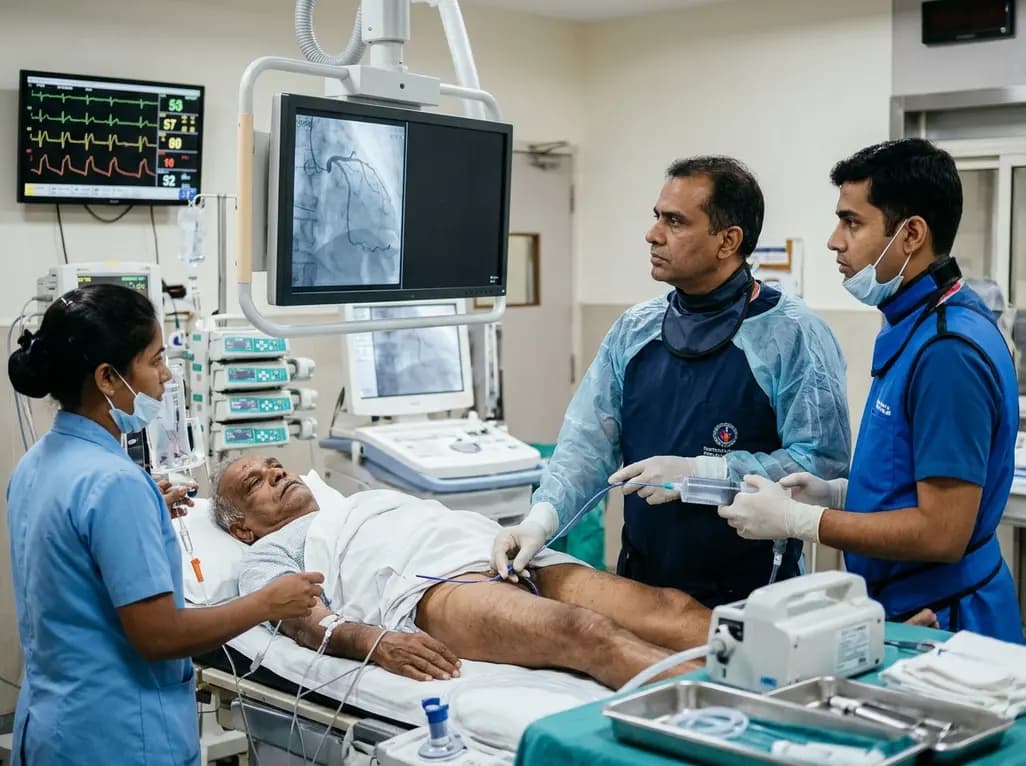
An elderly man with partially repaired Tetralogy of Fallot presented with STEMI caused by coronary embolism rather than atherosclerosis. Successful treatment with sustained mechanical aspiration thrombectomy underscores the vital need for high clinical vigilance in adult congenital heart disease.
Today

Demanding exhaustive hormonal profiling can inadvertently discourage clinical studies involving females. Methodological standards must align with the specific scientific question to expand, not restrict, equitable evidence for women.
Today

A recent study demonstrates that spinal oxygen sensors do not require mitochondrial electron transport to trigger sympathetic excitation during acute hypoxia, revealing new insights into how mitochondrial oxidative stress modulates autonomic tone in cardiovascular and neurological diseases.
Today

A comparative review of tension band wiring and intramedullary screw fixation in thumb metacarpophalangeal arthrodesis, evaluating union rates, hardware complications, and clinical outcomes.
Today

Following regulatory scrutiny from FSSAI regarding promotional representations and lean muscle preservation claims, Dr. Reddy's Laboratories and Nestlé Health Science are currently reviewing the branding and marketing strategy for their joint nutritional supplement Celevida GLP+.
Today
