.webp&w=384&q=75)

Loading, please wait...
Loading, please wait...
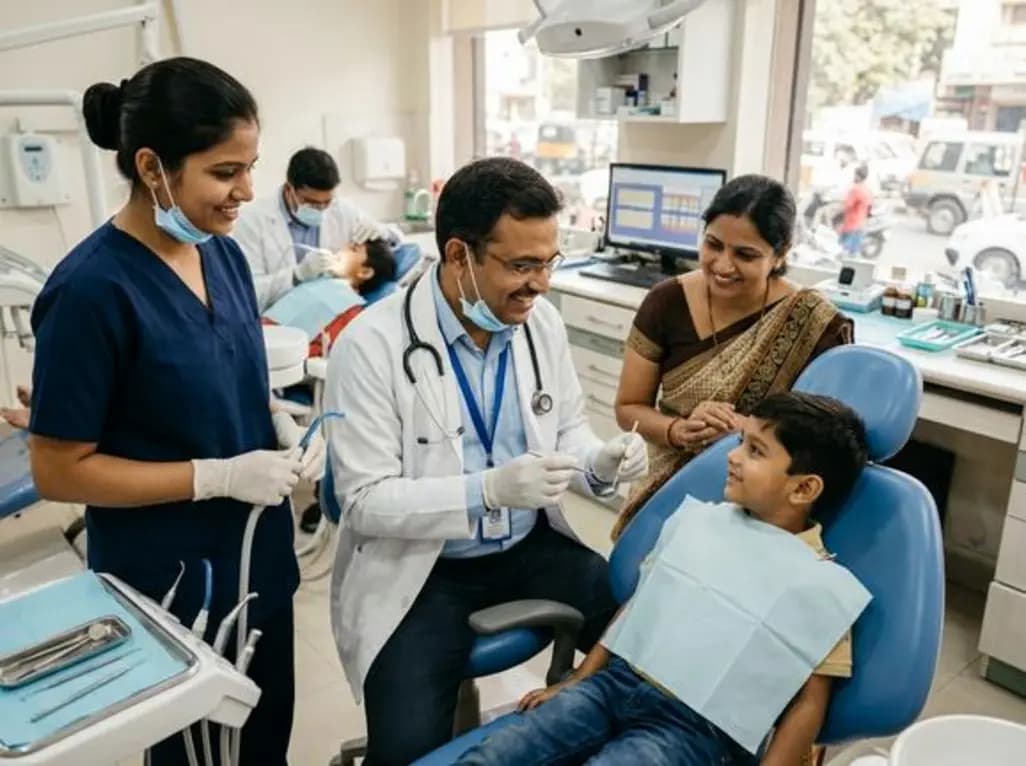
Researchers recently finalized the BeSiDe-CO study to standardize Dental Behaviour Support outcomes for both adults and children. This landmark study aimed to create a Core Outcome Set (COS) suitable for various techniques, including non-pharmacological support, sedation, and general anesthesia. Consequently, these findings provide a much-needed framework for evaluating how patients respond to dental interventions.
Furthermore, the development process involved systematic reviews and extensive consultation with key stakeholders. These groups included patients, carers, clinicians, and researchers who participated in a modified e-Delphi panel. During this process, experts prioritized 23 candidate outcomes before narrowing them down to the final set. Ultimately, nine specific outcomes form the core list: acceptability, adverse effects, anxiety, behavioral response, cost, pain, therapeutic alliance, time, and treatment completion.
In addition to the primary set, the study group established three specific outcomes for pharmacological studies. These include recovery, sedation effect, and physiological monitoring. Significantly, each outcome features a plain-language label to ensure that all stakeholders can interpret the results consistently. Although the primary focus remains on research, these standards have high transferability to routine clinical practice. Therefore, dentists in India can use these metrics to assess the quality of behavior management in their own clinics.
The study aims to standardize the reporting of Dental Behaviour Support outcomes. This ensures that different research trials use the same criteria, making it easier to compare the effectiveness of various behavioral and sedation techniques.
For pharmacological studies, researchers should include recovery times, the specific effect of the sedation, and physiological monitoring data alongside the nine core outcomes.
Disclaimer: This content is for informational and educational purposes only. It is not intended to be a substitute for professional medical advice, diagnosis, or treatment. Always seek the advice of your physician or other qualified health provider with any questions you may have regarding a medical condition. Refer to the latest local and national guidelines for clinical practice.
References
1. Mac Giolla Phadraig C et al. Behaviour Support in Dentistry Core Outcomes (BeSiDe-CO): A Core Outcome Set Development Study. Community Dent Oral Epidemiol. 2026 Jun 19. doi: 10.1111/cdoe.70083. PMID: 42321959.
2. COMET Initiative. Behaviour Support in Dentistry Core Outcomes (BeSiDe-CO). Study ID: 2101. Registered September 2022. Available at: https://www.comet-initiative.org/Studies/Details/2101
3. Geddis-Regan A, et al. A scoping review of interventions and outcome measures in trials of dental behavior support. Spec Care Dentist. 2023 Dec 18. doi: 10.1111/scd.12963.

Read summarized clinical updates, watch expert medical content, and earn CME certifications right from your smartphone.
Open your smartphone camera to scan and install.





The BeSiDe-CO study establishes a standardized Core Outcome Set for Dental Behaviour Support (DBS). Covering both adults and children, it identifies nine key outcomes like anxiety and treatment completion to unify research and clinical evaluation in dentistry.
4 months ago

As monsoon seasons elevate arboviral disease threats, Tamil Nadu has initiated an ICMR-monitored evaluation of the tetravalent dengue vaccine in Tenkasi district. Clinicians emphasize clinical monitoring, public prevention, and high-quality early pediatric care to reduce disease morbidity across endemic regions.
Today

Leucine Rich Bio has introduced South Asia's first comprehensive vaginal microbiome test, BugSpeaks. By profiling microbial dysbiosis, pathogens, and antimicrobial resistance, this next-generation diagnostic platform provides clinicians with deeper insights into recurrent infections, fertility, and reproductive health.
Today

Review how tailored exercise programs benefit frail older patients with heart failure. Explore pathophysiological mechanisms, individualized training prescriptions, and strategies to overcome adherence barriers in clinical practice.
Today

This comparative study evaluates posterior labral tears with and without glenohumeral instability, highlighting distinct demographic patterns, MRI underestimation in stable shoulders, and successful arthroscopic repair outcomes.
Today

A clinical study demonstrates that early intervention with tocilizumab, either as monotherapy or bridged with corticosteroids, achieves significant proptosis reduction and resolves active inflammation in treatment-naive thyroid eye disease.
Today
