.webp&w=384&q=75)

Loading, please wait...
Loading, please wait...

To begin with, Delhi is transforming its healthcare with the Ayushman Bharat in Delhi initiative. Specifically, official reports state that the government has issued over 7.72 lakh health cards to residents. This figure includes 2,90,475 cards distributed under the senior-focused Vaya Vandana Scheme (VVS). Furthermore, the department processed another 4,81,654 cards under the non-VVS category. Consequently, over 46,900 patients have already accessed high-quality, cashless medical services.
Currently, the central and state governments collaboratively fund this massive healthcare package. Specifically, eligible families can now access up to Rs 10 lakh in cashless coverage. The central government provides Rs 5 lakh under the core AB PM-JAY initiative. Moreover, the Delhi government offers an additional Rs 5 lakh to strengthen financial protection. Currently, a robust network of 233 empanelled hospitals supports this extensive medical rollout. This network comprises 181 private institutions and 52 government hospitals across the capital.
In addition to insurance, the administration is focusing heavily on climate-related medical emergencies. Therefore, Health Minister Pankaj Kumar Singh recently reviewed hospital readiness amid extreme heat conditions. Consequently, hospitals and Ayushman Arogya Mandirs have gone on high alert to handle emergencies. Specifically, Lok Nayak Hospital (LNJP) has established a dedicated heatwave treatment ward. This specialized facility includes four casualty beds and ten E-ICU beds. Furthermore, LNJP has placed a 70-bed disaster ward on active standby. Meanwhile, doctors have secured ample stocks of cooling pads, cold saline, and oral rehydration salts (ORS).
Q1: What is the total cashless coverage available under the Ayushman Bharat scheme in Delhi?
Eligible beneficiaries in Delhi can access up to Rs 10 lakh in cashless healthcare coverage. This comprises Rs 5 lakh from the central government's AB PM-JAY scheme and an additional Rs 5 lakh provided by the Delhi government.
Q2: How many hospitals are currently empanelled under the scheme in the capital?
Currently, healthcare services under the scheme are provided through a network of 233 empanelled hospitals, which includes 181 private hospitals and 52 government hospitals.
Q3: What clinical emergency arrangements has LNJP Hospital made for the heatwave?
LNJP Hospital has set up a dedicated heatwave ward. This facility features four casualty beds, ten E-ICU beds, and a standby 70-bed disaster ward. The hospital has also stockpiled cooling pads, cold saline, and ORS.
Disclaimer: This content is for informational and educational purposes only. It does not constitute medical advice or replace professional judgment. Refer to the latest local and national guidelines for clinical practice.
References

Read summarized clinical updates, watch expert medical content, and earn CME certifications right from your smartphone.
Open your smartphone camera to scan and install.





Delhi issues over 7.72 lakh health cards under AB PM-JAY and initiates robust clinical preparations at LNJP Hospital to manage extreme heatwave emergencies....
4 months ago

Following regulatory scrutiny from FSSAI regarding promotional representations and lean muscle preservation claims, Dr. Reddy's Laboratories and Nestlé Health Science are currently reviewing the branding and marketing strategy for their joint nutritional supplement Celevida GLP+.
Today
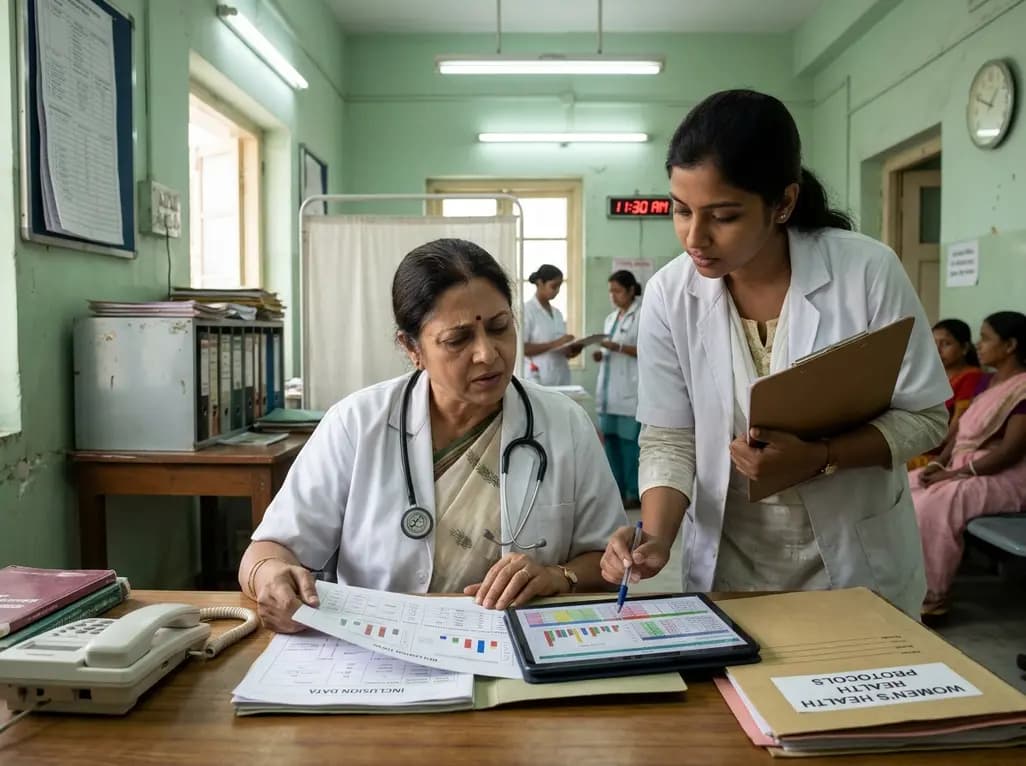
Demanding exhaustive hormonal profiling can inadvertently discourage clinical studies involving females. Methodological standards must align with the specific scientific question to expand, not restrict, equitable evidence for women.
Today

The Directorate General of Health Services directs Indian states to halt the hazardous reuse and reprocessing of single-use medical devices. Discover regulatory implications under the Drugs and Cosmetics Act, critical infection risks, legal liabilities, and operational changes required across clinical specialties.
Today
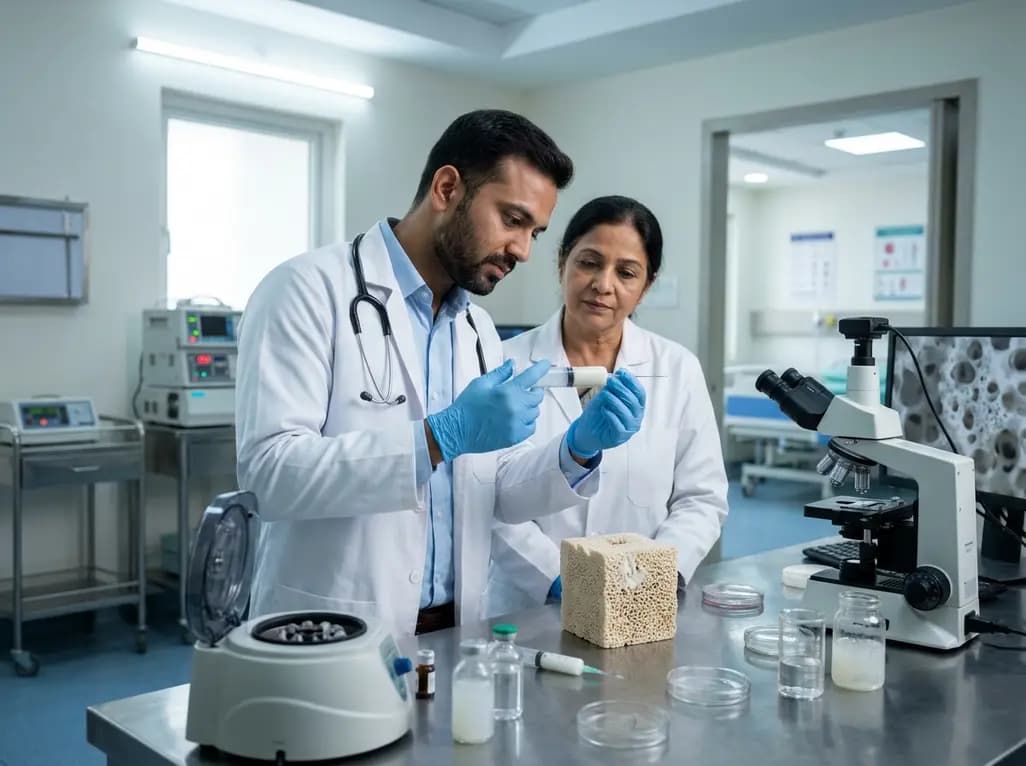
A novel calcium polyphosphate coacervate enables injectable bone implants with in situ hierarchical porosity via phase separation and gas foaming, significantly enhancing cell proliferation, energy metabolism, and osteogenic differentiation for minimally invasive bone defect repair.
Today

India is advancing preventive healthcare by integrating genomics, artificial intelligence, and quantum technologies. With the SANGAM programme sequencing one million Indian genomes, clinicians can unlock personalized therapies, detect cardiometabolic risks early, and curb the burden of diabetes and heart disease.
Today
