.webp&w=384&q=75)

Loading, please wait...
Loading, please wait...

Diffuse low-grade gliomas primarily affect young adults during their most productive developmental years. Historically, neurosurgeons focused primarily on avoiding severe neurological deficits such as hemiparesis or severe motor aphasia. However, contemporary neuro-oncology requires a much broader perspective. Young patients face intense cognitive demands, particularly when completing rigorous educational programs. In this context, awake surgical resection has emerged as the definitive surgical standard to protect complex neurocognitive networks. Clinicians now recognize that preserving essential neural connectivity is crucial for maintaining life goals. Consequently, surgeons must weigh oncological goals against the preservation of sophisticated mental faculties. Young individuals who attend school or university need intact working memory, high executive speed, and flexible attention. Therefore, surgical strategies must safeguard neuroplasticity alongside cytoreduction. Recent evidence highlighted by neurosurgical pioneer Hugues Duffau evaluates whether young students can genuinely acquire new academic competencies after undergoing functional brain surgery. The findings offer compelling evidence for early, individualized brain mapping.
The clinical cohort included 21 consecutive students undergoing mapping-guided awake craniotomy. Specifically, the cohort comprised 16 female and 5 male patients with a mean age of 22.9 years. Among them, 4 attended high school and 17 were university students. Remarkably, 6 patients were medical students, while others pursued challenging degrees in engineering, physiotherapy, law enforcement, and business management. Before intervention, patients maintained a median Karnofsky Performance Scale score of 95.2. Furthermore, the mean preoperative tumor volume reached 47.6 cubic centimeters. During the procedures, surgical teams utilized cortical and subcortical direct electrical stimulation. This intraoperative functional mapping allowed maximal tumor debulking up to critical axonal boundaries. Consequently, the team achieved a mean extent of resection of 93.5 percent. The mean residual tumor volume remained low at 5.8 cubic centimeters. Postoperative histological evaluation revealed 18 astrocytomas and 3 oligodendrogliomas. Remarkably, the postoperative median functional score improved slightly to 96.6, and no patient experienced permanent neurological injury.
Preserving academic capacity requires protecting delicate connectomal networks. Traditionally, standard neurosurgical resections relied on rigid anatomic landmarks. In contrast, awake surgical resection monitors dynamic subcortical white matter pathways in real time. Intraoperative tasks assess semantic processing, phonological retrieval, and complex executive multitasking under time pressure. Because diffuse low-grade gliomas infiltrate along axonal tracts, simple anatomic boundaries fail to show functional limits. Moreover, slow-growing tumors often induce significant cortical reorganization. Functional electrical mapping leverages this brain plasticity by identifying compensatory redundant pathways. Thus, the neurosurgeon halts resection only when reaching critical functional epicenters. By doing so, the team protects the underlying neural substrates responsible for learning and memory acquisition. Furthermore, high school students presented with significantly smaller preoperative tumor volumes and achieved higher resection percentages than older university students. This finding underscores the clinical value of early surgical intervention before tumors infiltrate expansive networks. Therefore, proactive functional surgery preserves long-term cerebral connectivity.
The primary finding of this investigation centers on long-term educational outcomes. Following surgery, all 21 students resumed their academic curricula. Even more impressive, 20 out of the 21 students, representing 95 percent, successfully passed their examinations and graduated. The single patient who did not finish school experienced significant psychiatric vulnerability rather than focal neurosurgical deficits. In addition, medical students returned to rigorous clinical rotations and didactic training without compromising their career advancement. Notably, none of the patients received early adjuvant chemotherapy or radiotherapy. Avoiding early cytotoxic treatments prevented therapy-induced cognitive decline and prolonged neurocognitive fatigue. As a result, the students maintained sufficient cognitive stamina to acquire novel information, synthesize complex theories, and sit for demanding national examinations. These remarkable results demonstrate that customized functional surgery directly preserves the high-order neural networks necessary for sustained scholarly achievement and professional integration.
Diffuse gliomas remain chronic infiltrative diseases that require meticulous longitudinal monitoring. Over a mean follow-up of 8.6 years, 76.1 percent of patients remained alive. Because gliomas inevitably recur, dynamic management strategies are essential. In this series, 12 patients underwent a second awake operation when tumor regrowth occurred. Subsequent awake resections utilize iterative brain plasticity. Between surgical interventions, the connectome reorganizes, shifting essential functional nodes into alternative cerebral territories. Consequently, repeat surgeries safely remove recurrent disease without inducing debilitating neurological deficits. Furthermore, delaying adjuvant radiation therapy shields young brains from accelerated vascular aging and irreversible leukoencephalopathy. Thus, sequential surgical interventions provide durable disease control while preserving cognitive agility. Neurologists and neuro-oncologists must therefore view low-grade glioma as a chronic condition best managed through active functional surveillance and repeated functional debulking.
These clinical insights present a transformative paradigm for modern multidisciplinary teams. First, clinicians should no longer recommend passive watchful waiting for young patients presenting with suspected low-grade gliomas. Instead, early surgical referral for mapping-guided awake craniotomy maximizes resection volume while brain plasticity remains high. Second, clinicians must discuss career and educational aspirations during preoperative counseling. Awake cognitive testing must replicate the specific demands of the patient's professional or academic life. For example, medical or engineering students require advanced multitasking assessments during intraoperative cortical stimulation. Third, neurosurgeons, neuro-oncologists, and rehabilitation specialists should collaborate closely to support rapid postoperative reintegration. Ultimately, functional preservation goes far beyond motor control; it safeguards identity, ambition, and personal fulfillment. Therefore, awake mapping-based neurosurgery offers young students an exceptional opportunity to overcome a serious brain tumor while fulfilling their educational dreams.
Awake surgery uses real-time intraoperative cognitive and electrical mapping while the patient performs speech, memory, and executive tasks. This technique allows the surgical team to precisely identify and avoid critical functional brain networks, preserving the complex neural pathways needed to learn, retain, and process novel academic information.
Early radiotherapy was deferred to prevent irreversible radiation-induced neurocognitive decline, memory loss, and mental fatigue in young patients. Because maximal surgical resection effectively controlled tumor burden, delaying radiotherapy helped patients maintain the mental sharpness and stamina necessary to complete intense university examinations and vocational curricula.
Yes, patients can safely undergo repeated awake resections. Because the brain undergoes continuous neuroplastic reorganization over time, eloquent functional epicenters often migrate away from recurrence zones. In this cohort, over half of the patients underwent successful repeat surgeries without developing permanent neurological or academic deficits.
Disclaimer: This content is for informational and educational purposes only. It does not constitute formal medical advice, diagnosis, or treatment. Refer to the latest local and national guidelines for clinical practice.
References
Duffau H The capability to successfully study and to be graduated in students who underwent awake surgical resection for a low-grade glioma. J Neurooncol. 2025 Aug. doi: 10.1007/s11060-025-05044-7. PMID: 40244520.
Lemaitre AL, Herbet G, Ng S, Moritz-Gasser S, Duffau H. Cognitive preservation following awake mapping-based neurosurgery for low-grade gliomas: a longitudinal, within-patient design study. Neuro Oncol. 2022;24(5):781-793. doi: 10.1093/neuonc/noab275.
Ng S, Rigau V, Moritz-Gasser S, et al. Long-term autonomy, professional activities, cognition, and overall survival after awake functional-based surgery in patients with IDH-mutant grade 2 gliomas: a retrospective cohort study. Lancet Reg Health Eur. 2024;46:101078. doi: 10.1016/j.lanepe.2024.101078.

Read summarized clinical updates, watch expert medical content, and earn CME certifications right from your smartphone.
Open your smartphone camera to scan and install.





A landmark study demonstrates that mapping-guided awake surgical resection in young low-grade glioma patients preserves higher cognitive functions, enabling 95% of students to continue their academic curricula and successfully graduate without permanent neurological deficits.
Today

A prospective comparative study shows intravenous N-acetylcysteine significantly reduces hospital stay, accelerates transaminase clearance, and promotes platelet recovery in dengue patients with marked aminotransferase elevation (≥400 U/L).
Today

A ten-year cohort study of ABU case logs reveals that URPS fellowship training significantly drives higher annual case volumes, advanced surgical complexity, and increased female representation in pelvic floor reconstruction, underscoring the vital need for structured subspecialty training.
Today

Systemic amyloidosis management is undergoing a therapeutic revolution. This clinical review synthesizes updates from the International Society of Amyloidosis, detailing novel plasma cell therapies, TTR stabilizers, silencers, translational models, and artificial intelligence in drug development.
Today
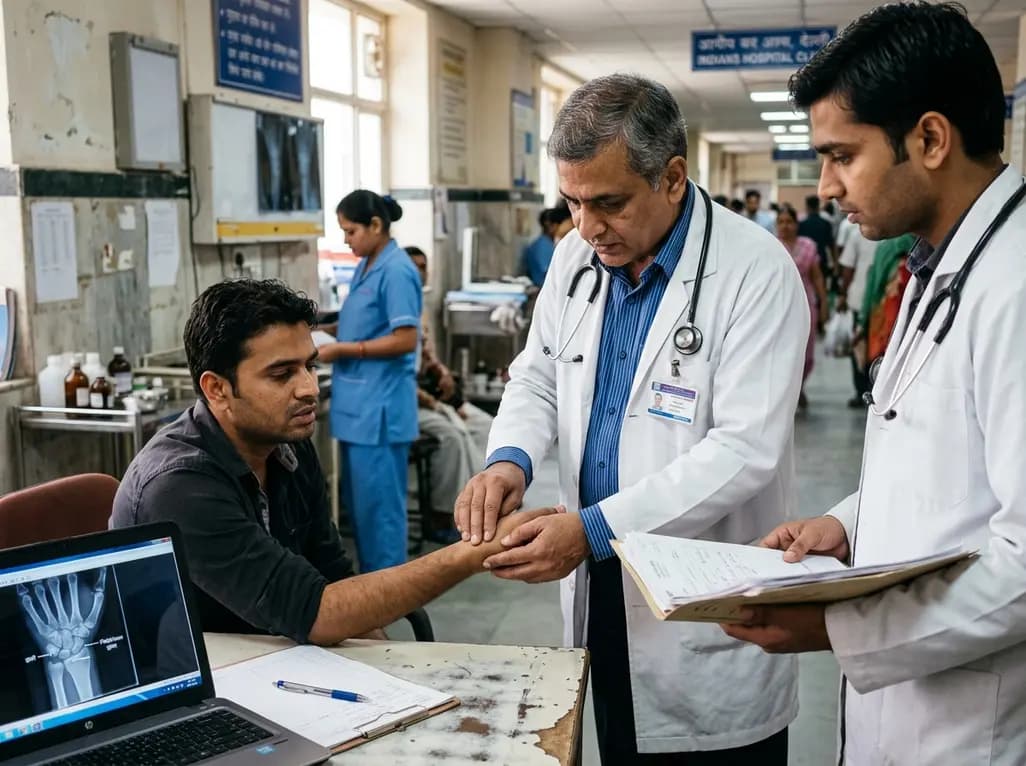
Posttraumatic pisotriquetral instability is a rare wrist injury causing severe hypothenar pain and weakness. Explore clinical examination, imaging, and pisiformectomy.
Today

A comprehensive review analyzes periconceptional GLP-1 receptor agonist exposure, revealing reassuring data on congenital anomalies and adverse perinatal outcomes while emphasizing the need for cautious patient counseling.
Yesterday
