.webp&w=384&q=75)

Loading, please wait...
Loading, please wait...

Systemic amyloidosis encompasses a challenging group of protein-misfolding disorders that cause progressive organ dysfunction. Historically, clinicians faced limited therapeutic options, and patient prognoses remained grim. Today, breakthroughs in molecular biology have fundamentally reshaped modern systemic amyloidosis treatment. By targeting distinct phases of amyloidogenesis, novel regimens improve organ preservation and extend overall survival. Furthermore, clinicians now evaluate disease mechanisms through sophisticated preclinical platforms. This article examines transformative insights from the International Society of Amyloidosis Scientific Workshop, highlighting novel pharmacological targets, translational tools, and computational innovations.
Pathogenic amyloid fibrils arise when unstable soluble precursor proteins misfold and self-assemble into insoluble cross-beta sheet structures. In systemic disease, these fibrils deposit throughout the extracellular space of vital organs, notably the heart, kidneys, and peripheral nerves. As a result, tissue architecture distorts and severe organ failure ensues. Systemic light-chain amyloidosis involves an underlying clonal plasma cell dyscrasia. In contrast, transthyretin amyloidosis stems from the dissociation and aggregation of tetrameric transthyretin produced primarily in the liver.
Historically, therapeutic strategies focused exclusively on broad organ support. However, modern systemic amyloidosis treatment prioritizes preventing fibril synthesis and halting further tissue deposition. Physicians must distinguish clearly between light-chain and transthyretin amyloidosis because therapeutic pathways diverge completely. In light-chain disease, therapies rapidly eradicate the clonal plasma cell population. Conversely, transthyretin therapies stabilize circulating tetramers or silence messenger ribonucleic acid transcription. Consequently, contemporary clinical protocols emphasize rapid biomarker-guided diagnosis to prevent irreversible end-organ damage. Early intervention effectively halts the cascade before extensive architectural distortion cripples functional reserve.
In light-chain amyloidosis, circulating immunoglobulin light chains exert direct proteotoxicity on cardiomyocytes and renal glomeruli. Therefore, treatment regimens must suppress pathogenic plasma cells rapidly and deeply. The introduction of anti-CD38 monoclonal antibody therapy alongside cyclophosphamide, bortezomib, and dexamethasone established a robust frontline benchmark. This combination produces high rates of deep hematologic responses, including complete response and minimal residual disease negativity. Consequently, patients achieve superior organ responses and improved survival.
Nevertheless, clinicians encounter persistent challenges in patients with refractory disease or relapsing clones. Furthermore, individuals presenting with advanced cardiac involvement often tolerate intensive chemotherapeutic regimens poorly. To overcome these barriers, investigators are exploring modern multiple myeloma advances. Specifically, B-cell maturation antigen-directed chimeric antigen receptor T-cell therapies and bispecific T-cell engagers exhibit impressive preclinical and early clinical activity. Additionally, the selective B-cell lymphoma-2 inhibitor venetoclax provides targeted efficacy in patients harboring the translocation t(11;14). Thus, precision hematologic strategies are redefining survival paradigms even among high-risk cohorts.
Therapeutic development in transthyretin amyloidosis illustrates the power of targeting specific stages of amyloidogenesis. The transthyretin tetramer normally transports thyroxine and retinol-binding protein. Pathogenesis begins when this tetramer dissociates into unstable monomers that rapidly misfold. First-generation stabilizers, including tafamidis, bind the thyroxine-binding pockets and prevent dissociation. Similarly, newer high-affinity stabilizers like acoramidis achieve near-complete tetramer stabilization, significantly reducing cardiovascular mortality and hospitalization rates.
Moreover, genetic silencing represents a profound paradigm shift in transthyretin management. Small interfering ribonucleic acids, such as patisiran and vutrisiran, along with antisense oligonucleotides like eplontersen, degrade hepatic messenger ribonucleic acid. Consequently, these agents reduce serum transthyretin production by up to eighty percent or more. Clinical trials confirm that gene silencers halt neuropathy progression and improve functional capacity in cardiomyopathy. Looking ahead, in vivo clustered regularly interspaced short palindromic repeats gene editing aims to permanently disrupt the transthyretin gene after a single infusion. Therefore, clinicians may soon replace lifelong chronic administration with durable, curative genetic interventions.
While precursor-suppressing agents effectively prevent new fibril assembly, they rarely eliminate existing tissue deposits. Because spontaneous amyloid resorption occurs exceedingly slowly, patients often remain symptomatic despite achieving deep hematologic or genetic remission. Therefore, developing therapies that clear existing organ amyloid represents the most urgent unmet need in systemic amyloidosis. In response, translational researchers have engineered monoclonal antibodies designed to target amyloid-specific conformations or ubiquitous fibril components.
Unfortunately, early clinical trials evaluating fibril-depleting antibodies yielded modest and conflicting results. Monoclonal candidates, such as birtamimab and anselamimab, bind distinct epitopes on misfolded light chains to promote macrophage-mediated phagocytosis. Although initial phase three trials failed to meet primary endpoints in unselected cohorts, post-hoc analyses revealed survival benefits in severe cardiac disease. Similarly, pan-amyloid depleting agents and novel engineered peptide-fusion constructs show promise across both light-chain and transthyretin subtypes. Consequently, ongoing clinical studies focus on refined patient stratification to determine whether clearers can reverse established cardiomyopathy and nephropathy.
Translational drug discovery historically suffered from inadequate laboratory models that accurately reproduce human organ involvement. Fortunately, recent bioengineering breakthroughs have established powerful experimental platforms. Patient-derived induced pluripotent stem cells can differentiate into functional cardiomyocytes and autonomic neurons. Researchers can expose these cellular models directly to toxic amyloid precursors. Consequently, scientists now study cellular proteotoxicity, electrophysiological dysfunction, and contractile impairment in controlled in vitro environments.
Furthermore, novel transgenic animal models mimic tissue deposition patterns more reliably than older rodents. These translational systems allow investigators to screen drug candidates rapidly before initiating human trials. In parallel, artificial intelligence is transforming systemic amyloidosis research. Machine learning models analyze complex structural proteomics to predict how small molecules bind and stabilize precursor proteins. Additionally, advanced artificial intelligence algorithms evaluate routine electrocardiograms and echocardiograms to identify subtle amyloid patterns years before clinical recognition. Thus, integrating computational biology with patient-specific stem cell models significantly accelerates drug development and facilitates earlier therapeutic deployment.
Transthyretin stabilizers bind directly to circulating tetrameric transthyretin proteins, preventing their rate-limiting dissociation into amyloidogenic monomers. In contrast, transthyretin silencers utilize small interfering ribonucleic acids or antisense oligonucleotides to degrade messenger ribonucleic acid inside hepatocytes. Consequently, silencers dramatically suppress the actual production of transthyretin precursor proteins by eighty percent or more. While stabilizers preserve native protein structure, silencers halt protein synthesis entirely at the genetic translation stage.
Suppressing precursor production only requires blocking hepatic synthesis or eliminating clonal plasma cells in bone marrow. In contrast, amyloid fibril clearance demands removing dense, insoluble protein complexes deeply embedded within delicate extracellular tissue matrices. Monoclonal antibodies must penetrate fibrotic organs and recruit functional tissue macrophages to initiate phagocytosis. However, severe local inflammation or extensive microvascular distortion frequently impairs immune cell access, limiting the overall clinical efficacy of current depleting therapies.
Artificial intelligence accelerates drug discovery by modeling complex protein folding dynamics and predicting molecular binding interactions with high accuracy. Additionally, computational machine learning algorithms analyze standard twelve-lead electrocardiograms, echocardiographic images, and electronic medical records. Consequently, these algorithmic diagnostic tools detect subtle amyloid signatures long before overt clinical cardiac failure occurs. Early detection enables clinicians to administer disease-modifying therapies during early disease stages, which significantly enhances long-term survival outcomes.
Disclaimer: This content is for informational and educational purposes only and should not be considered medical advice. Always consult a qualified healthcare provider for diagnosis and treatment decisions. Refer to the latest local and national guidelines for clinical practice.
References
Morgan GJ et al. Emerging therapies and translational tools for drug development in systemic amyloidosis: insights from the International Society of Amyloidosis Scientific Workshop. Amyloid. 2026 Oct 05. doi: 10.1080/13506129.2026.2735581. PMID: 42831864.
Nguyen O, Kamna D, Masri A. New therapies to treat cardiac amyloidosis. Curr Opin Cardiol. 2025;40(2):98-106. doi: 10.1097/HCO.0000000000001198.
Maurer MS, Schwartz JH, Gundapaneni B, et al. Tafamidis treatment for patients with transthyretin amyloid cardiomyopathy. N Engl J Med. 2018;379(11):1007-1016. doi: 10.1056/NEJMoa1805689.

Read summarized clinical updates, watch expert medical content, and earn CME certifications right from your smartphone.
Open your smartphone camera to scan and install.





Systemic amyloidosis management is undergoing a therapeutic revolution. This clinical review synthesizes updates from the International Society of Amyloidosis, detailing novel plasma cell therapies, TTR stabilizers, silencers, translational models, and artificial intelligence in drug development.
Today

A retrospective study of 824 patients undergoing over 2,200 intradetrusor onabotulinumtoxinA injections identifies sex- and etiology-specific predictors of 2-week post-void residual, highlighting the influence of baseline residual volumes, toxin dosage, and distinct urodynamic parameters on urinary retention risk.
Today
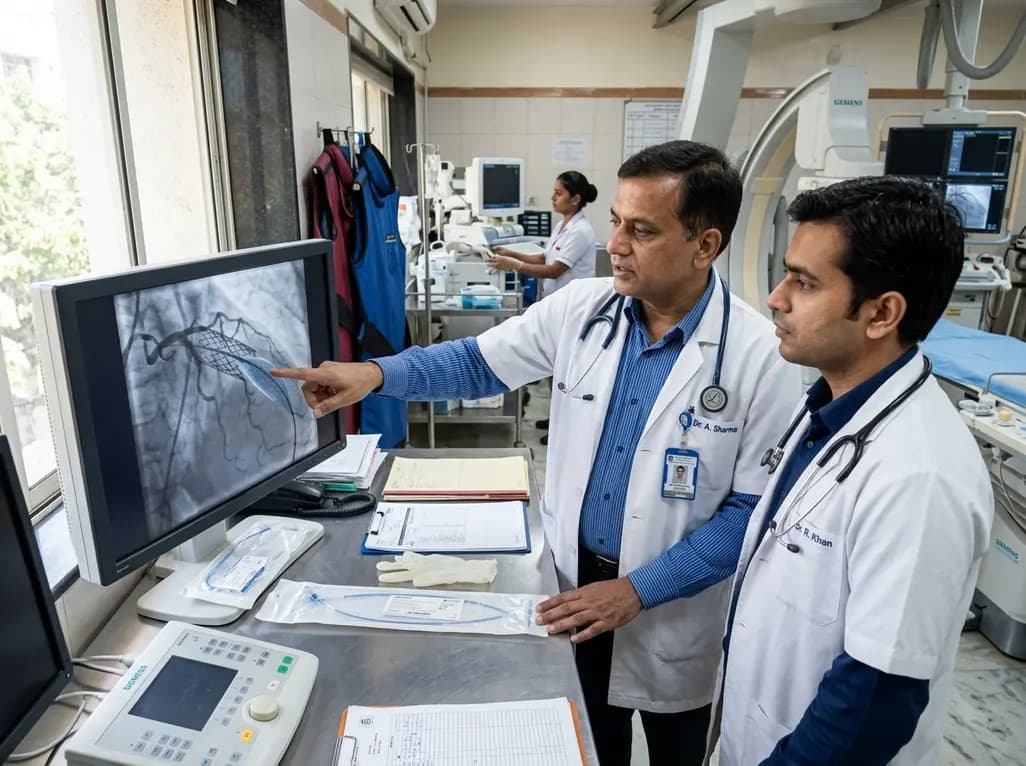
The US FDA has granted approval to the SELUTION SLR drug-eluting balloon for treating coronary in-stent restenosis. This milestone introduces a sustained-release sirolimus platform that eliminates the need for additional permanent metallic stents while maintaining robust vascular healing and luminal patency.
Today

The Thumbs-Out Classification (TOC) is a reliable screening tool for detecting thumb-in-palm deformity in children with cerebral palsy. Utilizing traffic-light tiers for radial abduction, TOC enables clinicians to monitor upper limb function and initiate timely therapeutic or surgical interventions.
Today

A comprehensive review analyzes periconceptional GLP-1 receptor agonist exposure, revealing reassuring data on congenital anomalies and adverse perinatal outcomes while emphasizing the need for cautious patient counseling.
Today
