.webp&w=384&q=75)

Loading, please wait...
Loading, please wait...

Managing advanced urothelial carcinoma (UC) requires a strategic approach to sustain the initial gains of platinum-based chemotherapy. Avelumab first-line maintenance has emerged as the standard of care for patients who do not experience disease progression after their initial treatment. However, clinicians frequently manage patients with metabolic comorbidities, such as high body mass index (BMI) or diabetes mellitus (DM). Consequently, understanding the long-term efficacy of immunotherapy in these specific populations is essential for personalized oncology care.
Recent exploratory analyses from the phase III JAVELIN Bladder 100 trial provided critical insights into these subgroups. The study evaluated patients with a BMI of 30 kg/m² or higher and those with documented controlled diabetes. Specifically, the researchers aimed to determine if these metabolic factors influenced the survival benefit of maintenance therapy. The findings offer a robust evidence base for continuing treatment in these common patient profiles.
The long-term data revealed significant survival advantages across all metabolic categories. In patients with high BMI, avelumab maintenance reduced the risk of death by 23% compared to best supportive care alone. Notably, the impact was even more pronounced in patients with diabetes mellitus, where the hazard ratio for overall survival reached 0.60. This indicates a 40% reduction in the risk of death for diabetic patients receiving the maintenance regimen. Therefore, these comorbidities should not serve as barriers to utilizing this life-prolonging therapy.
Furthermore, the duration of follow-up exceeded 38 months, demonstrating the durability of the immune response. These results suggest that the clinical benefit of avelumab first-line maintenance remains consistent regardless of the patient's metabolic status. Additionally, the survival curves continued to show separation over time, reinforcing the long-term value of the maintenance strategy in advanced UC management.
Safety is a paramount concern when administering long-term immunotherapy to patients with existing metabolic conditions. Fortunately, the long-term safety profile in the high BMI and DM subgroups remained consistent with the overall trial population. Investigators reported no new safety signals or unexpected toxicities specific to these patient cohorts. Consequently, clinicians can maintain the recommended dosing schedule while monitoring for standard immune-related adverse events. This consistency in safety simplifies the management of patients who may already be managing complex medication regimens for diabetes or obesity-related issues.
The updated findings support the broad applicability of avelumab first-line maintenance in the clinical setting. Since high BMI and diabetes are prevalent in the Indian population, these results are particularly relevant for local practitioners. Clinicians should prioritize the initiation of maintenance therapy immediately after completing platinum-based chemotherapy in eligible patients. Thus, ensuring that all patients, including those with metabolic risk factors, have access to this standard-of-care treatment can optimize long-term survival outcomes in urothelial carcinoma.
No, long-term data from the JAVELIN Bladder 100 trial shows that patients with a BMI ≥30 kg/m² achieve a significant survival benefit, with a hazard ratio of 0.77, which is consistent with the general population.
Yes, the safety profile in patients with diabetes was similar to those without the condition. No new or increased toxicities were observed during the long-term follow-up period.
In the exploratory analysis, patients with diabetes mellitus saw a 40% reduction in the risk of death when treated with avelumab maintenance, highlighting its high efficacy in this subgroup.
Disclaimer: This content is for informational and educational purposes only. It does not constitute medical advice or establish a doctor-patient relationship. Always seek the advice of a qualified healthcare provider regarding any medical condition or treatment. Refer to the latest local and national guidelines for clinical practice.
References
Aragon-Ching JB et al. Avelumab first-line maintenance for advanced urothelial carcinoma: long-term outcomes from the JAVELIN Bladder 100 trial in patients with high body mass index or diabetes mellitus. ESMO Open. 2026 Jun 12. doi: undefined. PMID: 42284622.
Powles T et al. Avelumab Maintenance Therapy for Advanced Urothelial Carcinoma. N Engl J Med. 2020;383(13):1218-1230. doi:10.1056/NEJMoa2002700.
Sridhar SS et al. Avelumab first-line maintenance for advanced urothelial carcinoma: long-term follow-up from the JAVELIN Bladder 100 trial. Journal of Clinical Oncology. 2023;41(16_suppl):4508.
"
Read summarized clinical updates, watch expert medical content, and earn CME certifications right from your smartphone.
Open your smartphone camera to scan and install.





Exploratory analyses of the JAVELIN Bladder 100 trial confirm that avelumab first-line maintenance significantly improves overall survival in advanced urothelial carcinoma patients with high BMI or diabetes mellitus, maintaining a consistent safety profile.
4 months ago

A landmark 12-year longitudinal study highlights significant reductions in opioid prescribing for nonspecific low back pain following clinical guidelines and prescription monitoring systems, emphasizing non-opioid multimodal pain care.
Today

A study in Ultrasound in Obstetrics & Gynecology shows that quantitative vascularization of the anterior fornix/cervix with transvaginal ultrasound reliably identifies placenta accreta spectrum and predicts severe intraoperative hemorrhage, offering vital objective risk stratification.
Today
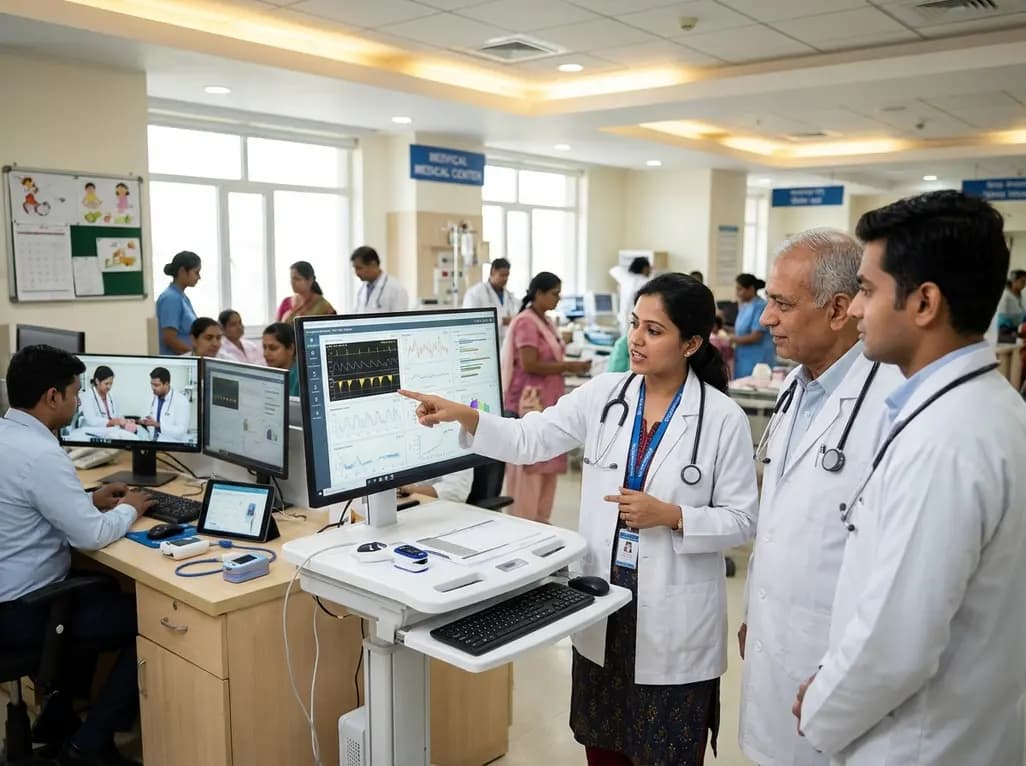
A landmark study details how an enterprise pediatric remote patient management model expanded from a single cardiology pilot to 16 diverse specialty programs by combining centralized digital operations with specialty clinical leadership.
Yesterday
A study evaluates vastus lateralis twitch kinetics, neural activation, and muscle architecture in 44 soccer players, showing dynamic neuromuscular measures predict jump and squat performance far better than ultrasound architecture alone.
Today

Protein O-GlcNAcylation couples cellular nutrient status to vital neuronal functions. This review explores how disrupted O-GlcNAc cycling drives both neurodevelopmental delays and neurodegenerative cascades, positioning metabolic post-translational modifications as therapeutic targets in clinical neurology.
Today
