.webp&w=384&q=75)

Loading, please wait...
Loading, please wait...

The implementation of these systems was successfully tested in a 3 T MRI environment. The results showed that autonomous MRI field cameras can achieve full functionality without any direct connection or communication with the host scanner. Specifically, the self-calibration process for probe positions deviated from conventional methods by less than 300 μm. This level of precision is crucial for maintaining image quality in high-performance imaging sequences.
Furthermore, self-synchronization allows these cameras to record sequence schematics and target specific measurement features. This capability makes the technology platform-agnostic, meaning it can be integrated with existing MRI systems regardless of the manufacturer. Consequently, this innovation could lead to more reliable and simplified field monitoring across various clinical settings.
By making field sensing self-reliant, radiologists can expect more consistent performance from their scanners. In addition, the reduced need for dedicated calibration sequences saves valuable scan time. This efficiency is particularly beneficial in busy imaging centers where maximizing patient throughput is essential. Ultimately, these advancements pave the way for more robust and portable field-monitoring solutions that enhance diagnostic confidence.
These cameras operate independently of the scanner's pulse programming and triggers. This reduces the complexity of hardware integration and allows for platform-agnostic field monitoring across different MRI systems.
The self-calibration for probe positions is highly accurate, with studies showing a deviation of less than 300 μm compared to conventional manual methods.
Yes, because the system is autonomous and does not require direct communication with the scanner, it can be readily integrated with most existing MRI platforms without hardware modifications.
Disclaimer: This content is for informational and educational purposes only. It is not intended to provide medical advice or to be used for diagnosing or treating a health problem. Patients should always consult with a qualified healthcare professional. Refer to the latest local and national guidelines for clinical practice.
References
Björkqvist O et al. Autonomy for MRI Field Cameras: Synchronization, Self-Calibration, and Sequence Detection. Magn Reson Med. 2026 Apr 02. doi: 10.1002/mrm.70339. PMID: 41926152.
Vannesjo SJ et al. Field camera for MR sequence monitoring and system analysis. Magn Reson Med. 2015;74(1):292-305. doi: 10.1002/mrm.25393.
Pruessmann KP. Magnetic field monitoring for MRI: techniques and applications. Proc Intl Soc Mag Reson Med. 2012;20:0011.

Read summarized clinical updates, watch expert medical content, and earn CME certifications right from your smartphone.
Open your smartphone camera to scan and install.





Researchers have developed autonomous MRI field cameras that sync and calibrate independently, improving imaging precision without scanner communication....
6 months ago
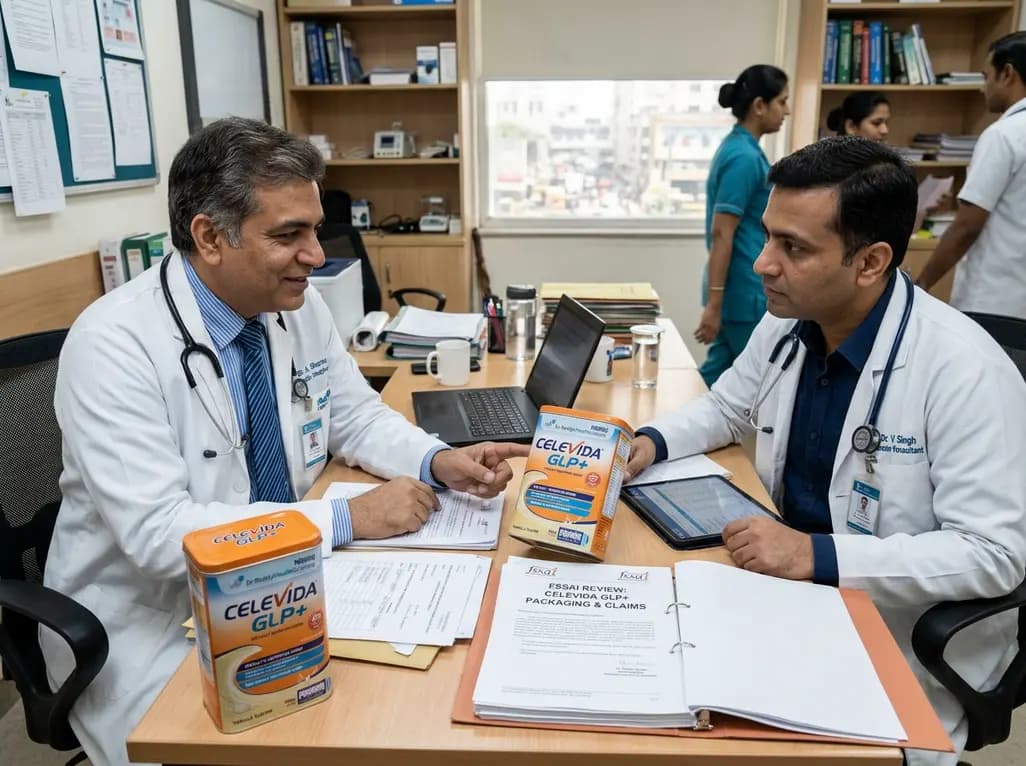
Following regulatory scrutiny from FSSAI regarding promotional representations and lean muscle preservation claims, Dr. Reddy's Laboratories and Nestlé Health Science are currently reviewing the branding and marketing strategy for their joint nutritional supplement Celevida GLP+.
Today
A comprehensive scoping review synthesises evidence linking prenatal maternal mental health to long-term offspring neurodevelopment, evaluating neuroendocrine, inflammatory, and epigenetic pathways while highlighting clinical screening and future research priorities.
Today

The Directorate General of Health Services directs Indian states to halt the hazardous reuse and reprocessing of single-use medical devices. Discover regulatory implications under the Drugs and Cosmetics Act, critical infection risks, legal liabilities, and operational changes required across clinical specialties.
Today
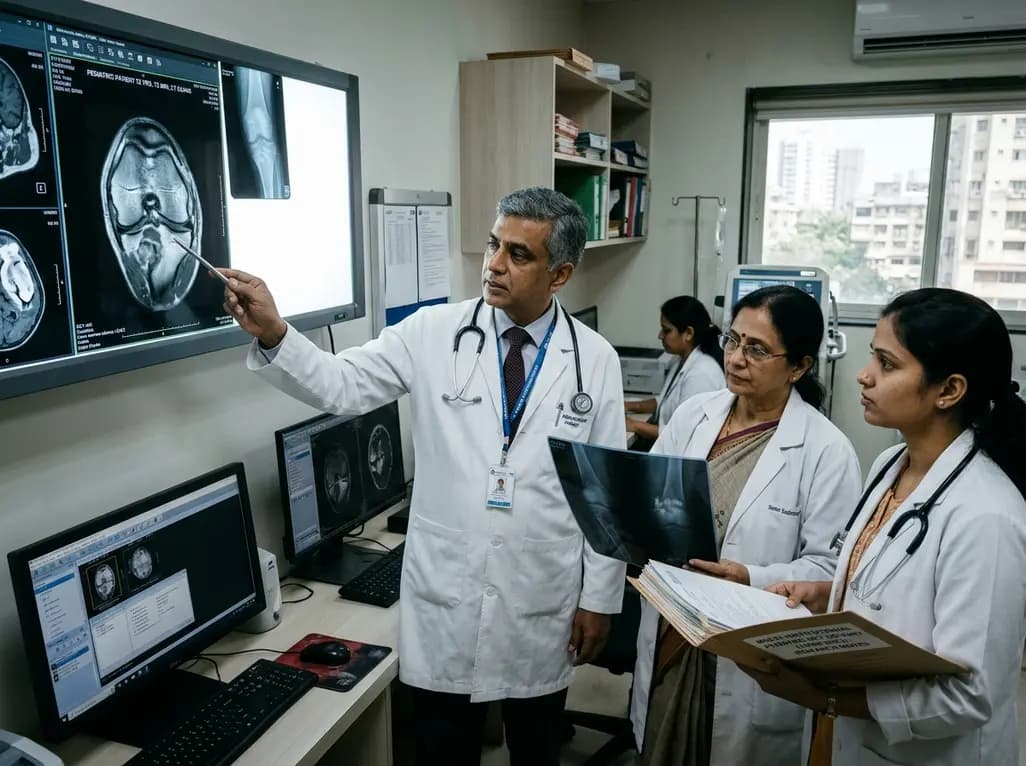
A 25-year multi-institutional cohort reveals high recurrence rates in pediatric giant cell tumor of bone, particularly in patients with open physes and bone marrow edema on preoperative MRI. Early surveillance and careful balance between growth plate preservation and tumor clearance are essential.
Today

India is advancing preventive healthcare by integrating genomics, artificial intelligence, and quantum technologies. With the SANGAM programme sequencing one million Indian genomes, clinicians can unlock personalized therapies, detect cardiometabolic risks early, and curb the burden of diabetes and heart disease.
Today
