.webp&w=384&q=75)

Loading, please wait...
Loading, please wait...
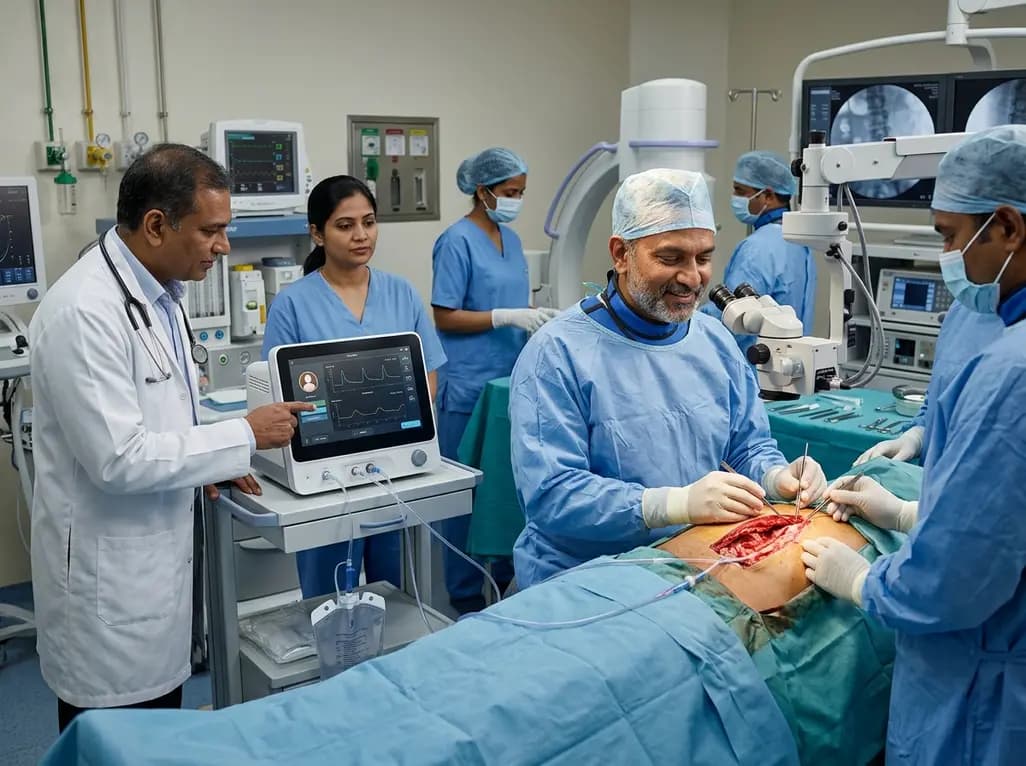
Spinal cerebrospinal fluid (CSF) leaks represent a frequent and technically demanding complication in the realm of complex spinal surgery. Whether occurring intra-operatively due to dural breaches or manifesting post-operatively as a fistula, these leaks significantly impede the healing process. Traditional Spinal CSF Leak Management often involves a combination of primary dural repair and secondary diversion techniques, such as lumbar drains. However, the management of high-flow leaks remains remarkably heterogeneous across surgical centers. When surgeons encounter high-flow situations, the primary goal is to minimize the pressure gradient across the dural repair site. This pressure reduction allows the surgical wound to heal without the constant pulsatile force of escaping fluid. Furthermore, persistent leaks can lead to devastating consequences, including pseudomeningoceles, wound dehiscence, and meningitis. Consequently, surgeons must employ meticulous closure techniques. Despite these efforts, static drainage systems often fail to adapt to the dynamic physiological changes in CSF production. Therefore, there is a growing clinical interest in more precise, automated systems that can measure and respond to patient-specific parameters in real-time. By accurately managing these pressures, clinicians can potentially improve surgical outcomes and reduce the length of hospital stays for complex patients.
Modern advancements have introduced automated systems designed to provide precise control over CSF pressure and volume. Unlike traditional gravity-dependent lumbar drains, automated devices like the LiquoGuard7 allow for consistent monitoring of patient-specific CSF production rates. This technology is particularly beneficial because it accounts for the physiological hyperproduction of CSF that often occurs in the context of durotomies. Research suggests that when the dura is breached, the body may increase CSF production as a compensatory mechanism. Furthermore, automated systems can maintain a set pressure regardless of the patient's physical positioning. This feature is crucial for Spinal CSF Leak Management as it prevents the risk of over-drainage or under-drainage, which are common pitfalls of manual systems. Additionally, these devices provide real-time data that allow clinicians to tailor diversion regimes to the individual patient's needs. Instead of following a generic protocol, the surgical team can adjust the drainage based on actual production metrics. As a result, the dural repair site is protected from excessive tension, facilitating more robust secondary intention healing in the overlying soft tissues. This precision significantly enhances the safety profile of CSF diversion in high-risk spinal procedures.
Managing high-flow leaks during complex spinal surgery requires a multi-layered approach. The first line of defense is always a primary dural repair using microsurgical techniques. However, in cases involving metastatic spinal cord compression or large dural defects from tumor resection, primary closure may be insufficient. In these scenarios, Spinal CSF Leak Management shifts toward reducing the hydrostatic pressure within the thecal sac. Surgeons often use automated drainage systems to achieve a "pressure-neutral" environment at the site of the repair. By diverting CSF at a rate that matches the patient's specific production, the system prevents the accumulation of fluid beneath the wound. Moreover, this approach supports the integrity of the layered wound closure, including the muscle and fascial planes. Consequently, the risk of developing a cerebrospinal fluid fistula or a pleural effusion is greatly reduced. Notably, patient-specific regimes allow for a more gradual weaning process from the drain. This gradual transition ensures that the dural repair is strong enough to withstand normal physiological pressures before the drain is removed. Therefore, the integration of automated pressure control into the surgical workflow represents a significant step forward in optimizing post-operative recovery for spinal patients.
Recent clinical observations have highlighted the efficacy of tailoring CSF diversion to the individual. In cases involving diverse pathologies such as disc prolapse, meningiomas, and metastatic cord compression, automated systems have demonstrated a consistent ability to manage high-flow leaks. For instance, evidence shows that CSF hyperproduction is common in these patients, often exceeding 140 ml per hour. Without an automated system, matching this high rate of production manually is extremely difficult and prone to error. Using patient-specific Spinal CSF Leak Management strategies, clinicians have successfully prevented the need for secondary surgical interventions for fistula repair. Furthermore, these systems have been instrumental in preventing wound breakdown and subsequent infections. By maintaining stable intracranial and intraspinal pressures, the automated device ensures that the soft tissue layers can heal without the interference of fluid collections. Additionally, the ability to monitor the hourly production rate helps in identifying early signs of complications. If the production rate fluctuates unexpectedly, it may signal an underlying issue that requires clinical attention. Thus, the data-driven nature of these systems provides a level of security that traditional methods cannot match, particularly in the management of complex spinal pathologies.
The ultimate goal of Spinal CSF Leak Management is to ensure the long-term integrity of the surgical wound. A successful outcome depends not only on the dural repair but also on the successful healing of the superficial tissues. When CSF leaks into the subcutaneous space, it creates a pathway for bacteria to enter, significantly increasing the risk of surgical site infections. Automated pressure control systems mitigate this risk by ensuring that the CSF is directed away from the wound into a sterile collection system. Moreover, by preventing the formation of a pseudomeningocele, these devices reduce the tension on the skin sutures. This is especially important in patients who may have compromised healing due to prior radiation therapy or systemic illnesses. Furthermore, the use of automated systems allows for earlier mobilization in some cases, as the device compensates for changes in posture. Consequently, patients can participate in physical therapy sooner, which is vital for recovery after complex spinal surgery. While larger studies are still needed to confirm the cost-effectiveness of this approach, the clinical benefits in terms of reduced re-operation rates are compelling. Therefore, adopting a patient-specific approach to CSF drainage is becoming a preferred strategy in high-volume neurosurgical centers.
As spinal surgery continues to evolve toward more complex reconstructions, the need for sophisticated Spinal CSF Leak Management will only grow. Future technological developments may include even more integrated sensors that can adjust drainage based on biochemical markers in the CSF. Furthermore, the miniaturization of these automated systems could lead to more portable options for post-operative care. Currently, the primary focus remains on refining the algorithms used to calculate patient-specific production rates. By understanding the factors that lead to CSF hyperproduction, surgeons can better predict which patients will require aggressive diversion. Additionally, the integration of these systems into standard protocols for high-risk cases may lead to a decrease in the overall burden of CSF-related complications. Nevertheless, clinicians must remain vigilant and combine technology with traditional surgical principles, such as meticulous tissue handling and anatomical reconstruction. Ultimately, the synergy between advanced automated pressure control and expert surgical technique offers the best chance for successful outcomes. As we look forward, the transition from "one-size-fits-all" drainage to personalized, data-driven management will likely become the standard of care for complex spinal interventions.
Automated CSF drainage provides precise, real-time pressure and volume control, adapting to the patient's specific production rates. This precision prevents the risks of over-drainage and under-drainage associated with manual gravity-based systems. Consequently, it maintains a stable environment for dural healing and reduces the likelihood of post-operative CSF leaks.
CSF hyperproduction often occurs after dural breaches, increasing the volume of fluid that can exert pressure on a surgical repair. If not managed properly, this excess fluid can force its way through the wound, causing fistulae, pseudomeningoceles, or wound dehiscence. Automated systems help by diverting this extra fluid safely.
Yes, by effectively diverting CSF away from the surgical wound, automated systems prevent fluid accumulation in the subcutaneous space. This reduces the risk of wound breakdown and eliminates the moist environment that facilitates bacterial growth. Therefore, it plays a critical role in minimizing the incidence of post-operative meningitis and infections.
Disclaimer: This content is for informational and educational purposes only... Refer to the latest local and national guidelines for clinical practice.
References
Khan DZ et al. Patient-specific automated cerebrospinal fluid pressure control to augment spinal wound closure: a case series using the LiquoGuard®. Br J Neurosurg. 2025 Aug. doi: 10.1080/02688697.2023.2290101. PMID: 38174716.
Mistry AM, Niesner K, Lake WB, et al. Management of cerebrospinal fluid leaks following spinal surgery: a review. Journal of Neurosurgery: Spine. 2016;24(6):973-981.
Ewald C, Kuhn S, Kalff R. Continuous lumbar cerebrospinal fluid drainage for treatment of high-flow cerebrospinal fluid fistulas after spinal surgery. Spine. 2012;37(13):E801-E805.

Read summarized clinical updates, watch expert medical content, and earn CME certifications right from your smartphone.
Open your smartphone camera to scan and install.





Spinal cerebrospinal fluid (CSF) leaks pose significant challenges in complex surgeries. This article explores how automated pressure control and patient-specific drainage regimes can optimize wound closure and prevent complications like CSF fistulae.
3 months ago

As monsoon seasons elevate arboviral disease threats, Tamil Nadu has initiated an ICMR-monitored evaluation of the tetravalent dengue vaccine in Tenkasi district. Clinicians emphasize clinical monitoring, public prevention, and high-quality early pediatric care to reduce disease morbidity across endemic regions.
Today

A comparative cohort study evaluates vNOTES vs TLH hysterectomy for benign conditions, demonstrating shorter operative duration, faster return to daily activities, and equivalent female sexual function scores without increased dyspareunia.
Today

Review how tailored exercise programs benefit frail older patients with heart failure. Explore pathophysiological mechanisms, individualized training prescriptions, and strategies to overcome adherence barriers in clinical practice.
Today

This comparative study evaluates posterior labral tears with and without glenohumeral instability, highlighting distinct demographic patterns, MRI underestimation in stable shoulders, and successful arthroscopic repair outcomes.
Today

A clinical study demonstrates that early intervention with tocilizumab, either as monotherapy or bridged with corticosteroids, achieves significant proptosis reduction and resolves active inflammation in treatment-naive thyroid eye disease.
Today
