

Loading, please wait...
Loading, please wait...

Surgeons continuously seek innovative adjunctive strategies to minimize surgical complications during pediatric cleft reconstructions. In primary palatal repairs, autologous platelet concentrates have emerged as a promising biological modality designed to reinforce mucosal healing. Primary cleft surgery presents unique anatomical challenges, such as lateral tissue deficiency and continuous biomechanical stress from infantile suckling. Consequently, reconstructive surgeons often observe post-surgical wound breakdown and oronasal fistula formation. Autologous platelet concentrates provide concentrated physiological reservoirs of autogenous growth factors directly to the fragile surgical interface. Clinicians harvest these blood products chairside from the infant's own peripheral circulation during routine anesthesia induction. Furthermore, this autologous origin eliminates the risks of foreign-body antigenic reactions and transmissible infectious agents. Therefore, pediatric surgeons increasingly employ platelet-rich fibrin and platelet-rich plasma as interposition membranes between nasal and oral mucosal layers. As surgical teams strive to reduce secondary revisional burdens, researchers rigorously evaluate whether these biological matrices truly enhance surgical outcomes. A recent comprehensive meta-analysis investigated these clinical parameters in primary cleft repair to clarify their overall therapeutic utility.
The systematic review evaluated data from major global biomedical databases through December 2025 to synthesize high-level evidence. Specifically, the authors screened PubMed, Scopus, Web of Science, Embase, LILACS, and Cochrane CENTRAL for randomized controlled trials. From an initial pool of 204 studies, five randomized trials met all eligibility criteria, enrolling 168 pediatric patients. Eighty-four patients received autologous platelet concentrates during primary cleft repair, while 84 matched patients underwent standard palatal repair alone. Quantitative meta-analysis demonstrated that the experimental group experienced a markedly lower likelihood of developing a post-surgical palatal fistula. Specifically, the pooled random-effects model showed a risk ratio of 0.21 with a 95% confidence interval of 0.06 to 0.70. Notably, the statistical assessment demonstrated negligible heterogeneity among the included trials, yielding an I-squared value of 0%. Consequently, these pooled metrics suggest an approximately 79% reduction in fistula risk when surgeons utilize platelet concentrates. Nevertheless, reconstructive teams must interpret these dramatic numerical improvements in the context of critical methodological constraints.
Understanding how autologous platelet concentrates enhance palatal tissue integrity requires an examination of cellular regenerative pathways. When platelets undergo activation, their intracellular alpha-granules release essential cytokines, including transforming growth factor-beta and platelet-derived growth factor. Consequently, these signaling molecules stimulate local fibroblast recruitment, rapid collagen matrix synthesis, and accelerated re-epithelialization across mucosal wound margins. Furthermore, vascular endothelial growth factor actively promotes robust capillary budding, which restores microvascular perfusion to ischemic flap borders. Beyond biochemical signaling, platelet-rich fibrin produces a dense, flexible three-dimensional fibrin scaffold. Surgeons position this natural biomembrane directly between the mobilized oral and nasal mucoperiosteal flaps. Therefore, the membrane functions as an anatomical barrier that effectively buffers biomechanical tension generated during swallowing and crying. Additionally, the fibrin seal impedes oral microflora and salivary enzymes from penetrating the underlying nasal repair line. By maintaining local microvascular circulation and shielding fragile tissues from physical shear stresses, the concentrates foster an optimal environment for undisturbed healing.
Despite the statistically significant reduction in palatal fistula formation, investigators encountered important evidence limitations during qualitative synthesis. The systematic review utilized the Cochrane Risk of Bias 2 tool and the GRADE framework to evaluate data certainty. Crucially, the GRADE evaluation classified the certainty of evidence for palatal fistula prevention as very low. This downgrade stemmed from small trial sample sizes, inconsistent blinding of surgical teams, and variable reporting standards. Moreover, the review could not perform a quantitative meta-analysis for wound dehiscence because primary studies lacked uniform diagnostic criteria. Additionally, the authors conducted a trial sequential analysis to determine whether the cumulative data reached definitive statistical power. This sophisticated analysis revealed that existing trial populations remain insufficient to surpass strict monitoring boundaries for conclusive evidence. Consequently, while autologous platelet concentrates show encouraging clinical promise, current literature cannot yet support definitive universal recommendations. Surgical researchers therefore emphasize that clinicians must regard these encouraging findings as preliminary rather than absolute.
In low- and middle-income regions where the burden of cleft lip and palate remains elevated, palatal fistulae present severe healthcare challenges. A recurrent oronasal fistula causes persistent hypernasal speech, food regurgitation, chronic rhinosinusitis, and significant psychosocial distress for children and parents. Furthermore, secondary fistula revisions require challenging surgical maneuvers and exhibit high recurrence rates due to preexisting scar tissue. Therefore, implementing an inexpensive, autologous biological adjunct that lowers fistula risk by nearly 80% represents an attractive clinical prospect. However, surgeons must realize that biological concentrates cannot overcome flawed surgical execution or excessive flap tension. Precise anatomical dissection, careful preservation of the greater palatine vessels, and multi-layer tension-free closure remain the cornerstones of successful palatoplasty. Additionally, surgical departments must standardize blood centrifugation protocols to guarantee consistent platelet yields across pediatric cohorts. Moving forward, large-scale multicenter randomized controlled trials will prove essential to define exact patient selection criteria and optimize cost-effectiveness in global cleft care.
Platelet concentrates deliver concentrated physiological reservoirs of growth factors directly into the cleft margins during surgical closure. Specifically, these biomolecules accelerate cell proliferation, neoangiogenesis, and extracellular matrix deposition across vulnerable mucosal flaps. Additionally, the autologous fibrin matrix functions as a protective mechanical seal between the nasal and oral mucosal layers. This barrier reduces suture line tension and prevents salivary contamination, thereby safeguarding microvascular perfusion and preventing tissue breakdown.
The certainty of evidence remains very low primarily due to small sample sizes across available randomized controlled trials. Furthermore, investigators observed notable variations in surgical methodology, cleft severity, and blinding techniques among individual centers. Because the cumulative number of enrolled patients remains modest, trial sequential analysis demonstrates that statistical monitoring thresholds for conclusive clinical proof remain unmet. Consequently, clinicians require larger, standardized multicenter trials to establish definitive recommendations before adopting routine universal implementation.
Clinical studies consistently demonstrate an excellent safety profile for autologous platelet concentrates in pediatric populations. Because technicians prepare these biomaterials directly from the infant's own peripheral blood, the risk of immunological rejection or bloodborne disease transmission remains virtually nonexistent. Furthermore, surgeons obtain small blood volumes safely during general anesthesia induction without compromising systemic hemodynamics. When clinicians execute standardized centrifugation protocols, autologous concentrates introduce zero foreign chemical additives, ensuring biocompatibility during delicate primary cleft operations.
Disclaimer: This content is for informational and educational purposes only and does not constitute formal medical advice. Healthcare professionals must exercise independent clinical judgment when evaluating surgical candidates. Refer to the latest local and national guidelines for clinical practice.
References
Siddiqui HP et al. Effect of autologous platelet concentrates on healing outcomes in primary cleft repair: a systematic review and meta-analysis of randomized controlled trials. Int J Oral Maxillofac Surg. 2026 Nov 02. doi: undefined. PMID: 42971877.
Bykowski MR, Naran S, Winger DG, Losee JE. The rate of oronasal fistula following primary cleft palate surgery: A meta-analysis. Cleft Palate Craniofac J. 2015;52(4):e81-e87.
Pratama AMO, Lewa A. The role of platelet rich fibrin for closure of oronasal fistula post palatoplasty. Int J Med Sci Clin Res Stud. 2023;3(3):388-393.

Read summarized clinical updates, watch expert medical content, and earn CME certifications right from your smartphone.
Open your smartphone camera to scan and install.





A systematic review and meta-analysis evaluates the clinical utility of autologous platelet concentrates in primary cleft repair, showing reduced palatal fistula risk despite very low certainty evidence.
Today
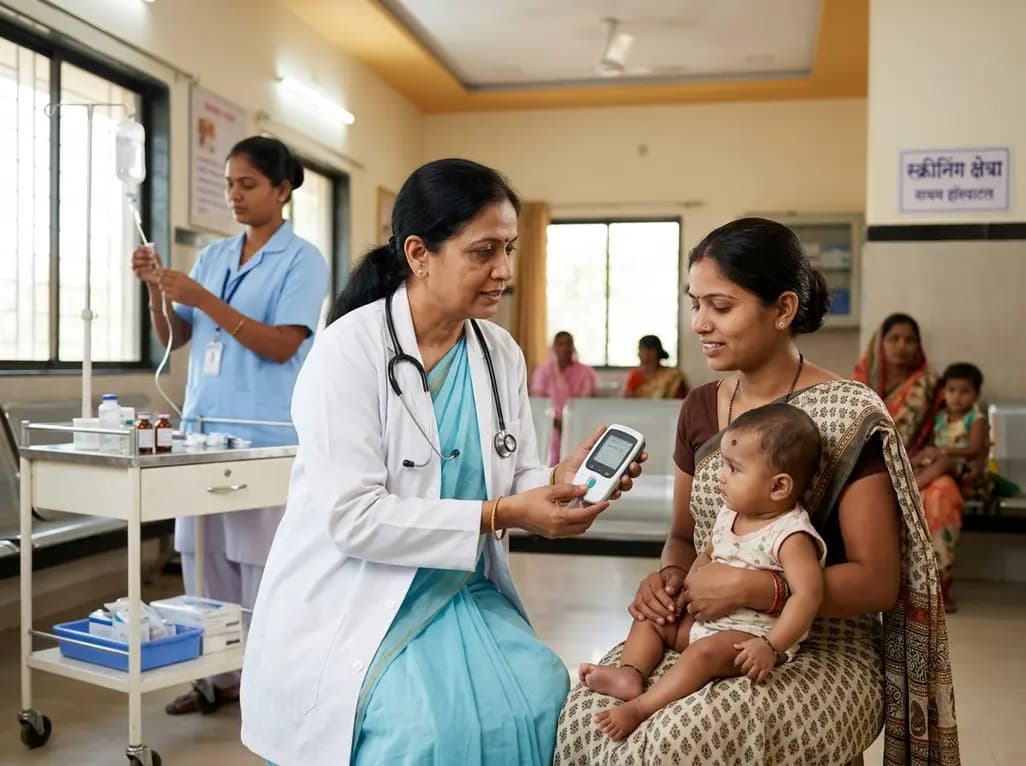
Maharashtra has launched a comprehensive initiative to halve anaemia prevalence across high-risk groups by 2030. The public health strategy integrates aggressive screening, point-of-care diagnostics, parenteral iron therapies, and targeted interventions for nutritional deficits and underlying hemoglobinopathies.
Today

A rare presentation of late myelomeningocele sac rupture devoid of a neural placode demonstrates excellent 2-year functional outcomes, shedding light on the mechanical, chemical, and hydrostatic dynamics of congenital spinal dysraphism.
Today
Dynamic contrast 4DCT enables precise mapping of left atrial appendage blood transport in atrial fibrillation. By quantifying regional stasis, wash-in kinetics, and residence time, this imaging advance offers clinician-tailored thromboembolic risk stratification beyond standard clinical scores.
Today

A systematic review and meta-analysis highlights the substantial impact of plyometric jump training on jump performance, reactive strength, and landing kinematics in female team-sport athletes, providing evidence-based programming guidelines for sports medicine and orthopedics.
Today

India is poised to transform chronic disease management through wearable health technology. Discover how continuous remote monitoring and predictive algorithms empower clinicians to detect early cardiovascular signals, personalize metabolic interventions, and deliver equitable preventive care across populations.
Today
