.webp&w=384&q=75)

Loading, please wait...
Loading, please wait...
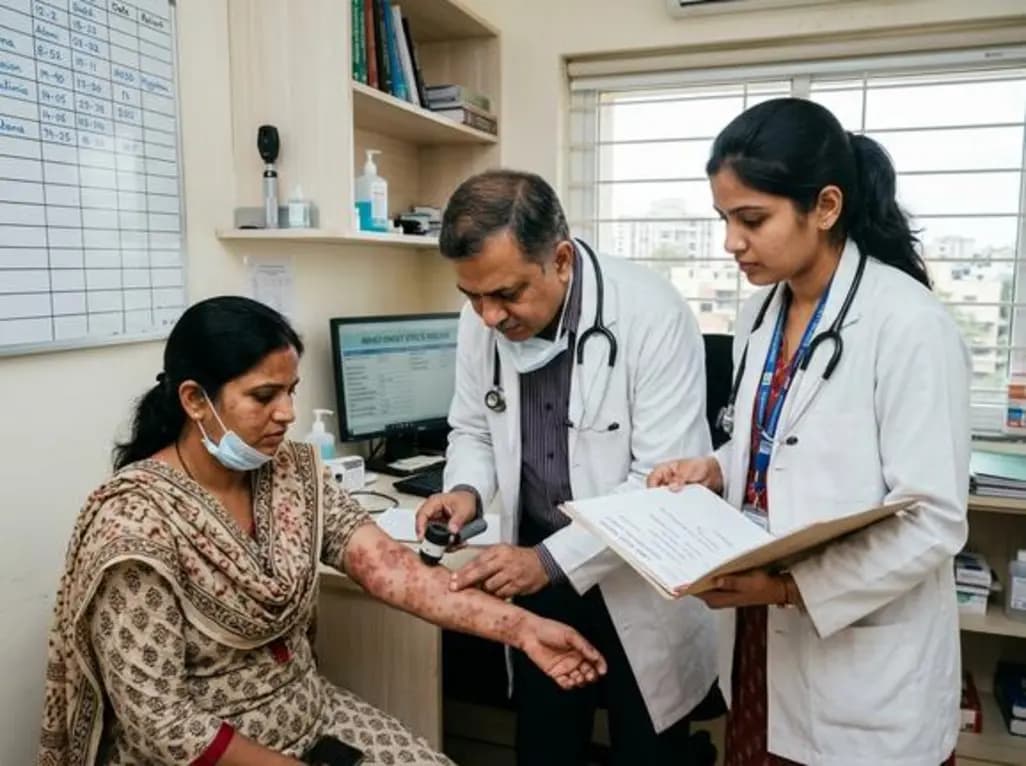
Adult-Onset Still's Disease is rare, but it is also quite serious. Although fevers occur, the skin rash is also a key sign. Specifically, atypical rashes appear, and they are also persistent. Consequently, these signs are vital because they aid the diagnosis. If the rash is odd, then a biopsy is also needed. As a result, doctors find necrotic cells, and so the diagnosis is finally made.
In addition, lab tests are also needed. Moreover, ferritin levels are high, and white cells also increase fast. Furthermore, neutrophils rise, so the diagnosis is also clearer. For instance, levels exceed 80%, so this is a major clue. Therefore, these markers are useful, and so they also help. Similarly, criteria are used so that errors are also avoided. Thus, the work is long, but it is also very vital.
In contrast, signs can be strange because they also vary. However, histology helps, and it also shows the truth. Indeed, necrotic cells appear, and they are also in the skin. For example, these cells are seen, so the doctor also knows. Therefore, the path is clear, and then the therapy also starts. Finally, drugs are given so that the patient also heals. In conclusion, finding Adult-Onset Still's Disease early is also always better.
The classic rash is typically an evanescent, salmon-pink maculopapular eruption that appears during fever spikes and fades quickly.
Atypical rashes often present as persistent, pruritic erythematous papules or plaques that do not fade when the fever subsides.
Extreme elevations in serum ferritin, often exceeding five times the normal limit, are a strong indicator of AOSD when other causes like infection or malignancy are ruled out.
Disclaimer: This content is for informational and educational purposes only. It does not constitute professional medical advice, diagnosis, or treatment. Always seek the advice of your physician or other qualified health provider with any questions you may have regarding a medical condition. Refer to the latest local and national guidelines for clinical practice.
References

Read summarized clinical updates, watch expert medical content, and earn CME certifications right from your smartphone.
Open your smartphone camera to scan and install.





Adult-Onset Still's Disease often presents with an evanescent rash, but atypical skin lesions can complicate the diagnosis. This case report highlights histological insights and clinical markers like hyperferritinemia to assist clinicians in identifying this rare autoinflammatory disorder.
4 months ago

As monsoon seasons elevate arboviral disease threats, Tamil Nadu has initiated an ICMR-monitored evaluation of the tetravalent dengue vaccine in Tenkasi district. Clinicians emphasize clinical monitoring, public prevention, and high-quality early pediatric care to reduce disease morbidity across endemic regions.
Today

A comparative cohort study evaluates vNOTES vs TLH hysterectomy for benign conditions, demonstrating shorter operative duration, faster return to daily activities, and equivalent female sexual function scores without increased dyspareunia.
Today

Review how tailored exercise programs benefit frail older patients with heart failure. Explore pathophysiological mechanisms, individualized training prescriptions, and strategies to overcome adherence barriers in clinical practice.
Today

This comparative study evaluates posterior labral tears with and without glenohumeral instability, highlighting distinct demographic patterns, MRI underestimation in stable shoulders, and successful arthroscopic repair outcomes.
Yesterday

A clinical study demonstrates that early intervention with tocilizumab, either as monotherapy or bridged with corticosteroids, achieves significant proptosis reduction and resolves active inflammation in treatment-naive thyroid eye disease.
Today
