.webp&w=384&q=75)

Loading, please wait...
Loading, please wait...

The Aster DM Healthcare merger with Quality Care India Limited (QCIL) recently achieved a significant milestone. Specifically, shareholders and creditors voted with a 96.68% majority to approve the amalgamation. Consequently, this strategic move aims to create a scaled healthcare platform in India. Furthermore, the integration leverages Aster’s clinical network alongside the growth expertise of Blackstone, which backs QCIL. The company expects to finalize the deal in the next quarter after obtaining remaining regulatory approvals from the National Company Law Tribunal.
Notably, the combined entity will emerge as one of India’s top three hospital chains. It will operate across nine states and 28 cities. Moreover, the platform will manage 39 hospitals featuring more than 10,625 beds. Additionally, a massive workforce of 36,000 employees and clinicians will serve millions of patients annually. This scale allows for better resource allocation and specialized care delivery. Furthermore, India remains the primary growth market for Aster. Consequently, the leadership team focuses on long-term value creation through this integration.
The merged entity plans to significantly increase its footprint in the coming years. Specifically, the total capacity will reach more than 14,700 beds. To achieve this, Aster will add approximately 2,368 beds through a capital outlay of ₹2,300 crore. These expansions include greenfield projects and strategic acquisitions in Karnataka and Kerala. For instance, the company is developing a 500-bed hospital in Yeshwanthpur and a 430-bed facility on Sarjapur Road. Furthermore, Aster recently operationalized the 263-bed Kasaragod Hospital in October 2025. This roadmap highlights a commitment to accessible healthcare.
Q1: What is the primary objective of the Aster DM Healthcare merger?
The merger aims to create a scaled healthcare platform in India by combining Aster\'s patient-centric clinical network with Blackstone\'s institutional expertise. This synergy intends to drive long-term value and expand patient access.
Q2: Which Indian regions will benefit most from the expansion?
Karnataka and Kerala are primary focus areas for capacity expansion. Specifically, new facilities are planned for Bengaluru, Thiruvananthapuram, and Kochi, while expansions continue in cities like Hyderabad and Ongole.
Disclaimer: This content is for informational and educational purposes only. It does not constitute medical advice or replace professional judgment. Refer to the latest local and national guidelines for clinical practice.
References

Read summarized clinical updates, watch expert medical content, and earn CME certifications right from your smartphone.
Open your smartphone camera to scan and install.





Aster DM Healthcare shareholders approve merger with Quality Care India, creating a top-three Indian hospital chain with over 10,625 beds and 39 hospitals....
6 months ago

A study verifies the quantitative risk assessment model using EC1.6 values from LLNA: BrdU-ELISA to predict skin sensitization from medical devices. Comparing FreeStyle Libre and Libre 2, researchers confirmed how reducing isobornyl acrylate below acceptable levels prevents allergic contact dermatitis.
Today
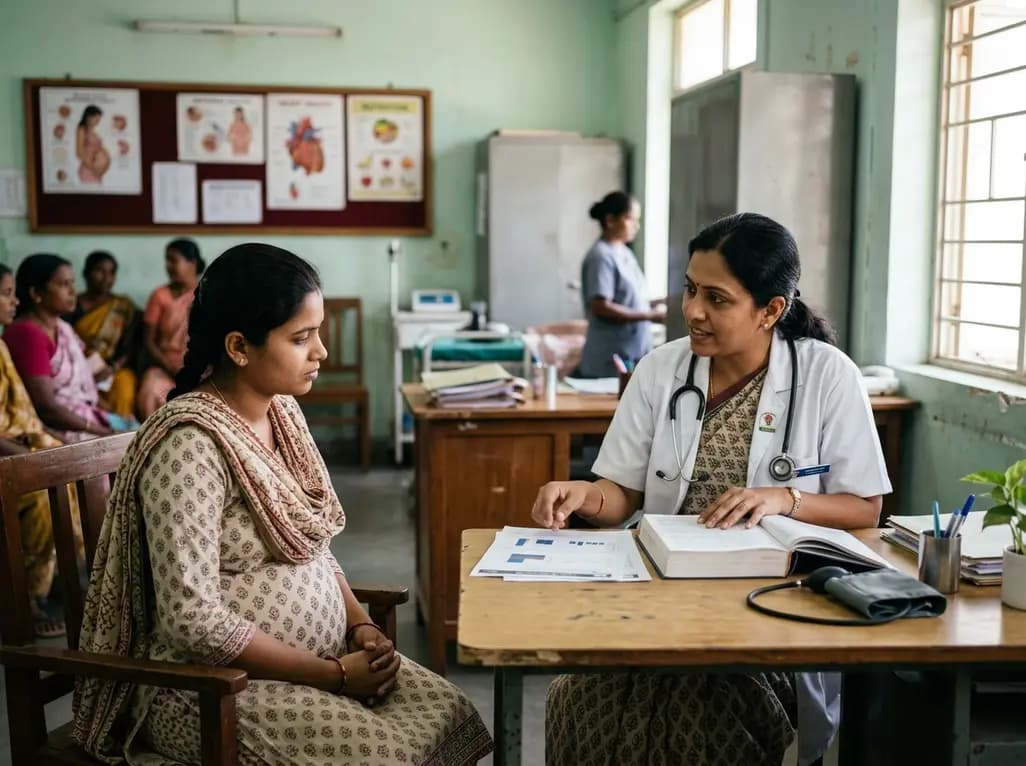
A recent longitudinal study evaluated the link between prenatal loss of control eating and cardiovascular health using Life's Essential 8 frameworks. While direct associations across pregnancy were non-significant, the high prevalence of dysregulated eating highlights critical implications for obstetric practice.
Today
Explore modern perioperative management protocols for clinical xenotransplantation. Learn how costimulation blockade, anti-inflammatory perfusion, and coagulopathy rescue overcome interspecies hurdles.
Today

A retrospective study evaluating a locally deployed vision language model (Qwen3-VL) reveals that smartphone-captured radiographs and retrieval-augmented generation can paradoxically reduce diagnostic accuracy in bone tumor referrals due to optical noise and textual hallucinations.
Today
A real-world quasi-experimental study reveals that web-based apps fostering healthy habit formation significantly boost physical activity and dietary quality in adults. Discover key clinical insights on digital adherence, dose-response effects, and patient-specific modifiers in preventive medicine.
Today
