.webp&w=384&q=75)

Loading, please wait...
Loading, please wait...
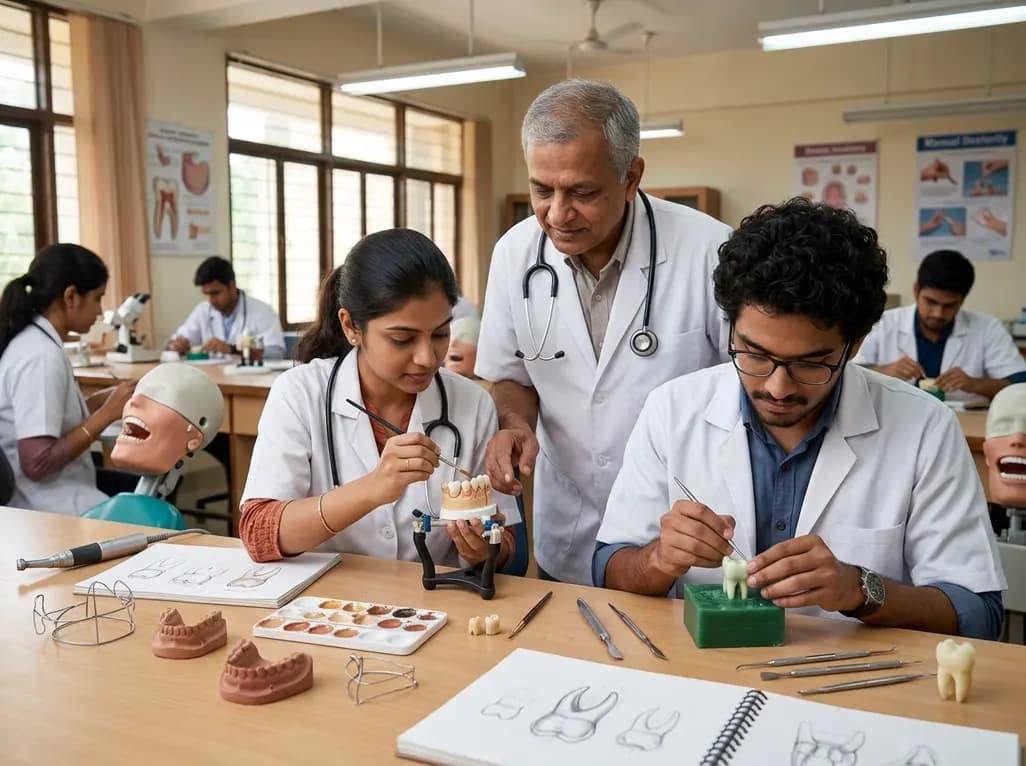
Modern dental education is evolving rapidly to meet the cognitive demands of a new generation. Art-based motor skill training has emerged as a vital tool for improving visual perception and manual dexterity. A recent longitudinal study examined a 12-week course designed to bridge the gap between traditional theory and clinical practice. This course aimed to address the unique learning preferences of contemporary students while enhancing their perceptual skills.
The curriculum integrated several creative phases led by a single art educator. Initially, students focused on intensive drawing techniques to sharpen their visual acuity. Subsequently, they progressed through two phases of detailed wax carving. This specific structure encouraged reflective practice through a robust self-assessment framework. Furthermore, educators used the Purdue Pegboard Test to measure motor performance. They administered the test both before and after the course to quantify improvements accurately.
The results indicated statistically significant improvements in motor performance across all academic levels. Interestingly, students who faced educational disruptions during the COVID-19 pandemic showed the most substantial gains. This finding suggests that the course served as a critical compensatory tool for lost practical instruction time. Consequently, integrating such manual training could address generational learning differences and curriculum gaps. Moreover, the study highlights how visual perception training translates directly into improved instrument handling.
Implementing these creative modules offers a dual benefit to dental institutions. Specifically, it fosters manual dexterity while encouraging a reflective mindset through self-evaluation. Thus, dental schools can better prepare students for the high-precision tasks required in clinical environments. Ultimately, this approach mitigates the long-term impact of disrupted educational pathways on future dental practitioners.
Art-based training, including drawing and wax carving, enhances fine motor coordination and visual perception. These skills are essential for the high-precision tasks required in clinical dentistry, such as cavity preparation and restorations.
The pandemic disrupted traditional practical training, leading to significant gaps in manual skill development for many cohorts. However, research indicates that targeted developmental courses can help compensate for these instruction losses effectively.
Yes, research validates the Purdue Pegboard Test as a reliable tool for measuring fine motor skills. It is frequently used to monitor student progress and predict success in preclinical dental courses.
Disclaimer: This content is for informational and educational purposes only. It does not constitute medical advice or a professional endorsement. Refer to the latest local and national guidelines for clinical practice.
References
Fazekas A et al. Enhancement of Motor Skill Development in Dental Education Through an Art-Based Course, Including the COVID-19 Period. Eur J Dent Educ. 2026 Jun 08. doi: 10.1111/eje.70208. PMID: 42260328.
Lugassy D, Levanon Y, Pilo R, et al. Predicting the clinical performance of dental students with a manual dexterity test. PLoS One. 2018;13(3):e0193980. doi: 10.1371/journal.pone.0193980.
Laureano ICC, et al. Impact of COVID-19 on Dental Education. IntechOpen. 2022. doi: 10.5772/intechopen.101830.
"
Read summarized clinical updates, watch expert medical content, and earn CME certifications right from your smartphone.
Open your smartphone camera to scan and install.





A study shows that art-based training improves motor skills in dental students, especially those whose education was disrupted by the COVID-19 pandemic....
4 months ago

As monsoon seasons elevate arboviral disease threats, Tamil Nadu has initiated an ICMR-monitored evaluation of the tetravalent dengue vaccine in Tenkasi district. Clinicians emphasize clinical monitoring, public prevention, and high-quality early pediatric care to reduce disease morbidity across endemic regions.
Today

Leucine Rich Bio has introduced South Asia's first comprehensive vaginal microbiome test, BugSpeaks. By profiling microbial dysbiosis, pathogens, and antimicrobial resistance, this next-generation diagnostic platform provides clinicians with deeper insights into recurrent infections, fertility, and reproductive health.
Today

Review how tailored exercise programs benefit frail older patients with heart failure. Explore pathophysiological mechanisms, individualized training prescriptions, and strategies to overcome adherence barriers in clinical practice.
Today

This comparative study evaluates posterior labral tears with and without glenohumeral instability, highlighting distinct demographic patterns, MRI underestimation in stable shoulders, and successful arthroscopic repair outcomes.
Today

A clinical study demonstrates that early intervention with tocilizumab, either as monotherapy or bridged with corticosteroids, achieves significant proptosis reduction and resolves active inflammation in treatment-naive thyroid eye disease.
Today
