

Loading, please wait...
Loading, please wait...

In human civilization, the eye represents far more than an intricate anatomical sensory organ. Cultural traditions and medical disciplines continually view the periorbital complex as the principal seat of consciousness, emotion, and individuality. For specialists performing craniofacial surgery, ocular aesthetics and symmetry govern how casual observers interpret human presence. Consequently, reconstructive surgeons must appreciate historical and philosophical perspectives to grasp the profound significance of their interventions. When treating trauma, congenital anomalies, or post-oncologic defects, surgeons do not merely realign bony margins or reposition muscular vectors. Instead, clinicians actively reconstruct the primary canvas through which patients project their identity. Recent academic discourse highlights that artistic narratives offer invaluable models for surgical planning. Moreover, the gaze serves as an immediate visual conduit of vitality. Therefore, surgical repair around the orbit carries substantial psychosocial weight for the individual. By bridging fine art with technical reconstruction, clinicians elevate surgical craft into an empathetic healing practice that honors personhood.
Classical mythology powerfully illustrates the ocular impartation of life. Specifically, the ancient Chinese legend of hualong dianjing, which translates to dotting the dragon's eyes, captures this transformative phenomenon. According to the folktale, a master painter depicted magnificent dragons upon a temple wall but intentionally omitted their pupils. When curious onlookers urged him to complete the artwork, the painter added the missing eyes. Immediately, the dragons roared to life, tore through the masonry, and soared into the heavens. In the realm of craniofacial surgery, this tale provides a compelling metaphor for final periorbital refinements. Reconstructive teams often rebuild extensive midface framework, yet the patient’s face remains visually detached until the eyelids achieve harmonious contour. Thus, precise canthopexy, levator balance, and symmetrical ocular exposure bestow vital presence upon reconstructed features. Furthermore, subtle periorbital positioning differentiates an inert physical facade from a dynamic, communicative human countenance.
Modern European art offers another profound lens through which surgeons can understand facial identity. In the biographical lore surrounding Italian painter Amedeo Modigliani, the artist famously deferred painting his sitters' eyes. He declared that he could only paint someone's eyes once he truly understood their soul. Many of his signature portraits display empty, almond-shaped voids that provoke contemplative introspection. In reconstructive craniofacial procedures, this insight resonates deeply with patient-centered goals. Surgeons must never treat the periocular region as isolated geometry or standardized cephalometric points. Instead, clinicians must discern each individual's unique social persona and self-concept before deciding on surgical plans. Furthermore, reconstructive adjustments alter how individuals communicate vulnerability, empathy, and joy. A successful orbital repair restores the authentic external mirror of a patient's interior life. Therefore, comprehensive preoperative dialogue ensures that surgeons align technical objectives with the patient's lived experience.
While complete restoration remains the common clinical ambition, ancient art reveals that intentional incompleteness carries extraordinary expressive power. The iconic limestone bust of Queen Nefertiti in Berlin exemplifies this fascinating aesthetic principle. Notably, the sculptor Thutmose inlaid the queen's right eye with dark quartz, but left the left eye socket conspicuously vacant. Rather than diminishing her stature, this asymmetric absence creates an enduring sense of mystery and transcendent beauty. For the modern craniofacial team, this historic masterpiece provides profound solace and practical wisdom. Complete structural perfection and absolute geometric symmetry remain unattainable in severe traumatic or congenital reconstructions. However, surgeons can achieve compelling harmony without forcing artificial, rigid uniformity upon vulnerable tissues. Indeed, minor asymmetries or healed contours can preserve personal dignity, resilience, and unique aesthetic character. Consequently, clinicians should emphasize balance, natural softness, and dynamic function over rigid perfection.
The synthesis of vitality, identity, and mystery directly influences operative strategies in complex craniofacial surgery. Periorbital reconstruction requires meticulous integration of hard structural supports and delicate dynamic soft-tissue layers. For instance, surgeons must carefully stabilize the bony orbital rim to prevent enophthalmos and globe dystopia. Simultaneously, the surgical team must reconstruct the palpebral fissures, lateral canthal tendons, and orbicularis oculi muscles to preserve expressive blink dynamics. Moreover, aesthetic units of the brow, temple, and malar prominence must flow seamlessly into the periorbital framework. If a surgeon addresses osseous defects while neglecting soft-tissue animation, the resulting aesthetic remains static and lifeless. Therefore, clinicians employ autologous fat grafting, composite cartilage struts, and precise suspension sutures to recreate soft-tissue fullness. In addition, thoughtful operative plans prioritize neuromuscular protection to ensure authentic emotional expression during social interactions.
Beyond operating room mechanics, ocular restoration plays a pivotal role in long-term psychosocial rehabilitation. The eyes serve as the focal point of human communication, mutual gaze, and social recognition. When patients sustain significant craniofacial trauma or cranial nerve paralysis, periorbital deformity frequently induces social anxiety and withdrawal. Furthermore, observers often misinterpret lagophthalmos or involuntary dystonia as emotional distance or intellectual deficit. Consequently, precise surgical interventions directly alleviate stigma by re-establishing normal gaze mechanics and interpersonal connection. Reconstructive teams must therefore measure success through validated patient-reported outcomes alongside objective radiographic assessments. In addition, psychological support remains essential throughout the phased reconstructive journey. Thus, craniofacial reconstruction achieves its highest calling when it restores not merely physical features, but the patient's courage to engage openly with society.
The human eye serves as the central anchor of facial recognition, interpersonal communication, and emotional expression. Casual observers subconsciously evaluate ocular symmetry, gaze alignment, and eyelid dynamics to assess vitality and personhood. Therefore, reconstructive craniofacial procedures must restore authentic periorbital balance alongside underlying bony architecture. This comprehensive anatomical harmony ensures that patients achieve natural facial expression, overcome social stigma, and regain lasting psychological confidence.
The Chinese legend of hualong dianjing demonstrates that the eye confers the ultimate spark of vitality upon physical form. For surgeons, this ancient narrative illustrates that extensive skeletal reconstruction remains visually incomplete without precise periorbital refinement. By meticulously adjusting eyelid position, canthal fixation, and soft-tissue drape, clinicians transform a reconstructed face into a lively, communicative visage that radiates authentic human energy and presence.
As demonstrated by the famous bust of Queen Nefertiti, subtle asymmetry or visual incompleteness can preserve profound aesthetic power and individual character. In complex craniofacial surgery, striving for rigid, geometric perfection often produces unnatural stiffness or scarred contours. Instead, clinicians prioritize balanced proportions, functional eyelid closure, and emotional expressiveness, which collectively create a natural, harmonious countenance that preserves the patient’s personal dignity.
Disclaimer: This content is for informational and educational purposes only... Refer to the latest local and national guidelines for clinical practice.
References

Read summarized clinical updates, watch expert medical content, and earn CME certifications right from your smartphone.
Open your smartphone camera to scan and install.





This editorial analysis explores the deep intersection of art history and craniofacial surgery. By examining classical art narratives, it highlights how ocular reconstruction conveys human vitality, inner identity, and personal mystery, elevating facial reconstructive surgery beyond pure anatomical restoration.
Today

A prospective study using wireless sensors reveals that smaller physician workrooms significantly increase contact density and respiratory virus transmission risks despite lower average occupancy, underscoring the urgent need for better architectural design and infection control in healthcare duty rooms.
Today

A KGMU study reveals over half of women with breast abnormalities fail to undergo diagnostic confirmation, leading to advanced-stage detection. Discover the socio-cultural barriers, clinical risks of incomplete resection, and community-level solutions needed to bridge the critical screening-to-diagnosis gap in India.
Today
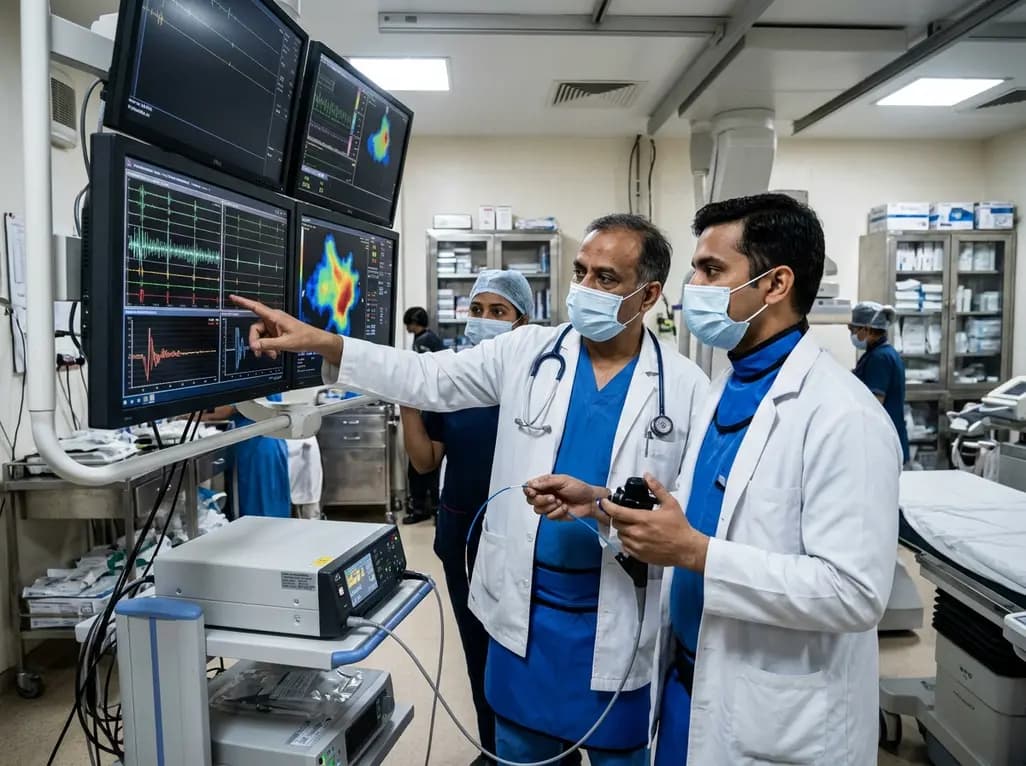
A comparative non-contact study reveals that high-power radiofrequency delivery with the QDOT MICRO catheter induces an artifactual contact force rise. Electrophysiologists must understand this power-dependent thermal and electrical phenomenon to avoid inadvertent catheter withdrawal and ineffective ablation.
Today
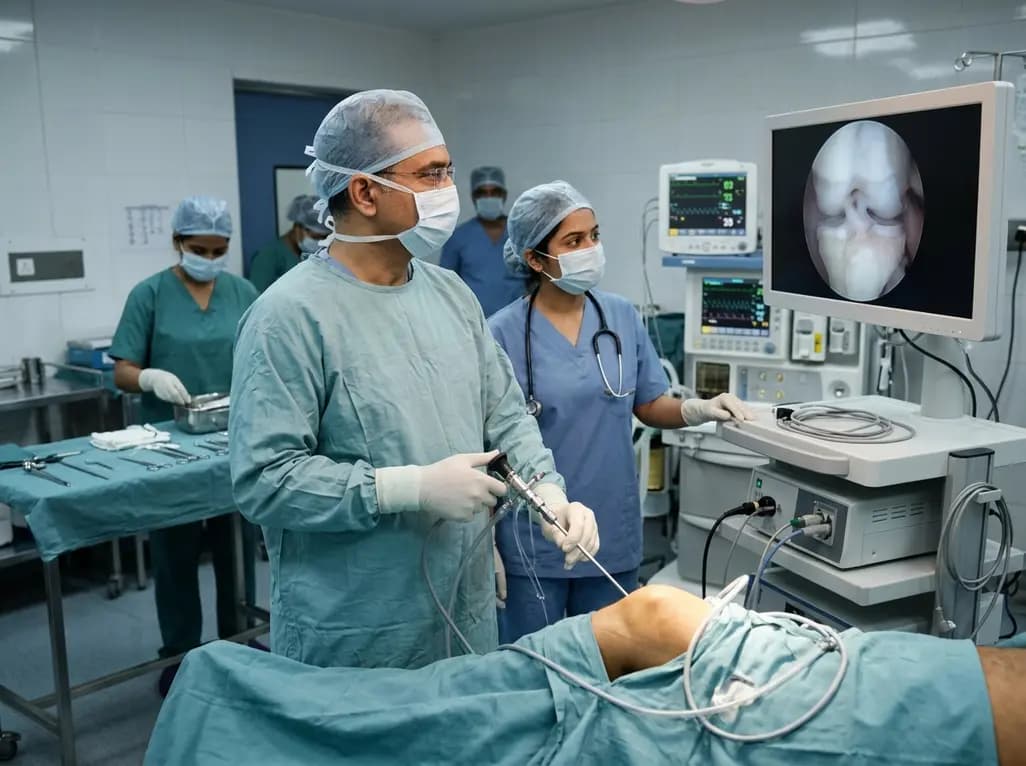
Healthium Medtech has transitioned its arthroscopy vertical into SIRONIX Orthopedics, aiming to capture key segments of the global joint care market. The strategic shift introduces dedicated portfolios in sports medicine, joint regeneration, surgical reconstruction, and digital operating technologies.
Today
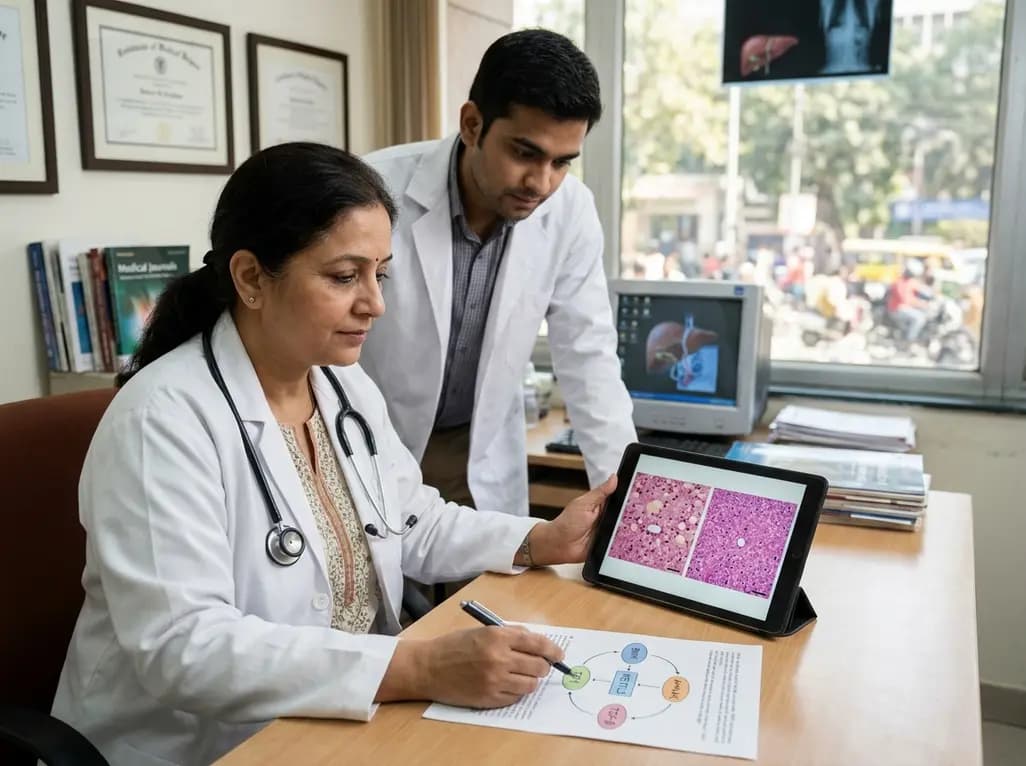
Preclinical research demonstrates that BMI1 overexpression alleviates metabolic syndrome-related liver injury. By triggering ubiquitin-mediated METTL3 degradation, BMI1 prevents AHNAK m6A methylation and suppresses fibrogenic TGF-β/SMAD signaling, significantly improving hepatic steatosis and insulin resistance.
Today
