

Loading, please wait...
Loading, please wait...
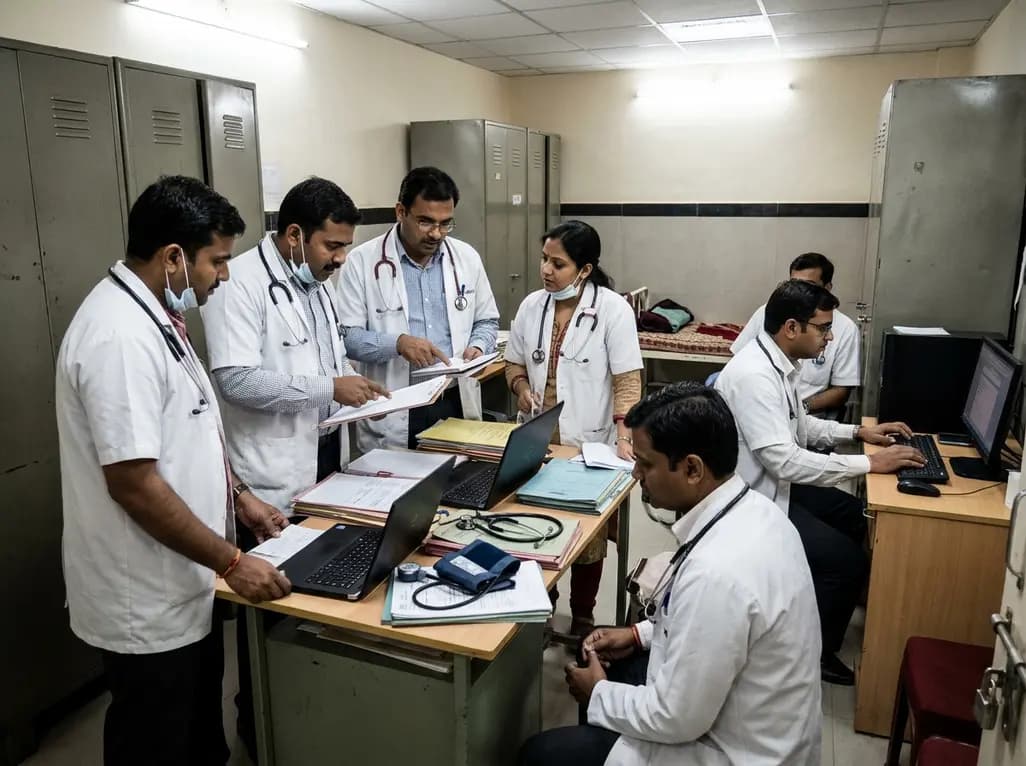
Hospital infection control frameworks traditionally prioritize patient isolation rooms, procedure suites, and hand sanitization compliance across inpatient wards. However, healthcare epidemiology frequently overlooks non-clinical staff environments where healthcare workers spend substantial portions of their daily shifts. Recent scientific investigations demonstrate that physician workroom contacts play a decisive role in propagating respiratory pathogens across hospital teams. Doctors, residents, and clinical students regularly gather in communal duty rooms to document electronic health records, coordinate patient handovers, and review diagnostics. Because clinicians perceive these private break spaces as safe havens, they routinely relax personal protective vigilance and unmask among colleagues. Consequently, unmitigated respiratory droplets and aerosols accumulate rapidly within enclosed work spaces during prolonged documentation sessions. When infected individuals share these small rooms, secondary viral transmission escalates dramatically. Furthermore, an outbreak among healthcare workers directly impacts institutional staffing levels and elevates the risk of inadvertent transmission to susceptible hospitalized patients. Therefore, healthcare administrators must evaluate how physical architecture and spatial geometry govern pathogen dynamics behind the clinical frontlines. Understanding these occupational contact patterns provides an essential foundation for strengthening institutional infection control protocols during seasonal surges.
To quantify interpersonal contact networks with scientific precision, researchers integrated active wearable sensors with computational simulation models in an academic medical center. Specifically, investigators tracked healthcare personnel across two distinct departmental physician workrooms over multiple consecutive weeks. The study monitored an internal medicine office measuring 208.7 square feet and a cardiology workroom measuring 112.6 square feet. Attending physicians, resident house staff, and medical students wore calibrated wireless proximity badges during their daily clinical duties. These tracking devices recorded interpersonal encounters whenever two individuals approached within six feet of each other, logging interactions at continuous one-minute intervals. In addition, the investigative team monitored internal medicine staff over eighteen days and cardiology personnel over fourteen days. Subsequently, researchers fed this empirical interaction data into a Susceptible-Infected mathematical simulation framework. The computational model simulated the transmission velocity of respiratory pathogens across varied viral transmissibility thresholds and room densities. As a result, the investigators established an objective comparison of secondary infection risks directly attributable to workroom configuration rather than theoretical assumptions, delivering valuable empirical benchmarks for facility design.
The empirical findings revealed a striking operational paradox regarding staff occupancy and transmission hazard in healthcare facilities. Specifically, the internal medicine workroom housed an average occupancy of 2.7 people, whereas the smaller cardiology workroom averaged only 2.3 individuals. However, despite accommodating fewer concurrent clinicians, the smaller cardiology room generated substantially higher contact density. Healthcare workers in the restricted 112.6 square foot space experienced significantly higher mean and median contact encounters compared to their peers in the larger room. Because the constrained architectural perimeter forced clinicians to navigate narrow pathways, staff repeatedly entered each other's six-foot respiratory breathing zone. In contrast, the 208.7 square foot internal medicine office provided sufficient floor area for team members to preserve physical separation during computer charting. Furthermore, the agent-based simulations demonstrated a persistently higher risk of secondary infections within the smaller cardiology workroom across all transmission probabilities. Consequently, spatial dimensions, rather than absolute headcount, dictate transmission vulnerability in clinical workstations. This crucial insight proves that merely limiting occupant numbers cannot eliminate infection risks if total floor space remains inadequate for clinical staff.
Shared hospital workstations foster unique occupational vulnerabilities that traditional infection prevention programs fail to address adequately. In busy teaching institutions, resident doctors spend consecutive twelve-hour shifts inside poorly ventilated duty rooms to complete charting and clinical discussions. Furthermore, healthcare personnel frequently remove their protective face masks during meals, coffee breaks, and informal team debriefs within these enclosed quarters. When presymptomatic or mildly symptomatic clinicians occupy compact rooms, pathogen-laden aerosols accumulate progressively in the stagnant ambient air. Moreover, clinical trainees rotate continuously across high-acuity wards, operating theatres, and intensive care units throughout their daily shifts. Therefore, a clustered outbreak in an isolated departmental workroom can quickly disseminate pathogens across multiple hospital units. In resource-constrained healthcare environments, including public hospitals across India, duty rooms routinely suffer from severe overcrowding and insufficient spatial ventilation. In addition, the lack of dedicated administrative workspace compels multiple medical teams to congregate in cramped quarters simultaneously. Ultimately, ignoring the spatial realities of staff environments leaves healthcare systems highly susceptible to crippling staffing shortages during community respiratory epidemics.
Mitigating infection transmission in clinical duty rooms requires an integrated approach that combines modern engineering controls with adaptive administrative policies. First, healthcare facility planners must establish clear spatial design standards that mandate minimum square footage allocations per clinician desk. When hospitals reconfigure shared staff offices, engineers should maintain physical desk separation and position barriers to prevent direct airflow between workstations. In addition, institutions should upgrade mechanical ventilation systems to deliver high air-exchange rates and install localized air purification systems with certified high-efficiency filters. Portable air cleaners effectively remove viral aerosols in compact duty rooms where central ventilation upgrades remain impractical or prohibitively expensive. Simultaneously, departmental leadership should introduce administrative scheduling adjustments, such as staggered documentation shifts and virtual morning handovers, to curb peak room congestion. Furthermore, hospital administrators can disperse charting kiosks into well-ventilated unit corridors to prevent doctors from congregating in small spaces. By combining structural renovations with disciplined administrative protocols, healthcare facilities can build resilient working environments that protect clinicians and prevent nosocomial pathogen dissemination across departments.
A smaller physical footprint forces occupants into continuous close proximity, which severely shrinks individual separation distances. Even with fewer total personnel present, the restricted spatial area eliminates natural buffers between workstations. Consequently, staff members cross within six feet of each other far more frequently during routine tasks. This heightened contact density accelerates respiratory aerosol exposure and significantly elevates secondary transmission rates during clinical shifts.
Hospital administrators can assess contact dynamics by combining wireless proximity sensors with observational time-motion surveys. Staff members wear lightweight radio-frequency identification or Bluetooth badges that log real-time distance intervals. Furthermore, facility epidemiologists can analyze these encounter networks using agent-based transmission models. This data identifies spatial bottlenecks, peak congestion intervals, and overcrowded workstations, allowing infection control teams to implement precise engineering and scheduling remedies across hospital departments.
Clinical teams can immediately implement staggered charting schedules to limit the number of clinicians present simultaneously. Furthermore, staff should conduct handoffs in well-ventilated areas or across secure digital systems rather than inside small offices. Adding standalone high-efficiency particulate air purifiers and maintaining strict mask adherence during seasonal respiratory surges also mitigates aerosol build-up. Finally, opening windows where feasible improves natural ventilation and dilutes airborne viral concentrations.
Disclaimer: This content is for informational and educational purposes only... Refer to the latest local and national guidelines for clinical practice.
References

Read summarized clinical updates, watch expert medical content, and earn CME certifications right from your smartphone.
Open your smartphone camera to scan and install.





A prospective study using wireless sensors reveals that smaller physician workrooms significantly increase contact density and respiratory virus transmission risks despite lower average occupancy, underscoring the urgent need for better architectural design and infection control in healthcare duty rooms.
Today
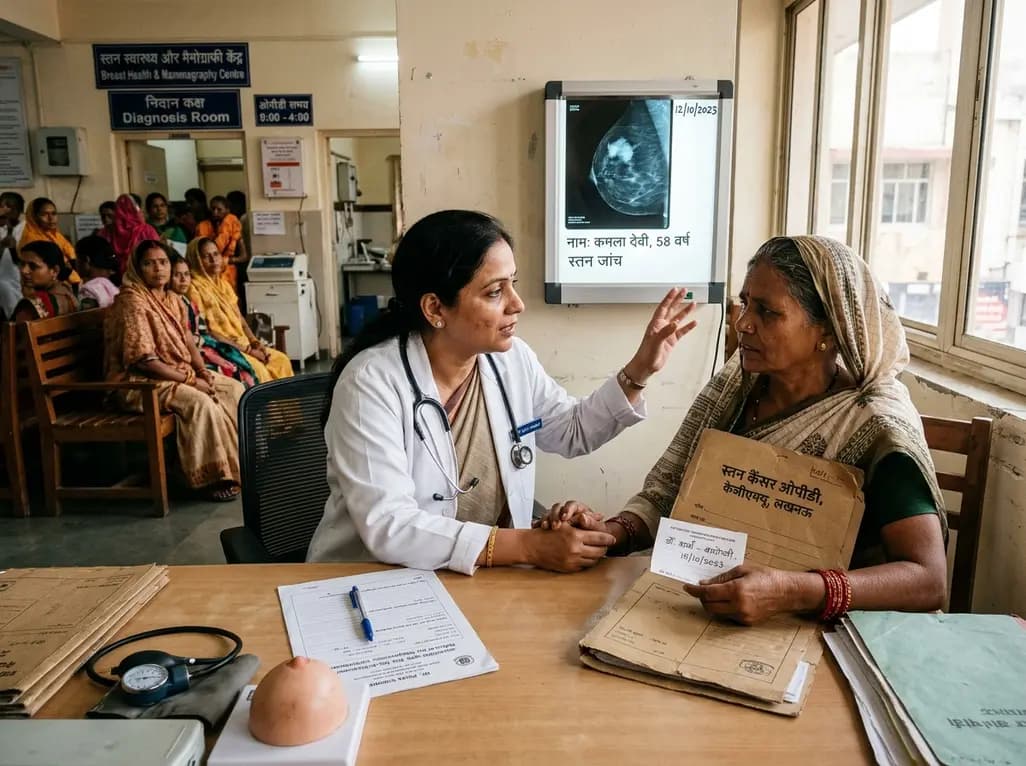
A KGMU study reveals over half of women with breast abnormalities fail to undergo diagnostic confirmation, leading to advanced-stage detection. Discover the socio-cultural barriers, clinical risks of incomplete resection, and community-level solutions needed to bridge the critical screening-to-diagnosis gap in India.
Today
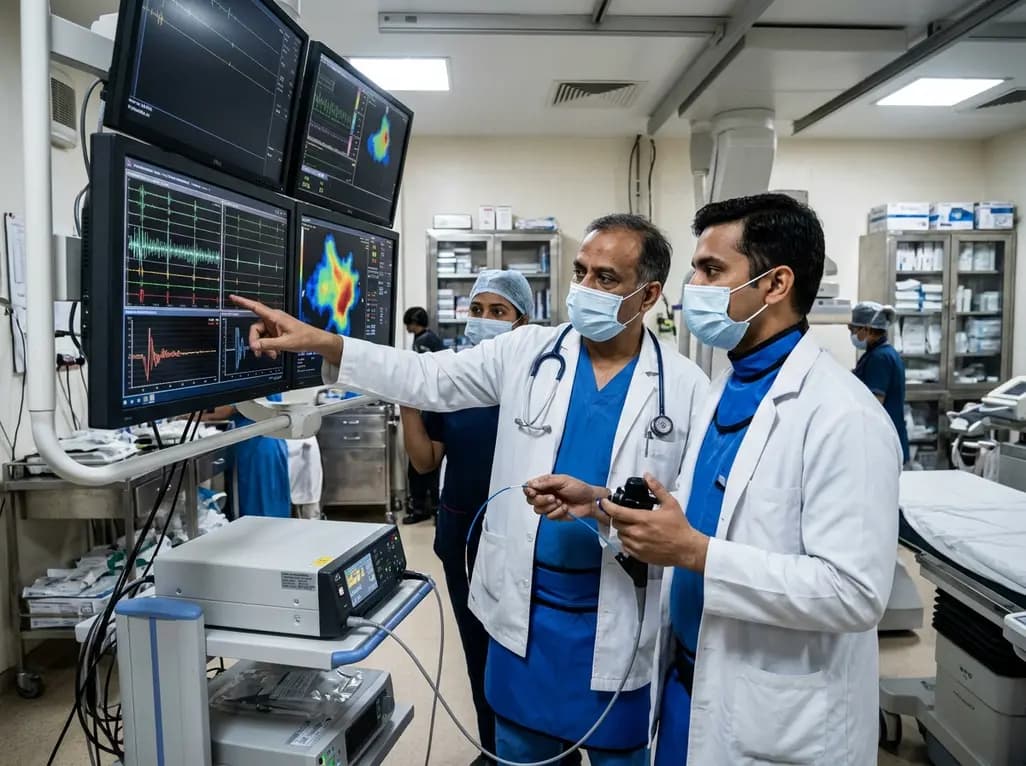
A comparative non-contact study reveals that high-power radiofrequency delivery with the QDOT MICRO catheter induces an artifactual contact force rise. Electrophysiologists must understand this power-dependent thermal and electrical phenomenon to avoid inadvertent catheter withdrawal and ineffective ablation.
Today
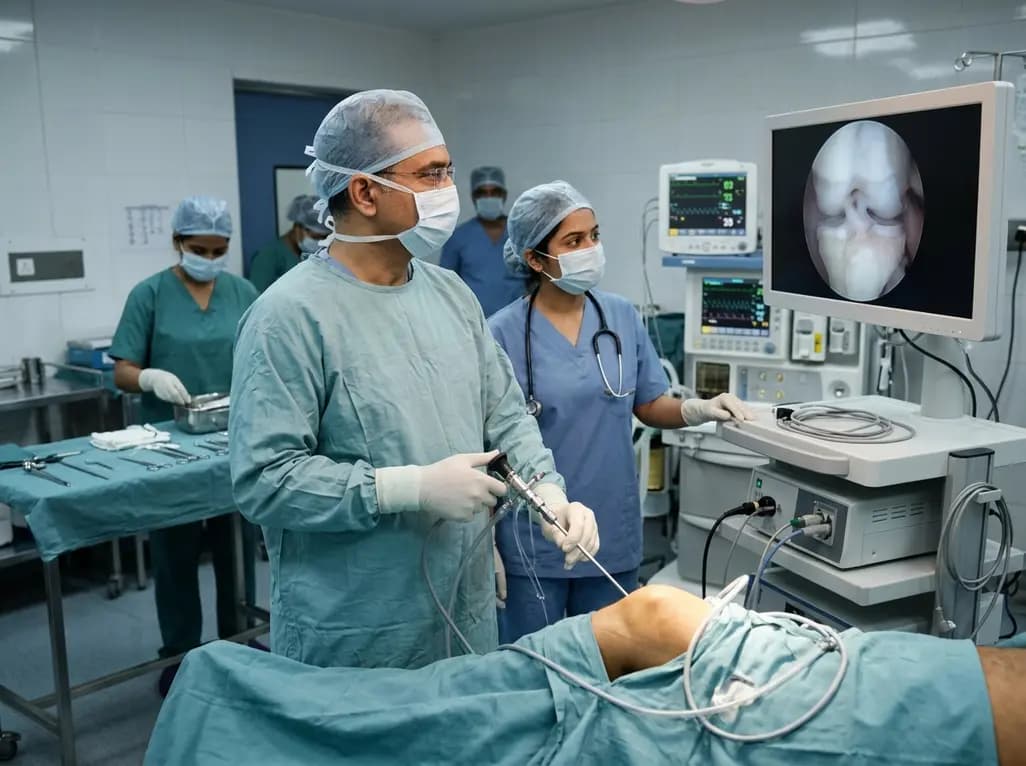
Healthium Medtech has transitioned its arthroscopy vertical into SIRONIX Orthopedics, aiming to capture key segments of the global joint care market. The strategic shift introduces dedicated portfolios in sports medicine, joint regeneration, surgical reconstruction, and digital operating technologies.
Today
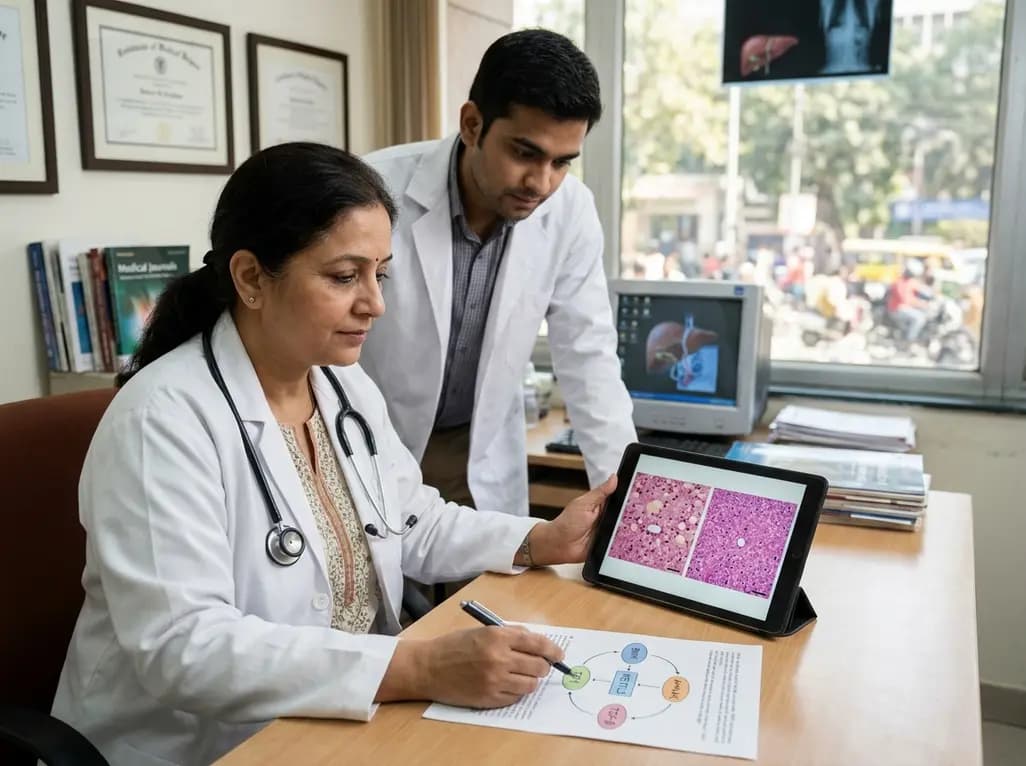
Preclinical research demonstrates that BMI1 overexpression alleviates metabolic syndrome-related liver injury. By triggering ubiquitin-mediated METTL3 degradation, BMI1 prevents AHNAK m6A methylation and suppresses fibrogenic TGF-β/SMAD signaling, significantly improving hepatic steatosis and insulin resistance.
Today
