.webp&w=384&q=75)

Loading, please wait...
Loading, please wait...
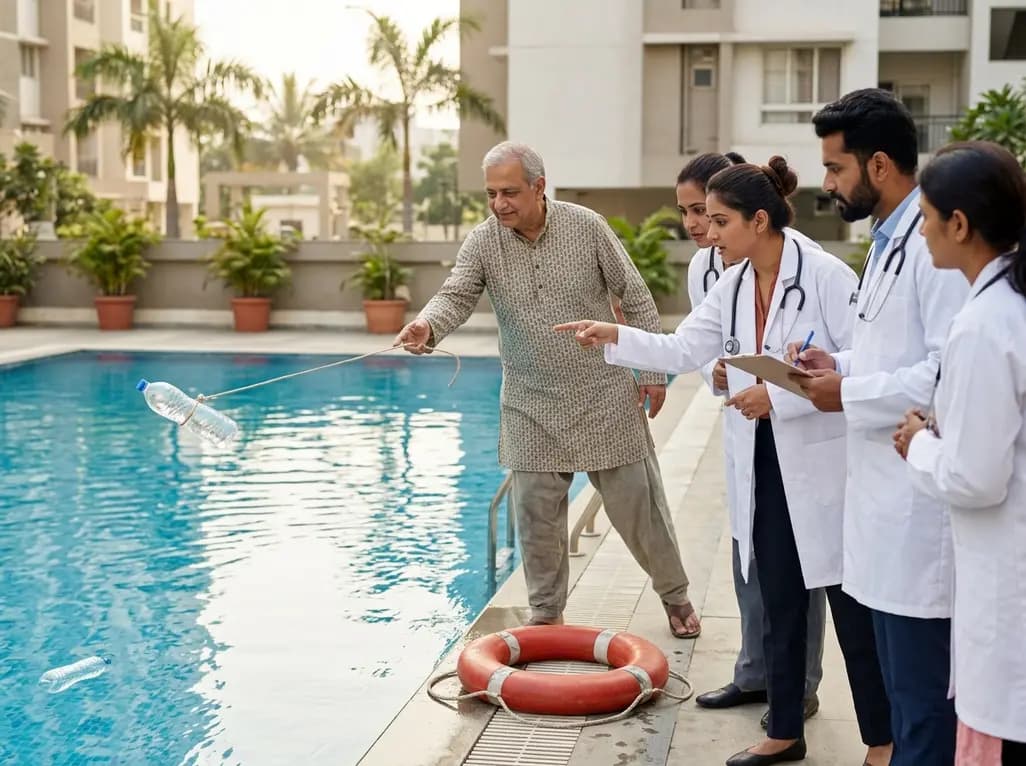
Drowning remains a significant public health challenge globally, and India is no exception. With vast coastal lines, numerous rivers, and seasonal monsoons, the risk of aquatic accidents is high. While much attention traditionally focuses on pediatric drowning, late middle-aged and older adults face unique vulnerabilities. These individuals often serve as primary caregivers for grandchildren or spend time near water bodies for religious or recreational purposes. Furthermore, their physical capacity to respond to an emergency often declines with age. Consequently, when a drowning incident occurs, these older bystanders are frequently the first on the scene. Their ability to deploy effective aquatic rescue devices is critical for saving lives without putting themselves at risk. However, the physical demands of traditional rescue equipment may not align with the capabilities of an aging population. Understanding which tools work best for this demographic is essential for improving community-based rescue outcomes and ensuring that rescuers do not become victims themselves. This study explores how simple, lightweight alternatives can bridge the gap between physical limitations and life-saving necessity.
In the field of water safety, the "Reach, Row, Throw, Don't Go" strategy is the gold standard for layperson interventions. This protocol prioritizes the safety of the rescuer by discouraging untrained individuals from entering the water. Historically, many bystander fatalities occur because the rescuer attempts a swimming rescue and becomes overwhelmed by the victim’s panic or the water conditions. Specifically, for older adults who may have underlying comorbidities or reduced cardiovascular reserve, entering the water is exceptionally dangerous. Therefore, throwing a flotation aid is often the most viable and safest intervention. For this strategy to succeed, the rescuer must be able to reach the victim from a safe distance. If the available aquatic rescue devices are too heavy or cumbersome, the rescue attempt may fail before it even begins. In addition, the psychological stress of an emergency can further impair physical performance. By emphasizing throwing techniques, safety organizations aim to provide a low-risk, high-impact solution. However, the effectiveness of this approach depends heavily on the compatibility of the rescue tool with the user's physical strength and coordination.
A recent pilot study evaluated how effectively older adults could use various rescue tools in a simulated drowning scenario. Researchers compared three specific items: a traditional ring buoy, a professional rescue buoy, and a common 1.5-liter PET bottle. The results were striking and offered clear evidence for a shift in how we think about emergency equipment. Participants achieved significantly greater throwing distances with the rescue buoy and the PET bottle compared to the heavy ring buoy. On average, the rescue buoy reached 8.0 meters and the PET bottle reached 7.7 meters, while the ring buoy lagged behind at only 5.6 meters. Interestingly, although the ring buoy is often considered the standard for public safety, its weight proved to be a hindrance rather than an advantage for this age group. Moreover, the study found no significant difference in throwing accuracy among the three devices. This suggests that while distance is improved by using lighter tools, the rescuer’s ability to hit the target remains consistent. Consequently, the use of lighter aquatic rescue devices could extend the "rescue zone" by several meters, potentially reaching victims who would otherwise be out of range.
As individuals age, they often experience a decline in explosive power and joint flexibility. These physiological changes directly impact the mechanics required to hurl a heavy object like a ring buoy, which typically weighs around 2.5 kilograms. For a middle-aged or older adult, the effort required to swing and release such a weight can lead to shorter trajectories and increased physical strain. In contrast, lighter aquatic rescue devices like a PET bottle or a specialized rescue buoy allow for a faster release velocity. This higher velocity translates into greater distance even when the rescuer has less muscular force. Furthermore, the ergonomic design of modern rescue buoys often includes handles or straps that make them easier to grip and swing. The PET bottle, while an improvised tool, offers a similar advantage due to its small diameter and lightweight profile when partially filled with water for ballast. In addition to physical strength, balance is a concern for older rescuers. Throwing a heavy object can shift a person's center of gravity, increasing the risk of a fall. Lighter tools minimize this risk, allowing the rescuer to maintain a stable stance on a pier or riverbank while performing the intervention.
The finding that a simple PET bottle performs nearly as well as professional equipment has profound implications for low-resource settings. In many parts of India, professional-grade aquatic rescue devices are not readily available at every pond or river crossing. However, plastic bottles are ubiquitous. By teaching the public how to convert these common items into rescue tools, we can significantly enhance community resilience. To make a PET bottle effective, it should be partially filled with roughly 100-200ml of water to provide enough weight for a stable flight without becoming too heavy. Additionally, attaching a thin, strong rope to the neck of the bottle allows the rescuer to pull the victim toward safety once they have grasped the container. This "improvised buoy" method is cost-effective, easy to teach, and highly accessible. Furthermore, local safety programs can encourage the placement of "rescue kits" consisting of a rope and a bottle at high-risk locations. This approach empowers older community members, who may feel physically incapable of using traditional gear, to take decisive action during a crisis. Ultimately, the best tool is the one that is available and that the rescuer can actually use effectively.
The results of this pilot study suggest that a "one size fits all" approach to water safety equipment may be outdated. As the global population ages, emergency protocols must adapt to the physical realities of older bystanders. Future research should focus on refining the design of aquatic rescue devices to ensure they are manageable for all age groups. This might include the development of ultra-lightweight aerodynamic throwing bags or standardized instructions for improvised tools. Moreover, public health initiatives in India, such as those led by the Rashtriya Life Saving Society, could integrate these findings into their training modules. Educating grandparents and older caregivers about the efficacy of lighter tools like PET bottles could save countless lives. In addition, community awareness campaigns should emphasize that accuracy is not lost when choosing a lighter device. By providing age-appropriate tools and training, we can ensure that older adults remain a vital and capable link in the chain of survival. Transitioning toward these evidence-based strategies will likely reduce bystander mortality and improve the overall success rate of aquatic rescues in diverse environments.
A PET bottle serves as an excellent improvised rescue tool because its lightweight and aerodynamic shape allow older adults to throw it significantly farther than traditional heavy buoys. When the bottle is partially filled with a small amount of water to act as ballast and attached to a sturdy line, it provides sufficient buoyancy to help a person stay afloat while being pulled to safety by the rescuer.
The traditional ring buoy performed poorly primarily due to its weight, which proved difficult for middle-aged and older participants to throw over long distances. While these buoys provide excellent flotation once reached, their bulkiness limits the "rescue range" for individuals with reduced physical strength. The study showed that lighter tools allowed for a more effective and extended reach without any loss in accuracy.
The most critical rule is "Reach or Throw, Don't Go," which means the rescuer should never enter the water to save a victim unless they are a professional lifeguard. Panicked victims can accidentally pull their rescuers underwater. By using aquatic rescue devices from the shore, bystanders can provide life-saving assistance while keeping themselves safe from the physical dangers of a swimming rescue.
Disclaimer: This content is for informational and educational purposes only. It is not intended to be a substitute for professional medical advice, diagnosis, or treatment. Always seek the advice of your physician or other qualified health provider with any questions you may have regarding a medical condition. Performance in emergency situations can vary based on individual training and physical health. Refer to the latest local and national guidelines for clinical practice.
References
Barcala-Furelos R et al. Throw What? Evaluation of Different Rescue Tools Used by Middle-Aged and Older Bystanders During a Drowning Incident: A Pilot Study. Wilderness Environ Med. 2026 Jul 09. doi: 10.1177/10806032261466965. PMID: 42426578.
Dandona R et al. Disparities in and characteristics of drowning deaths in India: findings from a population-based mortality study. PubMed. 2025. PMID: 41285516.
Peixoto-Pino L et al. Training children for prehospital aquatic interventions: assessing throwing skills using traditional and alternative materials in a simulated water rescue. Prehosp Disaster Med. 2024;39(5):358-363.

Read summarized clinical updates, watch expert medical content, and earn CME certifications right from your smartphone.
Open your smartphone camera to scan and install.





A new pilot study highlights that middle-aged and older adults achieve significantly greater throwing distances using lighter aquatic rescue devices, such as PET bottles and rescue buoys, compared to traditional ring buoys. These findings suggest a shift toward age-appropriate rescue tools for laypersons.
3 months ago

As monsoon seasons elevate arboviral disease threats, Tamil Nadu has initiated an ICMR-monitored evaluation of the tetravalent dengue vaccine in Tenkasi district. Clinicians emphasize clinical monitoring, public prevention, and high-quality early pediatric care to reduce disease morbidity across endemic regions.
Today

A comparative cohort study evaluates vNOTES vs TLH hysterectomy for benign conditions, demonstrating shorter operative duration, faster return to daily activities, and equivalent female sexual function scores without increased dyspareunia.
Today

Review how tailored exercise programs benefit frail older patients with heart failure. Explore pathophysiological mechanisms, individualized training prescriptions, and strategies to overcome adherence barriers in clinical practice.
Today

This comparative study evaluates posterior labral tears with and without glenohumeral instability, highlighting distinct demographic patterns, MRI underestimation in stable shoulders, and successful arthroscopic repair outcomes.
Today

A clinical study demonstrates that early intervention with tocilizumab, either as monotherapy or bridged with corticosteroids, achieves significant proptosis reduction and resolves active inflammation in treatment-naive thyroid eye disease.
Today
