

Loading, please wait...
Loading, please wait...

Randomized controlled trials represent the definitive gold standard for establishing treatment efficacy in advanced oncology. However, strict inclusion criteria often limit their direct translation to broader everyday patient cohorts. Recently, a major study from the PIONEER consortium analyzed whether modern metastatic prostate cancer trials accurately reflect newly diagnosed patients encountered in daily practice. By evaluating large observational claims databases, investigators uncovered a profound disconnect between trial participants and routine clinical populations. Consequently, oncologists and urologists must re-examine how they extrapolate landmark trial evidence to comorbid men presenting in community clinics.
To quantify trial applicability, researchers evaluated observational insurance claims mapped to the OMOP Common Data Model. Overall, the analysis screened nearly 398,000 prostate cancer patients across three comprehensive real-world databases. From this massive cohort, researchers identified 32,585 patients with newly diagnosed metastatic hormone-sensitive prostate cancer. In addition, the investigative team reviewed twelve major randomized phase 3 trials published between 2013 and 2023. They systematically extracted explicit laboratory thresholds, organ function criteria, and performance restrictions from each trial protocol. Subsequently, the investigators mapped these strict eligibility rules directly onto the longitudinal real-world patient records. This robust analytical design permitted precise estimation of real-world exclusion frequencies. Moreover, the investigators tracked actual therapeutic choices among ineligible men. Specifically, the team evaluated whether standard systemic regimens reached patients who technically failed official trial benchmarks. Therefore, the dataset offers a rare comparison between idealized protocols and routine oncology care.
The investigation revealed striking discrepancies across all evaluated study designs. Depending on the specific protocol examined, exclusion rates ranged widely from 8.6% to 55%. Across all twelve trials combined, between 5.9% and 12% of real-world patients failed eligibility entirely. However, when researchers excluded the HORRAD trial due to its unusually broad entry criteria, exclusion rates jumped to between 26% and 44%. Consequently, nearly half of all newly diagnosed patients would never qualify for landmark registration studies. Furthermore, the findings demonstrate that restrictive trial designs disproportionately filter out complex geriatric individuals. In routine clinical settings, patients rarely present with pristine organ function or isolated pathology. Instead, real-world oncology clinics encounter older men with multiple active chronic conditions. Thus, relying solely on trial results can mislead clinicians regarding expected community outcomes. Therefore, treatment guidelines must openly acknowledge these substantial demographic disparities.
Specific organ dysfunctions and laboratory abnormalities accounted for most study exclusions. Most notably, baseline anemia represented the single most common barrier, disqualifying between 16% and 29% of patients across trials. In addition, pre-existing congestive heart failure excluded between 6.2% and 13% of potential candidates. Renal failure also posed a substantial obstacle, eliminating between 3.9% and 19% of men from consideration. Because prostate cancer predominantly affects elderly men, cardiovascular and renal comorbidities occur with high frequency in routine practice. Nevertheless, modern oncology trials enforce rigorous organ function cutoffs to maximize protocol adherence and minimize toxicities. Unfortunately, these strict filters disproportionately penalize men who require immediate systemic intervention. Clinicians frequently encounter individuals presenting with symptomatic cancer cachexia, chronic kidney disease, or ischemic heart disease. Therefore, strict laboratory criteria systematically isolate trial findings from routine urological care. Consequently, excluding anemic patients eliminates individuals carrying the highest disease burden.
A critical discovery of the PIONEER analysis involves actual prescribing patterns among ineligible individuals. Remarkably, between 18% and 52% of real-world patients receiving a specific therapy would have been barred from that drug's pivotal trial. Clinicians routinely prescribe androgen receptor pathway inhibitors and cytotoxic regimens to men who fail formal trial criteria. For example, urologists frequently administer novel antiandrogens to patients with baseline cardiovascular disease or borderline renal clearance. In daily practice, doctors prioritize systemic disease control over strict experimental eligibility parameters. Consequently, real-world practitioners actively apply clinical trial evidence far beyond its verified boundaries. However, treating unstudied patient populations introduces substantial diagnostic uncertainty regarding true therapeutic tolerability. Unmonitored drug interactions, heightened organ toxicities, and altered pharmacokinetics may attenuate survival advantages. Thus, extrapolating efficacy without safety verification creates persistent clinical risk. As a result, real-world effectiveness often lags behind pivotal trial outcomes.
These profound disparities highlight an urgent mandate to modernize advanced prostate cancer clinical research. First, trial sponsors and regulatory authorities must design more pragmatic eligibility frameworks. Broadening inclusion parameters will produce clinical trials that reflect real-world demographic diversity. For instance, safely easing strict hematologic and renal thresholds could accommodate broader patient cohorts without compromising safety. In addition, clinicians require robust real-world data platforms to track drug performance in unselected populations. Registries such as PIONEER provide vital post-marketing intelligence regarding treatment toxicity and adherence. In developing nations such as India, patients often present with advanced disease and delayed diagnoses. Consequently, Indian clinicians must exercise extra vigilance when prescribing intensified regimens to frail men. Multidisciplinary care teams should balance survival benefits against comorbidity risks. Ultimately, integrating observational evidence with clinical trials will optimize patient-centered oncology decision-making. Therefore, closing this evidence gap requires collaborative efforts across international research consortiums.
Randomized clinical trials enforce rigorous inclusion criteria to protect participant safety and isolate therapeutic effects from confounding variables. Consequently, investigators exclude individuals with substantial medical comorbidities, including chronic kidney disease, congestive heart failure, and severe anemia. In routine clinical practice, however, prostate cancer primarily affects elderly men who commonly exhibit multiple chronic illnesses. Therefore, up to half of real-world patients fail to meet these stringent laboratory and organ function benchmarks.
Prescribing trial-approved therapies to ineligible patients carries clinical uncertainty because landmark trials did not establish drug safety in comorbid cohorts. Although physicians frequently prescribe these treatments to achieve disease control, vulnerable patients face heightened risks of severe adverse events, drug interactions, and treatment discontinuation. Clinicians must thoroughly evaluate organ function, proactively adjust dosages, and monitor comorbidities closely. Ultimately, shared decision-making should balance survival gains against potential toxicities in fragile patients.
Researchers can improve trial applicability by implementing pragmatic study designs with more inclusive eligibility criteria. Relaxing arbitrary organ function cutoffs allows trials to reflect true clinical populations without compromising participant welfare. Furthermore, trial sponsors should mandate expanded safety sub-studies and incorporate real-world registry data during post-approval monitoring. These collaborative initiatives help oncologists understand treatment tolerability across diverse demographic groups, including older adults with multiple pre-existing chronic conditions.
Disclaimer: This content is for informational and educational purposes only... Refer to the latest local and national guidelines for clinical practice.
References

Read summarized clinical updates, watch expert medical content, and earn CME certifications right from your smartphone.
Open your smartphone camera to scan and install.





A landmark PIONEER study reveals that up to 50% of real-world metastatic hormone-sensitive prostate cancer patients would be excluded from randomized controlled trials due to comorbidities, even though many still receive these therapies in routine clinical practice.
Today
The TREM-AB open-label pilot study evaluated a wearable passive nonlinear vibration absorber for essential tremor. The Nonlinear Energy Sink bracelet reduced clinical Fahn-Tolosa-Marin tremor scores by 32.1% and electrophysiological tremor power by 49.2% with no adverse effects reported.
Today

A population-based study of 20,928 children reveals that small vulnerable newborns face sex-divergent mental capital outcomes at ages 6-7: term SGA girls show higher behavioral difficulties and lower resilience, while preterm non-SGA boys experience increased behavioral problems.
Today
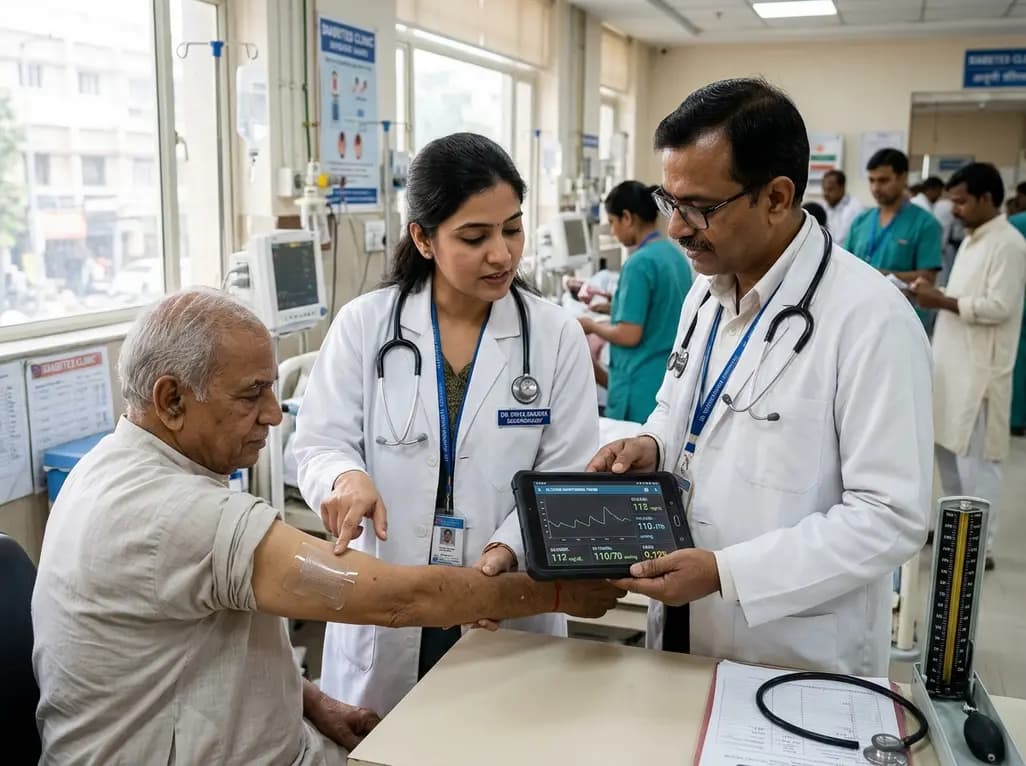
A breakthrough ultrathin multimodal sensor decouples physical hemodynamic monitoring from disposable electrochemical calibration, achieving long-term wearable glucose prediction with 81.36% accuracy and a 9.12% MARD. This offers a robust, drift-free solution for outpatient metabolic surveillance.
Today

A comparative review of tension band wiring and intramedullary screw fixation in thumb metacarpophalangeal arthrodesis, evaluating union rates, hardware complications, and clinical outcomes.
Today

Following regulatory scrutiny from FSSAI regarding promotional representations and lean muscle preservation claims, Dr. Reddy's Laboratories and Nestlé Health Science are currently reviewing the branding and marketing strategy for their joint nutritional supplement Celevida GLP+.
Today
