.webp&w=384&q=75)

Loading, please wait...
Loading, please wait...

Andhra Pradesh has launched a transformative healthcare initiative to modernize public health services. Specifically, the state government introduced several AI healthcare tools across 18 government general hospitals. Health Minister Y Satya Kumar Yadav officially announced the pilot project on Sunday. This strategic move aims to enable faster diagnosis and significantly improve treatment quality for patients in the region.
The pilot program is currently active in major medical hubs like Visakhapatnam, Guntur, and Vijayawada. Innovative startups developed these technologies through the AP MedTech Innovation Challenge. Consequently, 18 specific innovations were selected for clinical implementation. These devices allow medical teams to screen for 15 different diseases efficiently. For instance, doctors now use AI-powered cameras to detect cervical cancer at an early stage. Similarly, cough analysis software helps clinicians identify tuberculosis cases quickly.
The health minister explained that the program covers four distinct categories. First, diagnostic tools assist in identifying complex conditions like heart ailments and neurological disorders. Second, portable point-of-care devices allow for rapid blood testing without large infrastructure. Third, wearable technologies monitor vital signs in intensive care units. Furthermore, remote telemedicine systems bridge the gap for distant patients. These systems even record consultations to generate automated summaries and prescriptions. As a result, medical professionals can focus more on patient care rather than paperwork.
This pilot phase will conclude shortly. Afterward, the health department will submit a comprehensive report to the chief minister. The government will then decide whether to expand these AI services across the entire state. Additionally, officials plan to integrate these services with the ABHA ID system. This integration will help digitize patient records and make healthcare delivery more efficient. Ultimately, this initiative represents a major step toward technology-driven governance in India.
Q1: Which diseases are covered under the AP AI healthcare pilot?
The pilot program includes screenings for nearly 15 types of diseases. These include cervical cancer, heart ailments, tuberculosis, anaemia, cataract, glaucoma, and neurological disorders in children.
Q2: How do the AI tools help doctors with patient consultations?
Some AI systems record doctor-patient conversations. They then automatically generate consultation summaries and prescriptions. This helps clinicians streamline patient care and focus on medical decision-making.
Disclaimer: This content is for informational and educational purposes only. It does not constitute medical advice or replace professional judgment. Refer to the latest local and national guidelines for clinical practice.
References

Read summarized clinical updates, watch expert medical content, and earn CME certifications right from your smartphone.
Open your smartphone camera to scan and install.





Andhra Pradesh implements AI healthcare tools in 18 government hospitals for faster diagnosis of 15 diseases, including cancer and heart ailments....
7 months ago
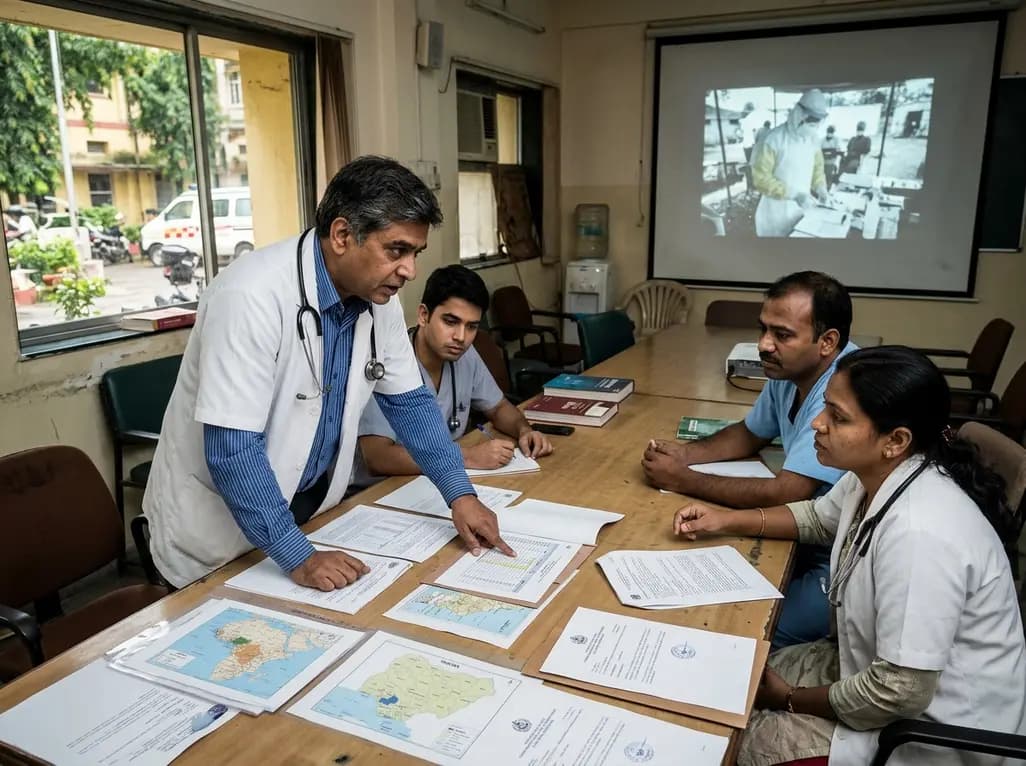
Following Nigeria's first recorded Ebola case linked to regional travel, the Africa CDC has convened an emergency ministerial summit. This alert underscores critical clinical priorities for healthcare professionals, including differentiating early viral infection from malaria, implementing barrier nursing, and triage.
Today

Leucine Rich Bio has introduced South Asia's first comprehensive vaginal microbiome test, BugSpeaks. By profiling microbial dysbiosis, pathogens, and antimicrobial resistance, this next-generation diagnostic platform provides clinicians with deeper insights into recurrent infections, fertility, and reproductive health.
Today

Review how tailored exercise programs benefit frail older patients with heart failure. Explore pathophysiological mechanisms, individualized training prescriptions, and strategies to overcome adherence barriers in clinical practice.
Today

This comparative study evaluates posterior labral tears with and without glenohumeral instability, highlighting distinct demographic patterns, MRI underestimation in stable shoulders, and successful arthroscopic repair outcomes.
Today

A clinical study demonstrates that early intervention with tocilizumab, either as monotherapy or bridged with corticosteroids, achieves significant proptosis reduction and resolves active inflammation in treatment-naive thyroid eye disease.
Today
