.webp&w=384&q=75)

Loading, please wait...
Loading, please wait...

Effective antiretroviral therapy counseling serves as the foundation of successful HIV care programs worldwide. Historically, healthcare facilities in resource-constrained settings provided uniform adherence messages to every client entering the clinic. These conventional sessions focused primarily on baseline disease education, dosing schedules, and drug side effects. While this introductory knowledge benefits treatment-naive patients, it frequently fails returning clients. Specifically, individuals re-initiating care after treatment interruption possess lived experience with medications and distinct structural challenges.
Recent epidemiological research from Malawi highlights the critical necessity of modernizing this programmatic approach. Investigators evaluated 840 adult clients across nine health facility catchment areas between September 2023 and April 2025. Among these individuals, new initiates represented 28 percent, while returning clients constituted the remaining 72 percent. Because returning clients have already navigated daily pill-taking, their adherence barriers differ substantially from initial diagnostic fears. Consequently, healthcare providers must reshape routine counseling protocols. By adopting differentiated counseling strategies, clinicians can protect long-term viral suppression and prevent repeated cycles of disengagement.
Interruption in treatment, defined clinically as missing medication refills by 28 days or more, represents a major threat to public health. Patients who discontinue antiretroviral regimens experience rapid viral rebound and progressive immunological decline. Furthermore, clients returning after an interruption face a significantly higher risk of subsequent treatment failure compared to continuously retained individuals. Thus, re-engagement requires more than simply handing out a new medication supply.
Clinicians must recognize that returning to care represents a courageous step for many patients. When individuals re-enter clinics after prolonged absences, they frequently anticipate scolding, judgment, or punitive administrative steps from facility staff. As a result, fear of negative provider interactions causes many individuals to delay their return until opportunistic symptoms emerge. Moreover, the Malawi investigation demonstrated that new initiates were significantly younger, with a median age of 33 years compared to 39 years among re-initiators. Therefore, healthcare teams must cultivate welcoming, non-judgmental clinical environments. Empathetic re-engagement conversations encourage honest dialogue regarding prior lapses and help clinicians co-create sustainable adherence plans with returning clients.
Psychosocial vulnerabilities play a pivotal role in driving treatment disengagement across resource-limited environments. In the Malawi cohort, investigators systematically screened clients for common mental health conditions, hazardous substance consumption, and geographic mobility. Specifically, the study utilized the validated WHO Self-Reporting Questionnaire to detect depressive symptoms. Concurrently, researchers applied the AUDIT-C screening tool to identify hazardous alcohol consumption among participants.
The findings illuminate critical targets for clinical intervention. Depressive symptoms directly impair client motivation, cognitive executive function, and daily routine consistency. Similarly, hazardous alcohol use correlates strongly with forgotten doses and missed clinic appointments. Furthermore, high geographical mobility disrupts care continuity, especially when seasonal labor or family responsibilities require travel away from primary dispensing facilities. Because these co-occurring stressors compound adherence hurdles, clinicians cannot treat HIV in clinical isolation. Instead, care teams must integrate standardized mental health and substance screening into routine check-ups. Providing targeted psychological first aid alongside decentralized multi-month dispensing addresses these root causes directly and fortifies long-term patient retention.
To optimize clinical outcomes, healthcare facilities must establish differentiated counseling pathways tailored to client treatment history. Treatment-naive clients primarily require reassurance, foundational health education, and clear explanations regarding viral suppression. Counselors should demystify laboratory markers, explain the importance of daily adherence, and address baseline stigma. In addition, peer educators can provide powerful emotional solidarity that normalizes chronic disease management for newly diagnosed individuals.
In contrast, re-initiators require an entirely distinct counseling methodology. Because these individuals already comprehend basic viral biology, repeating rudimentary instructions wastes valuable consultation time and breeds disinterest. Instead, counselors should focus on structural barriers, mental wellbeing, and previous regimen tolerability. Furthermore, clinicians must explore the specific life disruptions that triggered the prior treatment lapse. For instance, addressing relationship breakdowns, workplace mobility, or substance dependency offers practical solutions rather than abstract advice. By actively listening and validating past struggles, healthcare workers rebuild mutual trust. Ultimately, this patient-centered approach transforms re-engagement from an administrative chore into a restorative therapeutic alliance.
The insights generated by the Malawi study hold profound relevance for healthcare practitioners managing HIV in India and other resource-constrained environments. In India, the National AIDS Control Organisation has made immense progress in decentralizing antiretroviral therapy. However, preventing loss to follow-up and successfully reintegrating interrupted clients remain persistent clinical challenges. Like sub-Saharan Africa, resource-limited Indian settings frequently grapple with social stigma, extensive migrant worker mobility, and limited mental healthcare infrastructure.
Consequently, Indian clinicians and public health managers should adopt differentiated adherence protocols across ART centers. Facility teams must replace disciplinary reprimands with empathetic counseling when patients return after treatment lapses. Moreover, clinics should routinely deploy rapid screening tools for common mental disorders and hazardous alcohol use during routine refill visits. Task-sharing models that empower community health workers, clinical counselors, and peer navigators can ease physician workloads while delivering personalized psychosocial support. In addition, strengthening national tracking systems and offering flexible multi-month drug dispensing ensure uninterrupted access for mobile populations. By addressing psychosocial determinants proactively, healthcare systems can ensure durable viral suppression across all patient cohorts.
Interruption in treatment poses severe clinical risks for people living with HIV. When patients stop taking antiretroviral therapy, viral replication rebounds rapidly within weeks. Consequently, viral rebound accelerates CD4 cell decline and increases the risk of opportunistic infections. Furthermore, treatment interruption fosters drug resistance mutations, which significantly limits future therapeutic options. Therefore, re-engaging these clients quickly and providing targeted adherence support remains essential to re-establishing enduring viral suppression and preserving immunological function.
ART re-initiators possess previous lived experience with medication regimens and healthcare navigation. However, they frequently face specific barriers that caused their previous treatment interruption. For instance, returning clients often battle heightened stigma, depressive symptoms, hazardous alcohol consumption, or clinic fatigue. In contrast, treatment-naive individuals primarily require baseline health education and fear management. Therefore, counselors must shift away from basic drug literacy for re-initiators. Instead, clinicians must explore prior adherence challenges, unearth psychosocial distress, and rebuild therapeutic trust without judgment.
Clinicians can incorporate brief, validated screening instruments during routine client consultations. For example, healthcare workers can utilize the WHO Self-Reporting Questionnaire or PHQ-9 to detect depressive disorders promptly. Similarly, teams can administer the AUDIT-C questionnaire to uncover hazardous drinking patterns. Because mental health conditions severely undermine medication adherence, routine screening identifies vulnerable clients early. Consequently, medical teams can deliver focused psychological first aid, adjust counseling sessions, and coordinate timely referrals to community support groups or specialized psychiatric services.
Disclaimer: This content is for informational and educational purposes only... Refer to the latest local and national guidelines for clinical practice.
References
Thorp M et al. Characteristics of new and re-initiating antiretroviral therapy clients in Malawi: implications for client counseling in resource-constrained settings. Glob Health Action. 2026 Dec undefined. doi: 10.1080/16549716.2026.2740360. PMID: 42834876.
World Health Organization. Consolidated guidelines on HIV prevention, testing, treatment, service delivery and monitoring: recommendations for a public health approach. Geneva: World Health Organization; 2021.
National AIDS Control Organisation. National Guidelines for HIV Care and Treatment. New Delhi: Ministry of Health and Family Welfare, Government of India; 2021.

Read summarized clinical updates, watch expert medical content, and earn CME certifications right from your smartphone.
Open your smartphone camera to scan and install.





Evidence from resource-constrained settings reveals critical differences between new ART initiates and re-initiators returning after treatment interruption. Tailored counseling that addresses mental health, alcohol use, and mobility is essential to maintain viral suppression and patient retention in HIV care programs.
Today
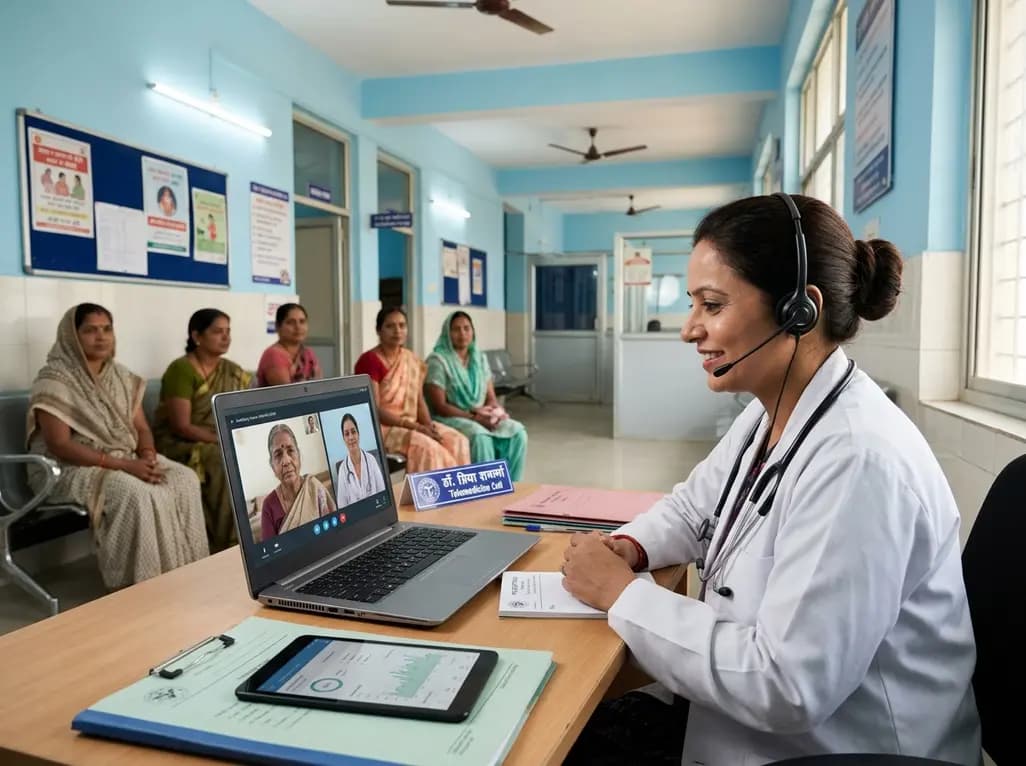
India's national digital health service achieved a historic milestone of fifty crore virtual consultations. Notably, female patients account for over fifty-seven percent of utilisation, demonstrating improved healthcare accessibility for remote communities, chronic disease management, and primary triage.
Today
A large UK Biobank study identified four routine biomarker subtypes that predict cardiometabolic disease progression to multimorbidity. Integrating multi-state modelling, metabolomics, and proteomics revealed distinct biological pathways, offering new avenues for tailored clinical risk stratification.
Today

Dual-nanofiber interpenetrating network scaffolds combining silica and PLLA/gelatin nanofibers with sodium alginate achieve complementary mechanical stability, immunomodulatory M2 macrophage polarization, and enhanced osteogenesis for advanced bone repair.
Today

Researchers at IISER Berhampur have engineered a covalent organic framework immunosensor that detects urinary NGAL. This novel nanotechnology platform distinguishes diabetic nephropathy from other renal conditions, enabling rapid, minimally invasive stratification and earlier clinical intervention for patients.
Today
