.webp&w=384&q=75)

Loading, please wait...
Loading, please wait...

Ageism significantly impacts the physical and mental health of the elderly in India. Most anti-ageism interventions primarily focus on the attitudes of younger generations. While education and intergenerational contact effectively reduce prejudice, researchers frequently neglect the experiences of older participants. Consequently, experts argue that this oversight is a significant missed opportunity. By ignoring the older demographic, programs fail to address how interactions improve older adults' self-perceptions. Furthermore, a systematic review reveals that only a small number of studies assess the impact on older participants. These limited findings are promising, as they suggest that engagement leads to better social inclusion. However, the current body of research suffers from significant theoretical and empirical weaknesses. Therefore, scholars must elevate the attention given to older participants to ensure programs provide mutual benefits.
In addition, programs must have clear theoretical foundations that identify expected outcomes for all participants. Strengthening research designs and measurement tools is essential for promoting a collaborative society. Doctors can lead this change by advocating for inclusive practices that value the participation of older adults. Ultimately, this approach will result in better health outcomes and a more respectful society.
These interventions can improve older adults' attitudes toward younger people, reduce the internalization of negative aging stereotypes, and potentially improve psychological well-being through social engagement.
Programs that combine educational components with structured, positive intergenerational contact often prove most effective in reducing ageist attitudes across all age groups.
Disclaimer: This content is for informational and educational purposes only. It does not constitute medical advice. Refer to the latest local and national guidelines for clinical practice.
References
Morrow-Howell N et al. There, but Not There: Older People in Anti-Ageism Interventions. Gerontologist. 2026 Feb 15. doi: undefined. PMID: 41693028.
Apriceno M, Levy SR. Systematic Review and Meta-Analyses of Effective Programs for Reducing Ageism Toward Older Adults. J Appl Gerontol. 2023 Jun;42(6):1356-1375.
World Health Organization. Global report on ageism. Geneva: World Health Organization; 2021.

Read summarized clinical updates, watch expert medical content, and earn CME certifications right from your smartphone.
Open your smartphone camera to scan and install.





Research highlights a critical gap in anti-ageism interventions, urging a focus on the outcomes and experiences of older participants for inclusive healthca...
8 months ago

The TREM-AB open-label pilot study evaluated a wearable passive nonlinear vibration absorber for essential tremor. The Nonlinear Energy Sink bracelet reduced clinical Fahn-Tolosa-Marin tremor scores by 32.1% and electrophysiological tremor power by 49.2% with no adverse effects reported.
Today
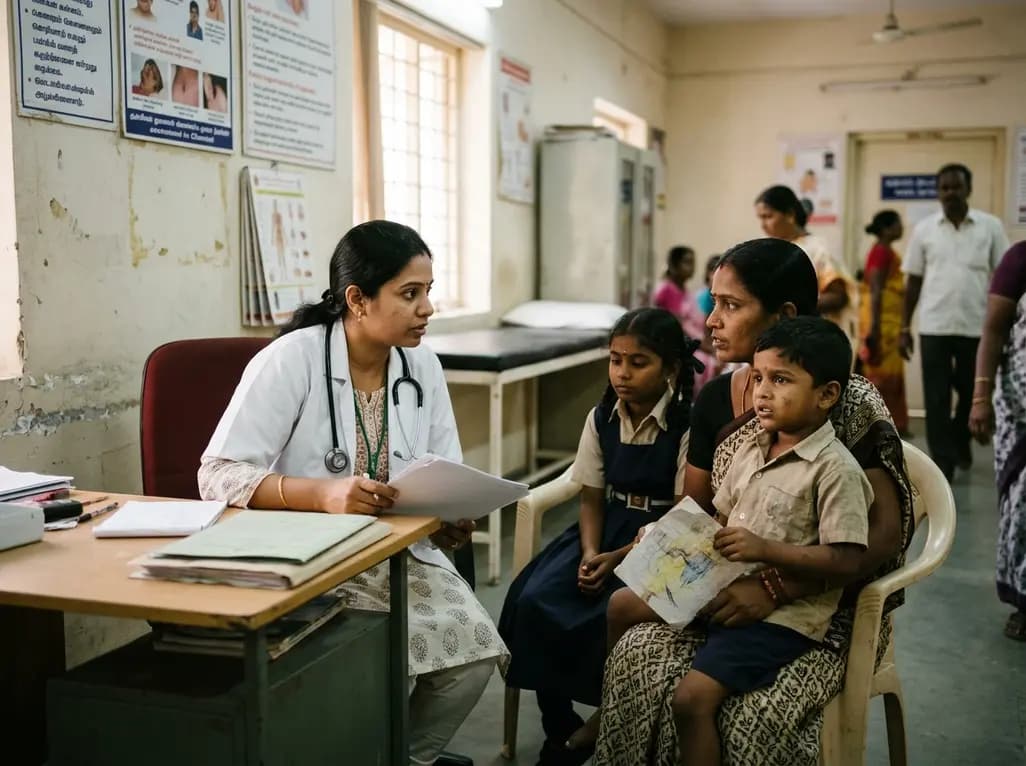
A population-based study of 20,928 children reveals that small vulnerable newborns face sex-divergent mental capital outcomes at ages 6-7: term SGA girls show higher behavioral difficulties and lower resilience, while preterm non-SGA boys experience increased behavioral problems.
Today
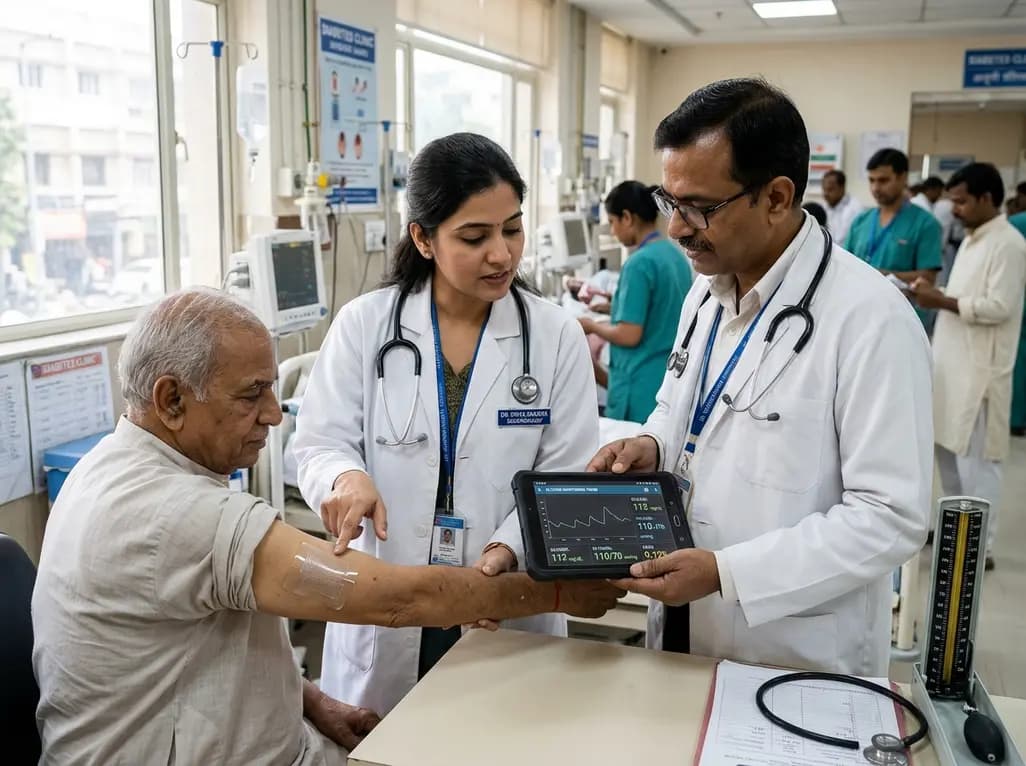
A breakthrough ultrathin multimodal sensor decouples physical hemodynamic monitoring from disposable electrochemical calibration, achieving long-term wearable glucose prediction with 81.36% accuracy and a 9.12% MARD. This offers a robust, drift-free solution for outpatient metabolic surveillance.
Today

A comparative review of tension band wiring and intramedullary screw fixation in thumb metacarpophalangeal arthrodesis, evaluating union rates, hardware complications, and clinical outcomes.
Today

Following regulatory scrutiny from FSSAI regarding promotional representations and lean muscle preservation claims, Dr. Reddy's Laboratories and Nestlé Health Science are currently reviewing the branding and marketing strategy for their joint nutritional supplement Celevida GLP+.
Today
