.webp&w=384&q=75)

Loading, please wait...
Loading, please wait...
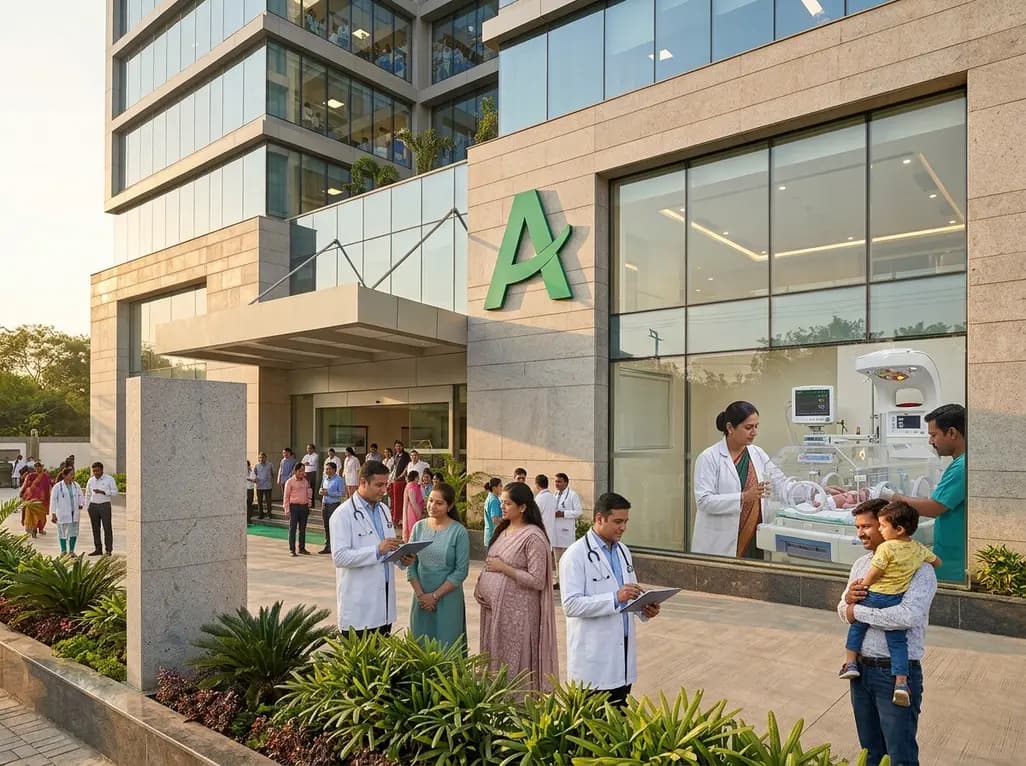
The healthcare landscape of Madhya Pradesh has witnessed a significant milestone with the formal launch of a state-of-the-art medical facility. Specifically, the newly inaugurated Ankura Hospitals Indore represents a major leap forward in providing specialized care for mothers and children. Consequently, families in Central India now have access to premium tertiary healthcare closer to home. Indore Mayor Shri Pushyamitra Bhargav graced this strategic launch. His presence underscored the immense public importance of this healthcare expansion. Furthermore, the establishment of this super speciality hospital highlights a growing commitment to reducing maternal and infant morbidity. As a result, local communities can expect a remarkable improvement in clinical outcomes. Therefore, the region is poised to become a central hub for pediatric and maternal services. Ultimately, this launch aligns with national goals to strengthen medical infrastructure. Healthcare professionals have widely welcomed this development, noting its potential to raise local healthcare standards. In addition, the hospital occupies a strategic location in Vijay Nagar to ensure maximum accessibility. This location will serve patients from various surrounding districts.
This newly established institution offers an extensive array of highly specialized clinical services under one roof. Specifically, the hospital provides advanced solutions in obstetrics and gynaecology, making it a comprehensive center for women's wellness. In addition, the facility manages high-risk pregnancies with dedicated maternal-fetal medicine specialists. To address complex neonatal needs, the center houses a state-of-the-art Level III Neonatal Intensive Care Unit. Consequently, premature newborns and critically ill infants can receive life-saving interventions immediately. Furthermore, the pediatric department is fully equipped to handle advanced pediatric surgeries and pediatric intensive care. Families can also access advanced fertility and IVF treatments within the same facility. This integration of reproductive medicine and maternity care ensures continuous support for aspiring parents. Moreover, the gynaecological care unit focuses on minimally invasive surgeries and routine wellness screenings. To guarantee safety, the hospital runs twenty-four-seven emergency services tailored specifically for women and children. Therefore, patients do not need to seek multiple clinics for diverse family health requirements. Ultimately, these clinical offerings set a new benchmark for comprehensive family-centered healthcare.
Historically, many families in Madhya Pradesh had to travel to other states for complex maternal and child treatments. For example, cases involving congenital disorders or extreme prematurity often required long journeys to distant metros. Consequently, these journeys increased the physical, emotional, and financial burden on anxious parents. This new facility effectively bridges this gap by offering advanced tertiary care directly within Indore. As a result, patients can receive timely care without the stress of interstate travel. Furthermore, the center will support surrounding districts like Ujjain, Dewas, Dhar, and Ratlam. This regional reach is crucial for rural communities lacking access to specialized healthcare. Therefore, the hospital acts as a critical referral point for pediatric emergencies across Central India. In addition, local obstetricians can now collaborate with fetal medicine specialists for better prenatal planning. This collaborative approach enhances the overall quality of maternal care in the region. Moreover, the availability of specialized critical care units reduces referral times during emergencies. Ultimately, having such services closer to home will save countless lives. This development represents a massive leap forward for regional medical infrastructure.
To deliver world-class clinical outcomes, the hospital features highly advanced infrastructure spanning over one hundred thousand square feet. Specifically, the facility includes twenty-five Level III NICU beds and fourteen PICU beds. This robust critical care capacity ensures the safest environment for fragile infants and children. In addition, the hospital features advanced labour and delivery suites designed to support diverse birthing choices. For instance, it introduces evidence-based options such as water birthing and natural birthing. Consequently, expecting mothers have greater autonomy over their delivery experiences in a highly secure environment. Furthermore, the center operates modern modular operating theatres to maintain the highest levels of infection control. These advanced surgical suites are crucial for performing intricate pediatric surgeries safely. Moreover, the hospital integrates modern diagnostic facilities and clinical imaging systems on-site. Therefore, doctors can obtain rapid, accurate diagnostics to make immediate clinical decisions. As a result, rapid diagnostics significantly reduce patient waiting times, optimizing overall healthcare delivery. Ultimately, this infrastructure reflects a commitment to prioritizing patient safety, clinical excellence, and privacy at every stage of care.
The launch in Vijay Nagar marks a major milestone in the national expansion of this healthcare network. Currently, the organization operates more than fifteen hundred beds across eighteen specialized centers in India. Specifically, its presence spans states like Telangana, Andhra Pradesh, Maharashtra, Odisha, and now Madhya Pradesh. Consequently, this rapid growth establishes the brand as one of the fastest-growing maternal and pediatric care chains. The organization’s primary vision is to make highly specialized medical care accessible to every mother and child. Furthermore, the group plans to introduce more localized healthcare centers to bridge urban-rural divides. Therefore, the expansion into Central India represents a deliberate effort to reach underserved communities. In addition, the group relies on a strong network of experienced clinicians and advanced technology to maintain quality. This combination ensures uniform healthcare delivery standards across all regional branches. Moreover, the organization conducts continuous training programs for nursing and paramedic staff to uphold clinical safety. Ultimately, this comprehensive growth strategy aims to elevate maternal and child health outcomes on a national scale.
Q1: What specific maternal and pediatric intensive care facilities are available at the newly launched hospital in Indore?
The newly launched hospital features highly advanced critical care infrastructure to support complex patient needs. Specifically, it boasts a state-of-the-art Level III Neonatal Intensive Care Unit with twenty-five beds to care for premature or critically ill newborns. Additionally, the hospital houses a fourteen-bed Pediatric Intensive Care Unit for children requiring intensive monitoring. These units operate under the round-the-clock supervision of experienced neonatologists and pediatric critical care specialists, ensuring the highest standards of safety.
Q2: How does the new facility aim to improve patient access and convenience for families in Madhya Pradesh?
Historically, families in Madhya Pradesh had to travel to major metro cities in other states for complex maternal and pediatric care. By establishing a comprehensive 120-bed super speciality center in Vijay Nagar, Indore, the hospital brings tertiary-level healthcare much closer to home. This regional facility will also serve surrounding districts like Ujjain, Dewas, and Dhar. Consequently, it eliminates the immense financial and emotional burdens associated with long-distance travel during medical emergencies.
Q3: What unique birthing options and specialized services does the new Indore facility offer to expecting mothers?
To support diverse birthing preferences, the Indore facility stands out as a unique center offering evidence-based natural birthing and water birthing options. In addition to these personalized birthing suites, the hospital provides specialized services in high-risk pregnancy management, fetal medicine, and advanced gynaecological laparoscopy. Expecting mothers also have immediate access to on-site fertility and IVF treatments, comprehensive diagnostic services, and twenty-four-seven emergency care managed by a dedicated multidisciplinary medical team.
Disclaimer: This content is for informational and educational purposes only. It does not constitute medical advice or replace professional judgment. Refer to the latest local and national guidelines for clinical practice.
References

Read summarized clinical updates, watch expert medical content, and earn CME certifications right from your smartphone.
Open your smartphone camera to scan and install.





The expansion of Ankura Hospitals into Indore, Madhya Pradesh, introduces a state-of-the-art 120-bed tertiary facility. Serving Central India, this center offers specialized care including a Level III NICU, pediatric surgery, high-risk pregnancy management, IVF, and 24/7 emergency services closer to home.
3 months ago

Review how tailored exercise programs benefit frail older patients with heart failure. Explore pathophysiological mechanisms, individualized training prescriptions, and strategies to overcome adherence barriers in clinical practice.
Today

Leucine Rich Bio has introduced South Asia's first comprehensive vaginal microbiome test, BugSpeaks. By profiling microbial dysbiosis, pathogens, and antimicrobial resistance, this next-generation diagnostic platform provides clinicians with deeper insights into recurrent infections, fertility, and reproductive health.
Today

In high-risk pulmonary embolism complicated by severe anemia and active uterine bleeding, systemic thrombolysis is contraindicated. Large-bore aspiration thrombectomy provides rapid hemodynamic rescue without fibrinolysis, supported by inferior vena cava filter placement and multidisciplinary critical care.
Today

This comparative study evaluates posterior labral tears with and without glenohumeral instability, highlighting distinct demographic patterns, MRI underestimation in stable shoulders, and successful arthroscopic repair outcomes.
Today

A clinical study demonstrates that early intervention with tocilizumab, either as monotherapy or bridged with corticosteroids, achieves significant proptosis reduction and resolves active inflammation in treatment-naive thyroid eye disease.
Today
