.webp&w=384&q=75)

Loading, please wait...
Loading, please wait...
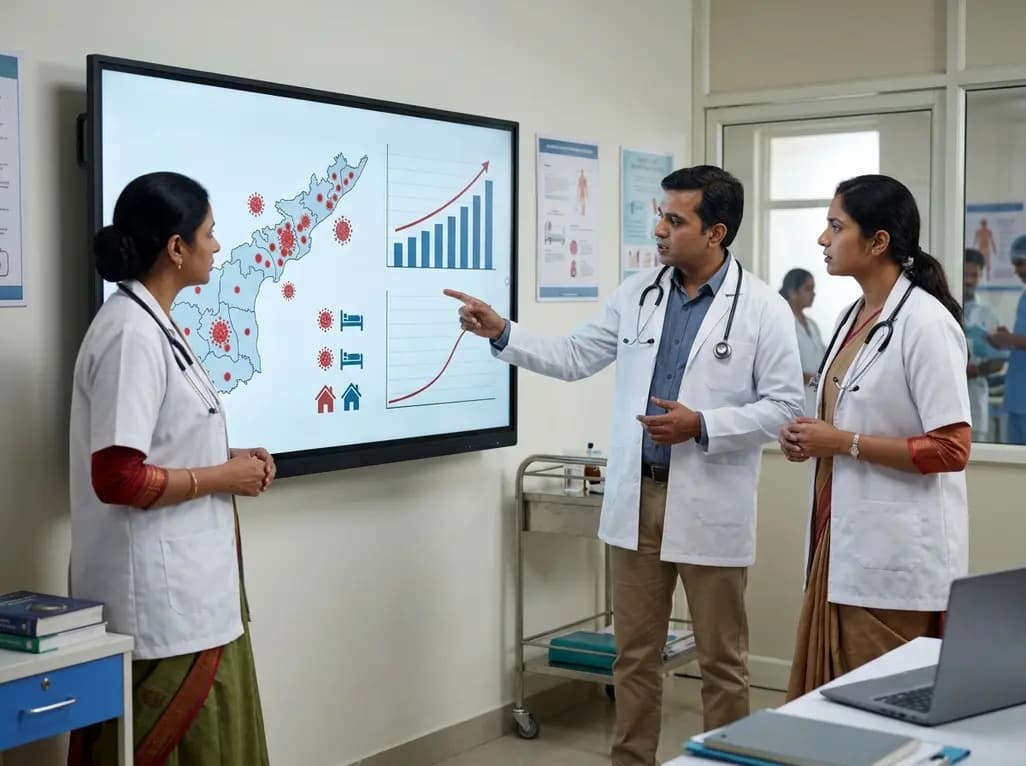
Recent epidemiological data indicate that Andhra Covid-19 cases are steadily rising across several districts in the state. On Saturday, health officials recorded 10 new viral infections, bringing the cumulative total of active and reported cases to 49. Fortunately, the overall death toll remains stable at four. Health authorities report that three of the latest cases originated in Guntur district. Additionally, NTR district reported two cases. Meanwhile, single cases emerged from Alluri Sitaramaraju, Eluru, Krishna, Tirupati, and Visakhapatnam. Thus, the infection footprint is gradually expanding across coastal and interior districts. Currently, 24 patients are undergoing active medical treatment inside hospitals. Conversely, 16 individuals are recuperating at their respective homes under strict doctor supervision. Furthermore, five patients have successfully recovered and received formal hospital discharge. Officials emphasize that these cases appear as sporadic instances rather than concentrated community clusters. Nevertheless, active surveillance remains vital for early detection. Clinicians must stay informed about local transmission trends. Consequently, healthcare facilities are updating their triage protocols. Prompt identification of viral symptoms helps mitigate broader community spread. Therefore, primary care providers play a crucial role in monitoring symptomatic individuals. Overall, continuous vigilance will prevent unexpected strain on regional healthcare infrastructure during this seasonal uptick.
Analyzing district-level metrics reveals distinct patterns in viral distribution across Andhra Pradesh. Notably, East Godavari district leads the state with the highest cumulative burden, logging 11 confirmed cases. Meanwhile, Guntur district registered nine cases following the recent addition of three new infections. Similarly, YSR Kadapa district accounts for eight total cases. Furthermore, Visakhapatnam has reported five infections. NTR district currently holds three cases. Additionally, Kakinada, Eluru, and Bapatla have each documented two cases. Remaining districts continue to report isolated, single-patient cases. Regrettably, all four recorded fatalities occurred in specific regions. Specifically, three deceased patients belonged to YSR Kadapa district, while one resided in Kakinada. Official medical reports confirm that these deceased individuals suffered from serious underlying comorbidities prior to contracting the virus. Thus, mortality remains tightly linked to pre-existing health conditions rather than elevated viral virulence. Consequently, clinicians in high-burden districts must prioritize vulnerable patient populations. For instance, elderly patients with diabetes or hypertension require immediate evaluation upon symptom onset. In contrast, younger patients without risk factors generally present with mild upper respiratory symptoms. Therefore, understanding regional distribution helps public health teams allocate critical diagnostic resources efficiently. Map-based tracking enables rapid deployment of rapid response teams to emerging district hotspots.
Managing respiratory viral infections requires clear stratification based on disease severity. Currently, 24 hospitalized patients in Andhra Pradesh are receiving institutional care tailored to their clinical presentation. Meanwhile, doctors actively supervise 16 stable patients recovering in home isolation. Patients managed at home must maintain daily contact with designated medical personnel. Furthermore, home-isolated individuals should regularly monitor pulse oximetry readings and body temperature. If oxygen saturation falls below recommended thresholds, immediate hospitalization becomes necessary. Conversely, hospitalized patients receive supportive therapies based on established national clinical protocols. Mild cases generally require antipyretics, adequate hydration, and symptomatic relief. However, moderate to severe cases demand supplemental oxygen therapy and corticosteroids under close monitoring. In addition, clinicians must carefully evaluate baseline comorbidities such as chronic kidney disease or pulmonary disorders. Effective monitoring prevents sudden clinical deterioration. Therefore, early admission for high-risk individuals significantly improves clinical outcomes. Hospital administrators have ensured adequate availability of isolation beds and oxygen supply line readiness. Additionally, nursing staff undergo refresher training regarding infection control practices. Consequently, hospitals are well-equipped to manage potential patient surges without disrupting routine medical services. Practitioners must maintain open communication with patients regarding warning signs that necessitate urgent medical evaluation.
In response to rising infection numbers, the Health Department has significantly intensified monitoring operations. Specifically, district Rapid Response Teams have mobilized across all affected areas. These specialized teams actively track positive cases and conduct thorough contact tracing. Furthermore, health workers monitor close contacts to prevent unchecked community transmission. In addition, state laboratories have received adequate supplies of RT-PCR testing kits. Consequently, diagnostic capacity remains robust across designated government and private testing centers. Furthermore, genomic sequencing efforts continue to monitor circulating viral variants. Recent samples sent to Pune confirmed the presence of the Omicron sub-lineage. Fortunately, health officials report no evidence of heightened disease severity associated with this variant. Therefore, public health experts emphasize that there is no cause for public panic. Instead, standard preventive measures remain highly effective. Health departments strongly advocate for public adherence to hand hygiene and voluntary mask usage in crowded indoor spaces. Moreover, healthcare facilities must enforce universal masking in outpatient departments and emergency rooms. Consequently, robust disease surveillance safeguards healthcare workers while keeping the general population safe. Public health communications focus on clear, transparent updates to prevent misinformation. Thus, coordinated institutional efforts maintain effective control over regional disease dynamics.
Accurate clinical diagnosis remains fundamental during seasonal surges of acute respiratory illnesses. Clinicians encountering patients with influenza-like illness must consider several differential diagnoses. For example, viral pathogens like influenza A, influenza B, and respiratory syncytial virus present with similar respiratory features. Therefore, laboratory confirmation via molecular testing provides essential diagnostic clarity. RT-PCR testing remains the gold standard for confirming active viral infection. Additionally, rapid antigen tests offer quick bedside screening in busy emergency departments. However, negative antigen results in highly symptomatic patients require confirmatory RT-PCR testing. Clinicians should also perform routine blood work and inflammatory marker assessments when patients show moderate respiratory distress. For instance, elevated C-reactive protein or ferritin levels may indicate progressive systemic inflammation. Furthermore, chest imaging helps rule out secondary bacterial pneumonia or viral pneumonitis. Consequently, systematic diagnostic algorithms prevent clinical delays and inappropriate antibiotic prescription. Medical practitioners must remain vigilant for atypical presentations, particularly in geriatric patients. Frequently, elderly individuals present with confusion or fatigue rather than classical fever. Thus, comprehensive clinical assessment combined with timely diagnostic testing ensures optimal patient outcomes. Ultimately, early diagnostic accuracy streamlines isolation procedures and protects healthcare workers from nosocomial exposure.
Q1: What is the current Covid-19 case scenario in Andhra Pradesh?
Andhra Pradesh reported 10 new Covid-19 cases recently, bringing the total active caseload to 49. Among these cases, 24 patients receive hospital treatment, while 16 undergo home isolation under medical supervision. Five individuals have fully recovered, and four deaths have been recorded overall. Crucially, public health authorities emphasize that the current cases represent sporadic instances across various districts rather than concentrated, alarming community clusters.
Q2: Which districts in Andhra Pradesh are most affected by the recent case rise?
East Godavari district reports the highest cumulative caseload with 11 cases, followed by Guntur with nine cases and YSR Kadapa with eight. Additionally, Visakhapatnam has documented five cases, while NTR district has three. Other districts, including Kakinada, Eluru, Krishna, Tirupati, Bapatla, and Alluri Sitaramaraju, report fewer isolated cases. Health authorities continue targeted district-level monitoring to track and control regional viral transmission effectively.
Q3: What clinical guidelines should doctors follow for patients in home isolation?
Doctors should advise home-isolated patients to monitor oxygen saturation, temperature, and respiratory symptoms daily. Patients with mild symptoms require symptomatic treatment, adequate rest, and proper hydration. However, if oxygen levels drop below 94% or severe breathlessness develops, immediate hospital transfer is necessary. Additionally, high-risk individuals with comorbidities like diabetes or cardiovascular disease require frequent tele-consultations and close clinical follow-up to detect potential complications early.
Disclaimer: This content is for informational and educational purposes only. It does not constitute medical advice or replace professional judgment. Refer to the latest local and national guidelines for clinical practice.
References

Read summarized clinical updates, watch expert medical content, and earn CME certifications right from your smartphone.
Open your smartphone camera to scan and install.





Andhra Pradesh reported 10 new Covid-19 cases, taking the state tally to 49 while deaths remain at four. With 24 patients hospitalized and 16 under home isolation, the Health Department has intensified monitoring. Medical professionals should review regional distribution, diagnostic protocols, and management plans.
2 months ago
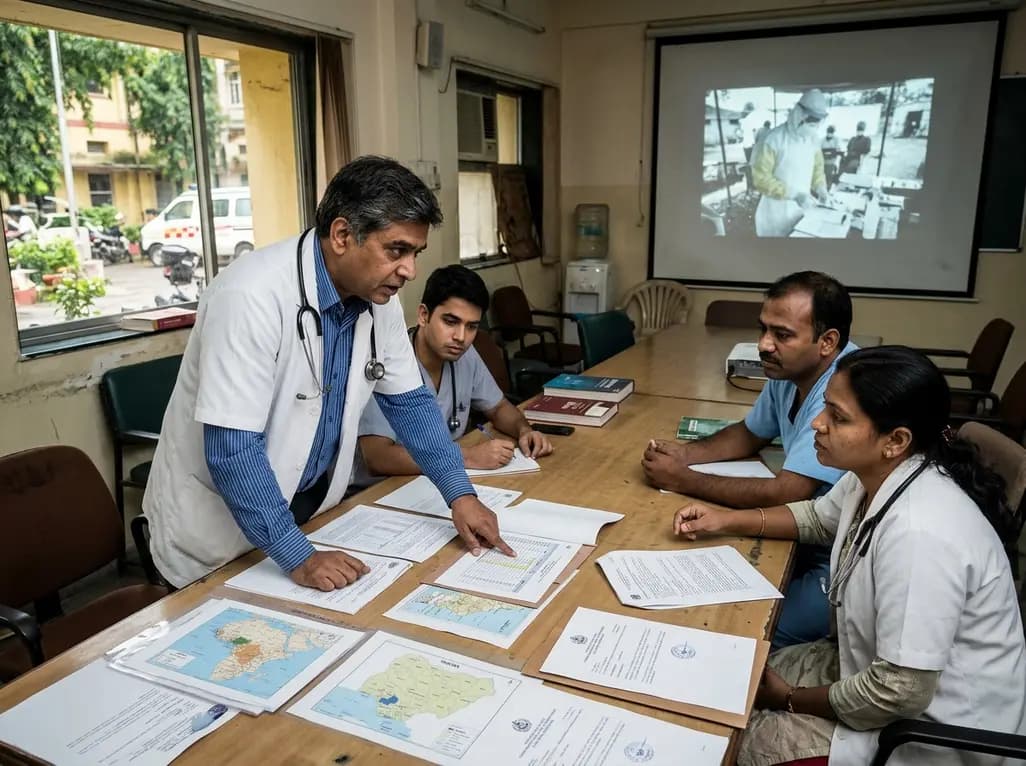
Following Nigeria's first recorded Ebola case linked to regional travel, the Africa CDC has convened an emergency ministerial summit. This alert underscores critical clinical priorities for healthcare professionals, including differentiating early viral infection from malaria, implementing barrier nursing, and triage.
Today

Leucine Rich Bio has introduced South Asia's first comprehensive vaginal microbiome test, BugSpeaks. By profiling microbial dysbiosis, pathogens, and antimicrobial resistance, this next-generation diagnostic platform provides clinicians with deeper insights into recurrent infections, fertility, and reproductive health.
Today

Review how tailored exercise programs benefit frail older patients with heart failure. Explore pathophysiological mechanisms, individualized training prescriptions, and strategies to overcome adherence barriers in clinical practice.
Today

This comparative study evaluates posterior labral tears with and without glenohumeral instability, highlighting distinct demographic patterns, MRI underestimation in stable shoulders, and successful arthroscopic repair outcomes.
Today

A clinical study demonstrates that early intervention with tocilizumab, either as monotherapy or bridged with corticosteroids, achieves significant proptosis reduction and resolves active inflammation in treatment-naive thyroid eye disease.
Today
