.webp&w=384&q=75)

Loading, please wait...
Loading, please wait...
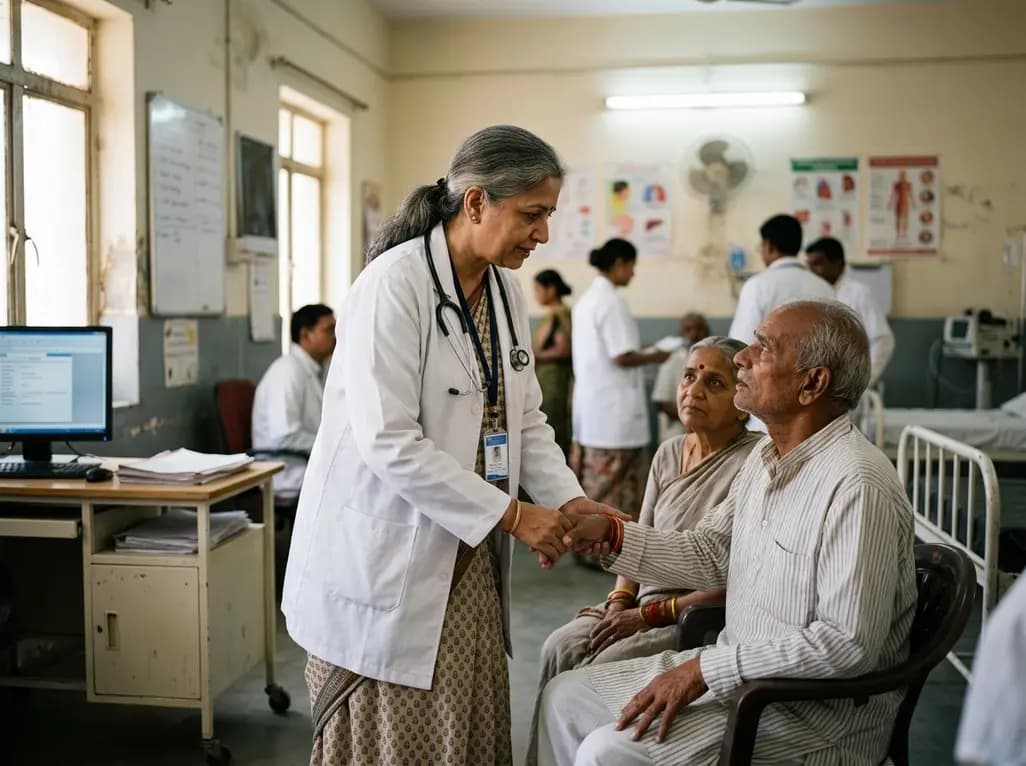
The Indian government has launched a significant national overhaul of its healthcare strategy to combat iron deficiency. Union Health Minister JP Nadda recently announced the revamped operational guidelines for the Anaemia Mukt Bharat Abhiyaan during a major administrative meeting. This upgraded campaign transitions the country's flagship initiative from a basic supplementation program into a technology-enabled, highly structured public health intervention. Consequently, medical practitioners across India must prepare to implement these critical clinical updates in their daily practice immediately to improve patient outcomes.
The newly revamped Anaemia Mukt Bharat Abhiyaan marks a monumental shift from the previous framework. Historically, the national strategy focused primarily on the distribution of iron and folic acid tablets to vulnerable cohorts. However, the updated campaign introduces a comprehensive, people-centric, and highly structured framework to address the underlying drivers of nutritional deficiency. Consequently, healthcare providers will now utilize advanced diagnostic tools, therapeutic management protocols, and dietary initiatives. This comprehensive overhaul is designed to tackle one of India's most persistent public health crises. It moves beyond simple distribution to guarantee long-term patient compliance. Furthermore, the updated strategy heavily emphasizes community mobilization through "Jan Chetna" campaigns. This shift ensures that local communities actively participate in awareness and prevention efforts. Healthcare facilities will now receive updated logistics support to sustain these services. Therefore, doctors must familiarize themselves with these systemic changes to align their clinical workflows. This transition ultimately aims to build a robust, responsive, and highly integrated healthcare delivery system that reaches the most remote regions of India, fostering better clinical care.
At the core of the revamped guidelines is the transition from the old 6x6x6 model to an expanded 7x7x7 framework. This upgraded strategy introduces a seventh beneficiary group, a seventh clinical intervention, and a seventh institutional mechanism. Crucially, low birth weight babies up to six months of age represent the seventh beneficiary group. This addition recognizes that early-life nutritional deficits lay the foundation for chronic developmental challenges. Additionally, the guidelines introduce a brand-new dietary intervention called the "Eating Right" initiative. This intervention actively promotes the daily consumption of highly diversified, iron-rich diets among all age categories. Furthermore, the seventh institutional mechanism establishes an advanced monitoring and evaluation platform powered by digital tracking. Together, these modifications create a highly coordinated shield against nutritional deficiencies. Pediatricians and neonatologists must integrate these new target cohorts into their routine screening processes. By implementing this multi-dimensional strategy, the government hopes to break the intergenerational cycle of maternal and infantile nutritional deficiency across diverse socio-economic populations, ensuring comprehensive clinical coverage even in geographically isolated areas.
The inclusion of low birth weight infants under six months of age represents a major clinical milestone. Historically, this highly vulnerable population faced significant gaps in early nutritional tracking. Under the updated protocols, clinicians must implement active surveillance and tailored therapeutic measures from birth. Because low birth weight babies are highly susceptible to early depletion of iron stores, timely intervention is critical. The revamped guidelines provide a structured pathway for early screening, diagnostic testing, and customized nutritional support. Furthermore, community health workers will actively track these infants through dedicated digital portals. This digital integration guarantees that vulnerable babies do not drop out of the safety net during crucial development phases. Clinicians must work closely with grassroots healthcare workers to monitor infant growth trajectories. Proper counselling regarding exclusive breastfeeding and appropriate complementary feeding practices forms a cornerstone of this intervention. Ultimately, these clinical measures aim to optimize neurodevelopmental outcomes, reduce cognitive impairments, and minimize infant mortality rates throughout India, providing a healthier start for newborns.
The service delivery model has received a major operational upgrade from the traditional T3 approach to a modernized T4 model. Previously, the framework rested on the pillars of Test, Treat, and Talk. The revamped strategy adds a vital fourth pillar: Track. This additional step ensures that all diagnosed individuals receive comprehensive follow-up care until their haemoglobin levels normalize. Furthermore, digital tracking will help prevent the high attrition rates typically observed in community-based treatment campaigns. Clinicians will now log real-time patient data into integrated national portals, enabling seamless referrals across different tiers of healthcare. Additionally, the tracking mechanism allows health departments to evaluate the long-term efficacy of local therapeutic protocols. Healthcare providers must train their clinical and administrative staff to utilize these digital platforms diligently. This systematic tracking is expected to drastically improve treatment compliance and cure rates nationwide. By converting a passive diagnostic model into an active, closed-loop care pathway, the T4 approach promises to revolutionize clinical follow-ups and ensure sustainable health improvements.
For pregnant and lactating women presenting with severe iron deficiency, the guidelines outline sophisticated clinical pathways. When oral therapies fail or when patients exhibit severe anaemia, clinicians must escalate treatment to intravenous iron therapy. Specifically, the updated protocols recommend the administration of ferric carboxymaltose or iron sucrose under controlled clinical conditions. This represents a highly proactive approach to preventing adverse obstetric outcomes, such as postpartum haemorrhage and premature births. Furthermore, patient diagnostic records will be tightly integrated across digital platforms. For instance, maternal haemoglobin records will be captured on the JANANI portal. Meanwhile, pediatric health data will be tracked through the RBSK and U-WIN portals. This digital ecosystem enables seamless information sharing between obstetricians and pediatricians, ensuring continuous care for both mother and child. Consequently, physicians must adapt their hospital protocols to align with these advanced therapeutic and digital reporting standards, ensuring that patient tracking remains uninterrupted from pregnancy through postpartum follow-up.
Q1: Who is the newly added beneficiary group under the revamped guidelines?
Under the revamped guidelines, low birth weight babies up to six months of age have been introduced as the seventh beneficiary group. This critical addition recognizes the urgent need to address nutritional deficiency at the earliest stages of life. Consequently, pediatricians and primary care providers must initiate screening and targeted interventions for these infants immediately to prevent developmental delays and improve long-term health outcomes.
Q2: What does the fourth pillar in the T4 service delivery model represent?
The fourth pillar represents "Track," which upgrades the previous Test, Treat, and Talk (T3) model. This vital addition ensures that patients are systematically followed up after their initial diagnosis and treatment. By leveraging digital platforms like the JANANI, RBSK, and U-WIN portals, healthcare providers can monitor compliance, manage referrals, and ensure haemoglobin levels normalize, thereby preventing patient dropouts and improving clinical outcomes.
Q3: What are the clinical recommendations for severe maternal anaemia under the updated protocols?
For pregnant and lactating women with severe anaemia, or those unresponsive to oral iron therapy, the national protocols recommend intravenous iron treatment. Clinicians should administer ferric carboxymaltose or iron sucrose in structured clinical settings. This approach ensures rapid restoration of iron stores, minimizes pregnancy-related complications, and secures better neonatal outcomes, with all treatment data recorded digitally for continuous monitoring.
Disclaimer: This content is for informational and educational purposes only. It does not constitute medical advice or replace professional judgment. Refer to the latest local and national guidelines for clinical practice.
References

Read summarized clinical updates, watch expert medical content, and earn CME certifications right from your smartphone.
Open your smartphone camera to scan and install.





The Indian government has expanded its flagship anaemia control programme, transitioning to the Anaemia Mukt Bharat Abhiyaan. Discover the updated 7x7x7 strategy, the inclusion of low birth weight infants, the transition to the T4 model, and new intravenous clinical protocols for severe maternal cases.
3 months ago

As monsoon seasons elevate arboviral disease threats, Tamil Nadu has initiated an ICMR-monitored evaluation of the tetravalent dengue vaccine in Tenkasi district. Clinicians emphasize clinical monitoring, public prevention, and high-quality early pediatric care to reduce disease morbidity across endemic regions.
Today

Leucine Rich Bio has introduced South Asia's first comprehensive vaginal microbiome test, BugSpeaks. By profiling microbial dysbiosis, pathogens, and antimicrobial resistance, this next-generation diagnostic platform provides clinicians with deeper insights into recurrent infections, fertility, and reproductive health.
Today

Review how tailored exercise programs benefit frail older patients with heart failure. Explore pathophysiological mechanisms, individualized training prescriptions, and strategies to overcome adherence barriers in clinical practice.
Today

This comparative study evaluates posterior labral tears with and without glenohumeral instability, highlighting distinct demographic patterns, MRI underestimation in stable shoulders, and successful arthroscopic repair outcomes.
Today

A clinical study demonstrates that early intervention with tocilizumab, either as monotherapy or bridged with corticosteroids, achieves significant proptosis reduction and resolves active inflammation in treatment-naive thyroid eye disease.
Today
