.webp&w=384&q=75)

Loading, please wait...
Loading, please wait...
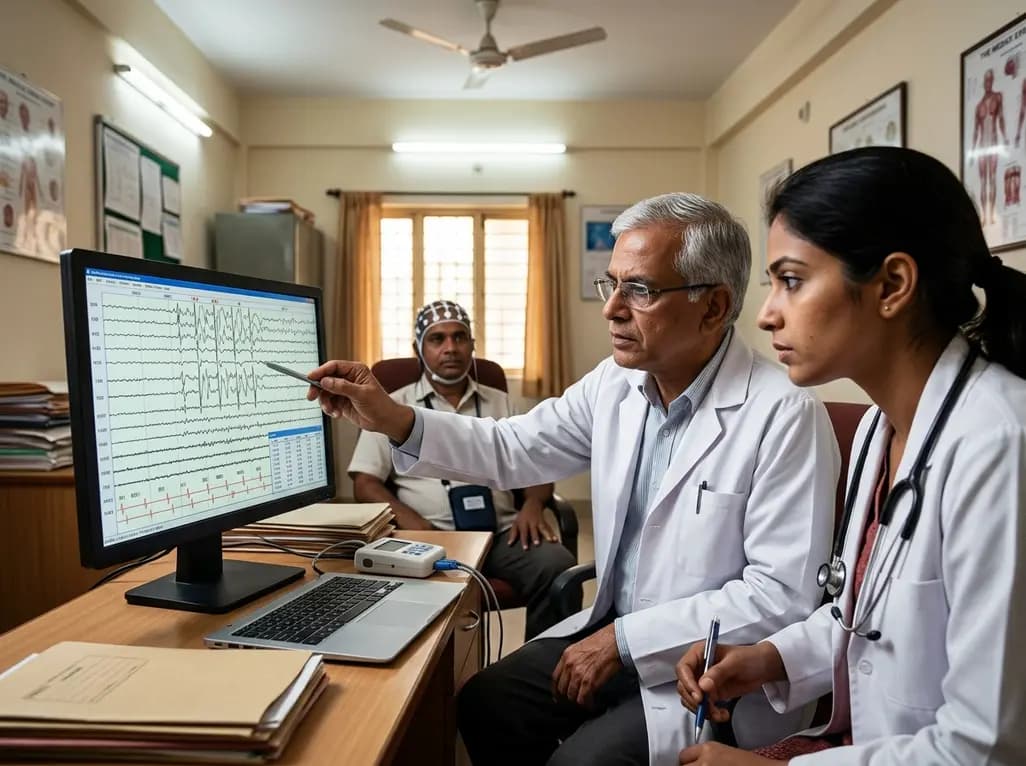
Electroencephalography remains the cornerstone of epilepsy diagnosis, yet routine recordings often fail to capture transient abnormalities. Ambulatory EEG (aEEG) has emerged as a highly accessible and cost-effective alternative for prolonged monitoring in the outpatient setting. By allowing patients to remain in their natural environment, this modality increases the likelihood of capturing spontaneous events that might be suppressed in a clinical atmosphere. However, the ambulatory EEG diagnostic yield varies significantly based on patient selection and technical parameters. Clinicians in India often face challenges regarding resource allocation and the high cost of inpatient video-EEG monitoring. Consequently, understanding which clinical characteristics predict a higher yield is essential for optimizing diagnostic pathways. Recent evidence suggests that specific factors, including prior test results and medication status, can guide physicians in determining the necessity and duration of these studies. By focusing on high-yield candidates, medical professionals can improve diagnostic accuracy while reducing unnecessary healthcare expenditures for patients with suspected seizure disorders.
A recent 6-month retrospective study conducted at a Comprehensive Epilepsy Center evaluated the efficacy of aEEG in an adult population. The cohort included 179 patients with an average age of 45 years, with a slight female predominance. Researchers utilized advanced statistical methods, including logistic regression and recursive feature elimination, to isolate factors associated with a higher diagnostic yield. The median duration for these ambulatory studies was approximately 48 hours, though some recordings extended up to 86 hours. This timeframe is particularly relevant for clinical practice, as it represents a balance between diagnostic necessity and patient comfort. Notably, the study focused on two primary endpoints: the observation of interictal epileptiform discharges (IEDs) and the capture of actual seizures. By analyzing how clinical history and medication use correlated with these findings, the study provides a roadmap for more targeted diagnostic interventions. Understanding these methodological nuances helps clinicians interpret aEEG data with greater precision and confidence.
The diagnostic yield for interictal epileptiform discharges in the study was approximately 35%. Several key factors were identified that significantly increased the likelihood of observing these discharges. For instance, patients who had a previously abnormal ambulatory EEG were over three times more likely to show IEDs in subsequent recordings. Furthermore, a higher number of concurrent antiseizure medications was associated with an increased yield, with an odds ratio of 1.45 per medication. This finding might seem counterintuitive at first; however, it likely reflects a higher pre-test probability of epilepsy in patients already receiving multiple pharmacological treatments. Additionally, the observation of IEDs appeared to be less dependent on the overall length of the study compared to seizure capture. This suggests that if the primary goal is to confirm an epilepsy diagnosis through interictal markers, a 24- to 48-hour recording may suffice for many patients. These predictors allow neurologists to prioritize patients for whom the diagnostic probability is already elevated based on clinical history.
Capturing a physical seizure is often the "gold standard" for defining an epilepsy syndrome, yet the yield for seizures in this study was lower, at 10%. Interestingly, the duration of the study played a critical role in this outcome. Recordings lasting 72 hours were significantly more likely to capture a seizure compared to shorter studies, with a dramatic odds ratio of 26. Most of these events occurred within the first 48 hours, suggesting that 48 hours should be considered the minimum standard for seizure detection. Moreover, patients with a higher baseline seizure frequency, as reported in their clinical history, naturally showed a higher probability of seizure observation during aEEG. Another strong predictor was the presence of IEDs during a prior admission to an inpatient epilepsy monitoring unit (EMU). Specifically, those with previously documented EMU findings were 22 times more likely to have a seizure captured on aEEG. These findings emphasize that while aEEG is useful, its success is highly contingent on the patient's existing clinical profile and the selected recording duration.
In the Indian healthcare landscape, where access to dedicated Epilepsy Monitoring Units may be limited to major metropolitan centers, aEEG offers a vital diagnostic bridge. The findings from this research suggest that physicians should aim for at least 48 hours of monitoring to maximize the chances of a definitive diagnosis. For patients with a lower frequency of events, extending the study to 72 hours may be appropriate to capture rare but clinically significant seizures. Furthermore, clinicians should carefully consider the patient's medication regimen and prior EEG history when requesting these tests. Using these evidence-based predictors helps in triaging patients, ensuring that those most likely to benefit from prolonged monitoring receive it. Additionally, the cost-effectiveness of ambulatory options compared to inpatient stays makes it a preferred choice for many families. By applying these selection criteria, neurologists can enhance the efficiency of their diagnostic services, leading to faster initiation of appropriate therapies and improved long-term outcomes for patients with epilepsy.
The transition from routine 20-minute EEGs to prolonged ambulatory monitoring represents a significant leap in neurodiagnostic capability. This study highlights that IED detection is largely driven by the pre-test certainty of an epilepsy diagnosis, whereas seizure capture is highly dependent on the length of the recording. Consequently, a tiered approach to EEG monitoring may be most effective. For patients where the diagnosis is highly suspected but interictal markers are missing, a shorter aEEG might be sufficient. In contrast, for those where the primary goal is event characterization or classification, longer studies are essential. Notably, the first 48 hours remain the most productive window for capturing ictal events. As technology continues to improve, with lighter and more portable recording devices, the utility of aEEG is only expected to grow. Clinicians should remain updated on these diagnostic yields to provide the best possible care. Ultimately, a tailored approach based on individual patient characteristics will yield the most useful clinical data for managing complex epilepsy cases.
The optimal duration for capturing seizures during ambulatory EEG is at least 48 to 72 hours. Research indicates that while many events are captured within the first two days, extending the recording to 72 hours significantly increases the diagnostic yield, especially for patients with a lower frequency of baseline seizures. Longer durations help overcome the inherent unpredictability of ictal events in an outpatient setting.
A history of abnormal findings on prior EEGs is a strong predictor of success in subsequent ambulatory monitoring. Specifically, patients with previously documented interictal epileptiform discharges or those with findings from an epilepsy monitoring unit are significantly more likely to yield diagnostic data. This history increases the pre-test probability, making aEEG a high-value tool for confirming or further characterizing the patient's seizure disorder.
Yes, ambulatory EEG is highly effective for patients on antiseizure medications. In fact, studies show that a higher number of concurrent medications is associated with an increased yield for detecting interictal discharges. While medications may suppress ictal activity, the presence of multiple prescriptions often correlates with a more established or severe epilepsy profile, which increases the likelihood of observing diagnostic interictal abnormalities during prolonged monitoring.
Disclaimer: This content is for informational and educational purposes only and does not constitute medical advice. It is not intended to be a substitute for professional medical advice, diagnosis, or treatment. Always seek the advice of your physician or other qualified health provider with any questions you may have regarding a medical condition. Refer to the latest local and national guidelines for clinical practice.
References
Kindja NL et al. Evaluating diagnostic yield of ambulatory EEG for interictal epileptiform discharges and seizures. Epilepsy Behav. 2026 Jul 19. doi: undefined. PMID: 42472484.
Dash D, Hernandez-Ronquillo L, Moien-Afshari F, et al. Ambulatory EEG: a cost-effective alternative to inpatient video-EEG in adult patients. Epileptic Disord. 2012 Sep; 14(3):290-297. PMID: 22963900.
Keezer M, Simard-Tremblay E, Veilleux M. The diagnostic accuracy of prolonged ambulatory versus routine EEG. Clin EEG Neurosci. 2016 Apr; 47(2):157-161. PMID: 26376916.

Read summarized clinical updates, watch expert medical content, and earn CME certifications right from your smartphone.
Open your smartphone camera to scan and install.





Ambulatory EEG (aEEG) is a cost-effective alternative to inpatient monitoring. This article evaluates the diagnostic yield of aEEG for interictal epileptiform discharges and seizures, identifying specific patient factors and recording durations that significantly improve diagnostic accuracy in clinical practice.
3 months ago

As monsoon seasons elevate arboviral disease threats, Tamil Nadu has initiated an ICMR-monitored evaluation of the tetravalent dengue vaccine in Tenkasi district. Clinicians emphasize clinical monitoring, public prevention, and high-quality early pediatric care to reduce disease morbidity across endemic regions.
Today

Leucine Rich Bio has introduced South Asia's first comprehensive vaginal microbiome test, BugSpeaks. By profiling microbial dysbiosis, pathogens, and antimicrobial resistance, this next-generation diagnostic platform provides clinicians with deeper insights into recurrent infections, fertility, and reproductive health.
Today

Review how tailored exercise programs benefit frail older patients with heart failure. Explore pathophysiological mechanisms, individualized training prescriptions, and strategies to overcome adherence barriers in clinical practice.
Today

This comparative study evaluates posterior labral tears with and without glenohumeral instability, highlighting distinct demographic patterns, MRI underestimation in stable shoulders, and successful arthroscopic repair outcomes.
Today

A clinical study demonstrates that early intervention with tocilizumab, either as monotherapy or bridged with corticosteroids, achieves significant proptosis reduction and resolves active inflammation in treatment-naive thyroid eye disease.
Today
