.webp&w=384&q=75)

Loading, please wait...
Loading, please wait...

Fractal dimensionality is a mathematical tool used to quantify the structural complexity and detail of brain regions at different scales. It detects subtle tissue changes that traditional volumetric MRI analysis might overlook.
Research indicates that FD measures are highly consistent across datasets and can identify reduced complexity in the memory network. This allows for more accurate individual-based classification during early disease stages.
Disclaimer: This content is for informational and educational purposes only. It does not constitute professional medical advice, diagnosis, or treatment. Always seek the advice of your physician or other qualified healthcare provider with any questions you may have regarding a medical condition. Refer to the latest local and national guidelines for clinical practice.
References
1. Tibon R et al. Structural complexity of brain regions in mild cognitive impairment and Alzheimer's disease. Brain Cogn. 2026 May 21. doi: undefined. PMID: 42166829.
2. Aruchamy S, Harini SA. Detection of Alzheimer's Disease in Brain MRI Using Fractal Analysis. Int J Comput Appl. 2017;165(5):37-43.
3. Marzi C, et al. Foundations and Clinical Applications of Fractal Dimension in Neuroscience: Concepts and Perspectives. MDPI Neuroscience. 2026.

Read summarized clinical updates, watch expert medical content, and earn CME certifications right from your smartphone.
Open your smartphone camera to scan and install.





Discover how fractal dimensionality in MRI improves Alzheimer's disease detection by identifying microstructural brain changes before clinical symptoms appe...
5 months ago

Following regulatory scrutiny from FSSAI regarding promotional representations and lean muscle preservation claims, Dr. Reddy's Laboratories and Nestlé Health Science are currently reviewing the branding and marketing strategy for their joint nutritional supplement Celevida GLP+.
Today

A comprehensive scoping review synthesises evidence linking prenatal maternal mental health to long-term offspring neurodevelopment, evaluating neuroendocrine, inflammatory, and epigenetic pathways while highlighting clinical screening and future research priorities.
Today

The Directorate General of Health Services directs Indian states to halt the hazardous reuse and reprocessing of single-use medical devices. Discover regulatory implications under the Drugs and Cosmetics Act, critical infection risks, legal liabilities, and operational changes required across clinical specialties.
Today
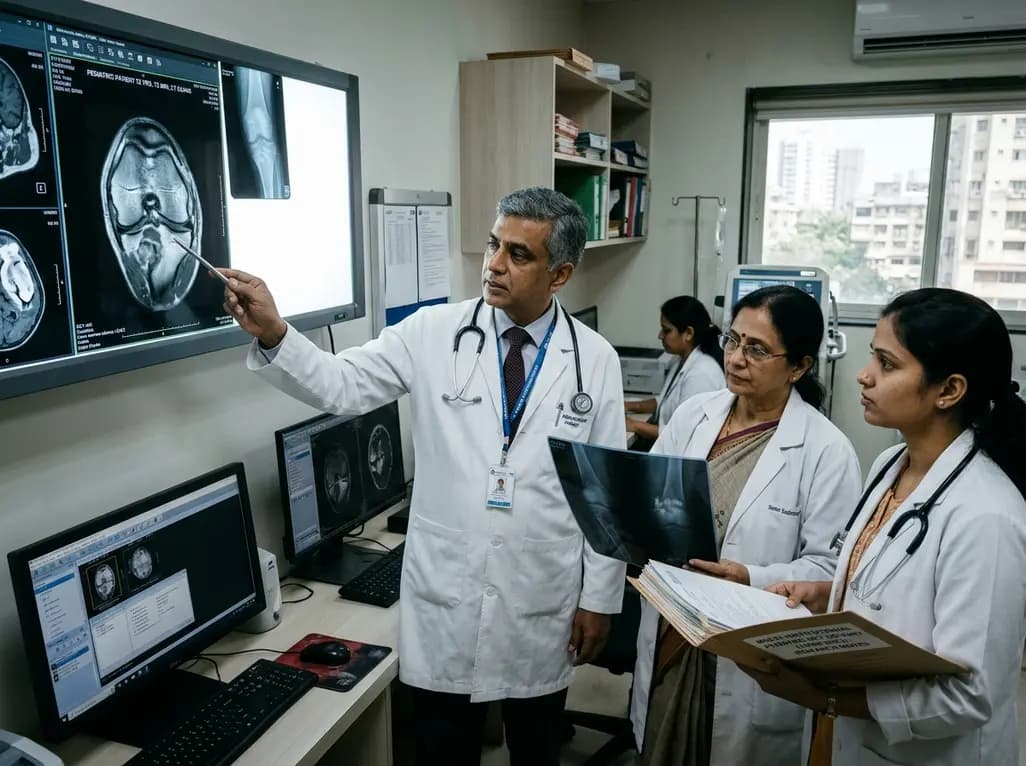
A 25-year multi-institutional cohort reveals high recurrence rates in pediatric giant cell tumor of bone, particularly in patients with open physes and bone marrow edema on preoperative MRI. Early surveillance and careful balance between growth plate preservation and tumor clearance are essential.
Today

India is advancing preventive healthcare by integrating genomics, artificial intelligence, and quantum technologies. With the SANGAM programme sequencing one million Indian genomes, clinicians can unlock personalized therapies, detect cardiometabolic risks early, and curb the burden of diabetes and heart disease.
Today
