.webp&w=384&q=75)

Loading, please wait...
Loading, please wait...
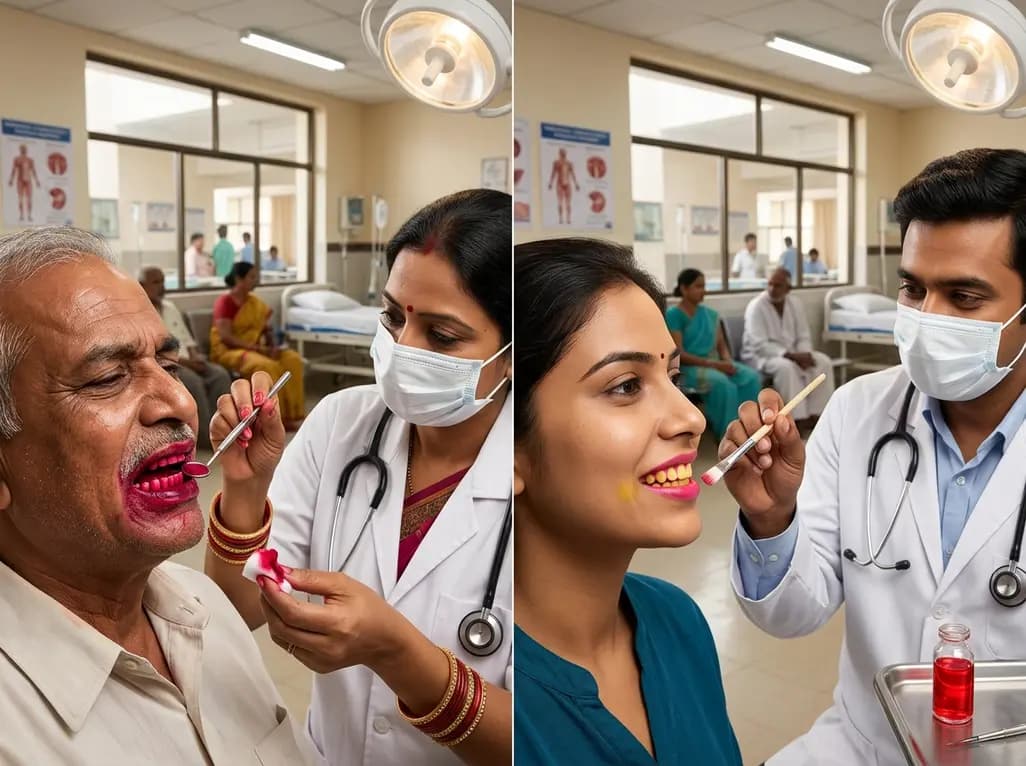
Dental practitioners frequently rely on plaque disclosing agents to enhance the visualization of oral biofilms during clinical examinations. These dyes play a vital role in educating patients about their oral hygiene effectiveness. While erythrosine has been the gold standard for decades, recent safety concerns and its tendency to cause persistent staining have led to the search for better alternatives.
A recent randomized crossover trial evaluated D&C Red No. 33 against traditional erythrosine. Researchers measured plaque visibility and user acceptability across three different formulations. Although erythrosine provided the highest visibility scores, it also caused significant residual staining on the lips and oral mucosa. Consequently, patients often find this staining aesthetically unappealing after leaving the dental clinic.
Furthermore, the study highlighted that D&C Red No. 33 offers a more favorable balance. It effectively identifies plaque accumulation while remaining easier to remove from soft tissues. Participants in the trial reported higher taste satisfaction with D&C Red No. 33 compared to the bitter profile of erythrosine. Additionally, all tested formulations achieved similar results in reducing plaque indices after routine brushing and flossing procedures.
Specifically, the mixed formulation containing green powder yielded intermediate outcomes. However, it demonstrated the lowest overall plaque visibility among the groups. Therefore, clinicians might prefer pure D&C Red No. 33 for routine disclosures. This transition could potentially improve patient compliance by making the procedure more comfortable and less messy. Moreover, the study supports the safety and efficacy of D&C Red No. 33 as a modern clinical tool.
D&C Red No. 33 offers significantly less residual staining on the lips and oral mucosa compared to erythrosine. Additionally, users report a more pleasant taste and find the stain easier to remove through routine brushing.
While erythrosine provides slightly higher visibility scores, D&C Red No. 33 remains highly effective for clinical plaque detection. It ensures that patients can clearly see biofilm while avoiding the drawbacks of excessive staining.
Disclaimer: This content is for informational and educational purposes only and does not constitute professional medical or dental advice, diagnosis, or treatment. Always seek the advice of your physician, dentist, or other qualified healthcare provider with any questions you may have regarding a medical condition. Refer to the latest local and national guidelines for clinical practice.
References
Sooampon S et al. Evaluation of D&C Red No. 33 as an alternative to erythrosine for plaque disclosure: a randomized crossover trial. BMC Oral Health. 2026 Jun 04. doi: 10.1186/s12903-026-08786-6. PMID: 42243816.
US4302439A. Method of disclosing dental plaque with D and C Red 33. Google Patents. 1981.
Pretty IA et al. Quantification of dental plaque in the research environment. Journal of Dentistry. 2005;33(3):193-207. doi: 10.1016/j.jdent.2004.10.017.

Read summarized clinical updates, watch expert medical content, and earn CME certifications right from your smartphone.
Open your smartphone camera to scan and install.





A randomized trial suggests D&C Red No. 33 is a viable alternative to erythrosine for plaque disclosure, offering better taste and less staining....
4 months ago

Review how tailored exercise programs benefit frail older patients with heart failure. Explore pathophysiological mechanisms, individualized training prescriptions, and strategies to overcome adherence barriers in clinical practice.
Today

Leucine Rich Bio has introduced South Asia's first comprehensive vaginal microbiome test, BugSpeaks. By profiling microbial dysbiosis, pathogens, and antimicrobial resistance, this next-generation diagnostic platform provides clinicians with deeper insights into recurrent infections, fertility, and reproductive health.
Today

In high-risk pulmonary embolism complicated by severe anemia and active uterine bleeding, systemic thrombolysis is contraindicated. Large-bore aspiration thrombectomy provides rapid hemodynamic rescue without fibrinolysis, supported by inferior vena cava filter placement and multidisciplinary critical care.
Today

This comparative study evaluates posterior labral tears with and without glenohumeral instability, highlighting distinct demographic patterns, MRI underestimation in stable shoulders, and successful arthroscopic repair outcomes.
Today

A clinical study demonstrates that early intervention with tocilizumab, either as monotherapy or bridged with corticosteroids, achieves significant proptosis reduction and resolves active inflammation in treatment-naive thyroid eye disease.
Today
