.webp&w=384&q=75)

Loading, please wait...
Loading, please wait...
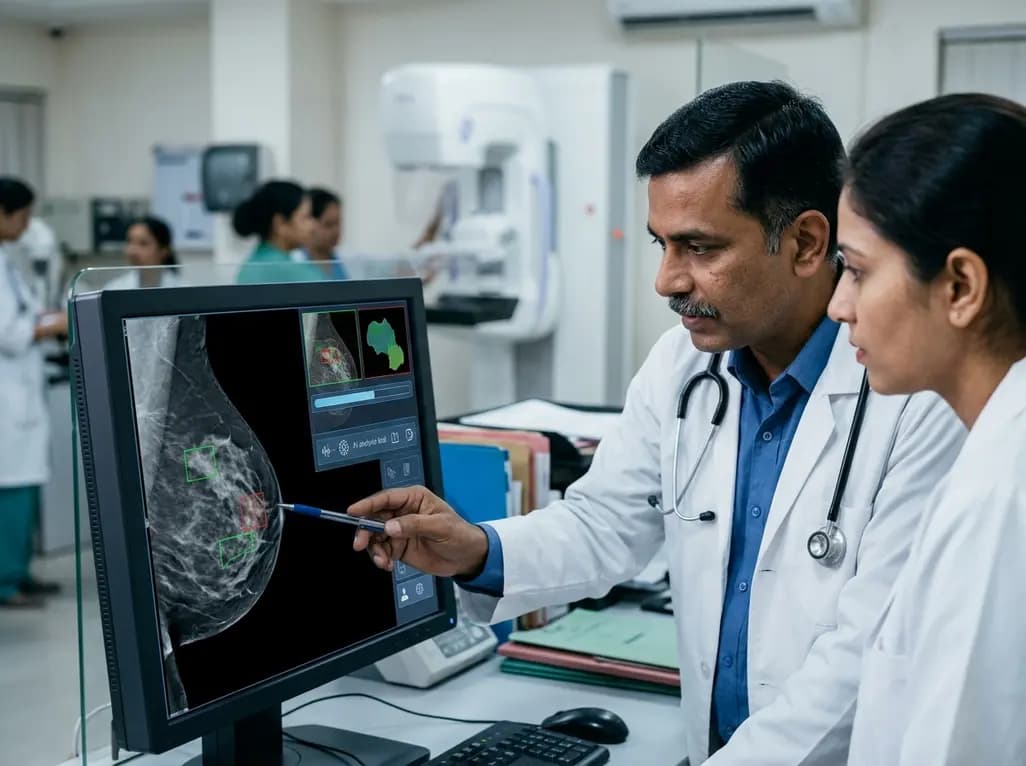
Breast cancer remains the most prevalent malignancy among Indian women, frequently presenting at advanced clinical stages due to delayed detection. To tackle this diagnostic obstacle, the All India Institute of Medical Sciences, New Delhi, has officially transferred its state-of-the-art AI mammography technology to BPL Technologies Limited. This high-profile industry-academia collaboration aims to move innovative academic research into real-world hospital workflows. Consequently, this milestone partnership promises to democratize specialized breast cancer screening, particularly in resource-constrained peripheral healthcare centers.
Early radiological detection of breast malignancies significantly improves long-term survival outcomes. However, healthcare systems across India face an acute shortage of specialized breast-imaging radiologists. Most diagnostic mammography centers operate in tertiary urban facilities, leaving tier-2, tier-3, and rural communities underserved. In addition, high daily patient workloads frequently cause diagnostic fatigue among on-duty clinicians. Under these circumstances, subtle neoplastic microcalcifications or architectural distortions might escape visual recognition.
Consequently, integrating AI mammography technology into standard digital imaging equipment offers an effective solution to these human resource constraints. The novel model serves as an automated clinical decision-support tool. It assists general radiologists and medical officers by highlighting suspicious radiographic regions. Therefore, facilities without on-site subspecialists can now achieve higher screening throughput and diagnostic confidence. Furthermore, this collaborative transfer accelerates commercial production, which ensures faster deployment of automated screening tools across both public and private hospital networks in India.
A critical limitation of imported commercial software lies in its reliance on Western demographic datasets. Western and Indian patient populations exhibit substantial anatomical variations. Specifically, Indian women often present with denser fibroglandular breast tissue and develop malignancies at a younger median age. High tissue density frequently obscures small invasive lesions on conventional two-dimensional radiographs, which increases false-negative rates.
To overcome this demographic bias, researchers from the Department of Diagnostic and Interventional Oncoradiology and computational engineers at AIIMS engineered the first completely indigenous model. The developmental team trained and validated the algorithms directly on domestic patient profiles. During retrospective clinical evaluations involving thousands of screening mammograms, the model demonstrated an exceptional 99% negative predictive value at standard operating thresholds. Therefore, when the system indicates an absence of malignancy, clinicians can trust the result with immense confidence. Moreover, the Ministry of Education funded this targeted research initiative, ensuring that public-sector innovation directly solves local clinical priorities.
The indigenous model operates essentially as a digital second reader rather than an autonomous diagnostic agent. In standard dual-reading workflows, two independent radiologists review each examination to minimize interpretive oversight. However, implementing dual reading across high-volume Indian centers remains practically unfeasible due to staffing limitations. Hence, the artificial intelligence software steps in to provide a reliable algorithmic safety net.
When a patient undergoes mammographic examination, the algorithm rapidly processes digital projections alongside human evaluation. It scrutinizes pixel-level density gradients, asymmetric densities, and spiculation patterns that human eyes might overlook during high-volume reporting shifts. Subsequently, the tool flags suspicious lesions and categorizes risk levels. Radiologists then review these automated flags before issuing the final diagnostic impression. Because the human clinician retains total diagnostic authority, the software preserves patient safety while drastically reducing perceptual errors. Consequently, this concurrent workflow elevates overall diagnostic sensitivity and minimizes diagnostic delays for symptomatic women.
Moving laboratory innovations into scalable clinical devices requires robust industrial engineering, stringent quality controls, and formal regulatory compliance. Academic institutions frequently lack the commercial infrastructure necessary to manufacture and distribute medical software at national scales. Therefore, the technology transfer to BPL Technologies Limited establishes an essential pathway toward scalable production.
Under this strategic agreement, BPL Technologies will oversee hardware-software integration, rigorous multisite clinical validation, and regulatory clearance under the Central Drugs Standard Control Organisation. Furthermore, the company will package the AI software directly into its existing portfolio of digital and cassette-based mammography units. This direct hardware integration simplifies adoption across diagnostic clinics and district hospitals. Clinicians will not need complex third-party workstations to utilize the automated reading support. Additionally, commercial technical support ensures seamless software maintenance, continuous model refinement, and secure data handling conforming to established health data privacy standards.
The arrival of indigenously trained computer-aided detection carries transformative implications for routine oncology practice. By streamlining baseline screening, secondary and primary care clinics can establish reliable decentralized triage programs. General medical practitioners can confidently identify patients who require expedited tissue biopsies or advanced contrast-enhanced imaging. Consequently, this automated triage alleviates referral congestion at major regional cancer centers.
Moreover, catching breast tumors at earlier stages fundamentally transforms oncological outcomes. Early-stage localized cancers require less aggressive surgical interventions, permit breast-conserving techniques, and avoid intensive cytotoxic chemotherapy regimens. Thus, earlier detection improves patient survival while markedly lowering out-of-pocket healthcare expenses. As BPL Technologies prepares the clinical release of this technology, medical professionals should familiarize themselves with artificial intelligence integration protocols. Ultimately, this indigenous partnership represents a paradigm shift toward equitable, data-driven preventative oncology across India.
Q1: What role does the AIIMS AI model play in clinical mammography interpretation?
The model operates strictly as an assistive digital second reader for practicing radiologists. It analyzes mammograms concurrently to identify subtle microcalcifications, masses, and tissue asymmetries. By flagging suspicious features, it helps clinicians avoid missed diagnoses during high-volume screening sessions. However, the software does not make independent clinical diagnoses. The human radiologist retains full interpretive responsibility and final signing authority for every patient report.
Q2: Why is training AI models on domestic Indian data medically important?
Indian women frequently exhibit denser fibroglandular breast tissue and develop breast cancer at a younger average age compared to Western cohorts. High breast density often masks small malignant lesions on standard imaging. Because foreign AI models are trained on Western datasets, they may underperform on dense Indian tissue. AIIMS trained this software on domestic cases to guarantee high diagnostic accuracy and minimize false-negative reporting.
Q3: What are the next implementation steps following this technology transfer?
Following the formal transfer, BPL Technologies will undertake extensive commercial product development and clinical validation across diverse hospital networks. The company will secure mandatory statutory clearances from Indian medical device regulators, including the CDSCO. Subsequently, BPL will embed the interpretation software directly into its domestic mammography imaging hardware, ensuring cost-effective deployment across district hospitals and private diagnostic facilities over the coming year.
Disclaimer: This content is for informational and educational purposes only. It does not constitute medical advice or replace professional judgment. Refer to the latest local and national guidelines for clinical practice.
References

Read summarized clinical updates, watch expert medical content, and earn CME certifications right from your smartphone.
Open your smartphone camera to scan and install.





AIIMS New Delhi has partnered with BPL Technologies to commercialise India's first indigenous artificial intelligence model for interpreting mammograms. Designed as a secondary reader, the tool addresses breast density patterns and radiologist shortages to boost early breast cancer detection across clinical centres.
Today
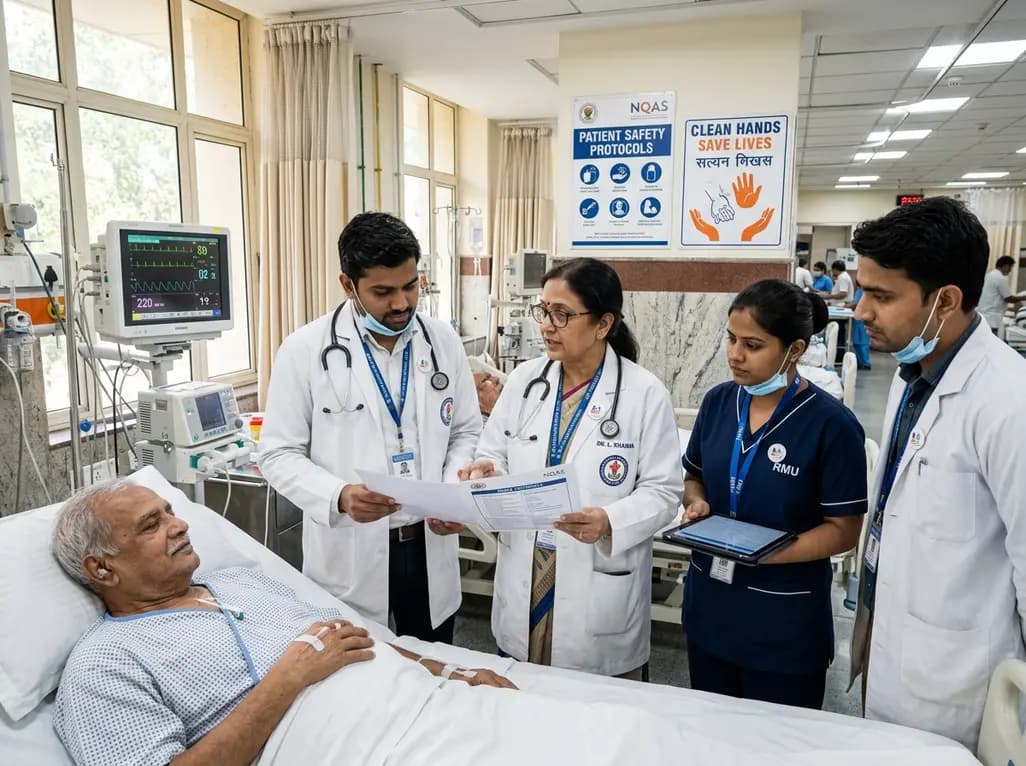
Union Health Minister JP Nadda highlighted patient safety, clinical hygiene, and institutional quality at ABVIMS and Dr RML Hospital on World Patient Safety Day 2026. The national strategy emphasizes NQAS certification, Ayushman Bharat expansions, PMBJP generic access, and safe lifelong management of chronic diseases.
Today
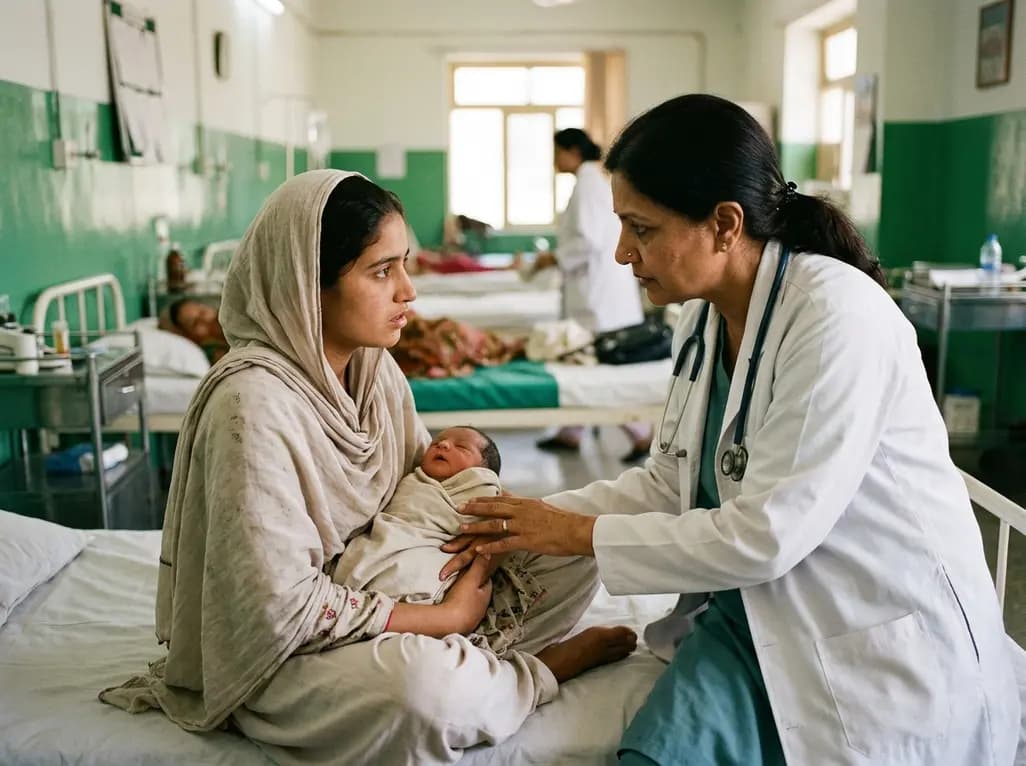
Prelacteal feeding persists in South Asian communities despite known clinical risks. This review examines determinants from Chitral, pathophysiological hazards, and pediatric strategies to eliminate harmful feeds and support exclusive breastfeeding.
Today
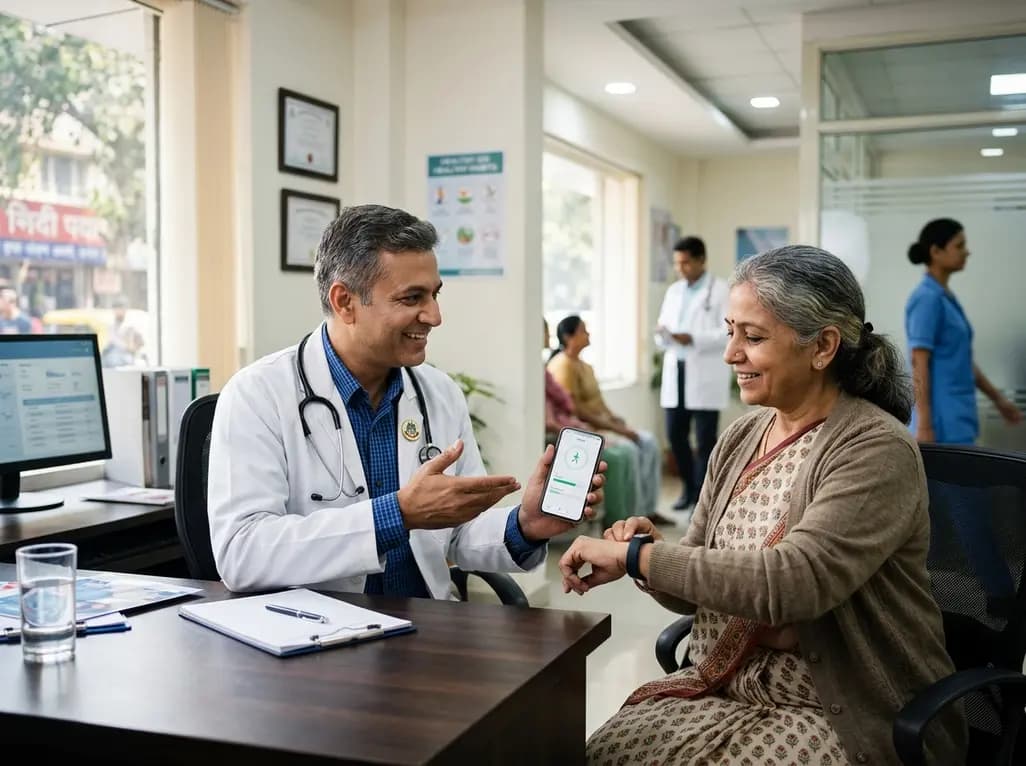
A randomized controlled trial demonstrates that theory-driven personalized mobile messaging reduces the risk of consecutive walking goal failures by 33 percent, highlighting the vital role of digital health tools in sustaining long-term exercise habits and chronic disease prevention.
Today

A comparative cohort study demonstrates that patients undergoing total hip arthroplasty after prior hip arthroscopy achieve comparable functional recovery, low complication rates, and equivalent implant survivorship when conversion occurs after six months.
Today
A cross-sectional study of 320 adults evaluated the link between habitual fasting duration and dietary quality using Nutrition Quotient scores, highlighting the clinical necessity of balancing time-restricted eating with nutrient density and meal quality in routine metabolic practice.
Today
