.webp&w=384&q=75)

Loading, please wait...
Loading, please wait...
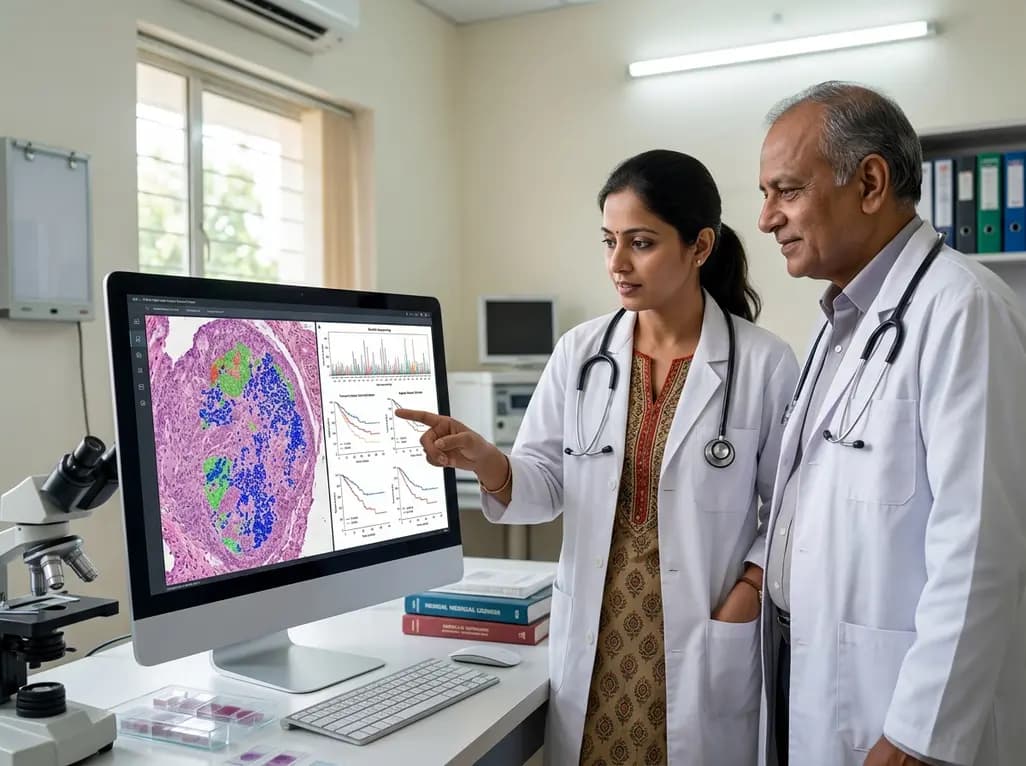
Ovarian cancer remains one of the most heterogeneous and lethal gynecological malignancies worldwide, posing significant challenges for clinical management. A critical component in predicting disease progression is the tumor immune microenvironment, particularly the presence and density of tumor-infiltrating lymphocytes. Recent advancements in digital pathology have paved the way for more objective assessments through Ovarian Cancer TIL Analysis. Traditionally, manual evaluation of these immune cells has been prone to inter-observer variability, which limits its utility in routine clinical practice. However, the integration of artificial intelligence and machine learning offers a standardized approach to quantifying these cells across various histological subtypes. The JGOG3025-A1 study specifically addresses these gaps by employing AI models to decode the complex spatial distribution of lymphocytes. By correlating these immune patterns with genetic backgrounds, researchers aim to establish a more robust framework for patient stratification. This dual focus on pathology and genomics is essential for developing personalized treatment strategies that target the unique vulnerabilities of each tumor.
In the landmark JGOG3025-A1 study, researchers meticulously collected diagnostic slides from 400 ovarian cancer cases to investigate the nuances of the immune landscape. To achieve high precision, they utilized two state-of-the-art artificial intelligence-based cell classification models. These computational tools were designed to analyze spatial distribution patterns and distinguish various cell types within the complex tumor architecture. The researchers calculated a specific score, defined as the total number of tumor-infiltrating lymphocytes divided by the total analyzed area. This metric allowed for the classification of tumors into distinct immunophenotypes, such as the immune-inflamed group. Furthermore, the use of AI minimized the subjective bias often associated with manual counts, providing a highly reproducible dataset. This methodology represents a significant shift toward digital pathology in oncology, where automated systems can handle large-scale data with remarkable speed and accuracy. By quantifying the immune response at such a granular level, the study provides a deeper understanding of how the body interacts with cancerous growths across different stages and subtypes.
The distribution of immune cells is far from uniform across the different histological subtypes of ovarian cancer. According to the study findings, high-grade serous carcinoma (HGSC) consistently exhibited the highest scores in the Ovarian Cancer TIL Analysis. This suggests that HGSC is generally more immunogenic compared to other forms of the disease. In contrast, clear cell carcinoma demonstrated the lowest infiltration levels, often appearing as an "immune desert." Endometrioid carcinoma occupied an intermediate position, showing moderate levels of lymphocyte presence. Notably, these differences in TIL scores reflect the underlying biological diversity of these subtypes, which often dictates how they respond to various therapeutic interventions. For instance, the high infiltration in HGSC might indicate a greater potential for response to immunotherapies or targeted agents. Understanding these variations is crucial for clinicians in India and elsewhere, as it helps in tailoring follow-up protocols and treatment expectations based on the specific pathology. These results underscore the importance of subtyping tumors not just by their appearance, but also by their inherent immune profiles.
One of the most compelling aspects of the JGOG3025-A1 study is the relationship between homologous recombination deficiency (HRD) and the immune microenvironment. In high-grade serous carcinoma, the researchers observed that TIL scores did not significantly vary based on BRCA alterations or general HRD status alone. However, when these factors were integrated, a clear prognostic pattern emerged. Specifically, the group characterized as both HRD and immune-inflamed achieved the most favorable clinical outcomes. This synergy suggests that a deficient DNA repair mechanism combined with a robust immune response creates a scenario where the tumor is more susceptible to both natural defenses and medical treatments. Conversely, in the homologous recombination-proficient (HRP) population, the presence of an immune-inflamed status was associated with better progression-free survival, though this trend did not significantly extend to overall survival. Therefore, the combination of genomic testing for HRD and pathology-based immunophenotyping provides a much more accurate prognostic tool than either method used in isolation. This integrated approach is vital for refining the selection of patients for PARP inhibitor therapy and other advanced treatments.
The study also delved into how large-scale genomic structural changes influence the immune landscape of ovarian tumors. A key finding involved whole-genome doubling (WGD), a phenomenon often seen in advanced cancers where the entire set of chromosomes is duplicated. In HRD tumors, whole-genome doubling was notably associated with lower levels of lymphocyte infiltration. This suggests that the increased genomic complexity provided by WGD may contribute to an immunosuppressive environment, potentially allowing the tumor to evade detection. Interestingly, this association between WGD and lower TIL levels was not observed in HRP tumors, highlighting a distinct biological interaction between DNA repair capacity and genomic stability. These insights into the relationships between TIL levels and genomic structure provide a window into how tumors evolve to survive under selective pressure. By identifying these patterns, scientists can better predict which patients might experience disease recurrence or resistance to standard therapies. Ultimately, this knowledge helps in the development of next-generation biomarkers that account for the dynamic interplay between the cancer genome and the host immune system.
The findings from the JGOG3025-A1 study have profound implications for the future of oncology, particularly in the realm of personalized medicine. By integrating AI-driven pathology with genomic analysis, clinicians can move beyond broad treatment categories toward highly specific patient profiles. For medical professionals in India, where ovarian cancer often presents at advanced stages, these tools offer a way to optimize resource allocation and improve patient survival rates. The study confirms that HGSC is the most immunologically active subtype, but it also highlights the need for specialized approaches in clear cell and endometrioid carcinomas. Moreover, the focus on integrating pathology-based immunophenotypes and HRD status marks a significant step forward in prognostic stratification. As these AI models become more accessible and validated in clinical settings, they will likely become integral to the multidisciplinary management of gynecological cancers. Future research should continue to explore how these digital biomarkers can predict responses to emerging therapies, such as immune checkpoint inhibitors and novel combination regimens. In conclusion, the era of digital immuno-oncology is set to redefine our approach to treating ovarian cancer.
Artificial intelligence enhances TIL assessment by providing a standardized, objective, and highly reproducible method for cell quantification. Unlike manual evaluation, which is subject to inter-observer variability and fatigue, AI models can precisely analyze thousands of cells across entire digital slides. This ensures that the TIL score is accurate and consistent, allowing for better classification of tumors into immune-inflamed or immune-cold categories, which is essential for determining a patient's prognosis.
The combination is significant because it captures two different but related aspects of tumor biology: DNA repair capacity and the host immune response. While HRD status identifies tumors sensitive to certain drugs like PARP inhibitors, the TIL score reflects how well the immune system is engaging the tumor. The JGOG3025-A1 study showed that patients in the HRD/immune-inflamed group had the best outcomes, proving that an integrated biomarker approach is superior for prognostic stratification.
Whole-genome doubling (WGD) appears to influence the immune microenvironment differently depending on the tumor's genetic background. In HRD tumors, WGD is associated with lower lymphocyte infiltration, suggesting it may contribute to immune evasion or an immunosuppressive state. However, this association was not found in HRP tumors. Understanding these genomic structural changes helps clinicians realize how the complexity of the cancer genome can directly affect the body's natural ability to fight the disease.
Disclaimer: This content is for informational and educational purposes only and does not constitute medical advice, diagnosis, or treatment. Always seek the advice of a qualified healthcare provider regarding any medical condition. Refer to the latest local and national guidelines for clinical practice.
References
Hamada K et al. AI-Based Analysis of Tumor-Infiltrating Lymphocytes and Homologous Recombination in Ovarian Cancer: JGOG3025-A1 Study. Cancer Sci. 2026 Jul 10. doi: 10.1111/cas.70474. PMID: 42432821.
Goode EL et al. Association between germline BRCA1/2 mutations and tumor-infiltrating lymphocytes in ovarian cancer: A report from the Ovarian Tumor Tissue Analysis Consortium. JAMA Oncol. 2017;3(10):e173290.
Kandoth C et al. Mutational landscape and significance across 12 major cancer types. Nature. 2013;502(7471):333-339.
"
Read summarized clinical updates, watch expert medical content, and earn CME certifications right from your smartphone.
Open your smartphone camera to scan and install.





The JGOG3025-A1 study utilizes AI-based models to analyze tumor-infiltrating lymphocytes (TILs) and homologous recombination deficiency (HRD) in ovarian cancer. Findings show that high-grade serous carcinoma (HGSC) has the highest TIL density, and combining HRD with immune status offers superior prognosis.
3 months ago

The TREM-AB open-label pilot study evaluated a wearable passive nonlinear vibration absorber for essential tremor. The Nonlinear Energy Sink bracelet reduced clinical Fahn-Tolosa-Marin tremor scores by 32.1% and electrophysiological tremor power by 49.2% with no adverse effects reported.
Today

A population-based study of 20,928 children reveals that small vulnerable newborns face sex-divergent mental capital outcomes at ages 6-7: term SGA girls show higher behavioral difficulties and lower resilience, while preterm non-SGA boys experience increased behavioral problems.
Today
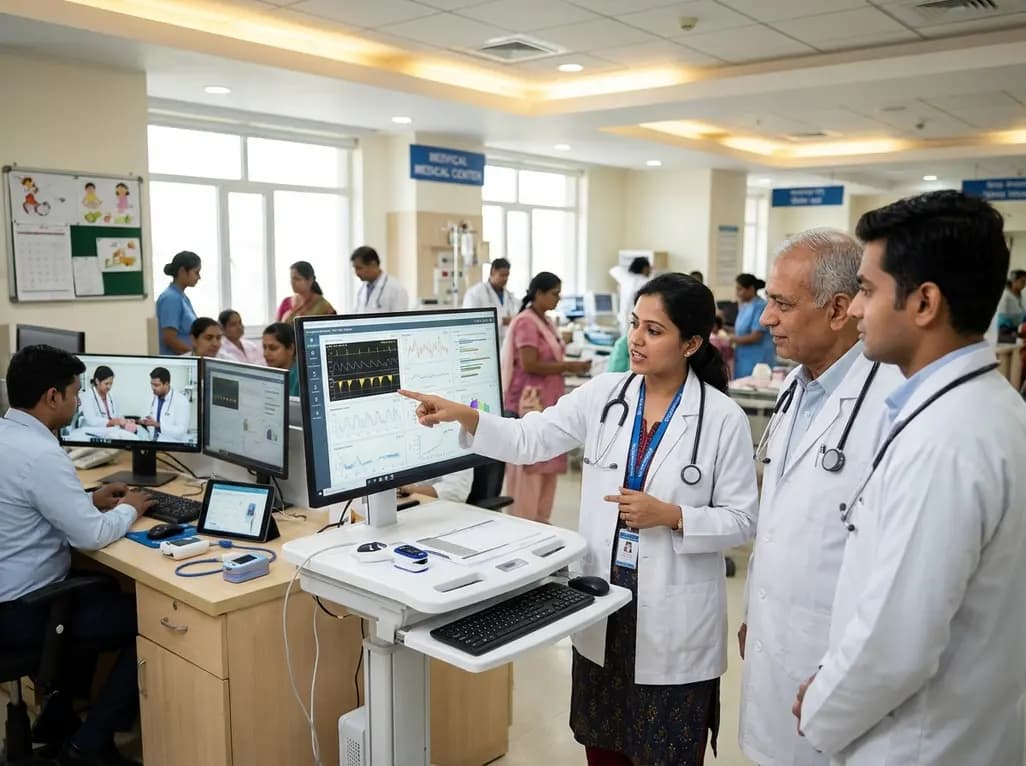
A landmark study details how an enterprise pediatric remote patient management model expanded from a single cardiology pilot to 16 diverse specialty programs by combining centralized digital operations with specialty clinical leadership.
Today

A comparative review of tension band wiring and intramedullary screw fixation in thumb metacarpophalangeal arthrodesis, evaluating union rates, hardware complications, and clinical outcomes.
Today

A breakthrough ultrathin multimodal sensor decouples physical hemodynamic monitoring from disposable electrochemical calibration, achieving long-term wearable glucose prediction with 81.36% accuracy and a 9.12% MARD. This offers a robust, drift-free solution for outpatient metabolic surveillance.
Today
