.webp&w=384&q=75)

Loading, please wait...
Loading, please wait...

The landscape of dental pedagogy is undergoing a seismic shift as digital technologies redefine how clinicians learn and assess knowledge. Specifically, the integration of AI in endodontics education has emerged as a transformative force for faculty members who face the daunting task of creating high-quality assessment materials. Traditionally, developing multiple-choice questions (MCQs) that effectively measure clinical reasoning requires significant time and subject matter expertise. However, large language models (LLMs) like ChatGPT-4, Microsoft Copilot, and Google Gemini now offer a potential solution by automating the drafting process. A recent landmark study by Kaval ME et al. meticulously evaluated these three tools to determine their utility in generating reliable endodontic questions based on professional position statements. This research is particularly relevant as dental schools globally seek more efficient ways to align their curricula with the latest evidence-based guidelines. While the promise of automation is alluring, the transition from manual to AI-assisted question generation necessitates a deep understanding of each model's strengths and limitations. By analyzing how these tools interpret complex endodontic literature, educators can better harness their potential while maintaining the high standards required for dental certification and clinical practice.
In the quest to identify the most effective tool for academic use, researchers utilized position statements from the European Society of Endodontology (ESE) as source material. Each of the three AI models—ChatGPT-4, Copilot, and Gemini—was tasked with producing forty questions using identical prompts to ensure a fair comparison. This methodology allowed for a rigorous evaluation of 120 total questions, focusing on their ability to distinguish between different levels of student performance. Interestingly, the results highlighted a significant disparity in how these models process technical dental information. ChatGPT-4 consistently emerged as the top performer, demonstrating a superior ability to synthesize guidelines into coherent and challenging assessment items. In contrast, Gemini frequently received the lowest ratings across various quality metrics. Furthermore, statistical analysis using Weighted Kappa and Kruskal-Wallis tests confirmed that the differences in performance were not merely coincidental. For instance, significant p-values were noted when comparing ChatGPT-4 and Copilot against Gemini, suggesting that the underlying architecture and training data of these models play a critical role in their educational output. Consequently, selecting the right model is the first and most crucial step for any educator looking to implement AI in endodontics education effectively.
One of the most challenging aspects of creating MCQs is the development of effective distractors—the incorrect options that must remain plausible enough to challenge the learner. The study by Kaval and colleagues placed a heavy emphasis on distractor quality and content validity to ensure that the AI-generated questions were pedagogically sound. High-quality distractors are essential because they prevent students from simply guessing the correct answer through a process of elimination. ChatGPT-4 excelled in this area, creating nuanced options that required a deep understanding of endodontic principles to navigate. Moreover, the content validity of ChatGPT-4's questions remained high, meaning they accurately reflected the core messages of the ESE position statements. On the other hand, Gemini often produced distractors that were either too obvious or lacked clinical relevance, thereby reducing the overall difficulty and validity of the exam items. This finding is significant because it suggests that while all LLMs can generate text, their ability to produce intellectually rigorous medical content varies widely. For dental faculty, this means that while AI can provide a starting point, the specific model chosen will dictate how much manual refinement is required to make the questions suitable for high-stakes examinations.
To understand why ChatGPT-4 outperformed its competitors, it is helpful to examine the specific nuances of its performance. ChatGPT-4 demonstrated a robust grasp of medical terminology and clinical logic, which allowed it to generate questions that felt authentic to the specialty of endodontics. It effectively managed to produce questions that were not only accurate but also reliable, with inter-rater agreement scores ranging remarkably high between 0.870 and 1.000. This suggests that expert endodontists found ChatGPT-4’s questions to be consistently logical and well-structured. Conversely, Google Gemini struggled to maintain this level of consistency. While Gemini is known for its speed and integration with the Google ecosystem, its performance in this specialized medical domain was lackluster. It frequently failed to capture the subtle complexities of endodontic treatment protocols, leading to questions that were either overly simplistic or technically imprecise. Microsoft Copilot occupied a middle ground, offering solid performance but often falling short of the sophisticated reasoning displayed by ChatGPT-4. Therefore, for tasks requiring high precision in AI in endodontics education, ChatGPT-4 currently stands as the most reliable choice for generating academic content that meets the rigorous demands of dental specialists and clinical educators.
The findings of this study have profound implications for the Indian dental education system, where the volume of students and the rigorous standards of the Dental Council of India (DCI) necessitate high-efficiency assessment tools. In India, postgraduate entrance exams like the NEET-MDS require thousands of high-quality MCQs every year to maintain a fresh and challenging question bank. Utilizing AI in endodontics education could significantly alleviate the burden on paper setters and subject matter experts. By using ChatGPT-4 as a primary drafting tool, Indian educators can quickly generate a large volume of questions that are aligned with global standards such as those from the ESE. However, given the significant performance gap between models like ChatGPT-4 and Gemini, it is vital for Indian institutions to adopt standardized protocols for AI usage. Relying on inferior models could lead to a decline in the quality of assessments, potentially impacting the clinical preparedness of future endodontists. Additionally, incorporating AI into the question-generation workflow allows faculty to focus more on the interpretive and clinical aspects of teaching, rather than the mechanical task of drafting exam items. This shift could lead to a more dynamic and evidence-based approach to endodontic training across the country's diverse dental colleges.
While the study confirms that AI can produce high-quality MCQs, it also underscores the necessity of expert oversight. No AI model, regardless of its sophistication, should be used to generate exam questions without a final review by a human specialist. A successful workflow for AI in endodontics education involves several key steps. First, educators should provide the AI with high-quality, authoritative source documents, such as clinical guidelines or peer-reviewed journals, to minimize the risk of hallucinations. Second, the prompts used must be specific and structured, instructing the AI on the desired difficulty level and the number of distractors required. Third, after the AI generates the questions, a panel of experts must review them for technical accuracy, clarity, and relevance to the local clinical context. This hybrid approach—combining the speed of AI with the nuanced judgment of a clinician—ensures that the final assessment is both efficient and academically rigorous. As AI technology continues to advance, the gap between the various models may narrow, but the requirement for professional validation will remain a cornerstone of medical education. By following these best practices, the dental community can responsibly integrate these powerful tools into their educational framework, ultimately improving the quality of student assessment and patient care.
AI tools significantly streamline the question-drafting process by providing a vast array of plausible distractors and clinical scenarios. Faculty members can use these models to generate initial drafts based on specific curriculum guidelines, thereby reducing administrative burden. However, the true value lies in the AI’s ability to suggest diverse answer choices that challenge different cognitive levels, helping educators move beyond simple recall toward more complex clinical reasoning assessments for dental students.
In this comparative evaluation, ChatGPT-4 exhibited superior performance because of its advanced natural language processing capabilities and extensive training on diverse medical literature. Unlike Gemini, which often struggled with the nuances of endodontic position statements, ChatGPT-4 maintained higher content validity and produced more sophisticated distractors. The model's ability to interpret complex clinical guidelines allowed it to generate questions that were more aligned with expert consensus and educational standards in endodontic specialty training.
Human review is absolutely vital because AI models can occasionally produce hallucinations or technically incorrect medical information. Even though models like ChatGPT-4 show high reliability, they lack the real-world clinical experience required to judge the subtlety of complex dental cases. Expert endodontists must verify each question for accuracy, ensure the language matches local clinical protocols, and confirm that the distractors are pedagogically sound. Relying solely on AI without rigorous professional oversight could compromise student assessment quality.
Disclaimer: This content is for informational and educational purposes only. It is not intended to provide any medical advice or substitute for the advice of a qualified healthcare professional. Readers are encouraged to consult with their healthcare provider for any health-related concerns. Refer to the latest local and national guidelines for clinical practice.
References
Kaval ME et al. Comparative Evaluation of Three Artificial Intelligence-Based Tools for Question Generation in Endodontics. Aust Endod J. 2026 Jul 05. doi: 10.1111/aej.70108. PMID: 42402001.
Çakar M et al. Assessment of the Accuracy of Modern Artificial Intelligence Chatbots in Responding to Endodontic Queries. Aust Endod J. 2025 Dec;51(3):732-739. doi: 10.1111/aej.70012.
Işık V et al. Can large language models support endodontic decision-making? Accuracy and Consistency of ChatGPT and Gemini in Deep Caries and Pulp Exposure. Essentials of Dentistry. 2026 May 07.
"
Read summarized clinical updates, watch expert medical content, and earn CME certifications right from your smartphone.
Open your smartphone camera to scan and install.





A study compares ChatGPT-4, Copilot, and Gemini for generating endodontic MCQs. ChatGPT-4 outperformed others in quality and validity, while Gemini trailed. Expert oversight remains essential for clinical accuracy in dental education.
3 months ago
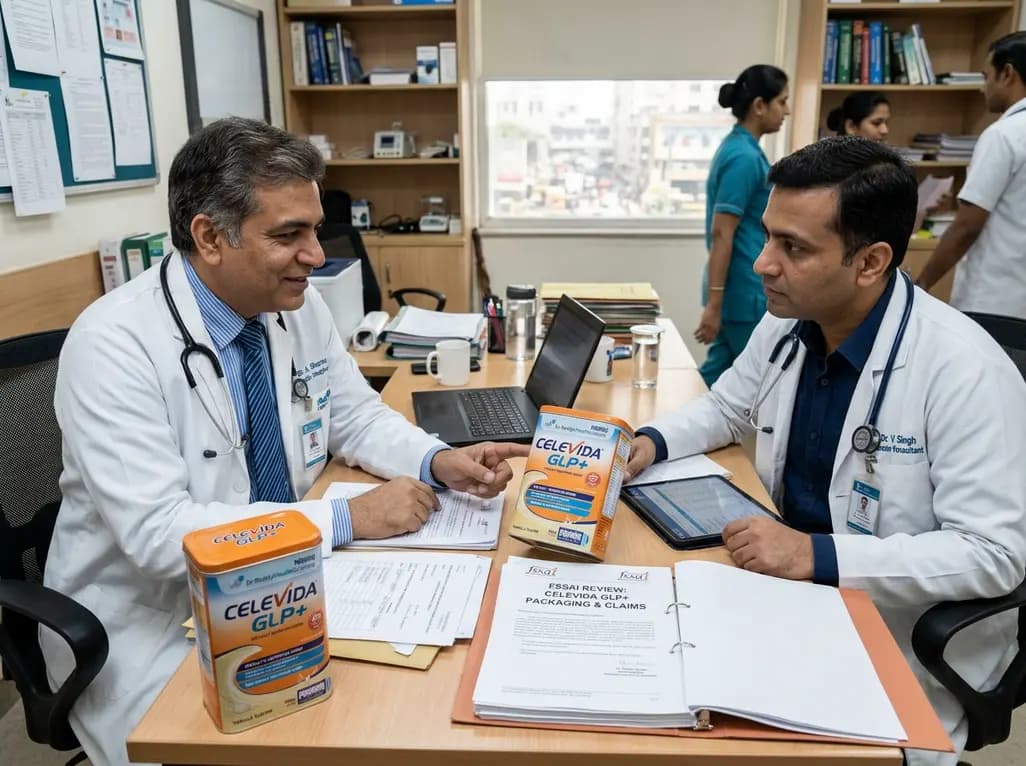
Following regulatory scrutiny from FSSAI regarding promotional representations and lean muscle preservation claims, Dr. Reddy's Laboratories and Nestlé Health Science are currently reviewing the branding and marketing strategy for their joint nutritional supplement Celevida GLP+.
Today

Demanding exhaustive hormonal profiling can inadvertently discourage clinical studies involving females. Methodological standards must align with the specific scientific question to expand, not restrict, equitable evidence for women.
Today

The Directorate General of Health Services directs Indian states to halt the hazardous reuse and reprocessing of single-use medical devices. Discover regulatory implications under the Drugs and Cosmetics Act, critical infection risks, legal liabilities, and operational changes required across clinical specialties.
Today
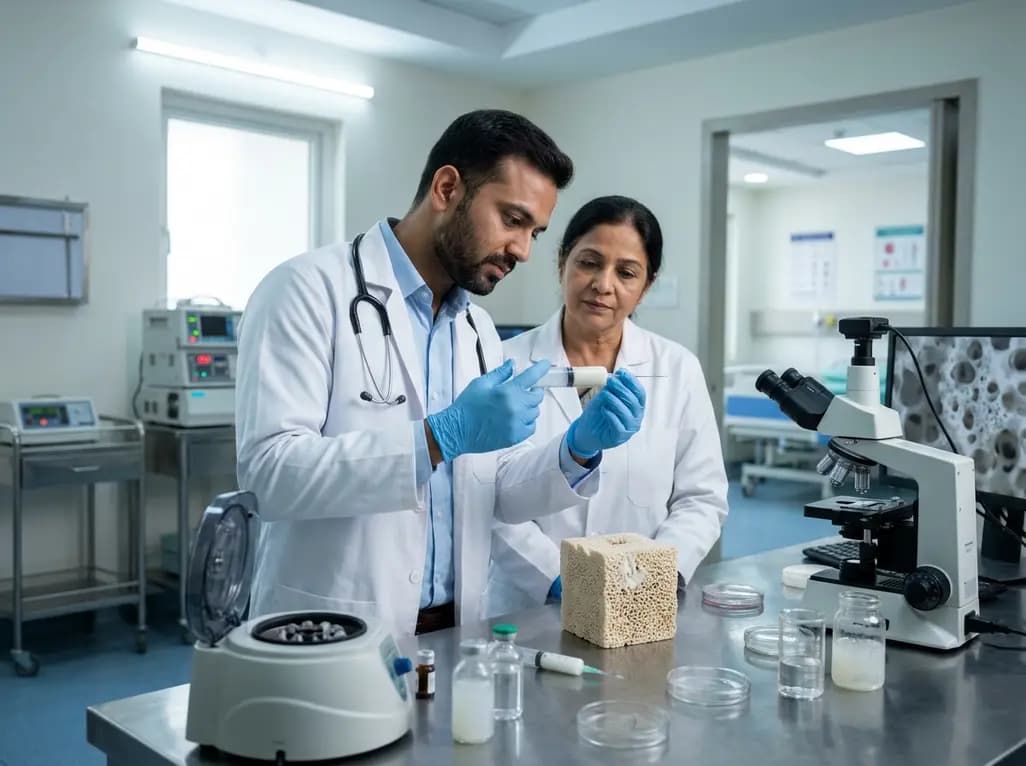
A novel calcium polyphosphate coacervate enables injectable bone implants with in situ hierarchical porosity via phase separation and gas foaming, significantly enhancing cell proliferation, energy metabolism, and osteogenic differentiation for minimally invasive bone defect repair.
Today

India is advancing preventive healthcare by integrating genomics, artificial intelligence, and quantum technologies. With the SANGAM programme sequencing one million Indian genomes, clinicians can unlock personalized therapies, detect cardiometabolic risks early, and curb the burden of diabetes and heart disease.
Today
