

Loading, please wait...
Loading, please wait...

The ASA physical status classification system remains the global cornerstone for evaluating surgical risks and guiding perioperative decisions. Clinical teams rely on this six-tier ordinal scale to categorize physiological reserve before surgery. However, despite its widespread adoption, the score exhibits notoriously poor interrater reliability, typically showing kappa values between 0.4 and 0.6. Consequently, subjective interpretations frequently yield divergent ratings for identical clinical profiles. This inconsistency compromises theatre scheduling, complicates surgical auditing, and alters risk-adjusted reimbursement frameworks. Furthermore, clinicians often encounter conflicting information when reviewing disparate data points across electronic medical records. Busy pre-anesthetic checkup clinics face immense throughput pressures, especially in high-volume public hospitals across India. Therefore, standardizing this assessment represents an essential priority for modern surgical pathways. While algorithmic assistance provides an attractive solution, traditional analytical methods face distinct boundaries. Conventional tabular programs process structured physiological variables consistently, yet they completely miss subtle historical nuances embedded in narrative notes. Conversely, human reviewers capture subjective contexts effectively but remain vulnerable to cognitive fatigue and personal bias. As a result, perioperative teams need dependable computational tools that can integrate structured physiological metrics with narrative histories while maintaining rigorous clinical fidelity.
To address historical analytical hurdles, researchers designed a parallel ensemble that unites traditional machine learning with modern generative language architectures. Specifically, the framework couples gradient-boosted decision trees, namely XGBoost, with Generative Pretrained Transformer-4o. The system operates on a dual-pathway mechanism where each computational engine processes its optimal modality independently. First, structured variables such as age, laboratory investigations, vital signs, and coded comorbidities flow into the XGBoost pipeline. This tabular algorithm calculates probability distributions with exceptional mathematical stability. Simultaneously, unstructured clinical narratives, operative notes, and multi-system history summaries enter the generative language model. In this manner, the language architecture interprets contextual nuances, qualitative severity statements, and subtle functional descriptions that numbers alone cannot convey. Subsequently, the system harmonizes both output vectors using weighted averaging to determine the final ordinal status. Furthermore, this hybrid architecture directly prevents diagnostic drift by grounding narrative interpretations within fixed tabular boundaries. The model avoids hallucinations because the structured pathway enforces continuous mathematical guardrails. Thus, combining tabular predictive algorithms with generative narrative parsing achieves an unprecedented balance between qualitative understanding and quantitative precision.
The validation study evaluated 3,000 adult surgical encounters from an academic medical center to assess model discrimination and diagnostic fidelity. Researchers allocated encounters into training, validation, and true held-out test partitions. Importantly, the validation cohort served strictly for architecture tuning, while the final evaluation relied entirely on the unseen 500-patient test set. On this rigorous benchmark, the parallel ensemble achieved an impressive macro-F1 score of 0.530 and an exact match accuracy of 0.630. Moreover, the ensemble achieved a remarkable plus-or-minus-one class accuracy of 0.980, ensuring that catastrophic tier misclassifications remained exceedingly rare. In direct comparisons, the hybrid model decisively surpassed both standalone architectures. For instance, the structured XGBoost model achieved a validation macro-F1 score of only 0.333, proving that isolated numerical data cannot capture systemic illness severity adequately. Similarly, while a frozen generative baseline reached a macro-F1 score of 0.493, it struggled with inconsistent criterion application across borderline categories. Therefore, combining both computational modalities yielded superior discriminatory power. Consequently, this parallel configuration successfully maximized sensitivity across all illness tiers without sacrificing categorical reliability.
To establish a realistic standard of comparison, two board-certified anesthesiologists independently evaluated patient charts to define an expert consensus benchmark. Notably, this human expert consensus yielded a theoretical macro-F1 ceiling of 0.590, underscoring the intrinsic subjectivity that pervades manual chart review. Because human clinicians often disagree on subtle boundary cases, algorithmic models cannot reasonably exceed this expert threshold without overfitting. Remarkably, the parallel ensemble closed this diagnostic gap, reaching a score of 0.530 and performing near the practical upper limit of human expertise. Furthermore, maintaining high plus-or-minus-one accuracy provides profound reassurance for clinical risk stratification. In real-world surgical pathways, confusing a class II patient with a class III patient presents manageable clinical variation. However, confusing a critically unstable class IV patient with an uncomplicated class II patient introduces severe perioperative hazards. The ensemble effectively eliminates these dangerous diagnostic gulfs. Additionally, automated scoring reduces the documentation burden on pre-anesthetic assessment clinics. By delivering rapid and transparent tier predictions, the platform supports consistent surgical auditing and facilitates standardized triage across hospital networks. Thus, automated classification offers a reliable method to stabilize perioperative assessment standards across complex surgical environments.
Implementing automated scoring holds significant promise for busy surgical ecosystems, particularly within resource-constrained environments like Indian healthcare networks. Indian tertiary hospitals and medical colleges manage overwhelming surgical volumes daily, placing enormous administrative demands on attending anesthesiologists. Under such intense pressure, manual chart reviews often suffer from inconsistent documentation and variable risk documentation. Therefore, integrating automated decision-support software can streamline pre-anesthetic triage without disrupting established clinical workflows. For example, junior residents in pre-anesthesia clinics can leverage automated suggestions to catch overlooked comorbidities before elective procedures. Moreover, robust predictive frameworks enable surgical administrators to allocate operating theatre time, blood products, and intensive care beds with greater anticipation. Nevertheless, clinical leaders must recognize that artificial intelligence should augment rather than replace physician oversight. Local validation across diverse demographic populations remains essential, as comorbidities and disease presentations vary significantly across regions. Furthermore, software designers must protect patient data privacy and ensure full compliance with national digital health standards. Ultimately, adopting validated ensemble architectures provides a dependable foundation to enhance patient safety, standardize surgical risk audits, and improve quality outcomes across perioperative care continuums.
Manual scoring relies on subjective clinical interpretation of systemic illness severity rather than strict mathematical metrics. Different anesthesiologists frequently weigh comorbidities, lifestyle factors, and physiological functional reserves differently during consultations. Consequently, interrater agreement remains low, with reported kappa values between 0.4 and 0.6. This diagnostic variability leads to inconsistent perioperative triage, irregular surgical auditing, and unpredictable clinical documentation across health systems.
Tabular machine learning models excel at evaluating structured parameters like vital signs and laboratory results with mathematical consistency. However, they cannot interpret qualitative clinical narratives. In contrast, generative language models process descriptive clinical notes and surgical histories effectively but struggle with consistent numerical rule adherence. Combining both approaches creates a balanced ensemble where structured numerical guardrails continuously anchor narrative contextual nuance, maximizing overall diagnostic accuracy.
Automated risk assessment tools cannot replace certified anesthesiologists or individual clinical judgment. Instead, these algorithms serve as supportive diagnostic aids that streamline pre-anesthetic checkups and reduce administrative charting burdens. Operating teams must always verify automated predictions against actual bedside evaluations, airway examinations, and dynamic patient characteristics. Ultimately, the clinician maintains full responsibility for perioperative care planning, anesthetic induction, and patient safety management.
Disclaimer: This content is for informational and educational purposes only and should not be considered medical advice or substituted for professional clinical judgment. Refer to the latest local and national guidelines for clinical practice.
References

Read summarized clinical updates, watch expert medical content, and earn CME certifications right from your smartphone.
Open your smartphone camera to scan and install.





A study validates a parallel machine learning and large language model ensemble combining XGBoost and GPT-4o to standardize ASA physical status classification. Achieving 0.98 plus-or-minus-one accuracy, the hybrid AI bridges human interrater variability to enhance perioperative risk assessment and patient safety.
Today
A novel adherence-driven sparsity framework demonstrates that missingness in patient-generated telemedicine data reflects human behavior rather than mere technical error, guiding safer clinical interpretations.
Today
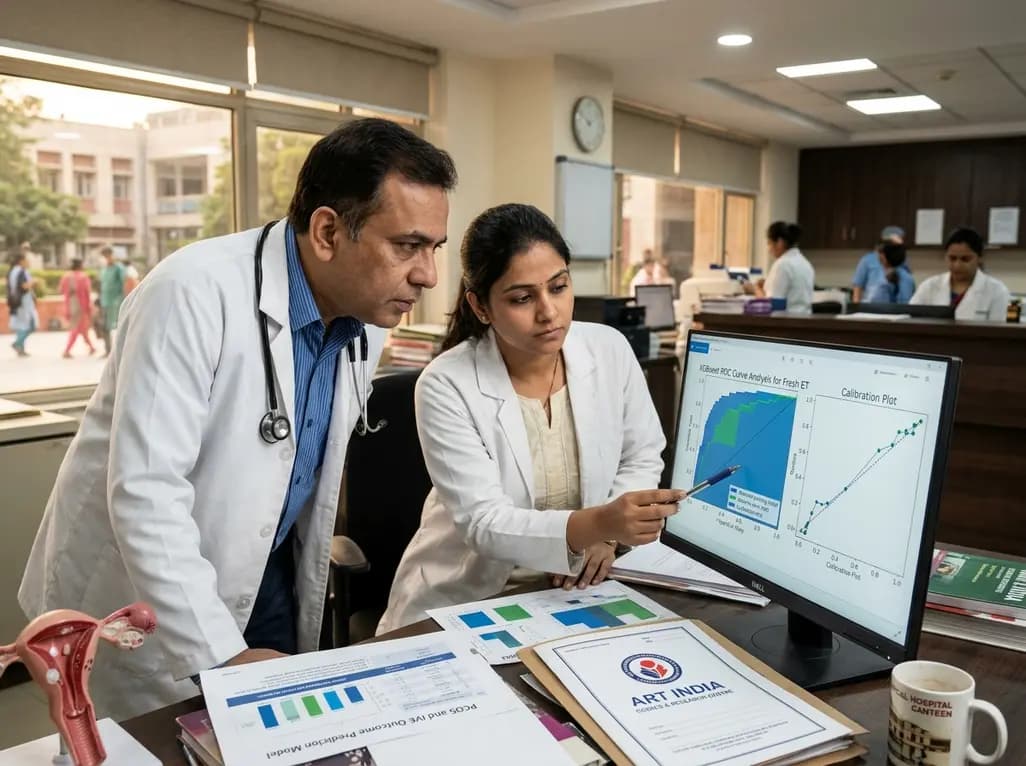
A multicenter study evaluates an XGBoost machine learning model to predict miscarriage risk in PCOS after fresh embryo transfer. While discrimination was strong internally, cross-cohort calibration drift emphasizes its role as a risk-ranking tool rather than a standalone diagnostic instrument.
Today
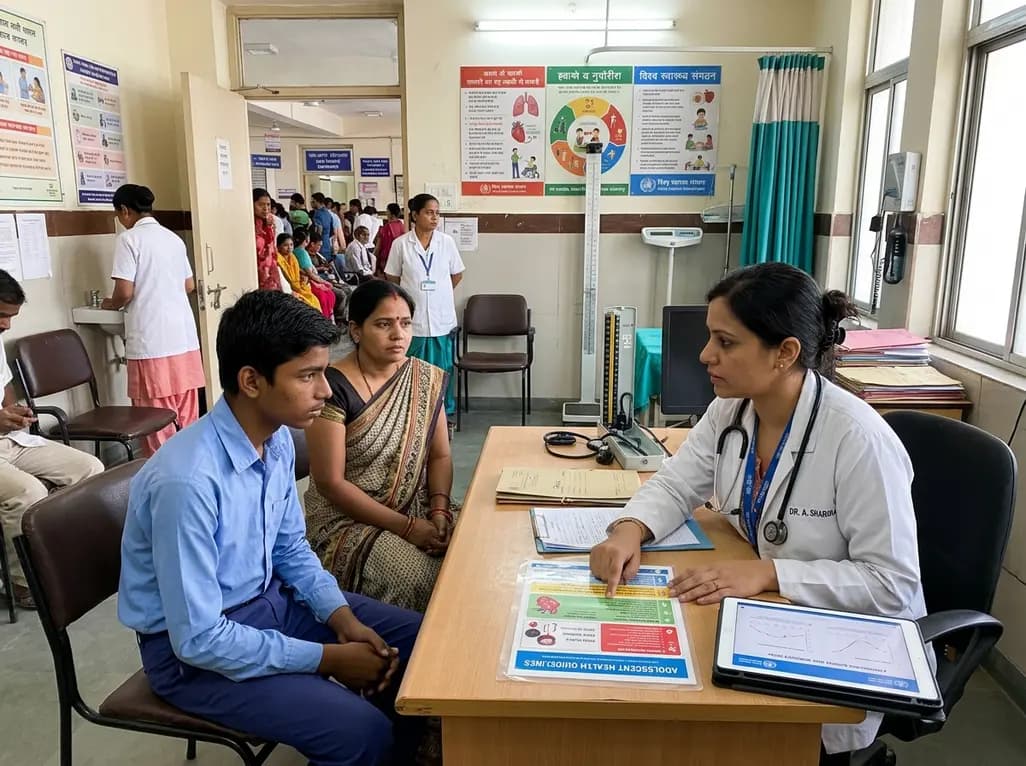
A major World Health Organization study reveals that one in four teenagers globally records zero active days per week. Discover the epidemiological data, cardiometabolic consequences of adolescent sedentary behavior, and practical guidance for clinicians to promote healthy lifestyle habits among youth.
Today

Engineered 3D piezoelectric PHBV scaffolds generate electrical charges during mechanical strain, mimicking native muscle electromechanics to promote cellular alignment, myogenic differentiation, and functional tissue repair in severe volumetric muscle loss.
Today

A study in aged rats reveals that caloric restriction broadly upregulates adipose macrophage genes, whereas concurrent endurance training buffers this response. Despite these tissue-level transcriptional changes, systemic glycemic and lipid markers remain unchanged, highlighting the complexity of geriatric metabolism.
Today
