

Loading, please wait...
Loading, please wait...

Modern healthcare systems increasingly rely on patient-generated telemedicine data to track chronic diseases beyond traditional hospital visits. Digital applications, connected glucometers, wearable blood pressure cuffs, and remote monitoring platforms capture physiological metrics in home environments. However, clinicians frequently encounter sparse, erratic, and incomplete logs across longitudinal monitoring programs. Healthcare professionals traditionally view these observational gaps as technical failures or simple measurement omissions. Yet, real-world data collection fundamentally depends on active, sustained human engagement. When patients skip logging their daily blood glucose levels or discontinue blood pressure checks, these gaps communicate vital behavioural realities. Therefore, treating omitted observations purely as computational noise obscures critical behavioral cues. Furthermore, patients facing treatment fatigue, emotional distress, or sudden symptom remission often alter their reporting frequency. Clinicians must recognize that remote monitoring platforms capture active human choices alongside physiological numbers. Consequently, digital health practitioners must reconsider their fundamental assumptions regarding missing values. Instead of discarding fragmented records, clinicians should evaluate the underlying behavioural context of every missed transmission. By reframing data gaps as behavioral indicators, remote care teams identify treatment barriers earlier and prevent misinformed therapeutic decisions.
The adherence-driven sparsity framework introduces an interpretive structure grounded in four foundational clinical principles. First, patient adherence behavior serves as the central determinant of data availability in decentralized monitoring programs. Devices cannot record metrics autonomously if individuals forget to wear sensors or decline to enter subjective symptoms. Second, patterns of data missingness carry clinically meaningful information regarding patient wellbeing and compliance. For example, a hypertensive patient who stops uploading blood pressure logs may experience medication adverse effects or depressive withdrawal. Third, adherence heterogeneity creates differential representation within observed datasets across diverse patient populations. Highly motivated individuals consistently log measurements, whereas struggling patients remain drastically underrepresented in outpatient registries. As a result, digital health registries often capture a skewed picture of overall disease control. Fourth, analytical methods must align with actual data characteristics rather than unrealistic mathematical ideals. Researchers often demand uniform daily inputs, but real-world telemedicine cohorts produce irregularly sampled trajectories. Therefore, analytical pipelines must accommodate human variability rather than enforce artificial data regularity. By embracing these principles, clinicians develop a nuanced understanding of digital patient engagement and tailor interventions to individual capabilities.
The framework establishes a structured preanalysis workflow to evaluate data integrity before applying clinical models. Clinicians and analysts must first examine the specific data generation context across home environments. In addition, teams must carefully differentiate adherence-driven gaps from system-driven infrastructure failures. Power outages, server downtimes, and device synchronization errors create technical absences that differ fundamentally from behavioural disengagement. Furthermore, the workflow characterizes data loss across six essential reporting dimensions to illuminate longitudinal trends. Healthcare teams evaluate whether missing values reflect missing completely at random, missing at random, or missing not at random mechanisms. In telemedicine, data are rarely missing completely at random because patient actions directly influence transmission. For instance, diabetic patients frequently check glucose during symptomatic hypoglycemia but omit testing during asymptomatic periods. Similarly, patients feeling entirely healthy may skip routine uploads due to perceived wellness. Consequently, assuming random data loss introduces substantial bias into longitudinal disease monitoring. By methodically categorizing missingness mechanisms, data scientists can choose defensible analytical strategies that respect underlying clinical dynamics. Thus, systematic preanalysis safeguards against erroneous clinical deductions. Moreover, this thoughtful workflow ensures that clinical decisions rest on valid behavioural assumptions.
Modern computational medicine increasingly applies sophisticated machine learning algorithms to continuous physiological data streams. However, importing algorithms designed for dense intensive care unit telemetry directly into outpatient telemedicine produces dangerous distortions. Dense clinical telemetry benefits from automated, continuous sensor feeds with minimal patient intervention. In contrast, remote outpatient monitoring depends entirely on sporadic patient cooperation and manual uploads. When researchers apply simple imputation algorithms, such as mean substitution or last observation carried forward, they distort clinical realities. For example, imputing normal blood glucose values during a week of skipped logs assumes health stability where acute distress might exist. Furthermore, complex neural networks may interpret the absence of data as zero risk rather than unmeasured vulnerability. In addition, algorithms trained on highly adherent cohorts perform poorly when applied to disengaged populations. Therefore, methodological complexity cannot compensate for a poor understanding of data collection mechanisms. Clinical teams must resist automated black-box imputations that overwrite meaningful behavioural absences. Instead, models should incorporate missingness itself as an informative predictive feature. Consequently, transparent statistical reasoning protects vulnerable patients from algorithmic misclassification.
Ambulatory clinicians can directly translate the principles of this framework into routine telemedicine consultations. When reviewing home monitoring dashboards, doctors must evaluate measurement frequency alongside numerical trends. For instance, a sudden decline in blood pressure submissions often signals prescription non-adherence or medication-related adverse effects. Conversely, a sudden flurry of blood glucose checks may reflect heightened patient anxiety or symptomatic glycemic volatility. In addition, clinicians must recognize that patients with limited digital literacy face unique barriers to sustained monitoring. Socioeconomic hurdles, device complexity, and app fatigue frequently disrupt continuous data generation. Therefore, when data gaps emerge, clinical teams should initiate supportive outreach rather than assume non-compliance or indifference. Telehealth nurses can contact patients to troubleshoot device connectivity, address financial constraints, or explore treatment tolerability. Furthermore, integrating missingness patterns into electronic health records allows clinicians to identify vulnerable individuals before catastrophic complications occur. Ultimately, patient-generated data reflect both physiological status and behavioral engagement. When physicians interpret both dimensions concurrently, they deliver compassionate, effective, and personalized ambulatory medical care.
Missing data in telemedicine frequently reflects human decision-making rather than technical hardware malfunction. Patients actively decide when to wear sensors, log vital signs, or complete digital symptom surveys. Consequently, prolonged gaps often signal treatment fatigue, adverse drug reactions, emotional distress, or perceived symptom resolution. Conversely, sudden spikes in logging frequency may indicate acute clinical deterioration or anxiety. Recognizing these behavioral patterns allows clinicians to intervene proactively before chronic conditions escalate.
Traditional statistical analyses assume that data are missing completely at random or missing at random. However, patient-generated telemedicine data typically exhibit missing not at random patterns driven by personal adherence choices. Patients choose whether to submit measurements based directly on how they feel or their daily circumstances. Therefore, assuming random omissions creates profound analytical bias. Adherence-driven sparsity explicitly acknowledges that the probability of missingness correlates with patient behavior, disease status, and individual socioeconomic challenges.
Dense machine learning algorithms assume continuous, regularly sampled inputs typical of intensive care telemetry. When analysts apply these models to sparse telemedicine streams, automated imputation methods often distort actual patient health. For instance, substituting average values across missing intervals obscures acute clinical deteriorations or unmeasured therapeutic non-compliance. Furthermore, algorithms trained primarily on highly compliant patients generalize poorly to disengaged individuals. Consequently, clinical teams risk making inappropriate management decisions based on artificially smoothed data representations.
Disclaimer: This content is for informational and educational purposes only... Refer to the latest local and national guidelines for clinical practice.
References

Read summarized clinical updates, watch expert medical content, and earn CME certifications right from your smartphone.
Open your smartphone camera to scan and install.





A novel adherence-driven sparsity framework demonstrates that missingness in patient-generated telemedicine data reflects human behavior rather than mere technical error, guiding safer clinical interpretations.
Today
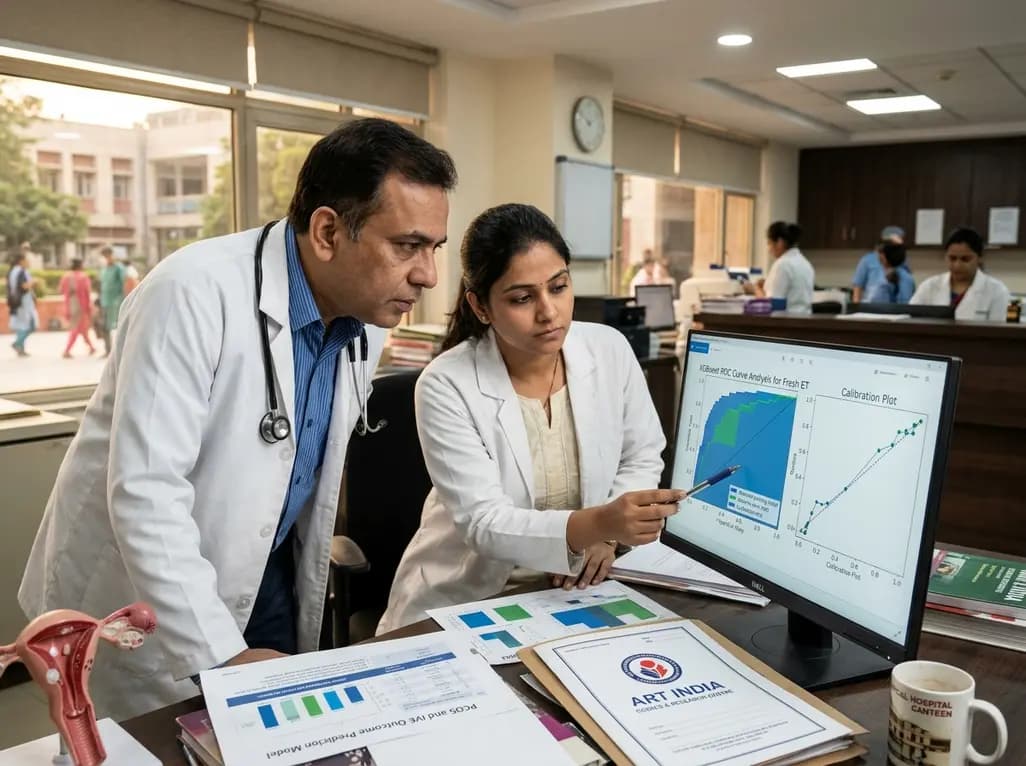
A multicenter study evaluates an XGBoost machine learning model to predict miscarriage risk in PCOS after fresh embryo transfer. While discrimination was strong internally, cross-cohort calibration drift emphasizes its role as a risk-ranking tool rather than a standalone diagnostic instrument.
Today
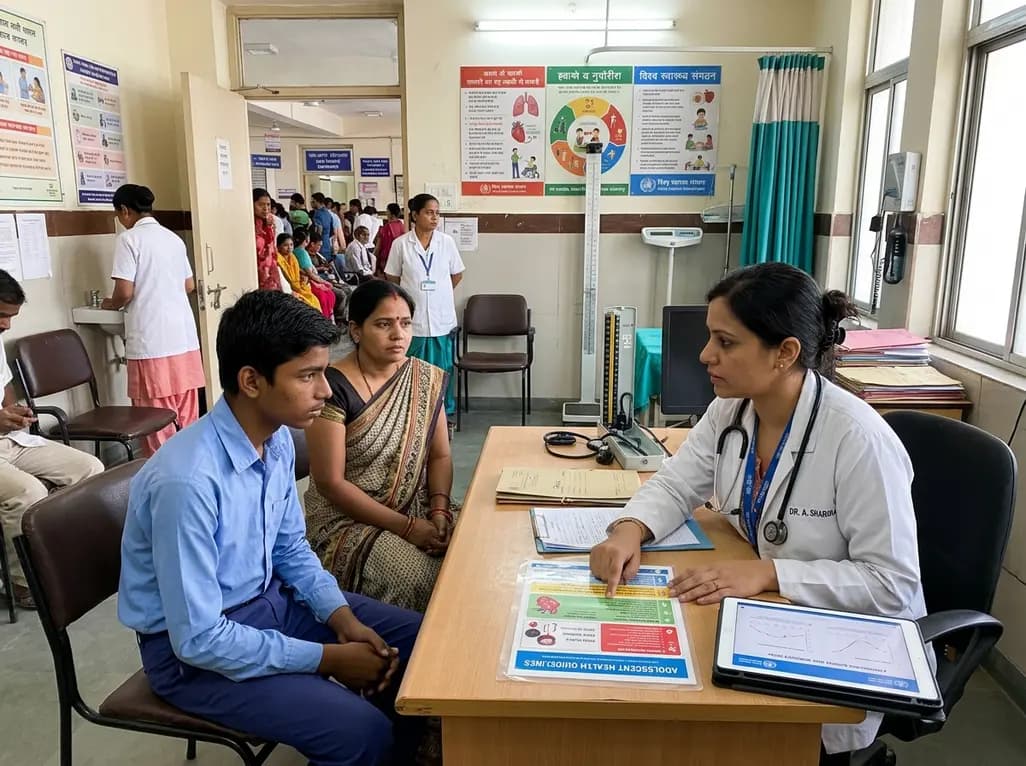
A major World Health Organization study reveals that one in four teenagers globally records zero active days per week. Discover the epidemiological data, cardiometabolic consequences of adolescent sedentary behavior, and practical guidance for clinicians to promote healthy lifestyle habits among youth.
Today

Engineered 3D piezoelectric PHBV scaffolds generate electrical charges during mechanical strain, mimicking native muscle electromechanics to promote cellular alignment, myogenic differentiation, and functional tissue repair in severe volumetric muscle loss.
Today

A study in aged rats reveals that caloric restriction broadly upregulates adipose macrophage genes, whereas concurrent endurance training buffers this response. Despite these tissue-level transcriptional changes, systemic glycemic and lipid markers remain unchanged, highlighting the complexity of geriatric metabolism.
Today
