.webp&w=384&q=75)

Loading, please wait...
Loading, please wait...

Effective communication serves as the cornerstone of successful postoperative recovery. However, medical professionals often struggle to convey complex surgical care instructions in a way that patients can easily digest. Traditionally, discharge summaries are laden with technical jargon and dense paragraphs that overwhelm individuals during a vulnerable recovery phase. Recent advancements in natural language processing (NLP) have introduced transformative opportunities for clinical documentation. Specifically, the integration of AI in discharge instructions offers a sophisticated method to bridge the gap between surgical expertise and patient comprehension. By utilizing large language models like ChatGPT-4, healthcare systems can now synthesize intricate medical data into simplified, patient-centric narratives. This evolution is particularly crucial in fast-paced surgical environments where time constraints often limit the depth of verbal counseling. Furthermore, providing clear written guidance ensures that patients have a reliable reference once they return home. Consequently, the shift toward AI-enhanced documentation represents a significant leap forward in patient safety and empowerment. As clinicians increasingly adopt these digital tools, the potential to standardize high-quality communication becomes more attainable across various surgical specialties.
Health literacy remains a significant barrier to optimal surgical outcomes globally, including in diverse clinical settings across India. Many traditional orthopaedic discharge documents are written at a reading level that far exceeds the average patient's ability to understand. When patients encounter instructions they cannot comprehend, the risk of medication errors and improper wound care increases substantially. Moreover, confusing instructions frequently lead to unnecessary hospital readmissions and increased anxiety for both patients and their families. To address this, researchers have turned to generative artificial intelligence to refine existing materials. By analyzing the readability and text complexity of standard hospital documents, AI can identify sections that are likely to cause confusion. Subsequently, the technology applies linguistic simplifications to ensure the content remains accessible without losing clinical accuracy. Therefore, addressing the readability gap is not merely about simplifying words; it is about ensuring that every patient has the knowledge required to navigate their recovery safely. This proactive approach to communication is essential for reducing the burden on healthcare facilities and improving the overall patient experience.
The practical application of AI in discharge instructions involves more than just a simple rewrite of text. Specifically, recent studies have utilized structured prompting strategies with ChatGPT-4 to focus on seven critical subcategories of postoperative care. These areas include activities, complications, medications, pain management, physical therapy, and wound care. By using specific prompts, surgeons can ensure the AI prioritizes the most vital information for each unique procedure. Furthermore, the AI can structure these instructions using bullet points and clear headings, which significantly enhances visual clarity. This structured format allows patients to quickly locate specific details about their care, such as when to call a doctor or how to manage pain. Additionally, the ability of AI to adapt its tone to be more encouraging and actionable empowers patients to take an active role in their healing process. Consequently, the clarity provided by these AI-generated tools reduces the volume of repetitive inquiries directed at nursing staff and surgical teams. By leveraging these technologies, hospitals can deliver a higher standard of care that is both personalized and highly effective.
To validate the effectiveness of artificial intelligence in clinical communication, researchers employ several objective measures. Readability is often assessed using validated tests such as the Flesch-Kincaid Grade Level and the Flesch Reading Ease score. In recent evaluations, ChatGPT-4 consistently reduced the complexity of discharge instructions from an advanced collegiate level to a much more manageable middle-school level. Moreover, the Patient Education Materials Assessment Tool (PEMAT) is used to evaluate understandability and actionability. Understandability refers to whether a patient can grasp the core concepts, while actionability measures whether they know exactly what steps to take. Results have shown that AI-rewritten content scores significantly higher in both PEMAT categories compared to original hospital documents. Furthermore, the AI was able to maintain high fidelity to the original clinical requirements, ensuring no critical medical information was omitted during the simplification process. Therefore, these metrics provide strong evidence that NLP tools can reliably enhance the quality of patient education materials. This data-driven validation is essential for gaining the trust of the medical community and encouraging broader adoption of AI in clinical workflows.
The clinical implications of improved discharge communication are profound and multifaceted. When patients clearly understand their postoperative protocols, they are more likely to adhere to medication schedules and physical therapy regimens. This adherence directly translates to faster recovery times and a lower incidence of complications such as surgical site infections or deep vein thrombosis. Furthermore, clear instructions regarding "red flag" symptoms enable patients to seek medical attention early, potentially preventing minor issues from escalating into emergencies. Additionally, the use of AI allows for the rapid generation of instructions in multiple languages, which is particularly beneficial in culturally diverse regions like India. By removing language barriers, clinicians can provide equitable care to all patient populations regardless of their primary tongue. Consequently, the integration of NLP into the discharge process supports a more inclusive and effective healthcare system. As surgeons and hospitals look to optimize their performance metrics, improving the quality of patient communication through AI stands out as a high-impact, low-cost intervention. Eventually, this will lead to higher patient satisfaction scores and better long-term clinical results.
Successfully integrating natural language processing into a busy surgical practice requires a balanced approach between technology and human oversight. While ChatGPT-4 demonstrates remarkable capabilities in simplifying text, it is not a replacement for clinical judgment. Therefore, surgeons must review AI-generated instructions to ensure they align with the specific nuances of the surgery performed. This collaborative model, where AI handles the heavy lifting of linguistic simplification and the clinician provides final validation, is the most efficient path forward. Moreover, hospitals can integrate these AI prompts directly into their electronic health record (EHR) systems to automate the creation of patient-friendly summaries. Furthermore, continuous training of the AI models with local clinical guidelines can further refine the accuracy and relevance of the outputs. By adopting these tools, healthcare providers can significantly reduce the administrative burden associated with documentation. This allows medical staff to dedicate more time to direct patient care and complex decision-making tasks. Ultimately, the synergy between human expertise and artificial intelligence will define the future of postoperative care, ensuring that every patient leaves the hospital with the clarity and confidence they need for a successful recovery.
AI improves actionability by transforming passive, technical descriptions into direct, imperative sentences that clearly define required behaviors. Instead of stating \"ambulation should be prioritized to prevent venous stasis,\" the AI might write \"walk for five minutes every hour while awake to prevent blood clots.\" This clear, step-by-step guidance removes ambiguity, ensuring patients understand exactly what they must do, when to do it, and the specific reason for the action.
Yes, advanced large language models are highly capable of translating and culturally adapting medical text into various Indian regional languages like Hindi, Tamil, or Bengali. Beyond literal translation, these tools can adjust the complexity of the vocabulary to match the specific literacy level of the target audience. This ensures that the simplified, actionable nature of the instructions is maintained across different languages, significantly improving health equity in diverse populations.
While generative AI is highly proficient at linguistic simplification, there is a small but critical risk of \"hallucinations\" or the omission of specific clinical nuances. This is why AI should always be used as an assistive tool under the supervision of a qualified medical professional. Surgeons must perform a final review of all AI-generated content to ensure that dosages, activity restrictions, and follow-up timelines remain 100% accurate and specific to the patient's procedure.
Disclaimer: This content is for informational and educational purposes only. It does not constitute medical advice or a substitute for professional clinical judgment. AI tools should be used as adjuncts to, not replacements for, expert medical oversight. Refer to the latest local and national guidelines for clinical practice.
References
Reaver CN et al. Natural Language Processing Improves Postoperative Discharge Instructions. Arthroscopy. 2026 Jun 28. doi: 10.1002/arj.70400. PMID: 42365632.
Huang T et al. Patient-Representing Population's Perceptions of GPT-Generated Versus Standard Emergency Department Discharge Instructions. Journal of Medical Internet Research. 2024;26:e60336.
Jido JT, Al Wizni A. Are Artificial Intelligence-generated Patient Leaflets Ready for Clinical Use? A Readability Comparison across Common Orthopaedic Procedures. Journal of Orthopaedic Case Reports. 2025;15(10):295-301.
"
Read summarized clinical updates, watch expert medical content, and earn CME certifications right from your smartphone.
Open your smartphone camera to scan and install.





A recent study demonstrates that ChatGPT-4 can significantly enhance the readability, understandability, and actionability of orthopaedic discharge instructions. By simplifying complex medical jargon into clear, actionable steps, AI tools provide a scalable solution to improve postoperative patient communication.
3 months ago

The HELO study evaluates hearing function in virologically suppressed persons living with HIV. Learn how chronic inflammation, vascular factors, and antiretroviral therapy impact auditory decline and why regular audiological monitoring is critical for aging patients.
Today

A population-based study of 20,928 children reveals that small vulnerable newborns face sex-divergent mental capital outcomes at ages 6-7: term SGA girls show higher behavioral difficulties and lower resilience, while preterm non-SGA boys experience increased behavioral problems.
Today
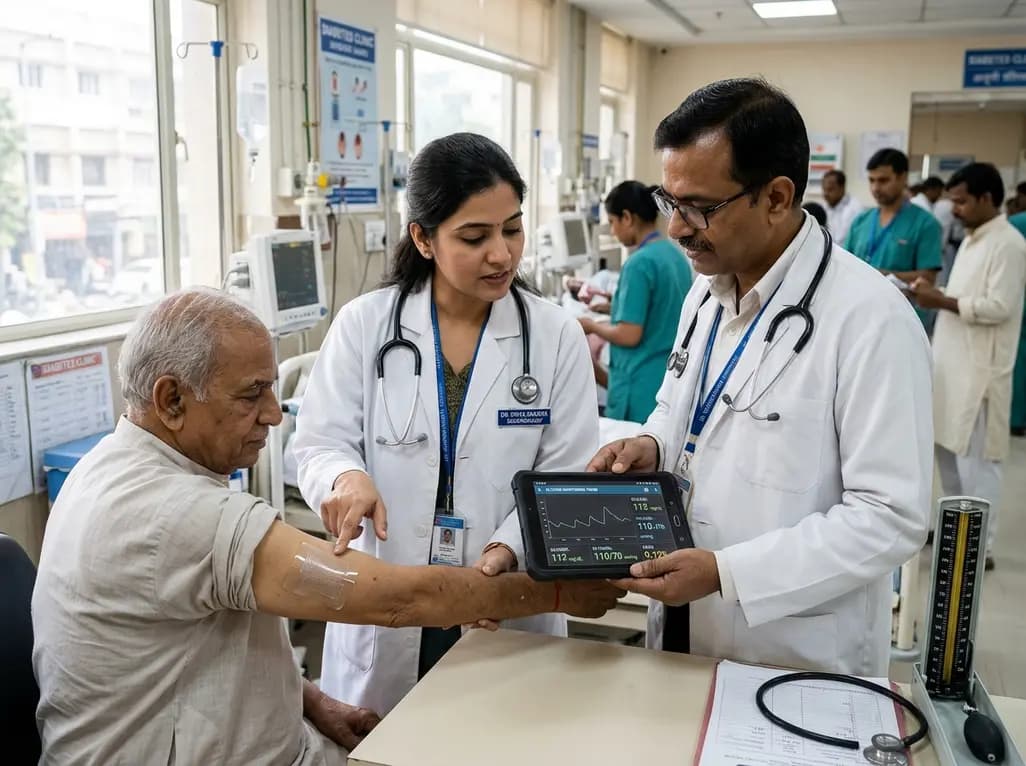
A breakthrough ultrathin multimodal sensor decouples physical hemodynamic monitoring from disposable electrochemical calibration, achieving long-term wearable glucose prediction with 81.36% accuracy and a 9.12% MARD. This offers a robust, drift-free solution for outpatient metabolic surveillance.
Today
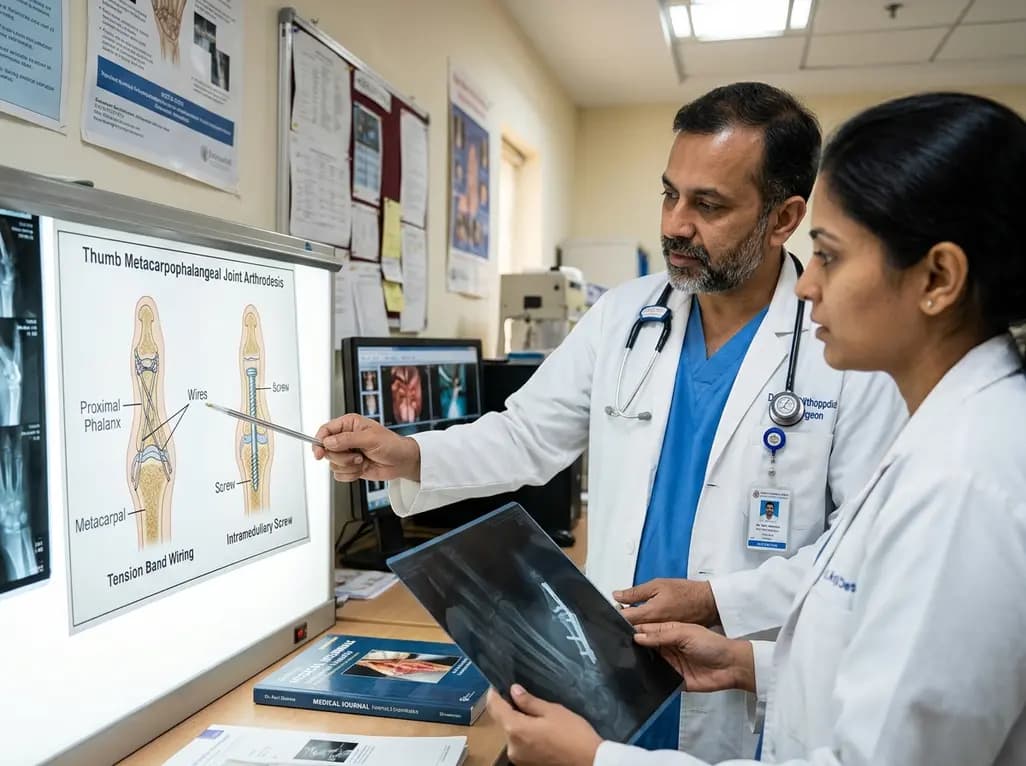
A comparative review of tension band wiring and intramedullary screw fixation in thumb metacarpophalangeal arthrodesis, evaluating union rates, hardware complications, and clinical outcomes.
Today

Following regulatory scrutiny from FSSAI regarding promotional representations and lean muscle preservation claims, Dr. Reddy's Laboratories and Nestlé Health Science are currently reviewing the branding and marketing strategy for their joint nutritional supplement Celevida GLP+.
Today
