.webp&w=384&q=75)

Loading, please wait...
Loading, please wait...
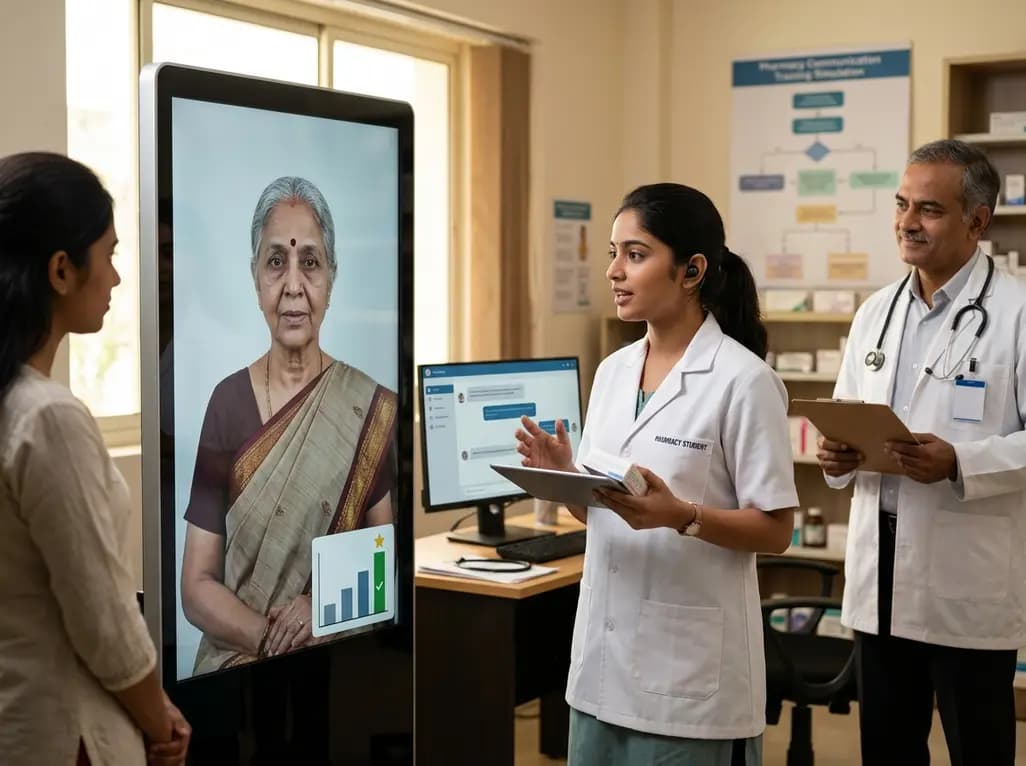
Modern pharmacy curricula now face the vital challenge of integrating technology to improve patient interactions. Recently, researchers introduced ATLAS, an educator-guided GenAI tool designed for AI communication skill training. This innovative prototype offers real-time simulations using patient avatars. Furthermore, it provides students with both verbal and non-verbal feedback. By creating a safe environment for practice, the tool aims to bridge the gap between classroom theory and clinical reality.
A recent quasi-experimental study evaluated the impact of ATLAS on undergraduate pharmacy students. Specifically, 201 students accessed the tool one month before their summative Objective Structured Clinical Examination (OSCE). Notably, researchers compared their performance against a control group of 313 non-users. Students who utilized the AI tool showed a significant improvement in their communication scores. For instance, ATLAS users experienced a median increase of 1.55 points, while the control group showed no significant change. Consequently, this data suggests that technology-supported practice directly correlates with better assessment outcomes.
One of the most compelling findings from the study involves the frequency of use. While any usage was beneficial, the greatest gains occurred after multiple interactions. Students who completed three or more conversation attempts saw score improvements ranging from 6.5 to 8.3 points. Moreover, female and domestic students appeared to benefit the most from this digital intervention. Although some students still prefer in-person practice for developing deep empathy, many reported that the AI avatars felt realistic. Therefore, implementing such tools can effectively supplement traditional teaching methods.
In summary, the ATLAS tool serves as a valuable asset for developing nuanced communication subskills. It particularly helps students who may feel less confident participating in a traditional classroom setting. However, the study also highlights technical limitations and initial AI hesitancy among some learners. Future research will prioritize multi-site randomized trials to further validate these findings and ensure equitable access for all student demographics.
ATLAS provides a safe, accessible platform where students interact with realistic patient avatars. It offers immediate, personalized feedback on both verbal and non-verbal cues, allowing students to refine their techniques before high-stakes exams.
The study suggests that GenAI is an excellent supplement, especially for building confidence and practicing subskills. However, many students still find in-person practice superior for developing complex emotional empathy and navigating nuanced human interactions.
Disclaimer: This content is for informational and educational purposes only. It does not constitute medical advice or establish a doctor-patient relationship. Refer to the latest local and national guidelines for clinical practice.
References
1. Lim A et al. Using an educator-guided generative artificial intelligence (GenAI) tool for developing communication skills in undergraduate pharmacy students. Curr Pharm Teach Learn. 2026 Jun 01. doi: undefined. PMID: 42224813.
2. Shorey S et al. Application of AI Communication Training Tools in Medical Undergraduate Education: Mixed Methods Feasibility Study Within a Primary Care Context. JMIR Med Educ. 2025 Oct 24. doi: 10.2196/54321.
3. Masters K. Artificial intelligence in medical education. Med Teach. 2023. doi: 10.1080/0142159X.2023.2187234.
"
Read summarized clinical updates, watch expert medical content, and earn CME certifications right from your smartphone.
Open your smartphone camera to scan and install.





The ATLAS GenAI tool shows a significant link between repeated simulation practice and improved OSCE communication scores in undergraduate pharmacy students...
4 months ago

As monsoon seasons elevate arboviral disease threats, Tamil Nadu has initiated an ICMR-monitored evaluation of the tetravalent dengue vaccine in Tenkasi district. Clinicians emphasize clinical monitoring, public prevention, and high-quality early pediatric care to reduce disease morbidity across endemic regions.
Today

Leucine Rich Bio has introduced South Asia's first comprehensive vaginal microbiome test, BugSpeaks. By profiling microbial dysbiosis, pathogens, and antimicrobial resistance, this next-generation diagnostic platform provides clinicians with deeper insights into recurrent infections, fertility, and reproductive health.
Today

Review how tailored exercise programs benefit frail older patients with heart failure. Explore pathophysiological mechanisms, individualized training prescriptions, and strategies to overcome adherence barriers in clinical practice.
Today

This comparative study evaluates posterior labral tears with and without glenohumeral instability, highlighting distinct demographic patterns, MRI underestimation in stable shoulders, and successful arthroscopic repair outcomes.
Today

A clinical study demonstrates that early intervention with tocilizumab, either as monotherapy or bridged with corticosteroids, achieves significant proptosis reduction and resolves active inflammation in treatment-naive thyroid eye disease.
Today
