

Loading, please wait...
Loading, please wait...

Cross-cultural psychiatric assessments and behavioral health research demand rigorous instrument adaptation. Historically, clinicians have relied on Brislin's classical translation model to convert patient-reported questionnaires into target languages. However, conventional manual translation frequently proves labor-intensive, expensive, and susceptible to subjective adjudicator bias. Recent advances in computational linguistics demonstrate that AI back-translation provides a robust, scalable alternative for international researchers. By integrating artificial intelligence into translation workflows, investigators can rapidly adapt clinical scales while maintaining linguistic consistency. Nonetheless, researchers must evaluate whether automated platforms achieve true psychometric validity across diverse linguistic demographics.
For decades, investigators followed standard forward- and back-translation protocols to adapt psychological measures across global populations. In this conventional approach, one bilingual expert translates the original questionnaire into the target language. Subsequently, an independent translator converts the draft back into the source language to detect discrepancies. While this framework remains popular, researchers frequently implement it uncritically without objective validation metrics. Furthermore, human translators often introduce personal lexical idiosyncrasies, leading to inconsistent interpretations across clinical trial sites. In clinical psychiatry, an inaccurate item translation can distort symptom severity scores, compromising diagnostic precision. Therefore, methodological innovators have explored neural machine translation architectures to enhance procedural reproducibility. Recent comprehensive investigations have evaluated platforms like DeepL, ChatGPT, and Google Translate to modernize this traditional workflow. Initial pilot studies demonstrated that advanced neural engines, particularly DeepL, exhibit remarkable syntactic accuracy and contextual coherence during forward and backward text conversions. Consequently, researchers now recognize artificial intelligence as a viable instrument to streamline early adaptation stages. By accelerating preliminary drafting, computational tools allow investigators to dedicate valuable time to qualitative cultural vetting.
Rigorous methodological studies have directly compared AI-generated translations against traditional human translations across diverse language pairs, including English, German, and Spanish. In initial single-round evaluations, AI back-translation generated linguistic quality that matched or exceeded human performance on standardized psychometric inventories. Furthermore, automated back-translations showed strong quantitative correspondence with original source items when researchers assessed semantic preservation. The computational models preserved idiomatic nuance remarkably well in common screening inventories, avoiding the awkward phrasing that often plagues inexperienced human translators. However, machine translation engines still exhibit clear limitations when processing complex, culture-specific psychiatric idioms or highly abstract psychological constructs. For example, colloquial descriptions of depressive affect or somatic anxiety frequently require subtle semantic adjustments that algorithms cannot intuitively deduce. Therefore, experts emphasize that automated linguistic fidelity does not automatically ensure complete conceptual equivalence. While algorithms rapidly generate linguistically clean outputs, researchers must systematically review every item against established cultural criteria. Incorporating automated quantitative scoring helps identify lexical deviations, but experienced clinicians must adjudicate whether the clinical intent remains unaltered. Thus, machine translation serves as a powerful collaborative partner rather than an autonomous replacement for clinical researchers.
Translating a psychiatric instrument requires far more than surface linguistic fidelity; it demands strict psychometric equivalence. When clinicians administer translated scales across diverse groups, they must demonstrate that the instrument measures identical psychological constructs in every cohort. Methodological trials assessing multi-round AI translation protocols have examined measurement invariance across language versions. Notably, statistical analyses confirm that AI-translated inventories demonstrate configural and metric invariance comparable to human-translated counterparts. This finding confirms that patients conceptualize the underlying clinical dimensions similarly, regardless of whether a machine or human produced the translated phrasing. In addition, item-factor loadings and scale reliability coefficients remain stable across both translation methodologies. However, researchers must remember that statistical measurement invariance in one linguistic pair does not guarantee cross-cultural validity in another. Cultural contexts fundamentally shape how individuals interpret emotional distress and behavioral symptoms. Consequently, investigators cannot assume psychometric validity simply because an algorithm generates identical back-translated wording. Clinical teams must conduct cognitive debriefing interviews with representative patient samples to confirm pragmatic comprehension. Therefore, establishing complete psychometric integrity requires a balanced combination of algorithmic precision and empirical field pretesting.
To overcome the vulnerabilities of uncritical automated translation, recent research proposes an enhanced, multi-round AI-assisted framework. This modern methodology integrates parallel machine-generated forward translations, automated back-translation, and structured adjudication protocols. Rather than relying on a single output, researchers generate multiple translation candidates using distinct artificial intelligence models. Subsequently, investigators apply the TRAPD model, which incorporates translation, review, adjudication, pretesting, and documentation stages. To facilitate systematic evaluation, researchers developed dedicated digital tools such as the AI Translation Evaluation Assistant. This specialized utility enables clinical teams to conduct qualitative reviews while tracking linguistic deviations systematically. Furthermore, investigators utilize the Metric for Evaluation of Translation with Explicit Ordering as an objective indicator of quantitative correspondence. By uniting automated metrics with human adjudication, the framework minimizes individual reviewer bias and enforces rigorous quality control. Moreover, complete documentation of every editorial change ensures transparent replication across multinational research consortia. This structured approach transforms scale adaptation from an informal art into an auditable, reproducible scientific discipline.
The findings from multi-round translation research offer tremendous practical value for healthcare delivery and psychiatric research across India. Indian clinicians practice in an extraordinarily diverse linguistic landscape featuring twenty-two official languages and hundreds of regional dialects. When screening for psychiatric disorders or evaluating treatment outcomes, physicians frequently lack validated, linguistically adapted psychometric tools in regional languages. Deploying commercial human translation agencies across multiple regional tongues often requires prohibitive budgets and prolonged timelines. Consequently, clinical research networks can leverage AI-assisted translation workflows to rapidly draft culturally grounded assessment inventories. For instance, teams can generate parallel drafts in Hindi, Tamil, Telugu, or Marathi, followed by algorithmic back-translation to verify conceptual clarity. However, Indian practitioners must recognize the distinct socio-cultural nuances that govern somatic symptom reporting in South Asian populations. Psychiatric distress in India often manifests through somatic metaphors that standard Western algorithms might mistranslate. Therefore, bilingual Indian psychiatrists and mental health professionals must rigorously adjudicate every translated item. By combining efficient machine intelligence with local clinical expertise, Indian researchers can expand validated mental healthcare screening across underserved demographic communities.
AI back-translation cannot replace human experts because linguistic parity does not guarantee cultural or psychometric equivalence. While artificial intelligence translates sentences quickly, it cannot interpret nuanced cultural metaphors or clinical diagnostic subtleties. Furthermore, regulatory bodies require human adjudication to verify that clinical questions convey their intended diagnostic meaning. Therefore, investigators must treat machine translation as an efficient supportive tool that complements, rather than replaces, qualified multidisciplinary expert review panels.
Methodological studies indicate that DeepL currently demonstrates superior syntactic accuracy and contextual coherence compared to general conversational models for European language pairs. However, translation quality varies significantly depending on specific target languages, training corpora, and syntax complexity. For regional languages, researchers should generate parallel outputs using multiple architectures, including specialized neural engines and large language models. This comparative strategy allows adjudicators to select the most culturally natural phrasing for clinical assessment.
Linguistic similarity only confirms that words correspond literally between languages, but it does not ensure identical construct measurement. Diverse cultural groups often perceive emotional symptoms, stigma, and behavioral prompts differently despite literal translation accuracy. Consequently, scales must demonstrate statistical measurement invariance and conceptual equivalence through empirical field testing. Without rigorous cognitive debriefing and psychometric validation, translated questionnaires risk producing skewed symptom severity estimates and unreliable clinical research conclusions.
Disclaimer: This content is for informational and educational purposes only. It is not intended to replace professional medical advice, diagnosis, or treatment. Always seek the advice of your physician or another qualified healthcare provider with any questions you may have regarding a medical condition or clinical practice guidelines. Refer to the latest local and national guidelines for clinical practice.
References

Read summarized clinical updates, watch expert medical content, and earn CME certifications right from your smartphone.
Open your smartphone camera to scan and install.





A comprehensive multi-study evaluation reveals that AI back-translation matches or exceeds human linguistic precision in psychological scale adaptation. However, expert clinician review and psychometric invariance testing remain vital to ensure cross-cultural validity in diverse patient populations.
Today
A recent study highlights that pairing photograph-assisted 24-hour recalls with regional food databases significantly boosts dietary assessment accuracy. This methodology reduces cultural bias and strengthens nutrient tracking, offering crucial lessons for clinicians managing nutritional care in diverse populations.
Today
A randomized trial of 272 young women in underserved settings evaluated motivational interviewing versus didactic education. Motivational interviewing effectively reduced unintended pregnancy and risky sexual behavior, while didactic counseling fostered greater condom consistency in Hispanic participants.
Today
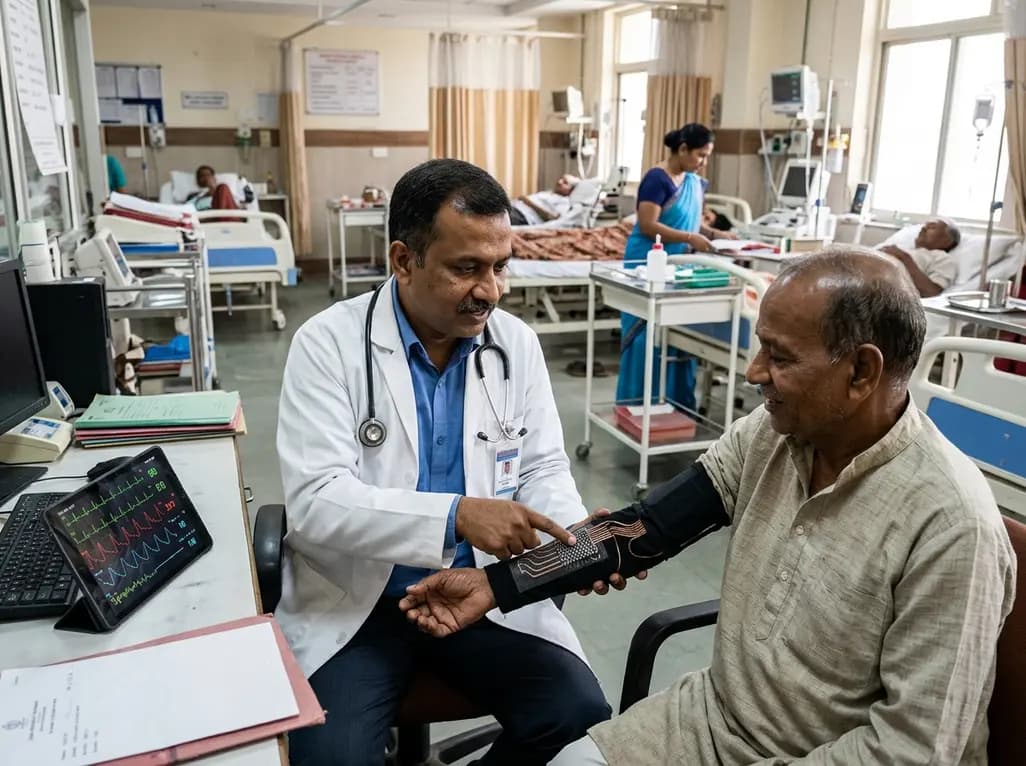
Wearable e-textiles transform cardiovascular monitoring by integrating flexible conductive sensors into everyday clothing. This advance enables continuous, non-invasive assessment of ECG, pulse waves, and hemodynamics, bridging the gap between hospital diagnostics and home healthcare.
Today

Engineered 3D piezoelectric PHBV scaffolds generate electrical charges during mechanical strain, mimicking native muscle electromechanics to promote cellular alignment, myogenic differentiation, and functional tissue repair in severe volumetric muscle loss.
Today

India's food safety authority is taking aggressive action against major beverage companies for marketing high-caffeine products as energy drinks. This clinical analysis examines the cardiovascular complications, metabolic risks, and pediatric concerns behind the regulator's push for truthful beverage standards.
Today
