

Loading, please wait...
Loading, please wait...

Adolescent sexual and reproductive health remains a paramount clinical concern worldwide. Healthcare providers frequently encounter significant barriers when addressing unintended pregnancy and sexually transmitted infections among marginalized youths. A landmark randomized trial evaluated whether motivational interviewing with personalized feedback could outperform standard didactic education counseling among vulnerable young women. The investigation focused on young women attending alternative educational institutions and underserved community settings. Consequently, the findings provide vital insights into behavioral interventions for clinicians navigating adolescent healthcare.
Adolescents in underserved settings experience disproportionate rates of reproductive health morbidities. Socioeconomic deprivation, limited health literacy, and systemic barriers frequently compound these clinical challenges. In addition, substance use during sexual activity significantly amplifies the risk of barrier contraceptive failure. Young women in alternative education programs frequently face marginalization, which limits their access to reliable reproductive guidance. Furthermore, conventional clinical consultations often fail because didactic lectures do not build intrinsic motivation. When healthcare professionals simply deliver prescriptive warnings, adolescents frequently resist or dismiss the advice. Therefore, public health experts must identify tailored communication strategies that actively engage high-risk populations. In India and other developing nations, adolescent reproductive health initiatives similarly struggle with low compliance and social taboos. Consequently, medical practitioners need robust, evidence-based counseling frameworks that respect adolescent autonomy while systematically mitigating reproductive risks. By addressing underlying psychosocial determinants, clinicians can foster genuine behavior modification. This paradigm shift requires moving beyond conventional information sharing toward interactive, patient-centered clinical dialogues that directly address daily lifestyle realities.
To evaluate behavioral intervention efficacy, researchers recruited 272 young women aged 14 to 21 years across alternative school settings. The cohort represented a diverse demographic profile, comprising 35% White, 21% Black, and 44% Hispanic participants, with 57% receiving public assistance. Investigators randomly assigned participants to receive either motivational interviewing with structured feedback or didactic education counseling. Additionally, the study protocol utilized objective biological assays alongside confidential self-reports. Specifically, clinicians collected urine samples and vaginal swabs to detect biological outcomes and verify infection status over time. Statistical analysis relied on multivariable logistic regression and generalized estimating equations to measure longitudinal behavioral trajectories. Didactic counseling typically provides structured information regarding barrier protection, contraceptive compliance, and disease transmission pathways. In contrast, motivational interviewing actively explores personal ambivalence, clarifies individual values, and strengthens autonomous motivation for protective health practices. Thus, this methodological design allowed investigators to isolate the unique therapeutic mechanisms of open-ended, non-judgmental counseling from traditional pedagogical instruction.
The study revealed striking advantages for behavioral counseling in reducing severe reproductive outcomes. Compared to didactic education, motivational interviewing substantially reduced behaviors that expose young women to unintended pregnancy and sexually transmitted infections. For instance, participants receiving motivational counseling demonstrated significantly lower rates of condomless intercourse during substance use. Furthermore, the intervention showed remarkable clinical efficacy in preventing unplanned pregnancies among minoritized adolescents. Specifically, motivational interviewing achieved significant pregnancy reduction among racially minoritized participants and ethnically minoritized participants. By addressing substance-involved sexual encounters, clinicians effectively dismantled a major driver of unintended reproductive complications. Because alcohol and illicit substances impair cognitive appraisal and risk awareness, targeting this intersection is critical. Didactic education alone rarely alters behavior when intoxication impairs judgment during sexual encounters. Motivational interviewing, however, empowers adolescents to devise proactive harm-reduction strategies prior to high-risk social scenarios. As a result, patients acquire internal self-regulation tools that persist across high-stress environments, directly translating into tangible public health benefits.
While motivational strategies dominated across most clinical endpoints, investigators observed an unexpected divergence regarding barrier protection. Specifically, didactic education counseling outperformed motivational interviewing for consistent condom use among Hispanic participants. This nuanced finding highlights how cultural dynamics may influence communication reception and behavioral uptake. For example, some adolescent subgroups may benefit more directly from concrete, unambiguous instruction regarding barrier application and negotiation tactics. Moreover, didactic sessions eliminate ambiguity by providing explicit procedural guidelines that adolescent patients can easily memorize. In contrast, exploratory counseling styles may leave concrete procedural steps less defined if the clinician does not explicitly integrate practical skills. Underserved clinical settings should therefore consider combining motivational interviewing with structured didactic modules to optimize condom adherence. In addition, qualitative research must explore why Hispanic young women demonstrate superior responsiveness to prescriptive educational formats. By understanding these sociocultural nuances, multidisciplinary teams can refine counseling scripts to accommodate diverse patient beliefs. Ultimately, tailored hybrid models will likely yield the strongest protection against both infections and unwanted conceptions.
Adopting patient-centered counseling principles within busy outpatient clinics presents logistical challenges, yet the clinical rewards remain substantial. Physicians, adolescent pediatricians, and gynecologists must transition away from paternalistic lecturing toward collaborative health dialogues. For instance, clinicians should utilize reflective listening, open-ended questioning, and affirming statements to explore patient readiness for contraceptive adoption. Furthermore, primary care centers can train nursing personnel and allied health workers to deliver standardized motivational interventions during routine checkups. This team-based approach distributes the clinical workload while maintaining continuous adolescent engagement across multiple clinic visits. In addition, healthcare facilities operating in resource-limited settings can integrate digital feedback tools to reinforce counseling messages between appointments. Clinicians must simultaneously address concurrent substance use, recognizing its direct causal role in barrier contraceptive failure. Therefore, screening protocols should routinely combine sexual health assessments with substance use evaluations. By embedding empathetic, culturally sensitive motivational interviewing into community clinics, healthcare systems can substantially reduce adolescent morbidity and advance global reproductive equity.
Motivational interviewing is a collaborative, patient-centered counseling style that resolves ambivalence and elicits intrinsic motivation for change. In contrast, didactic educational counseling relies on unidirectional advice and informational instruction. While didactic counseling informs patients about biological risks, motivational interviewing helps young women articulate personal goals, recognize high-risk patterns, and develop realistic behavioral strategies. Consequently, motivational counseling achieves superior long-term adherence by empowering adolescents to actively guide their own health decisions.
Didactic educational counseling provides direct, structured information regarding barrier protection, correct application, and infection transmission pathways. Researchers suggest that culturally specific communication preferences may cause some Hispanic young women to favor clear, authoritative guidance over open-ended exploratory counseling. Didactic teaching delivers unequivocal practical instructions that reduce confusion during high-pressure sexual encounters. Therefore, incorporating structured educational demonstrations alongside motivational interviewing offers the most effective, culturally competent intervention for this population.
Healthcare providers can integrate brief, five-minute motivational interviewing techniques into standard adolescent consultations. Instead of lecturing, practitioners ask open questions about relationship expectations and substance use before providing feedback. Additionally, clinics can cross-train nurses, community health workers, and peer counselors to deliver basic motivational modules. Utilizing digital applications or interactive brochures can also reinforce structured didactic elements outside the clinical encounter, thereby optimizing provider time while significantly improving preventive care outcomes.
Disclaimer: This content is for informational and educational purposes only. It is not intended to provide medical advice, diagnosis, or treatment. Always seek the advice of your healthcare provider with any questions you may have regarding a medical condition. Refer to the latest local and national guidelines for clinical practice.
References

Read summarized clinical updates, watch expert medical content, and earn CME certifications right from your smartphone.
Open your smartphone camera to scan and install.





A randomized trial of 272 young women in underserved settings evaluated motivational interviewing versus didactic education. Motivational interviewing effectively reduced unintended pregnancy and risky sexual behavior, while didactic counseling fostered greater condom consistency in Hispanic participants.
Today
A recent study highlights that pairing photograph-assisted 24-hour recalls with regional food databases significantly boosts dietary assessment accuracy. This methodology reduces cultural bias and strengthens nutrient tracking, offering crucial lessons for clinicians managing nutritional care in diverse populations.
Today
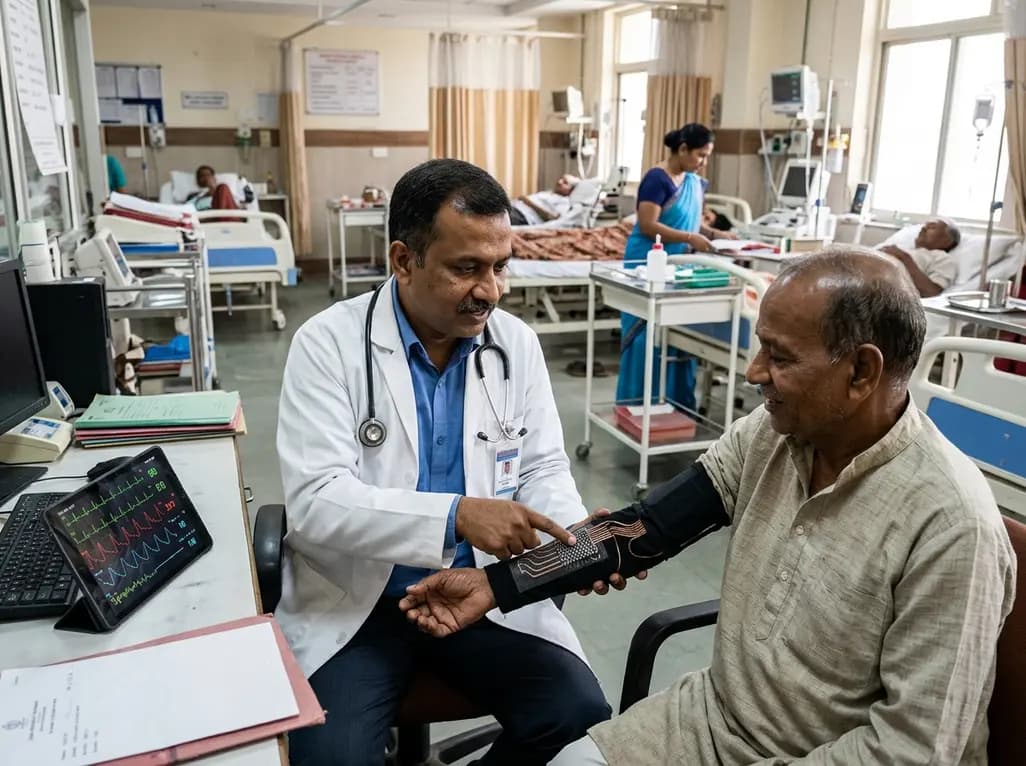
Wearable e-textiles transform cardiovascular monitoring by integrating flexible conductive sensors into everyday clothing. This advance enables continuous, non-invasive assessment of ECG, pulse waves, and hemodynamics, bridging the gap between hospital diagnostics and home healthcare.
Today
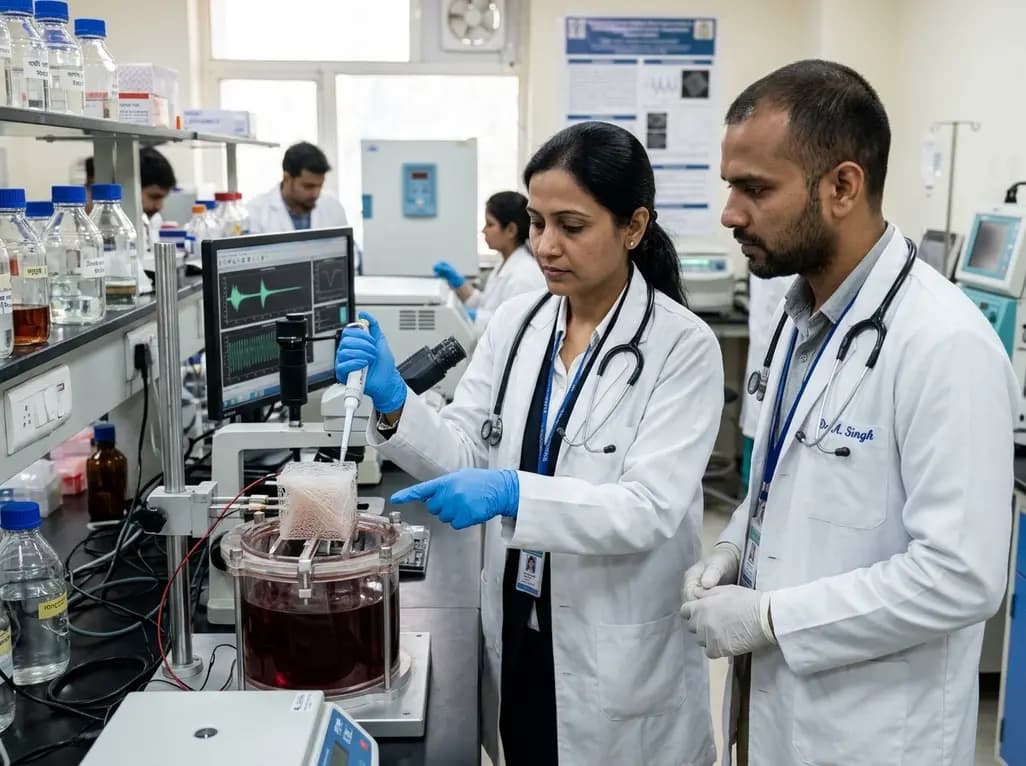
Engineered 3D piezoelectric PHBV scaffolds generate electrical charges during mechanical strain, mimicking native muscle electromechanics to promote cellular alignment, myogenic differentiation, and functional tissue repair in severe volumetric muscle loss.
Today
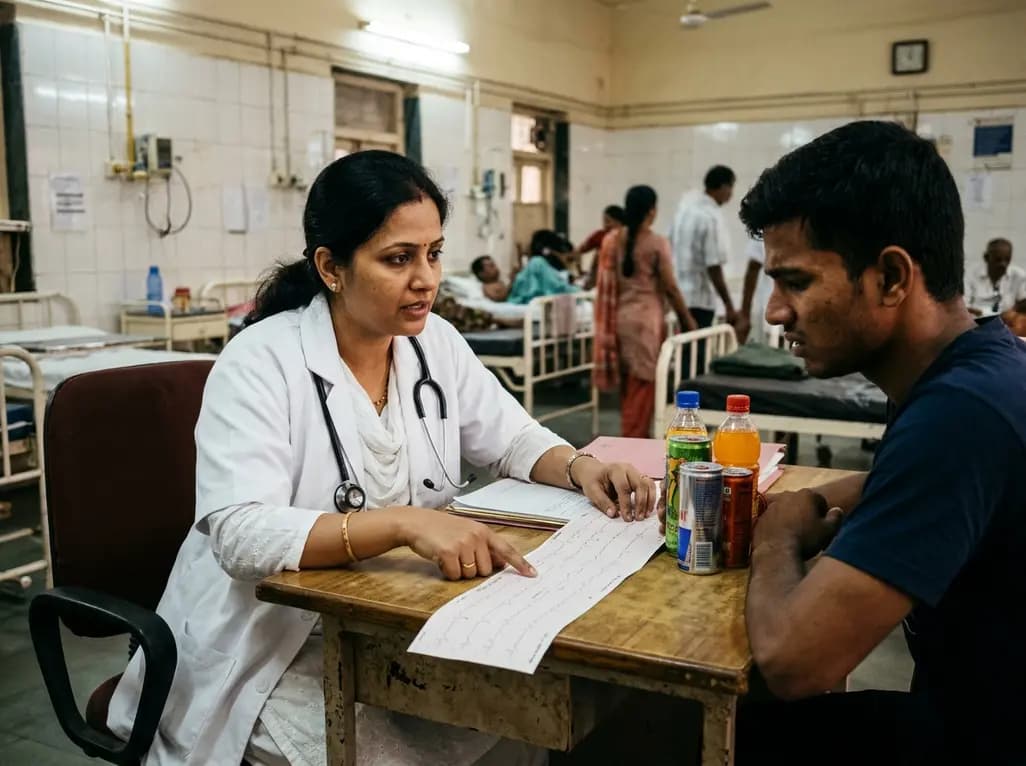
India's food safety authority is taking aggressive action against major beverage companies for marketing high-caffeine products as energy drinks. This clinical analysis examines the cardiovascular complications, metabolic risks, and pediatric concerns behind the regulator's push for truthful beverage standards.
Today
