.webp&w=384&q=75)

Loading, please wait...
Loading, please wait...
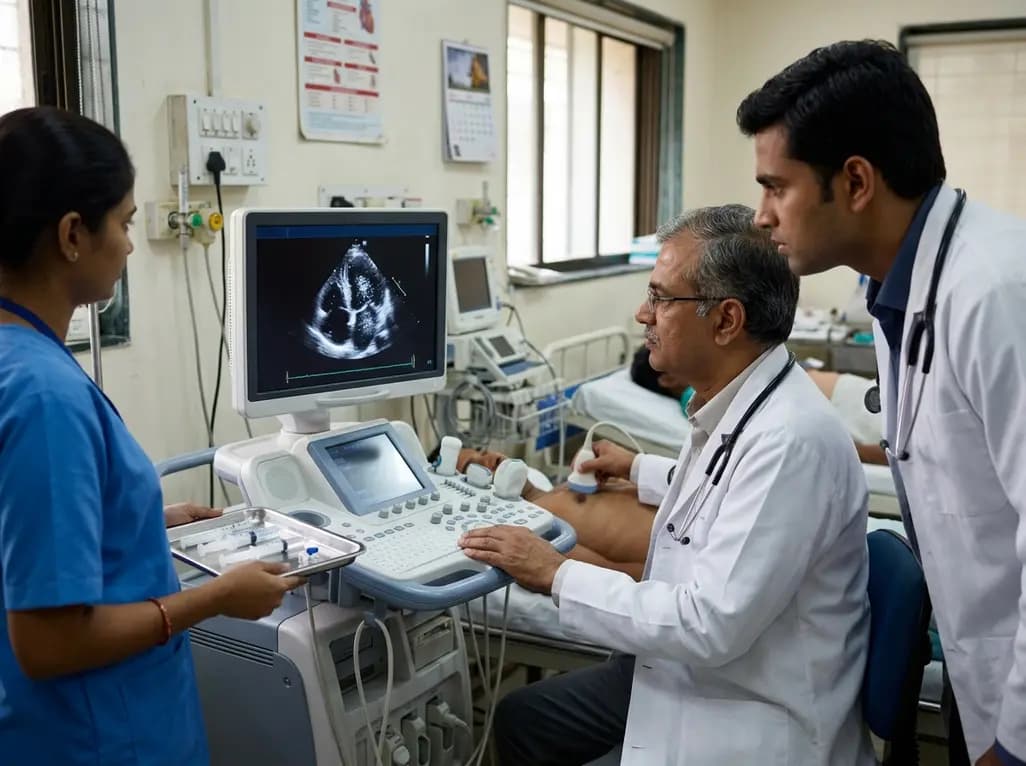
Agitated saline contrast echocardiography, frequently referred to as a 'bubble study,' remains a cornerstone in modern cardiac imaging. This technique uses macrobubbles to detect right-to-left (R-L) shunts, which are often implicated in various clinical conditions. Recently, the British Society of Echocardiography (BSE) published updated recommendations to standardize this procedure. Consequently, clinicians can now follow a more structured approach to improve diagnostic accuracy and patient outcomes.
The core of the bubble study involves the rapid exchange of saline and air between two syringes to create macrobubbles. These bubbles are too large to pass through the pulmonary capillaries under normal conditions. Therefore, if bubbles appear in the left-sided heart chambers within a few beats, it indicates an abnormal shunt. Furthermore, the use of provocative maneuvers like the Valsalva maneuver or coughing is essential. These actions transiently increase right atrial pressure, which enhances the sensitivity for detecting a patent foramen ovale (PFO).
Identifying a PFO is only the first step in clinical management. Determining if the shunt caused a specific event, such as a cryptogenic stroke, requires a comprehensive framework. Specialists often utilize the Risk of Paradoxical Embolism (RoPE) score to quantify this likelihood. High scores suggest that the PFO is more likely to be the cause of the stroke rather than an incidental finding. Accordingly, this score helps guide the decision for percutaneous PFO closure in eligible patients.
While transthoracic echocardiography (TTE) with agitated saline is an excellent screening tool, it has limitations. If the TTE results are equivocal but clinical suspicion remains high, clinicians should proceed to more advanced modalities. Transesophageal echocardiography (TEE) provides superior anatomical detail of the interatrial septum. Moreover, it allows for a more precise assessment of PFO size and the presence of an atrial septal aneurysm.
Adopting standardized protocols for agitated saline contrast echocardiography ensures consistency across clinical practices. This guidance emphasizes the importance of proper technique and integrated decision-making. By following these recommendations, healthcare providers can better manage patients with suspected shunts and associated syndromes.
Generally, the appearance of even a single bubble in the left atrium within three to five cardiac cycles is considered a positive finding. However, many protocols categorize the shunt size based on the total number of bubbles observed.
Yes, the procedure is remarkably safe with a very low risk of adverse events. It uses simple sterile saline and a tiny amount of air, which are naturally absorbed without causing harm in the vast majority of patients.
Disclaimer: This content is for informational and educational purposes only. It is not intended to provide medical advice or to be a substitute for professional medical advice, diagnosis, or treatment. Refer to the latest local and national guidelines for clinical practice.
References
Rana B et al. Agitated Saline Contrast Echocardiography in the diagnosis of right to left shunts: Guidance and recommendations from the British Society of Echocardiography. Echo Res Pract. 2026 Jun 01. doi: undefined. PMID: 42219525.
Bernard S, et al. Agitated Saline Contrast Echocardiography in the Identification of Intra- and Extracardiac Shunts. J Am Soc Echocardiogr. 2021.
Kent DM, et al. The Risk of Paradoxical Embolism (RoPE) Score: Derivation and Validation of a Practical Prediction Tool. Neurology. 2013.

Read summarized clinical updates, watch expert medical content, and earn CME certifications right from your smartphone.
Open your smartphone camera to scan and install.





The British Society of Echocardiography (BSE) provides updated guidance on using agitated saline contrast (bubble study) for diagnosing right-to-left shunts...
4 months ago
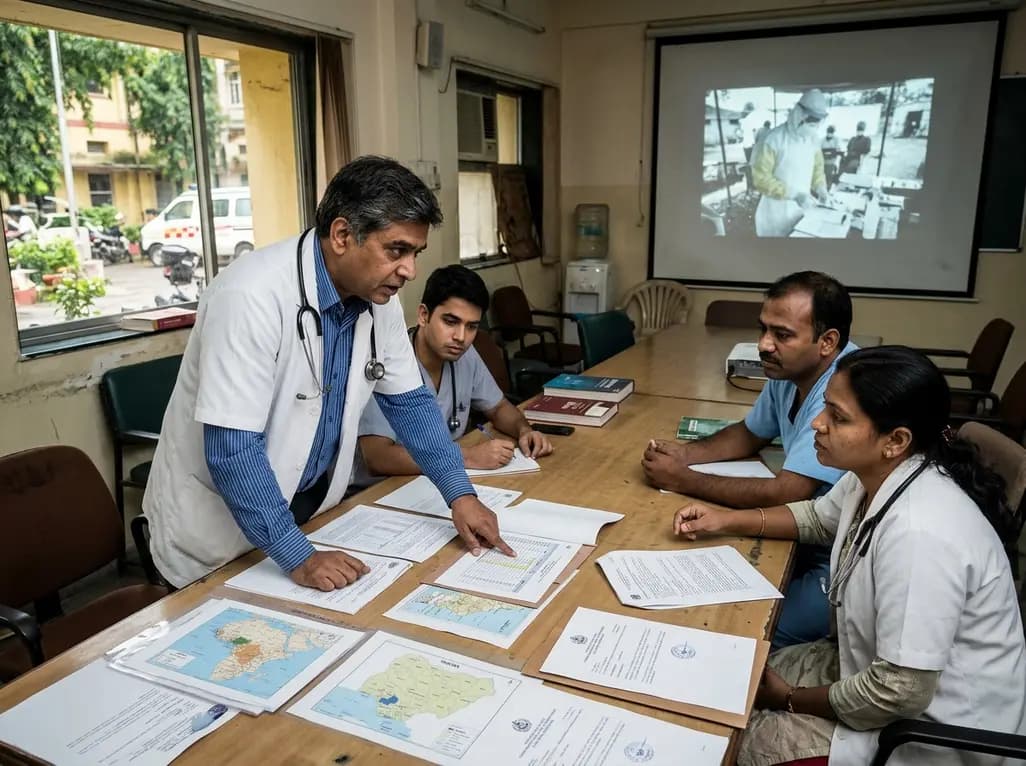
Following Nigeria's first recorded Ebola case linked to regional travel, the Africa CDC has convened an emergency ministerial summit. This alert underscores critical clinical priorities for healthcare professionals, including differentiating early viral infection from malaria, implementing barrier nursing, and triage.
Today

Leucine Rich Bio has introduced South Asia's first comprehensive vaginal microbiome test, BugSpeaks. By profiling microbial dysbiosis, pathogens, and antimicrobial resistance, this next-generation diagnostic platform provides clinicians with deeper insights into recurrent infections, fertility, and reproductive health.
Today

Review how tailored exercise programs benefit frail older patients with heart failure. Explore pathophysiological mechanisms, individualized training prescriptions, and strategies to overcome adherence barriers in clinical practice.
Today

This comparative study evaluates posterior labral tears with and without glenohumeral instability, highlighting distinct demographic patterns, MRI underestimation in stable shoulders, and successful arthroscopic repair outcomes.
Today

A clinical study demonstrates that early intervention with tocilizumab, either as monotherapy or bridged with corticosteroids, achieves significant proptosis reduction and resolves active inflammation in treatment-naive thyroid eye disease.
Today
