.webp&w=384&q=75)

Loading, please wait...
Loading, please wait...
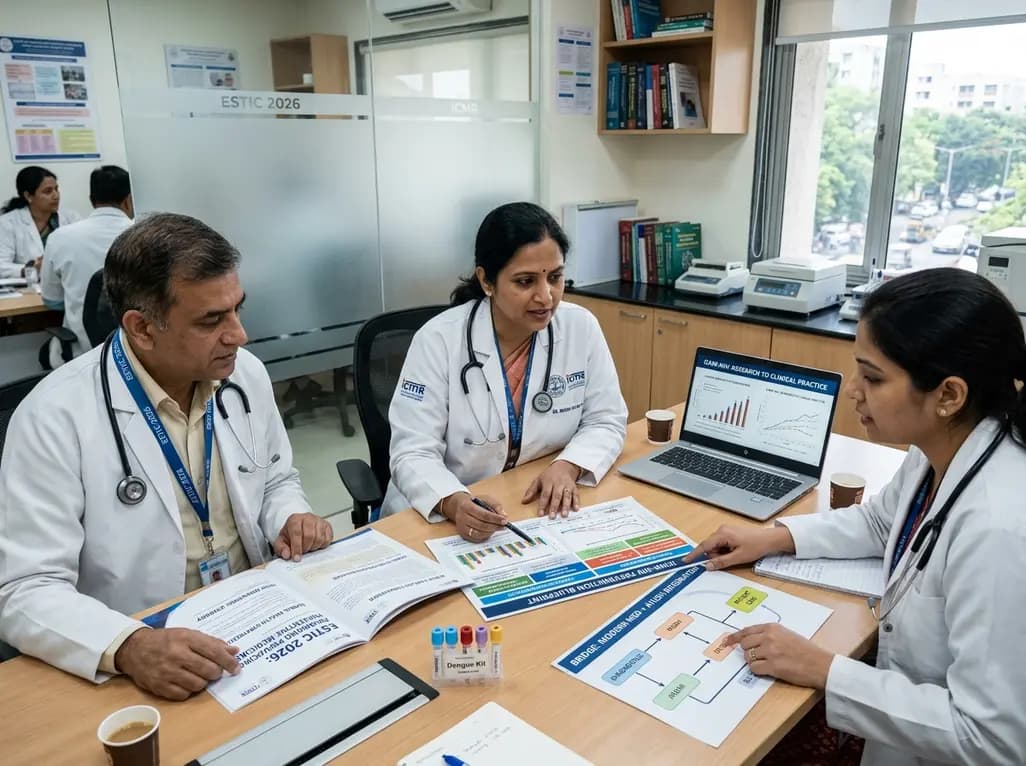
The convergence of cutting-edge biomedical research and public health implementation represents a vital pillar in safeguarding clinical outcomes across India. As emerging pathogens and chronic conditions continue to challenge healthcare infrastructure, medical leaders must prioritize sustainable, scalable, and affordable healthcare solutions. During the curtain-raiser for the Emerging Science, Technology and Innovation Conclave (ESTIC) 2026, hosted by the ICMR-National Institute of Virology (ICMR-NIV) in Pune, leading scientists established a decisive roadmap for preventive medicine. Consequently, this initiative bridges clinical diagnostics, vaccine development, and grassroots healthcare delivery.
Translational medicine forms the cornerstone of effective disease management and patient care. Historically, academic institutions generated remarkable benchside discoveries that encountered delays before reaching clinical application. However, the Indian Council of Medical Research (ICMR) and the Department of Health Research (DHR) are actively dismantling these operational silos. Dr. Pragya Yadav emphasized that biomedical translation must rapidly inform bedside clinical decisions and nationwide public health guidelines. Therefore, researchers now coordinate directly with hospital administrators and clinicians to design relevant trials and actionable diagnostic protocols.
Moreover, this coordinated model enables rapid knowledge dissemination during acute infectious outbreaks. When novel viral variants emerge, frontline physicians require immediate genomic surveillance data to adapt clinical therapy. By streamlining discovery pipelines, tertiary medical centers can deploy validated testing protocols within days rather than months. Furthermore, robust translational ecosystems foster indigenous manufacturing of reagents, diagnostic kits, and personal protective gear. Consequently, healthcare institutions decrease their reliance on volatile global supply chains. In addition, localized biomanufacturing lowers procurement expenses for public hospitals and private facilities alike. Ultimately, closing the gap between laboratory investigators and bedside practitioners enhances patient survival rates and optimizes resource allocation across regional healthcare systems.
A robust diagnostic infrastructure serves as the primary barrier against uncontrolled infectious disease transmission. During the ESTIC 2026 curtain-raiser, virologists highlighted the urgent necessity of decentralizing advanced laboratory diagnostics across tier-two and tier-three districts. Currently, many peripheral clinics face delayed turnaround times for specialized confirmatory viral assays. To resolve this hurdle, ICMR-NIV continues expanding regional viral research and diagnostic laboratories across the country. As a result, primary care physicians can swiftly confirm suspect cases of arboviral, respiratory, and zoonotic pathogens.
Additionally, modern decentralized diagnostics reduce empirical antimicrobial prescribing among outpatient clinicians. When practitioners receive rapid multiplex molecular panels, they can accurately distinguish viral syndromes from bacterial infections. Thus, expanded diagnostic networks directly support national antimicrobial stewardship initiatives. Furthermore, integrating point-of-care testing devices empowers rural health workers to identify infectious clusters before widespread community dispersion occurs. Digital reporting channels immediately relay test outcomes to centralized epidemiological dashboards. Consequently, surveillance authorities can implement targeted containment strategies without disrupting daily healthcare operations. In summary, strengthening peripheral laboratory capabilities elevates diagnostic precision, preserves critical antimicrobials, and protects vulnerable patient populations from delayed interventions.
Virological research remains indispensable for preemptive epidemic preparedness and long-term population health. Over the past decade, ICMR-NIV has demonstrated exceptional leadership in isolating emerging viral strains, characterizing genomic lineages, and formulating clinical countermeasures. Dr. Yadav highlighted that ongoing investigations into viral pathogens directly inform the development of affordable healthcare solutions for the Indian populace. When national laboratories develop indigenous vaccine candidates and antibody therapeutics, procurement costs decline dramatically. Therefore, state governments can provide free immunization drives without straining departmental budgets.
Furthermore, affordable preventive medicine extends beyond vaccine production to include routine clinical screening assays. Cost-effective diagnostic platforms ensure that economically vulnerable demographics receive equitable disease screening for conditions such as viral hepatitis, dengue, and chikungunya. Similarly, clinical teams can monitor chronic viral loads without imposing severe out-of-pocket expenses on working-class households. Private healthcare providers also benefit from domestic diagnostic innovations because local manufacturing reduces equipment acquisition and maintenance charges. Hence, clinical facilities can offer competitive billing rates while maintaining superior diagnostic accuracy. Ultimately, developing affordable healthcare solutions democratizes clinical access, decreases preventable hospitalizations, and fortifies the entire health system against novel biological threats.
Modern health challenges demand multidimensional responses that transcend traditional medical boundaries. Dr. Ruchi Singh highlighted that ESTIC 2026 unites thirteen distinct government ministries on a single collaborative platform. For instance, addressing vector-borne illnesses requires close coordination between the Ministry of Health, the Ministry of Housing and Urban Affairs, and the Ministry of Jal Shakti. In addition, developing artificial intelligence tools for diagnostic interpretation requires active partnerships with the Ministry of Electronics and Information Technology. Consequently, inter-ministerial synergy transforms fragmented healthcare projects into unified national interventions.
Moreover, this multi-sector approach supports the broader vision of Viksit Bharat 2047, which links national economic resilience to population wellness. When urban planners, sanitation engineers, and medical epidemiologists collaborate, preventative environmental measures drastically reduce disease incidence. Therefore, clinical facilities encounter fewer seasonal surges of preventable waterborne and vector-transmitted infections. Furthermore, deep-tech startups and engineering institutes can collaborate directly with hospital clinicians to design ergonomic medical hardware and intelligent monitoring software. This cross-pollination accelerates technological commercialization and reduces clinical overhead costs. Thus, multi-ministerial integration establishes a comprehensive defense system that protects public health while cultivating domestic scientific self-reliance.
The integration of traditional knowledge systems with modern evidence-based clinical practices represents a promising avenue for public health. At the conclave event, Dr. A. Raghu emphasized the vital importance of unifying the Ministry of AYUSH with mainstream biomedical science. When clinicians combine lifestyle, herbal, and mind-body interventions with conventional therapeutics, patients often achieve superior outcomes in chronic disease management. However, medical practitioners rightly demand rigorous pharmacological validation before incorporating traditional remedies into clinical pathways. Therefore, premier institutions like ICMR and AYUSH research councils are conducting collaborative pharmacokinetic and randomized controlled trials.
Additionally, this integrative approach holds substantial value for preventive immunology and metabolic rehabilitation. For example, scientifically validated botanical immunomodulators can serve as safe adjunctive therapies alongside modern anti-infective regimens. Similarly, incorporating structured Ayurvedic dietary principles into cardiometabolic clinics helps patients sustain glycemic and blood pressure targets. Furthermore, mutual respect between allopathic physicians and AYUSH specialists fosters transparent patient communication regarding complementary supplement usage. Consequently, clinicians can identify potential herb-drug interactions early and adjust prescription regimens appropriately. In conclusion, rigorous, evidence-driven medical integration enriches clinical toolkits, respects cultural health practices, and promotes personalized patient care.
Q1: What is the primary clinical objective of the ESTIC 2026 conclave?
The conclave aims to unite scientific institutions, government ministries, and clinical researchers to advance preventive medicine and accessible healthcare. By establishing robust translational pipelines, ESTIC 2026 accelerates the movement of laboratory innovations into clinical practice. Clinicians will benefit from expanded diagnostic networks, indigenous vaccines, and standardized digital tools, which together improve disease surveillance, patient management, and outbreak preparedness nationwide.
Q2: How does ICMR-NIV contribute to frontline clinical practice and public health?
ICMR-NIV serves as the national apex body for viral surveillance, pathogen characterization, and epidemic investigation. The institute develops standardized diagnostic assays, produces reference reagents, and leads candidate vaccine evaluation. For frontline physicians, this work translates into rapid confirmation of viral infections, timely epidemiological advisories during seasonal outbreaks, and access to validated, cost-effective diagnostics that curb inappropriate empiric therapy and optimize treatment decisions.
Q3: Why is the integration of AYUSH with modern medicine clinically significant?
Integrating AYUSH with modern clinical medicine allows physicians to offer evidence-informed, holistic management strategies for chronic lifestyle disorders and immune health. Rigorous joint clinical trials between ICMR and AYUSH validate the safety, efficacy, and pharmacodynamics of traditional formulations. Consequently, this collaborative approach minimizes adverse herb-drug interactions, broadens preventive therapeutic options, and supports comprehensive patient-centered care models across primary and tertiary healthcare settings.
Disclaimer: This content is for informational and educational purposes only. It does not constitute medical advice or replace professional judgment. Refer to the latest local and national guidelines for clinical practice.
References

Read summarized clinical updates, watch expert medical content, and earn CME certifications right from your smartphone.
Open your smartphone camera to scan and install.





At the curtain-raiser for ESTIC 2026, ICMR-NIV outlined critical public health blueprints focused on disease prevention, indigenous diagnostics, and inter-ministerial synergy. The initiative aims to translate laboratory breakthroughs into clinical practice, bridging modern medicine with AYUSH systems for patient care.
Today
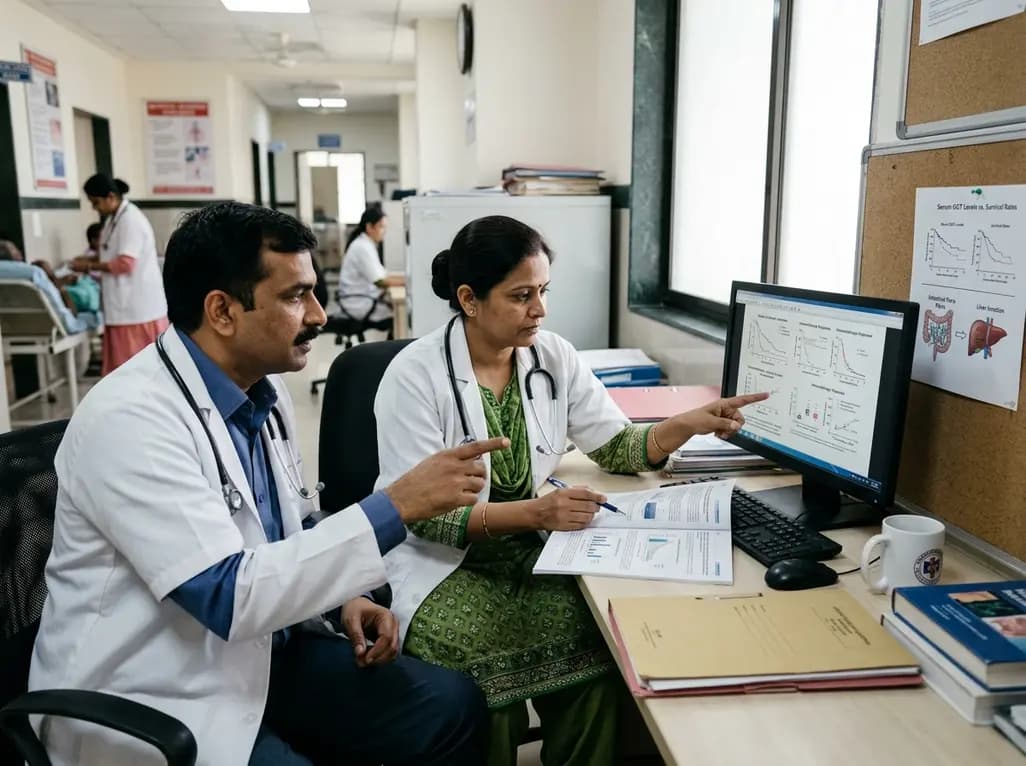
Recent research reveals that subclinical cholestasis, marked by elevated serum gamma-glutamyl transferase, reflects gut dysbiosis and predicts resistance to immune checkpoint blockade. Bile acid remodeling and mucosal MAdCAM-1 loss impair antitumor immunity, highlighting novel therapeutic targets.
Today

Maharashtra has initiated the appointment of two dedicated special public prosecutors in every district alongside a joint police-health SOP to fast-track PCPNDT and MTP cases. Medical imaging centers, radiologists, and obstetricians must strengthen statutory documentation and audit preparedness.
Today
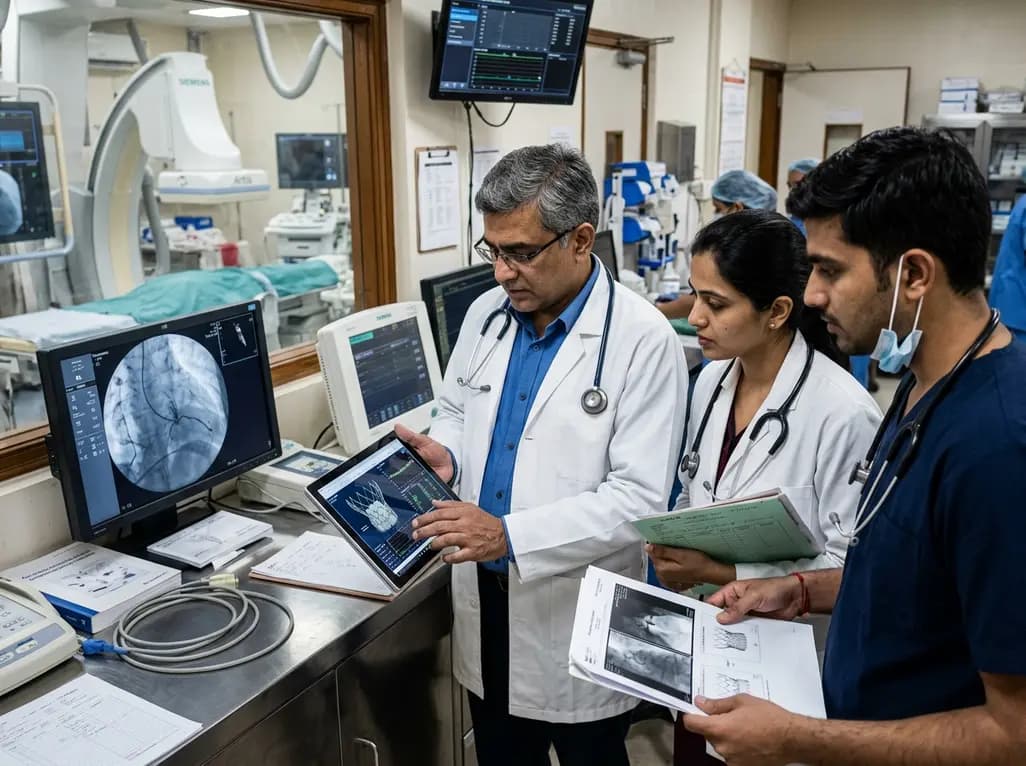
The US FDA has released an early safety alert regarding Edwards Lifesciences Commander M delivery catheters used in transcatheter mitral valve replacement. Reports of balloon bursting during deployment led to one death and one injury, prompting a recall of specific lots and urgent clinical inventory reviews.
Today

A meta-analysis evaluates the impact of preoperative transthoracic echocardiography on surgical delay and hospital stay in geriatric hip fracture patients. Evidence emphasizes balancing cardiac workups against operative urgency and adhering to clinical guidelines.
Today

An exploratory pilot study evaluates metoprolol pharmacokinetics across cisgender males, cisgender females, and transgender women on gender-affirming hormone therapy. Findings reveal distinct drug disposition trends, emphasizing the critical need for genotype-stratified research in transgender cardiovascular care.
Today
