.webp&w=384&q=75)

Loading, please wait...
Loading, please wait...
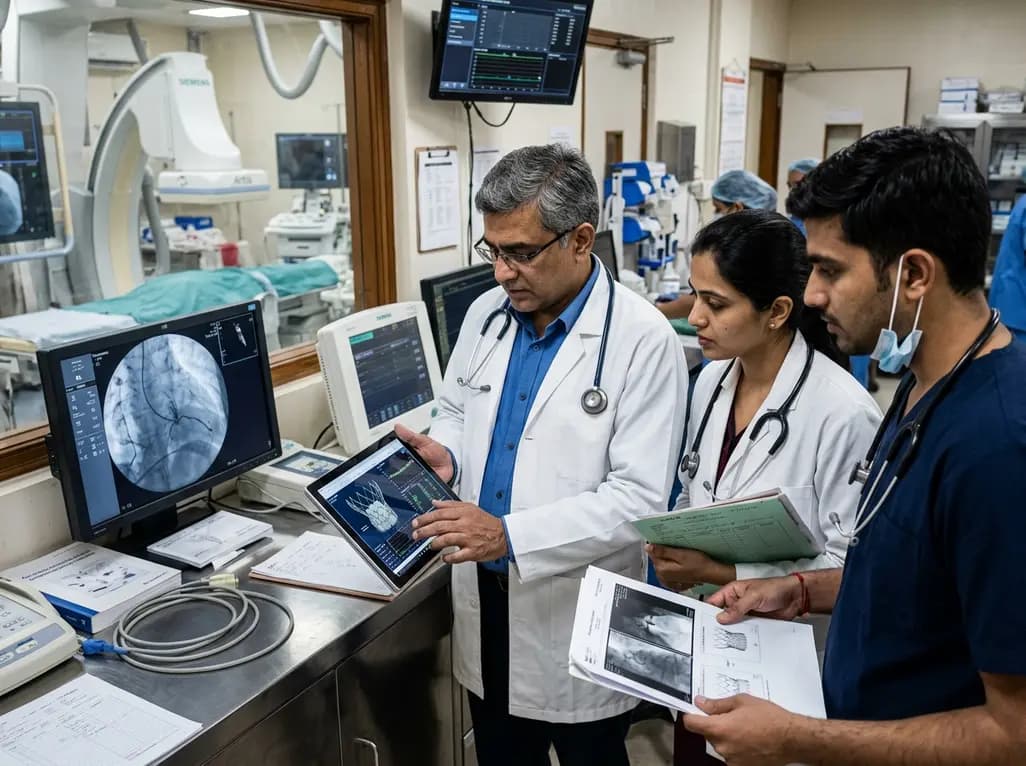
The United States Food and Drug Administration recently flagged serious safety risks involving a specialized heart valve delivery system. Edwards Lifesciences warned clinicians after multiple reports documented deployment balloons rupturing during transcatheter mitral valve replacement. Consequently, regulatory authorities confirmed one patient fatality and one serious injury linked directly to the issue. Therefore, structural heart teams must recognize the clinical risks, identify recalled lots, and follow strict precautionary protocols.
In October 2026, the FDA issued an urgent alert to warn healthcare professionals about high-risk device malfunctions. Specifically, the warning targets the Commander M delivery catheter used to deploy the SAPIEN M3 transcatheter mitral valve. Edwards Lifesciences initiated a voluntary recall after receiving three confirmed reports of balloons bursting during valve expansion. Consequently, the company documented one patient death and another life-threatening injury connected to this equipment failure.
Although the SAPIEN M3 system received FDA approval in late 2025 for mitral regurgitation, this alert mandates immediate clinical vigilance. Furthermore, federal regulators emphasized that balloon rupture represents a catastrophic complication during structural interventions. Because the delivery system navigates fragile intracardiac spaces, sudden mechanical failure compromises proper valve seating and threatens hemodynamics. Therefore, the FDA advises hospitals to halt the use of all affected production units immediately. Interventional specialists must work closely with departmental inventory managers to remove compromised stock promptly from cardiac suites. In addition, healthcare facilities must report any related adverse occurrences directly to national surveillance databases. Ultimately, active monitoring protects vulnerable cardiac patients from avoidable procedural harm during cutting-edge structural procedures. Therefore, proactive inventory isolation remains essential to preserve the clinical integrity of emerging transcatheter mitral replacement programs.
Interventional cardiologists rely on balloon-expandable delivery systems to deploy bioprosthetic valves into accurate anatomical position. However, unexpected balloon rupture during active inflation introduces severe mechanical and hemodynamic dangers. When a high-pressure balloon bursts, the polymer membrane tears irregularly, creating jagged flaps of non-compliant plastic. Consequently, this deformed material can snag against the outer guide catheter, preventing safe withdrawal through the femoral access sheath.
Additionally, balloon rupture introduces a major danger of systemic gas or particulate embolism. When balloon integrity fails abruptly, pressurized fluid and sheared material escape into the left atrium or left ventricle. Therefore, fragments can travel directly into the cerebral circulation, producing catastrophic ischemic strokes or peripheral vascular occlusion. Furthermore, violent balloon deflation can lacerate fragile subvalvular structures, tear chordae tendineae, or traumatize the mitral annulus. As a result, the patient experiences acute hemodynamic collapse or massive intracardiac hemorrhage. If operators cannot retrieve the damaged catheter through percutaneous maneuvers, they must perform emergent open-heart conversion. Thus, interventional teams must prepare immediate contingency plans whenever balloon-mounted hardware navigates high-risk intracardiac anatomy. Consequently, comprehensive pre-procedure imaging and careful catheter selection help mitigate sudden mechanical failures during complex transcatheter deployments.
Candidates for transcatheter mitral valve replacement represent an exceptionally frail and vulnerable patient cohort. Typically, multidisciplinary Heart Teams select TMVR for individuals with severe symptomatic mitral regurgitation who cannot undergo standard surgical valve repair. Consequently, these individuals often present with advanced biventricular failure, severe pulmonary hypertension, renal impairment, and extensive clinical frailty. Therefore, their physiologic reserve for unexpected intraprocedural emergencies remains markedly compromised compared to standard surgical candidates.
When a balloon ruptures during TMVR, endovascular retrieval may fail completely, leaving the team with limited salvage options. In such scenarios, surgeons must rapidly convert the percutaneous procedure into an emergency open sternotomy. However, emergent open surgery under hemodynamically unstable conditions carries prohibitive mortality rates in this non-surgical cohort. Furthermore, prolonged cardiopulmonary bypass in individuals with severe pulmonary hypertension often precipitates refractory right ventricular shock. As a result, sudden mechanical device failure transforms a controlled, minimally invasive therapy into an immediate surgical crisis. Accordingly, heart teams must thoroughly evaluate baseline surgical fallback feasibility during pre-procedural planning. Ultimately, avoiding compromised delivery lots remains the best safeguard against fatal surgical conversions in high-risk patients.
To eliminate patient exposure to catastrophic balloon failures, Edwards Lifesciences asked clinical centers to quarantine affected delivery devices. Specifically, the recall impacts Commander M delivery systems associated with four distinct production lots: 67718561, 67804014, 67887043, and 67887044. Therefore, hospital inventory managers, catheterization laboratory directors, and procurement staff must inspect stockrooms immediately. Facilities should remove any matching inventory from clinical areas and return the items directly to the manufacturer.
Meanwhile, federal regulators confirmed that Commander M systems bearing alternative lot numbers remain cleared for ongoing clinical use. Nevertheless, interventionalists must verify lot numbers during pre-procedure timeouts before opening sterile packaging. Additionally, nursing supervisors should place prominent warning notices near structural heart storage cabinets to prevent accidental retrieval of quarantined units. Furthermore, hospital quality assurance committees must document the audit process to satisfy institutional accreditation and regulatory standards. In contrast, failing to implement rigorous supply checks exposes healthcare centers to severe patient morbidity and regulatory penalties. Consequently, clinical departments must maintain open communication with biomedical engineers and procurement teams. By executing systematic inventory controls, catheterization laboratories ensure that only fully verified devices reach the operative field. Therefore, interdisciplinary collaboration between procurement teams and clinicians guarantees uninterrupted patient safety during high-volume transcatheter procedures.
Beyond managing physical inventory, structural interventionalists must adopt rigid procedural safeguards to prevent and manage balloon failure events. First, operators should inspect every balloon delivery catheter under bright illumination prior to vascular insertion. Clinicians must confirm that the folded balloon exhibits no surface irregularities, micro-punctures, or crimping abrasions. Furthermore, catheterization teams must adhere strictly to recommended contrast-to-saline ratios, nominal inflation pressures, and slow inflation intervals. Rapid, high-pressure inflations substantially increase membrane tension, precipitating premature balloon rupture.
If an operator suspects a balloon rupture during deployment, maintaining composure and adherence to established protocols becomes paramount. For instance, the interventionalist must not forcibly pull the burst balloon back into the transseptal sheath. Forcible traction can peel balloon fragments, shear intravascular tissue, or invert the delivery sheath inside the atrium. Instead, operators should maintain guidewire access, evaluate live transesophageal echocardiography, and gently rotate the shaft to reduce device profile. Additionally, the hybrid suite must maintain an on-call cardiothoracic surgeon, perfusionist, and blood products ready for immediate intervention. Ultimately, comprehensive team readiness and adherence to manufacturer guidelines save lives when intraoperative emergencies arise. Consequently, continuous simulation training empowers interventional teams to navigate catastrophic balloon disruptions with calm efficiency and minimal delay.
Q1: Which specific medical devices are affected by the Edwards Lifesciences recall?
Edwards Lifesciences issued an urgent removal notice for specific production lots of the Commander M delivery system. Clinicians use this system exclusively to deploy the SAPIEN M3 transcatheter heart valve during mitral procedures. Specifically, the recall impacts lot numbers 67718561, 67804014, 67887043, and 67887044. Therefore, hospital catheterization laboratories must quarantine these lots immediately, while other unaffected batches remain approved for continued structural heart interventions.
Q2: What clinical complications can arise when a delivery system balloon bursts?
When an intraprocedural balloon bursts during mitral valve expansion, several life-threatening complications can emerge. First, balloon rupture can generate embolic debris or cause arterial gas embolism. Furthermore, the torn balloon material can snag against the delivery sheath, preventing safe device withdrawal through the femoral access. Consequently, interventionalists may face acute hemodynamic instability, severe vascular lacerations, or catastrophic mechanical obstruction requiring urgent surgical bailout in fragile patients.
Q3: Why does balloon failure carry an exceptionally high mortality risk in TMVR patients?
Patients undergoing transcatheter mitral valve replacement represent a distinct clinical cohort deemed ineligible for conventional open-heart surgery due to severe comorbidities. Therefore, when balloon rupture prevents catheter retrieval or triggers profound hemodynamic collapse, conversion to sternotomy becomes an extraordinary surgical challenge. Consequently, these high-risk candidates exhibit minimal physiologic reserve to withstand acute cardiopulmonary bypass, which significantly increases perioperative mortality and severe postoperative morbidity during emergent salvage operations.
Disclaimer: This content is for informational and educational purposes only. It does not constitute medical advice or replace professional judgment. Refer to the latest local and national guidelines for clinical practice.
References

Read summarized clinical updates, watch expert medical content, and earn CME certifications right from your smartphone.
Open your smartphone camera to scan and install.





The US FDA has released an early safety alert regarding Edwards Lifesciences Commander M delivery catheters used in transcatheter mitral valve replacement. Reports of balloon bursting during deployment led to one death and one injury, prompting a recall of specific lots and urgent clinical inventory reviews.
Today

Recent research reveals that subclinical cholestasis, marked by elevated serum gamma-glutamyl transferase, reflects gut dysbiosis and predicts resistance to immune checkpoint blockade. Bile acid remodeling and mucosal MAdCAM-1 loss impair antitumor immunity, highlighting novel therapeutic targets.
Today

Maharashtra has initiated the appointment of two dedicated special public prosecutors in every district alongside a joint police-health SOP to fast-track PCPNDT and MTP cases. Medical imaging centers, radiologists, and obstetricians must strengthen statutory documentation and audit preparedness.
Today
A meta-analysis evaluates the impact of preoperative transthoracic echocardiography on surgical delay and hospital stay in geriatric hip fracture patients. Evidence emphasizes balancing cardiac workups against operative urgency and adhering to clinical guidelines.
Today

An exploratory pilot study evaluates metoprolol pharmacokinetics across cisgender males, cisgender females, and transgender women on gender-affirming hormone therapy. Findings reveal distinct drug disposition trends, emphasizing the critical need for genotype-stratified research in transgender cardiovascular care.
Today
