.webp&w=384&q=75)

Loading, please wait...
Loading, please wait...

Bystander intervention is vital for surviving an out-of-hospital cardiac arrest (OHCA). However, simply installing devices in public spaces is insufficient. Specifically, a recent study by Choi D et al. highlights the critical role of AED functional accessibility. This concept refers to the realistic ability of a bystander to retrieve and use a defibrillator within a small survival window. Consequently, clinicians must look beyond geographical proximity. Therefore, timing remains the most essential factor for patient survival. Notably, the study utilized network-based walking routes to measure true access times rather than simple straight-line distances.
The researchers conducted a geospatial analysis of 39,563 cardiac arrest incidents in Korea. They found that the median walking time to the nearest device was 1.9 minutes. However, rural areas lag significantly behind urban centers. For instance, only 25.4% of rural arrests occurred within a three-minute walking radius. Thus, distance directly influences clinical outcomes. Furthermore, shorter walking times significantly increased the likelihood of a prehospital return of spontaneous circulation (ROSC). Specifically, every minute saved in retrieval can drastically improve the chances of neurological recovery.
Furthermore, the research revealed a massive gap in residential coverage. Although home arrests account for 70% of total cases, bystander defibrillation remains extremely low. Additionally, nighttime arrests showed markedly reduced device usage across all regions. Consequently, this suggests that physical proximity does not guarantee access if buildings are locked. For example, many AEDs are stored in offices or community centers that close after business hours. Therefore, many public access programs fail because they lack 24/7 availability. Specifically, the functional window closes when the sun goes down.
In conclusion, public health programs must prioritize round-the-clock availability of life-saving equipment. Moreover, strategic placement in high-traffic, always-accessible areas like transit hubs or 24-hour pharmacies is essential. Thus, urban planners should focus on functional coverage to reduce health disparities. Finally, because early intervention is the best predictor of survival, improving device visibility and public education is paramount. Similarly, medical professionals should advocate for localized registries that help bystanders find these devices quickly.
It refers to the actual time and walking distance required for a bystander to reach, retrieve, and return with a defibrillator during an emergency, accounting for barriers like locked doors or complex routes.
Many public AEDs are located inside offices, schools, or government buildings that are locked after hours. This makes the devices functionally inaccessible to the public during the night and on weekends.
Shorter walking times are significant predictors of prehospital ROSC. When bystanders can retrieve an AED within 3 minutes, the probability of a successful resuscitation and favorable neurological outcome increases significantly.
Disclaimer: This content is for informational and educational purposes only. It is not a substitute for professional medical advice, diagnosis, or treatment. Refer to the latest local and national guidelines for clinical practice.
References
Choi D et al. Functional Access to Public Defibrillators and Out-of-Hospital Cardiac Arrest Outcomes: A Population-Based Geospatial Analysis in Korea. J Am Heart Assoc. 2026 Apr 22. doi: 10.1161/JAHA.125.048080. PMID: 42017328.
Hansen CM, et al. Automated external defibrillators inaccessible to more than half of nearby cardiac arrests in public locations during evening, nighttime and weekends. Circulation. 2013;128(20):2224-2231.
Sun CLF, et al. Association of Degree of Urbanization and Survival in Out‐of‐Hospital Cardiac Arrest. J Am Heart Assoc. 2022;11(10):e024225.
"
Read summarized clinical updates, watch expert medical content, and earn CME certifications right from your smartphone.
Open your smartphone camera to scan and install.





A study in Korea highlights that functional AED accessibility—not just proximity—is crucial for survival in out-of-hospital cardiac arrest outcomes....
6 months ago
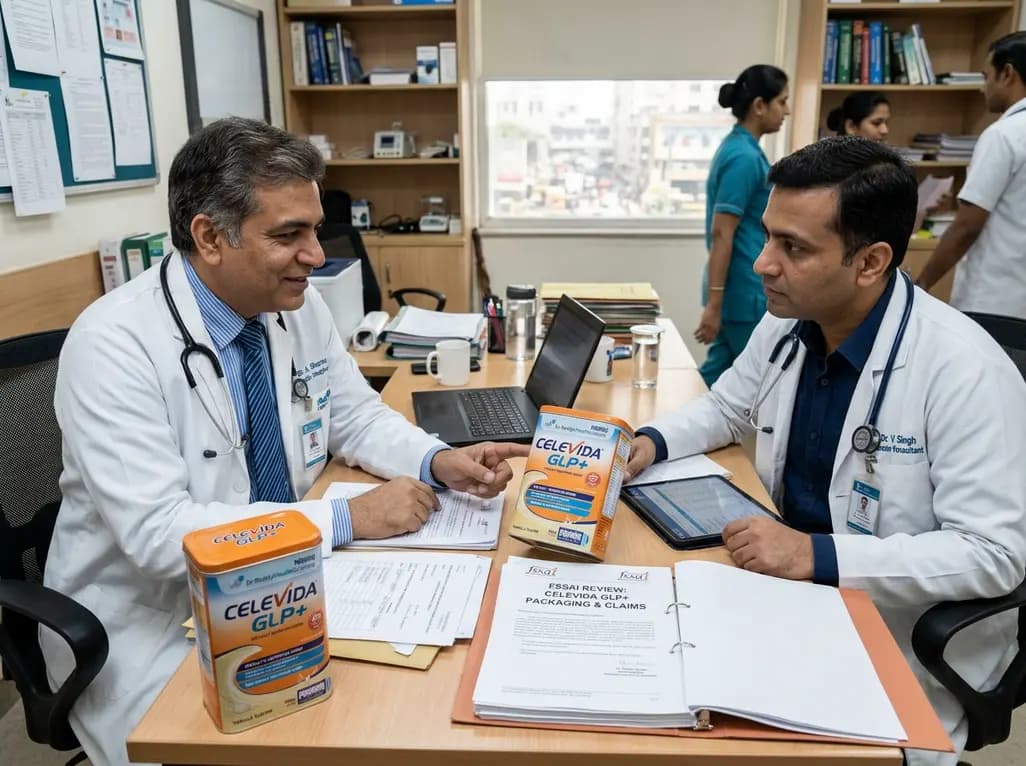
Following regulatory scrutiny from FSSAI regarding promotional representations and lean muscle preservation claims, Dr. Reddy's Laboratories and Nestlé Health Science are currently reviewing the branding and marketing strategy for their joint nutritional supplement Celevida GLP+.
Today

Demanding exhaustive hormonal profiling can inadvertently discourage clinical studies involving females. Methodological standards must align with the specific scientific question to expand, not restrict, equitable evidence for women.
Today

The Directorate General of Health Services directs Indian states to halt the hazardous reuse and reprocessing of single-use medical devices. Discover regulatory implications under the Drugs and Cosmetics Act, critical infection risks, legal liabilities, and operational changes required across clinical specialties.
Today
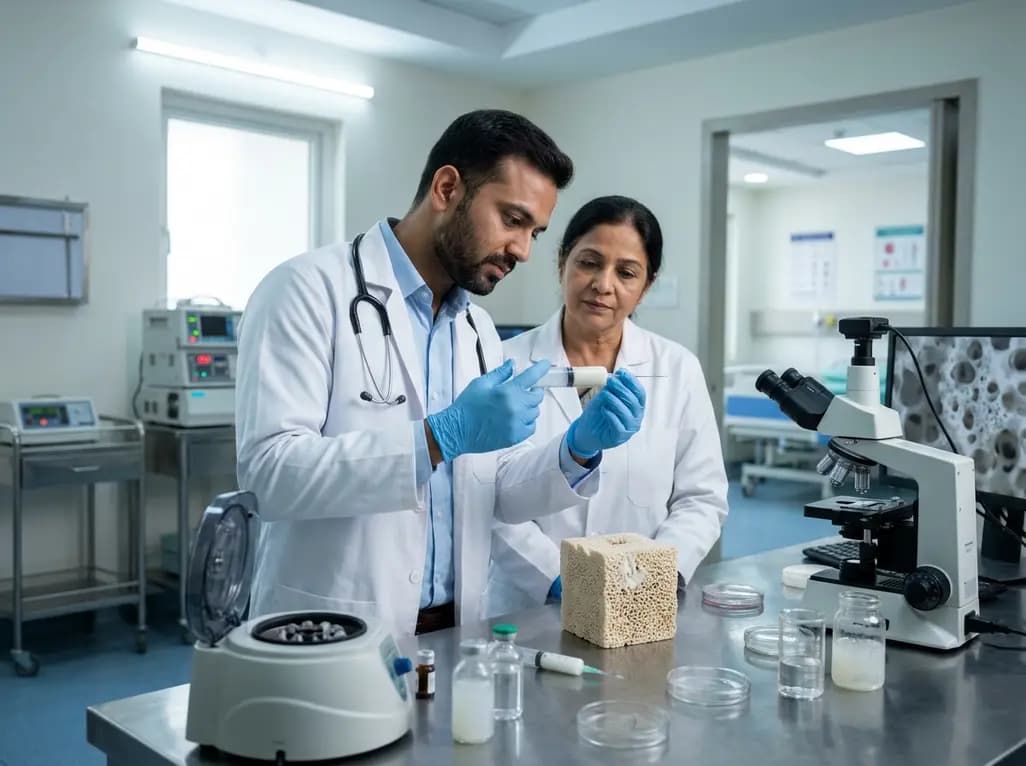
A novel calcium polyphosphate coacervate enables injectable bone implants with in situ hierarchical porosity via phase separation and gas foaming, significantly enhancing cell proliferation, energy metabolism, and osteogenic differentiation for minimally invasive bone defect repair.
Today

India is advancing preventive healthcare by integrating genomics, artificial intelligence, and quantum technologies. With the SANGAM programme sequencing one million Indian genomes, clinicians can unlock personalized therapies, detect cardiometabolic risks early, and curb the burden of diabetes and heart disease.
Today
