.webp&w=384&q=75)

Loading, please wait...
Loading, please wait...
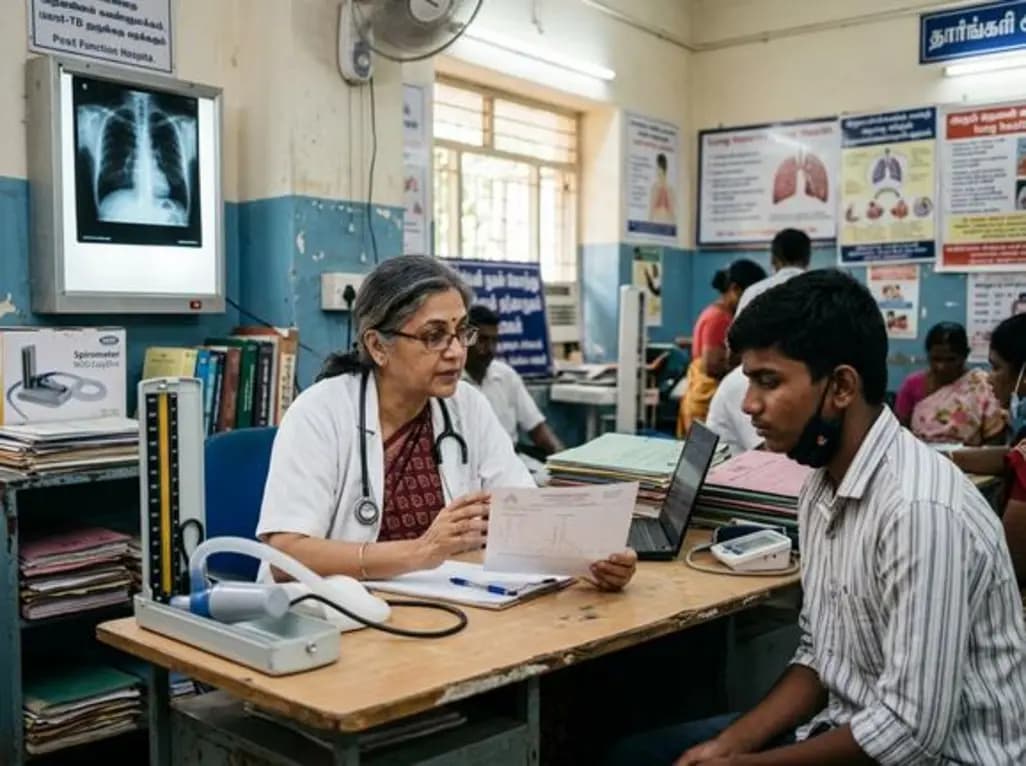
Tuberculosis (TB) remains a major global health concern, but the journey does not always end with bacteriological cure. A recent prospective cohort study published in Pediatrics has shed light on the significant burden of post-tuberculosis lung disease among adolescents. While most clinical focus remains on achieving successful treatment completion, this research suggests that survivors often face long-term respiratory sequelae that impact their quality of life and physical capabilities.
The study compared 101 adolescent TB survivors in Lima, Peru, with matched healthy controls over a 24-month period. Using advanced diagnostic tools like spirometry and oscillometry, researchers found that survivors exhibited markedly reduced lung function. Specifically, these individuals showed lower forced expiratory volume (FEV1) and forced vital capacity (FVC), alongside increased airway resistance. Even as some metrics improved over time, they remained significantly worse than those of the healthy control group, indicating that post-tuberculosis lung disease can be a persistent condition.
Radiological evaluations further underscored the severity of the damage. Chest CT scans of the TB survivors revealed various structural abnormalities, including bronchiectasis, nodules, reticular patterns, and architectural distortion. These physical changes translated into real-world disability; survivors reported higher scores on the St. George’s Respiratory Questionnaire (SGRQ), reflecting more frequent symptoms and greater activity limitations compared to their peers. This evidence suggests that a "cure" defined only by the absence of bacteria may be insufficient for comprehensive adolescent care.
The findings emphasize that the medical community must look beyond treatment completion. Pediatricians and pulmonologists should consider integrating respiratory assessments into the post-treatment follow-up protocol for adolescents. Early identification of post-tuberculosis lung disease allows for better management of chronic symptoms and potentially reduces the long-term disability burden. As India continues its push toward TB elimination, addressing the morbidity of survivors becomes an essential part of the public health strategy.
PTLD refers to chronic respiratory impairment and structural lung damage that persists in individuals who have been successfully treated for pulmonary tuberculosis. It can include conditions like bronchiectasis, fibrosis, and obstructive airway diseases.
Even after the bacteria are cleared, the initial infection can cause permanent damage to the airways and lung tissue. Regular monitoring helps in managing symptoms like breathlessness and cough, and ensures timely intervention for any secondary complications.
Some aspects of lung function, such as airway reactance and resistance, may show gradual improvement over the years following treatment. However, studies show that many survivors do not return to the baseline lung health of healthy individuals.
Disclaimer: This content is for informational and educational purposes only and does not constitute professional medical advice, diagnosis, or treatment. Always seek the advice of your physician or other qualified healthcare provider with any questions you may have regarding a medical condition. Refer to the latest local and national guidelines for clinical practice.
References
Chiang SS et al. Posttuberculosis Lung Disease in Adolescents in Lima, Peru. Pediatrics. 2026 Jun 23. doi: undefined. PMID: 42331351.
World Health Organization. WHO operational handbook on tuberculosis: Module 5: Management of tuberculosis in children and adolescents. 2022.
Kumar K, Narasimhan M. The role of pulmonary rehabilitation in patients with tuberculosis sequelae. Indian J Respir Care 2022;11:11-3.

Read summarized clinical updates, watch expert medical content, and earn CME certifications right from your smartphone.
Open your smartphone camera to scan and install.





A prospective study reveals that adolescent TB survivors in Lima, Peru, experience significant and persistent respiratory impairment and disability even after achieving bacteriological cure. Findings highlight the critical need for long-term respiratory assessments and monitoring following TB treatment.
3 months ago

Review how tailored exercise programs benefit frail older patients with heart failure. Explore pathophysiological mechanisms, individualized training prescriptions, and strategies to overcome adherence barriers in clinical practice.
Today

Leucine Rich Bio has introduced South Asia's first comprehensive vaginal microbiome test, BugSpeaks. By profiling microbial dysbiosis, pathogens, and antimicrobial resistance, this next-generation diagnostic platform provides clinicians with deeper insights into recurrent infections, fertility, and reproductive health.
Today

In high-risk pulmonary embolism complicated by severe anemia and active uterine bleeding, systemic thrombolysis is contraindicated. Large-bore aspiration thrombectomy provides rapid hemodynamic rescue without fibrinolysis, supported by inferior vena cava filter placement and multidisciplinary critical care.
Today

This comparative study evaluates posterior labral tears with and without glenohumeral instability, highlighting distinct demographic patterns, MRI underestimation in stable shoulders, and successful arthroscopic repair outcomes.
Today

A clinical study demonstrates that early intervention with tocilizumab, either as monotherapy or bridged with corticosteroids, achieves significant proptosis reduction and resolves active inflammation in treatment-naive thyroid eye disease.
Today
