

Loading, please wait...
Loading, please wait...

Major depressive disorder in youth presents significant clinical challenges, particularly because executive dysfunction frequently accompanies affective distress. Historically, clinicians have evaluated these impairments primarily through subjective behavioral assessments and clinical interviews. However, objective neurophysiological markers remain critical to clarify underlying pathophysiology. A pivotal comparative study has offered valuable neurobiological insights into these challenges by utilizing adolescent depression EEG recordings during cognitive processing. By focusing on unmedicated, drug-naive patients, researchers eliminated pharmacological confounders to capture pure neural oscillation patterns. Consequently, these findings significantly improve our understanding of early depressive neurobiology.
Cognitive impairment in young patients often manifests as diminished attention, memory problems, and delayed processing speed. Therefore, evaluating real-time cortical processing provides critical diagnostic clues. In this landmark investigation, clinicians evaluated 173 drug-naive adolescents with major depressive disorder alongside 126 healthy control participants. Furthermore, every subject completed a standardized visual oddball task while investigators recorded continuous high-density electroencephalography. This visual paradigm specifically recruits neural networks responsible for target detection, selective attention, and motor execution. Consequently, the paradigm allowed researchers to study time-frequency dynamic activity during active cognitive load. In addition, studying treatment-naive individuals prevented psychoactive medications from altering baseline neural oscillations. As a result, the recorded spectral changes directly reflect primary neuropathology rather than medication effects. This methodology provides a remarkably clean window into adolescent brain function during complex visual cognitive tasks.
The time-frequency spectral analysis demonstrated pronounced electrophysiological deviations in depressed adolescents relative to healthy peers. Specifically, affected youth exhibited significant spectral power reductions across multiple distinct frequency bands. These reductions were prominent in the delta, theta, and alpha oscillations across frontal, central, and parietal scalp locations. Most notably, electrodes Fz, Cz, C5, C6, Pz, P5, and P6 displayed consistently suppressed power spectra throughout task execution. Additionally, depressed adolescents exhibited localized theta suppression at the left frontal F5 site. Similarly, alpha band power dropped significantly at bilateral frontal electrodes F5 and F6. Because frontal theta oscillations typically reflect active working memory and attentional allocation, this suppression suggests impaired executive engagement. Meanwhile, alpha oscillations regulate sensory gating and cortical inhibition. Therefore, widespread alpha attenuation highlights defective attentional filtering in the depressed adolescent brain.
Beyond local oscillatory power changes, functional connectivity analysis uncovered significant network-level communication deficits in adolescents with depression. Specifically, researchers measured synchronous phase activity across distinct cortical regions during the visual cognitive task. Consequently, they identified marked reductions in functional connectivity across frontal and central electrode clusters. Healthy adolescents typically recruit synchronized frontocentral circuits to successfully coordinate stimulus detection and decision-making. In contrast, depressed youths demonstrated significant decoupling within these critical anterior cortical networks. Furthermore, parietal network communication showed concomitant attenuation during target processing. Because successful cognitive execution demands coordinated long-range neural synchrony, these connection breakdowns likely impair timely information transfer. Hence, reduced cortical synchrony offers an objective biological explanation for the mental sluggishness and executive difficulty reported by young patients.
Recognizing neuroelectrophysiological alterations carries profound implications for clinical practice in pediatric mental health. Clinicians often find it difficult to differentiate early cognitive symptoms of depression from primary attention-deficit disorders. Therefore, establishing objective neural markers provides valuable diagnostic clarity. Furthermore, the presence of distinct spectral and connectivity anomalies supports developing targeted interventions. For instance, neuromodulation approaches such as transcranial magnetic stimulation or neurofeedback could directly target dysfunctional frontocentral pathways. Additionally, measuring task-based electrophysiological changes may serve as a quantitative monitoring tool during psychotherapy or pharmacotherapy. If therapeutic interventions successfully restore delta, theta, or alpha spectral power, clinicians could assess biological recovery before overt behavioral improvements emerge. Thus, objective electrophysiological profiling could eventually guide personalized treatment plans in adolescent mental healthcare.
Although these findings provide important insights, future research must build upon these electrophysiological discoveries. Longitudinal investigations are essential to determine whether frontocentral connectivity deficits normalize following successful therapeutic remission. Moreover, combining time-frequency EEG analysis with high-resolution magnetic resonance imaging could localize these cortical alterations to specific deep brain structures. Researchers must also explore how different symptom clusters, such as anhedonia versus psychomotor retardation, correlate with distinct spectral bands. In addition, evaluating these electrophysiological paradigms across diverse demographic cohorts will validate their real-world diagnostic reliability. Eventually, automated machine learning algorithms may interpret complex oscillatory data within point-of-care clinical environments. Consequently, objective electrophysiology could become an accessible and routine component of pediatric neuropsychiatric assessments.
Adolescent EEG research identifies objective neural deficits underlying cognitive impairment without invasive procedures. Because adolescents experience rapid brain maturation, identifying altered oscillatory rhythms helps clinicians understand underlying neurodevelopmental interruptions. Furthermore, analyzing drug-naive cohorts guarantees that observed network abnormalities reflect genuine depressive pathophysiology rather than pharmacological side effects.
Research demonstrates widespread power reductions across delta, theta, and alpha frequency bands during cognitive tasks. Specifically, depressed adolescents display significant theta power loss at frontal electrodes and alpha suppression in bilateral frontal regions. These specific deficits correlate directly with impaired executive attention, working memory failure, and poor sensory gating.
Impaired functional connectivity reflects disrupted communication between frontal, central, and parietal brain regions. Because complex cognitive processing requires coordinated electrical synchronization across diverse cortical areas, these communication breakdowns hinder information transfer. Consequently, adolescents experience noticeable slowing in mental processing speed, reduced visual attention, and executive decision-making difficulties.
Disclaimer: This content is for informational and educational purposes only and should not be considered as medical advice. Healthcare professionals should make clinical decisions based on their independent professional judgement and individual patient assessments. Refer to the latest local and national guidelines for clinical practice.
References
Zhang Y et al. Time-frequency and functional connectivity analysis in drug-naive adolescents with depression based on electroencephalography using a visual cognitive task: A comparative study. J Child Psychol Psychiatry. 2025 Sep. doi: 10.1111/jcpp.14154. PMID: 40098279.
Zhai L, Zhao M, Zhang J, Jamil M, Naz R, Li C. A systematic review of EEG-based biomarkers for depression, anxiety, and bipolar disorder: trends in explainable artificial intelligence (XAI). BMC Psychiatry. 2025;25(1):158.
Coelli S, et al. Altered dynamic functional connectivity characteristics in adolescent depression: a resting-state EEG study. Front Psychol. 2025;16:1343739.

Read summarized clinical updates, watch expert medical content, and earn CME certifications right from your smartphone.
Open your smartphone camera to scan and install.





A comparative EEG study in drug-naive adolescents with depression shows marked reductions in delta, theta, and alpha power alongside impaired frontocentral connectivity during cognitive tasks, illuminating objective neural markers for mood pathology.
Today

An observational study from the NIH All of Us Research Program reveals that adding a multi-ancestry polygenic risk score to machine learning models provides only modest improvements in predicting adult weight gain, underscoring the enduring significance of routine clinical and lifestyle factors.
Today

A study in JAMIA Open shows lightweight open-source reasoning LLMs achieve up to 95% sensitivity and accelerate evidence synthesis screening by nearly twentyfold, presenting a cost-effective, scalable AI solution for biomedical research and systematic reviews.
Today
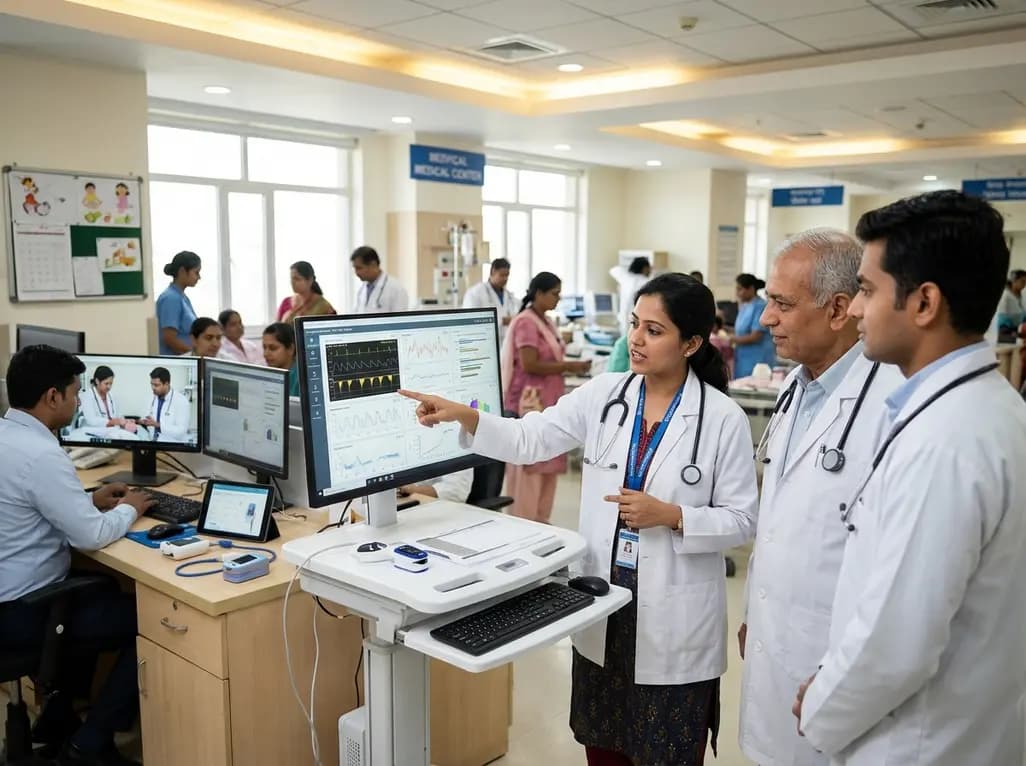
A landmark study details how an enterprise pediatric remote patient management model expanded from a single cardiology pilot to 16 diverse specialty programs by combining centralized digital operations with specialty clinical leadership.
Yesterday

A comparative review of tension band wiring and intramedullary screw fixation in thumb metacarpophalangeal arthrodesis, evaluating union rates, hardware complications, and clinical outcomes.
Yesterday

A breakthrough ultrathin multimodal sensor decouples physical hemodynamic monitoring from disposable electrochemical calibration, achieving long-term wearable glucose prediction with 81.36% accuracy and a 9.12% MARD. This offers a robust, drift-free solution for outpatient metabolic surveillance.
Yesterday
