

Loading, please wait...
Loading, please wait...

Managing acute spontaneous urticaria presents a frequent and unpredictable challenge in outpatient clinical practice. Clinicians routinely encounter patients who develop sudden, highly pruritic wheals and angioedema without an obvious external trigger. Although international consensus defines acute disease by symptom persistence lasting six weeks or less, the exact timeline of resolution remains poorly understood. Therefore, understanding the real-world trajectory of disease resolution helps clinicians optimize patient counseling and improve therapeutic adherence.
For decades, clinical guidelines have separated acute spontaneous urticaria from chronic spontaneous urticaria using an empirical six-week cutoff. Clinicians established this timeline primarily through historical convention rather than biological milestones. Consequently, physicians often struggle to predict which patients will recover quickly and which will progress to prolonged illness. In daily practice, patients often experience significant distress and demand clear expectations regarding their recovery timeline.
When urticarial wheals arise spontaneously, early mast cell degranulation releases histamine and pro-inflammatory cytokines into the surrounding tissue. Furthermore, this localized immune response can either resolve swiftly or transition into self-sustaining vascular and cellular inflammation. Because early presentations of self-limiting and persistent disease appear identical, clinicians cannot rely on lesion morphology alone. Instead, identifying clear temporal patterns offers objective guidance during initial consultations. By establishing accurate prognostic milestones, healthcare providers can alleviate unnecessary anxiety and prevent premature escalations in diagnostic testing.
A landmark multicenter retrospective study investigated 1029 patients presenting with spontaneous urticaria who began medical therapy within seven days of symptom onset. This specific enrollment window allowed researchers to observe disease trajectories before secondary immune remodeling occurred. Among the total cohort, investigators evaluated 902 patients for time to complete control and 877 patients for time to complete remission. Complete control represented the absence of symptoms while taking pharmacotherapy, whereas complete remission denoted permanent freedom from symptoms after terminating medication.
Interestingly, evaluating these two distinct endpoints revealed important differences in therapeutic responses. Most patients obtained rapid symptomatic relief following the initiation of modern second-generation antihistamines. However, achieving symptom suppression under active medication did not immediately equate to genuine disease clearance. Therefore, tracking the subsequent time to medication-free remission provided deeper insights into underlying disease biology. Furthermore, studying early-treated cohorts standardized treatment timelines and provided robust real-world data reflecting typical outpatient presentations.
Survival analysis demonstrated a striking biphasic pattern in the probability of patients remaining symptomatic without remission. Specifically, the survival rate of patients without remission dropped rapidly during the first 16 days following symptom onset. After this sharp decline during the initial two weeks, the rate of resolution slowed substantially. Patients who did not clear their symptoms within this critical sixteen-day window experienced a prolonged disease course that extended toward the chronic phase.
This observation strongly suggests that the true biological turning point occurs much earlier than the traditional six-week boundary. Moreover, these findings suggest that the initial sixteen days represent a crucial physiological crossroad between self-limiting mast cell activation and chronic cutaneous inflammation. When disease mechanisms fail to resolve within this early window, ongoing immune amplification may take place. Consequently, clinicians can utilize day sixteen as an essential prognostic benchmark. Early follow-up appointments scheduled around the two-week mark provide high clinical utility for therapeutic reassessment.
The investigative team also examined how clinical variables, including preceding acute infections and patient age, influenced therapeutic endpoints. Interestingly, researchers observed no significant sex-related differences regarding time to complete control or time to remission. In contrast, infectious triggers showed meaningful associations with clinical trajectories. Preceding upper respiratory or gastrointestinal infections commonly trigger acute urticaria, especially among younger populations.
In many patients with infection-triggered episodes, the immune perturbation resolved once the body cleared the inciting pathogen. Consequently, these individuals often achieved faster remission compared to individuals lacking an infectious antecedent. Furthermore, patient age influenced resolution rates, as older individuals frequently exhibited slower remission curves. Slower recovery in older adults likely reflects underlying immune dysregulation or persistent autoallergic tendencies. Prompt medical intervention within the first week helped stabilize mast cells and mitigate histamine-induced vasodilation. Therefore, evaluating infectious history and patient age allows clinicians to risk-stratify individuals early in their disease journey.
These temporal insights offer immediate, practical value for physicians managing urticaria in diverse Indian healthcare environments. In India, patients frequently visit local clinics, general practitioners, or emergency rooms immediately after sudden hives appear. Unfortunately, significant anxieties surrounding food allergies and dietary restrictions often lead to inappropriate diagnostic testing. Patients frequently demand unnecessary food allergy panels, broad elimination diets, or excessive systemic corticosteroid prescriptions.
Armed with knowledge of the sixteen-day turning point, Indian clinicians can offer reassuring, evidence-based guidance. Physicians can explain that most acute episodes remit within approximately two weeks under appropriate second-generation antihistamine therapy. Furthermore, practitioners should emphasize that non-sedating H1-antihistamines represent the cornerstone of therapy, avoiding prolonged reliance on oral corticosteroids. If symptoms fail to resolve after sixteen days, clinicians should calmly adjust expectations and plan stepwise escalation according to standard guidelines. Consequently, rational prognostic counseling markedly enhances patient trust and delivers superior overall outcomes.
Complete control occurs when a patient experiences no urticarial wheals or pruritus while continuously taking prescribed medication, such as nonsedating antihistamines. In contrast, complete remission indicates the total absence of symptoms after completely stopping all treatments. Clinicians must distinguish between these states because symptom suppression under therapy does not guarantee underlying disease resolution. Patients achieving complete control should undergo cautious, gradual medication tapering to verify true biological remission without provoking immediate symptom rebound.
Survival analysis demonstrates that the vast majority of patients with self-limiting acute urticaria enter remission within the first 16 days of symptom onset. After day sixteen, the rate of spontaneous resolution declines markedly, and remaining patients often progress toward prolonged or chronic disease. Therefore, day sixteen serves as a valuable clinical milestone. It allows physicians to identify persistent cases early, reassure resolving patients, and schedule timely clinical reassessments before reaching the traditional six-week diagnostic boundary.
Acute viral or bacterial infections frequently provoke transient immune system activation, causing mast cells to degranulate and trigger acute urticaria. Because these infectious episodes are self-limiting, urticaria provoked by an infection typically resolves rapidly as the underlying infection clears. Consequently, patients with documented preceding infections often achieve complete remission faster than individuals without an identifiable infectious trigger. In such cases, clinicians should prioritize treating the infection while managing skin symptoms with standard second-generation antihistamines.
Disclaimer: This content is for informational and educational purposes only... Refer to the latest local and national guidelines for clinical practice.
References

Read summarized clinical updates, watch expert medical content, and earn CME certifications right from your smartphone.
Open your smartphone camera to scan and install.





A multicenter cohort study reveals that remission in acute spontaneous urticaria drops sharply within the first 16 days, redefining our understanding of disease progression beyond the traditional six-week cutoff and guiding evidence-based management in clinical practice.
Today
The HELO study evaluates hearing function in virologically suppressed persons living with HIV. Learn how chronic inflammation, vascular factors, and antiretroviral therapy impact auditory decline and why regular audiological monitoring is critical for aging patients.
Today

A population-based study of 20,928 children reveals that small vulnerable newborns face sex-divergent mental capital outcomes at ages 6-7: term SGA girls show higher behavioral difficulties and lower resilience, while preterm non-SGA boys experience increased behavioral problems.
Today

A breakthrough ultrathin multimodal sensor decouples physical hemodynamic monitoring from disposable electrochemical calibration, achieving long-term wearable glucose prediction with 81.36% accuracy and a 9.12% MARD. This offers a robust, drift-free solution for outpatient metabolic surveillance.
Today

A comparative review of tension band wiring and intramedullary screw fixation in thumb metacarpophalangeal arthrodesis, evaluating union rates, hardware complications, and clinical outcomes.
Today
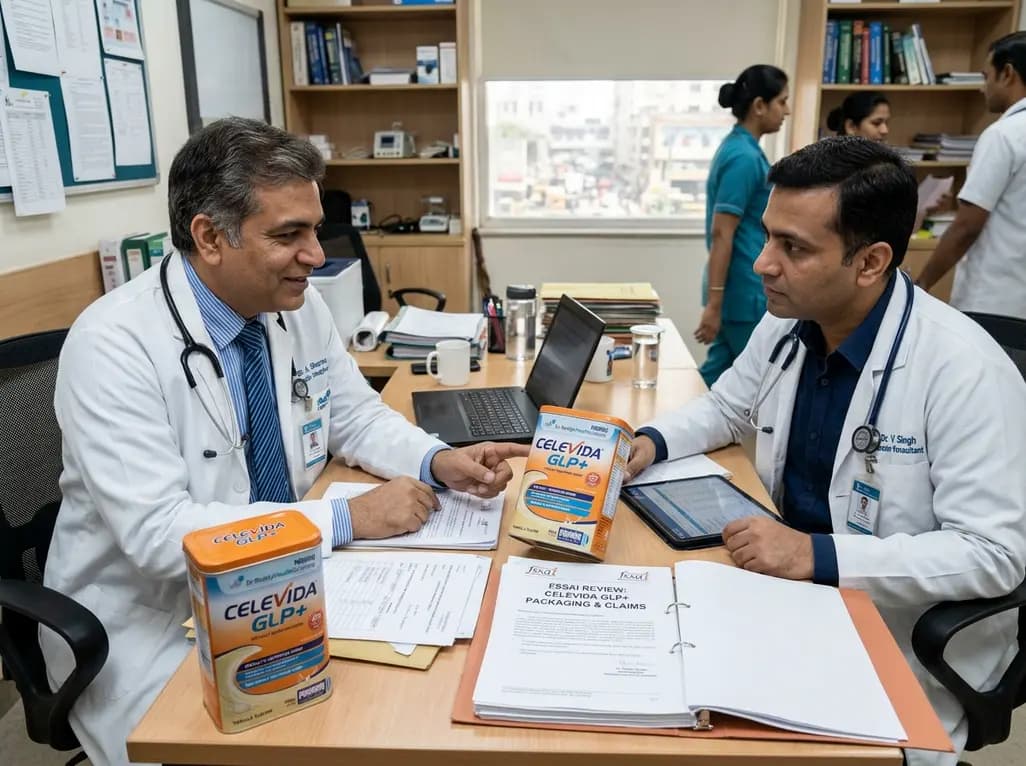
Following regulatory scrutiny from FSSAI regarding promotional representations and lean muscle preservation claims, Dr. Reddy's Laboratories and Nestlé Health Science are currently reviewing the branding and marketing strategy for their joint nutritional supplement Celevida GLP+.
Today
