.webp&w=384&q=75)

Loading, please wait...
Loading, please wait...

Chronic wound management remains a significant challenge for patients undergoing oral anticoagulant therapy. Healthcare providers often worry about the effectiveness of blood-derived treatments in these individuals. Recently, an exploratory ex vivo study investigated the success of ActiGraft clot formation in patients receiving medications like warfarin and rivaroxaban. The findings provide crucial insights into how these anticoagulants influence the development of autologous whole blood clots.
The research stratified twenty-five participants into three distinct cohorts based on their treatment regimen. These groups included a vitamin K antagonist group (warfarin), a factor Xa inhibitor group (rivaroxaban), and a healthy control group. Specifically, the researchers measured the clot formation time (CFT). They defined this as the point where fluid movement stopped. While the anticoagulant groups showed longer formation times than the controls, the results remained within the standard reference range of 8 to 12 minutes.
Consequently, the study confirms that ActiGraft technology is feasible for patients on systemic anticoagulation. Moreover, the results indicated no statistically significant difference between patients taking warfarin and those on rivaroxaban. This is particularly relevant for Indian clinicians managing elderly patients with multiple comorbidities. Therefore, doctors can confidently apply this autologous therapy without needing to pause essential anticoagulant medications.
In addition, the average clot formation time for the entire study population was approximately 10.5 minutes. Notably, the study demonstrates that the proprietary coagulation process in ActiGraft overcomes the inhibitory effects of oral anticoagulants. Furthermore, this approach provides a bioactive scaffold that supports natural healing. As a result, the therapy remains a viable option for high-risk patients with chronic lower limb ulcers.
Research shows that while warfarin may slightly increase the time it takes for a clot to form, the process still occurs within the clinically acceptable range of 8 to 12 minutes.
Yes, the study confirmed that patients on factor Xa inhibitors like rivaroxaban can successfully form autologous clots using the ActiGraft system, making it a feasible option for wound care.
Disclaimer: This content is for informational and educational purposes only and does not constitute medical advice. Always seek the advice of a physician or other qualified health provider with any questions you may have regarding a medical condition. Refer to the latest local and national guidelines for clinical practice.
References
Jacobson BF et al. Autologous whole blood clot formation with actigraft in patients receiving oral anticoagulant therapy: an ex vivo feasibility study. J Thromb Thrombolysis. 2026 May 24. doi: 10.1007/s11239-026-03321-4. PMID: 42177743.
Snyder RJ, et al. A prospective, randomized, multicenter, controlled trial of an autologous whole blood clot product in the treatment of diabetic foot ulcers. Wounds. 2024.
RedDress Ltd. ActiGraft Pro: Personalized Care for Chronic Wounds. Woundsource.com. 2024.

Read summarized clinical updates, watch expert medical content, and earn CME certifications right from your smartphone.
Open your smartphone camera to scan and install.





A new study confirms that ActiGraft autologous blood clot formation is feasible and effective for wound care in patients receiving oral anticoagulant therap...
4 months ago

A landmark cluster randomized trial demonstrates that community-based mass dog vaccination achieves superior coverage and sustains protective herd immunity against rabies far better than conventional campaign models, offering vital lessons for global and Indian elimination targets.
Today

Explore the crucial link between dietary protein and immunocompetence. This review examines how low-protein nutrition shifts metabolic resources away from pathogen defense toward early reproduction, compromising host survival and immunity against severe bacterial infections.
Today
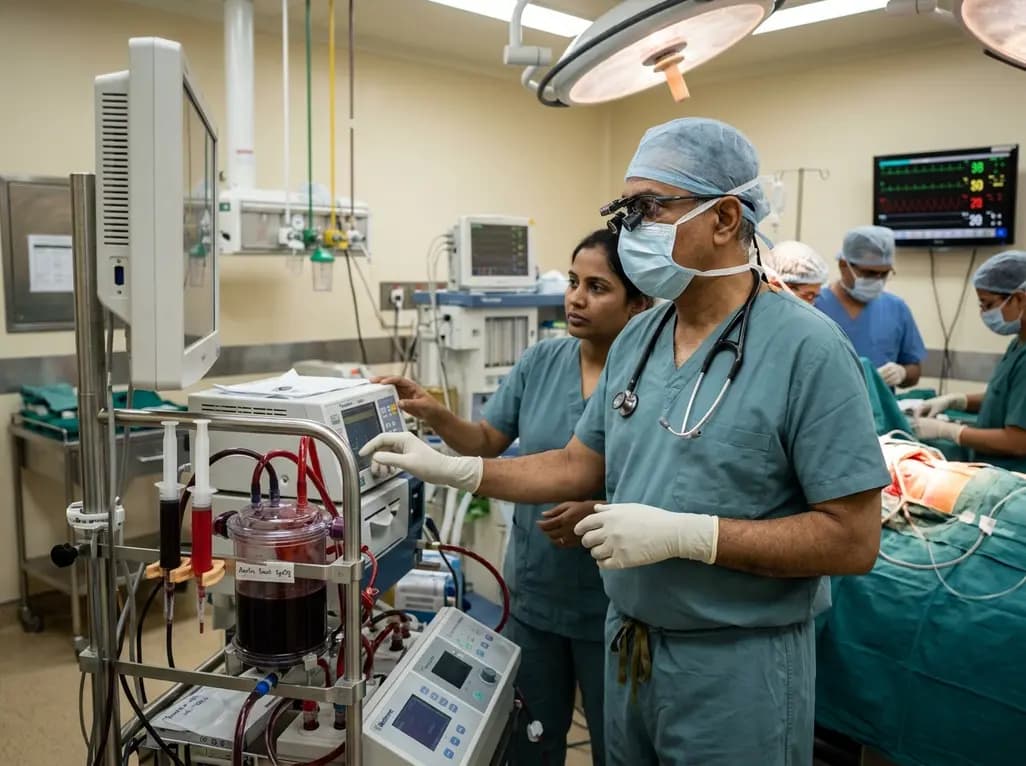
Differential oxygenation during peripheral TA-NRP can cause undetected coronary hypoxemia due to arch vessel clamping. A novel circuit with continuous aortic root monitoring detects desaturation early, facilitating left ventricular unloading and preventing allograft dysfunction and unnecessary heart discard.
Today

A longitudinal study reveals that patients undergoing staged bilateral hip arthroscopy experience progressive contralateral labral deterioration during surgical intervals. However, structural degradation does not compromise 2-year postoperative clinical outcomes or patient-reported satisfaction scores.
Today

A post hoc analysis of the PARM-T2D study shows pemafibrate exerts baseline-dependent effects on LDL-C and particle size in type 2 diabetes and hypertriglyceridemia. It lowers triglycerides and remnants while favorably remodeling atherogenic LDL particles based on initial lipid control status.
Today
