

Loading, please wait...
Loading, please wait...

Acral melanoma represents a biologically and clinically unique malignancy that originates on the glabrous volar skin of palms, soles, and nail beds. Unlike classic sun-induced cutaneous malignancies, this rare neoplasm does not develop from ultraviolet radiation exposure. Consequently, clinicians and oncologists cannot rely on conventional cutaneous management paradigms when addressing these aggressive lesions. Patients across Asia, Africa, and Latin America suffer a disproportionately high burden of this subtype, which frequently presents at advanced stages. Understanding its distinct biological mechanisms remains essential for improving patient outcomes globally.
Unlike common cutaneous malignancies, acral melanoma exhibits a remarkably low single-nucleotide mutational burden. However, whole-genome sequencing reveals extensive structural variations and complex chromosomal rearrangements throughout its architecture. Researchers frequently observe clustered copy number alterations termed hailstorms or tyfonas, which provoke catastrophic genomic disruption. In addition, these catastrophic events trigger high-level focal amplifications of key oncogenes such as CCND1, CDK4, and TERT. Consequently, critical cell cycle checkpoints degrade rapidly, which facilitates unchecked proliferation without ultraviolet mutagenesis. Furthermore, telomerase activation occurs exceptionally early during malignant initiation in these volar tissues. This early telomerase activation stabilizes fractured chromosomes and allows aberrant clones to survive destructive breakage-fusion-bridge cycles. In contrast, canonical BRAF V600E mutations occur far less frequently here than in sun-exposed body sites. Instead, clinicians encounter actionable alterations in KIT, NF1, or SPRED1 in meaningful patient subsets. Therefore, genomic sequencing confirms that acral lesions follow an entirely separate path of malignant oncogenesis. Recognizing these fundamental divergence points helps oncologists select precise diagnostic testing panels during initial patient workups. Moreover, understanding these distinct oncogenic drivers prevents physicians from relying on ineffective targeted therapies.
Clinicians have long observed that weight-bearing regions of the soles sustain the highest frequency of primary plantar tumors. Therefore, researchers hypothesize that chronic mechanical shear stress acts as a persistent physical promoter of tissue injury. Repetitive mechanical pressure stimulates local inflammatory cytokines, induces epidermal microtrauma, and accelerates reactive oxygen species production within the glabrous skin. Furthermore, sophisticated phylogenetic tracking studies demonstrate a unique pattern of late clonal evolution in these malignancies. Primary tumors initiate through structural copy number hailstorms rather than early driver point mutations. Consequently, activating mutations in the MAPK pathway, such as subclonal NRAS, BRAF, or NF1 mutations, emerge late during tumor progression. Different geographic regions of a single primary tumor frequently harbor completely discordant driver mutations. As a result, this striking intratumoral heterogeneity presents a formidable challenge for needle biopsy interpretation and targeted drug selection. In addition, subclonal resistant cells expand rapidly when clinicians administer monotherapy against these late branch alterations. Ultimately, exploring the biomechanical microenvironment will clarify how physical forces interact with somatic instability to drive malignant progression. Similarly, ongoing clinical investigations examine whether pressure-relieving orthotics can reduce tissue inflammation in high-risk patients.
Early identification of volar melanocytic neoplasms remains notoriously challenging during routine dermatological and primary care practice. Frequently, patients ignore painless macular pigmentation on the heel, toe web, or subungual space for many months. Furthermore, healthcare providers often misdiagnose early malignant lesions as benign verrucae, diabetic neurotrophic ulcers, chronic tinea pedis, or traumatic hematomas. Consequently, patients typically present with advanced Breslow thickness, dermal ulceration, and occult regional lymph node metastases. Dermatologists emphasize the indispensable role of dermoscopy to evaluate parallel ridge patterns, which strongly indicate volar malignancy. In addition, clinicians must maintain a vigilant diagnostic threshold for longitudinal melanonychia that widens proximally or demonstrates Hutchinson sign. When physicians encounter suspicious lesions, they must perform a definitive full-thickness excisional or narrow-margin incisional biopsy. Superficial shave biopsies frequently fail to capture true lesion depth and generate dangerous diagnostic delay. Therefore, routine full-body skin examinations must always include meticulous evaluation of the palms, soles, and nail units. Prompt histological confirmation remains the single most effective intervention for reducing melanoma mortality. Moreover, multidisciplinary tumor boards ensure accurate pathological staging and comprehensive surgical planning for complex extremity locations.
Historically, oncology guidelines extrapolated treatment algorithms for volar lesions directly from sun-exposed cutaneous melanoma literature. However, this generalized clinical strategy frequently yields disappointing therapeutic outcomes in advanced stages of disease. Because acral lesions carry a low overall tumor mutational burden, they display fewer immunogenic neoantigens for cytotoxic surveillance. Consequently, single-agent immune checkpoint inhibitors targeting PD-1 produce substantially lower objective response rates than in cutaneous cases. Moreover, the tumor microenvironment in acral tumors displays pronounced immunosuppressive features, including dense fibrous stroma and prominent macrophage infiltration. Similarly, targeted therapies offer only brief disease control because MAPK mutations exist predominantly within subclonal tumor populations. Patients with identified KIT alterations sometimes achieve meaningful disease stabilization with tyrosine kinase inhibitors such as imatinib. Nevertheless, secondary resistance emerges rapidly through parallel bypass pathway activation and copy number alterations. In addition, pivotal global clinical trials have historically underrepresented non-Caucasian cohorts and acral subtypes. Therefore, clinicians cannot continue to rely on extrapolated cutaneous evidence to direct therapy for these challenging patients. Thus, oncologists require dedicated clinical trials that test innovative drug combinations tailored specifically to the biological realities of volar tumors.
Overcoming the clinical hurdles of volar tumors requires innovative, biology-driven therapeutic paradigms and international multi-center collaboration. Because cell cycle pathway amplifications predominate, investigators are actively exploring combinations that inhibit CDK4/6 alongside other signaling cascades. For example, combining CDK4/6 inhibitors with MEK inhibitors or multi-kinase inhibitors shows promising preclinical synergy against CCND1-amplified cells. Furthermore, pairing anti-PD-1 antibodies with anti-angiogenic tyrosine kinase inhibitors demonstrates encouraging overall response rates in modern international trials. These novel multi-targeted regimens effectively remodel the dense tumor microenvironment and enhance cytotoxic lymphocyte infiltration into immune-excluded stroma. In addition, worldwide research consortia must aggressively prioritize clinical trial diversity to accelerate biospecimen acquisition and single-cell sequencing. Such collaborative scientific networks will uncover novel structural driver alterations and identify reliable predictive biomarkers. Ultimately, replacing empirical treatment extrapolation with subtype-specific international guidelines will significantly elevate long-term patient survival. Healthcare institutions must unite to guarantee standardized molecular diagnostics, specialized surgical care, and compassionate experimental access for every affected patient. Consequently, establishing dedicated registry networks across underrepresented populations will directly bridge critical knowledge gaps and optimize global clinical outcomes.
Acral melanoma arises exclusively on glabrous volar skin, including the palms, soles, and nail beds. Unlike typical cutaneous melanoma, it lacks an ultraviolet radiation etiology and exhibits a low overall mutational burden. Instead, its pathogenesis features early structural genomic hailstorms and frequent copy number amplifications of genes like CCND1, CDK4, and TERT. Consequently, standard targeted and immune checkpoint therapies demonstrate lower response rates in this distinct clinical entity.
Checkpoint inhibitors show reduced activity in acral tumors primarily because these malignancies carry low tumor mutational burdens. Consequently, the neoplastic cells present fewer immunogenic neoantigens for host T cells to recognize. Furthermore, the tumor microenvironment in volar lesions remains densely fibrotic and highly immunosuppressive, characterized by heavy macrophage infiltration and restricted lymphocyte trafficking. Therefore, overcoming this primary immune resistance requires novel combinations that pair checkpoint blockade with targeted multi-kinase or anti-angiogenic therapies.
Clinicians should look specifically for a parallel ridge pattern during dermoscopy of pigmented volar lesions. In this pattern, pigment band distribution preferentially tracks the dermatoglyphic ridges rather than the furrows. In addition, irregular diffuse pigmentation, abrupt peripheral cutoffs, and multicentric color variegation indicate potential malignancy. For nail apparatus lesions, widening of a dark pigmented band, Hutchinson sign, and nail dystrophy require an immediate full-thickness biopsy to exclude invasive subungual disease.
Disclaimer: This content is for informational and educational purposes only... Refer to the latest local and national guidelines for clinical practice.
References

Read summarized clinical updates, watch expert medical content, and earn CME certifications right from your smartphone.
Open your smartphone camera to scan and install.





Acral melanoma is a rare, non-UV-related malignancy arising on volar skin. Characterized by early genomic hailstorms and late MAPK mutations, it responds poorly to standard cutaneous protocols. This review explores its distinct biology, diagnostic challenges, and emerging targeted and combinatorial strategies.
Today
A prospective study introduces a clinical and biomarker-based score incorporating faecal calprotectin to predict microscopic colitis with high accuracy (AUC 0.90), outperforming older risk scores and preventing missed diagnoses during colonoscopy in chronic watery diarrhoea.
Today

Delhi is undergoing a major healthcare overhaul with enhanced Ayushman Bharat insurance up to ₹10 lakh, increased MBBS and PG medical training seats, expanded primary network mandirs, new tertiary neuro-ICUs, and public-private reproductive technology initiatives to build a resilient, preventative healthcare model.
Today
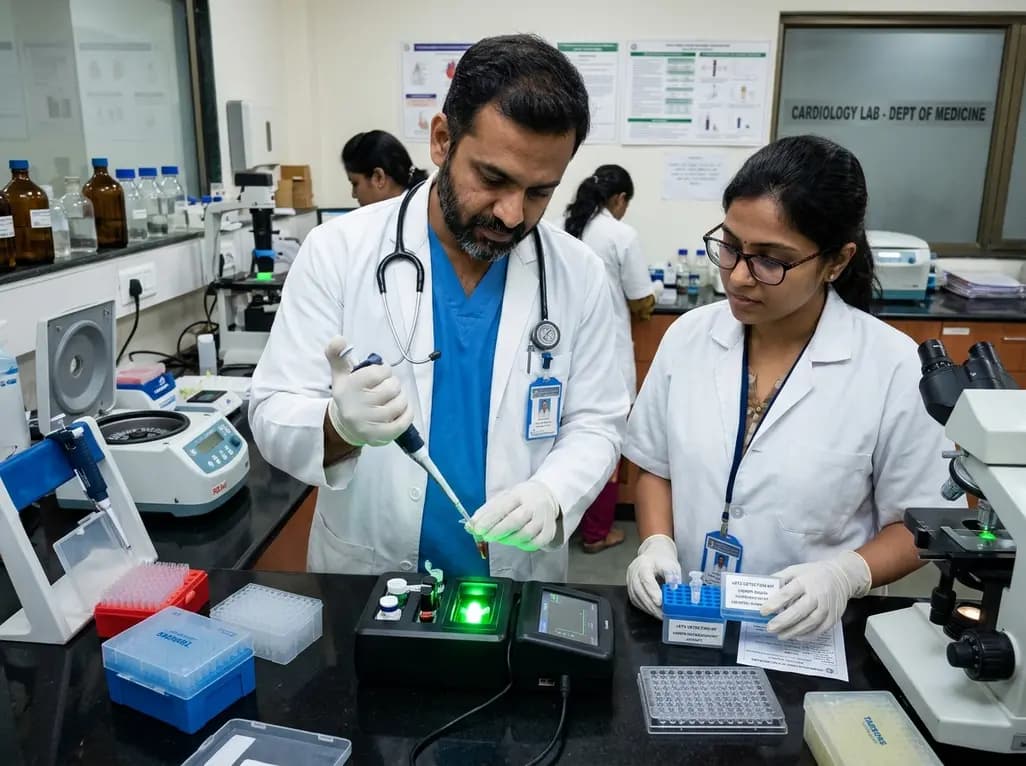
Researchers have engineered an innovative CRISPR-Cas12a fluorescent diagnostic kit for clinical sST2 detection. By combining nanotechnology with enzymatic trans-cleavage, this platform enables rapid, ultrasensitive heart failure diagnosis and risk stratification, outperforming conventional laboratory ELISA methods.
Today

Non-union fractures occur in 2-5% of cases, causing significant disability and cost. Conservative modalities such as LIPUS, PEMF, and focused ESWT offer non-surgical healing options for defects up to 5-10 mm when adequate mechanical stability exists without infection.
Today
A Brazilian birth cohort reveals significant sex-specific associations between preterm birth and adolescent adiposity, underscoring the urgent need for targeted long-term cardiometabolic surveillance and tailored clinical monitoring.
Today
