

Loading, please wait...
Loading, please wait...

Evaluating adult patients presenting with persistent non-bloody bowel movements poses significant clinical difficulties for physicians across outpatient settings. Chronic watery diarrhoea frequently prompts exhaustive investigations to distinguish functional gastrointestinal disorders from organic mucosal inflammation. Among these organic conditions, microscopic colitis represents an underappreciated yet substantial cause of chronic secretory loose stools, predominantly affecting middle-aged and elderly individuals. However, macroscopic endoscopic inspection during routine colonoscopy typically reveals normal or unremarkable mucosal surfaces. Consequently, definitive diagnosis strictly requires obtaining multiple stepwise mucosal biopsies from both right-sided and left-sided colonic segments. Unfortunately, clinicians frequently omit random mucosal biopsies during an otherwise visually normal colonoscopy. In many busy endoscopy suites, procedural time constraints and resource limitations prevent universal histological sampling. As a result, patients endure substantial diagnostic delays, repeated hospital evaluations, and recurrent misclassification as irritable bowel syndrome. Therefore, establishing reliable pre-endoscopic stratification tools has become an urgent clinical priority. Accurate prediction algorithms identify high-risk individuals requiring mandatory biopsies. Meanwhile, they spare low-probability patients from unnecessary tissue sampling and processing expenses. Moreover, timely recognition allows prompt initiation of targeted oral budesonide, thereby rapidly restoring patient quality of life.
To optimize histological sampling and reduce procedural omissions, investigators previously proposed several clinical prediction systems, notably the Cotter, Kane, and Atieh scores. These conventional models predominantly synthesized demographic variables and subjective symptom patterns. Common parameters included older age, female sex, nocturnal diarrhoea, and exposure to medications such as nonsteroidal anti-inflammatory drugs or proton pump inhibitors. Although these clinical frameworks represented significant conceptual progress, subsequent validation studies consistently demonstrated disappointing diagnostic accuracy in real-world patient cohorts. Specifically, their area under the receiver operating characteristic curve values frequently ranged between 0.63 and 0.72. Because these scores rely solely on subjective historical details, their discrimination remains inadequate across diverse clinical populations. Furthermore, substantial symptomatic overlap between functional diarrhoea and organic mucosal inflammation introduces diagnostic ambiguity. When clinicians apply these legacy systems in daily practice, false-positive recommendations prompt unnecessary biopsy protocols in low-risk individuals. Conversely, false-negative assessments risk missing active inflammatory disease, leaving symptomatic patients completely untreated. Consequently, gastroenterologists require objective biomarkers that directly reflect mucosal immune activity rather than relying entirely on historical patient reports.
Addressing these diagnostic shortcomings, a prospective multicentre study developed an innovative scoring framework designed specifically to predict microscopic colitis. The investigators prospectively evaluated 111 consecutive adult patients undergoing colonoscopy for chronic watery diarrhoea across two referral centres. Among the enrolled cohort, histopathology confirmed the disease in 41 individuals, comprising lymphocytic and collagenous subtypes. Importantly, researchers collected baseline clinical data alongside quantitative faecal calprotectin measurements before endoscopy. Employing multivariate logistic regression analysis, the authors identified four independent, powerful predictors of the disease. These parameters included stool frequency exceeding five movements daily and diarrhoea duration of eight months or less. Additionally, body mass index at or below 26 kilograms per square metre and faecal calprotectin above 81 micrograms per gram proved highly predictive. Furthermore, score weights were assigned mathematically according to the regression beta coefficients. Internal validation utilizing bootstrap resampling across 1000 iterations confirmed the structural stability and statistical robustness of the model. Thus, by combining straightforward bedside measurements with an objective non-invasive biomarker, the algorithm provides actionable predictive power.
The statistical performance of this integrated biomarker scoring tool significantly surpassed all existing historical prediction models within the investigated cohort. Specifically, the novel score demonstrated an outstanding receiver operating characteristic area under the curve of 0.90. Furthermore, it maintained an optimism-corrected value of 0.88 following internal bootstrap validation. In striking contrast, legacy instruments demonstrated inferior discriminative capability in this population, yielding modest AUCs between 0.63 and 0.72. Most importantly, using a sensitivity-driven cut-off threshold, the algorithm achieved a zero false-negative rate. Consequently, every single patient with confirmed histological inflammation fell into the positive biopsy recommendation category. In clinical practice, minimizing false negatives is paramount. Missing mucosal biopsies during colonoscopy causes persistent diagnostic confusion and prolonged patient discomfort. Additionally, calibration metrics confirmed close agreement between predicted risks and observed histological outcomes across diverse risk strata. Therefore, this derivation study demonstrates that integrating faecal calprotectin with clinical parameters provides unprecedented accuracy. This approach resolves diagnostic challenges that hindered previous purely symptom-based scores.
Implementing this biomarker-enhanced scoring tool offers profound practical benefits for gastroenterologists, internists, and endoscopists managing persistent diarrhoeal illnesses. In typical clinical workflows, endoscopists encountering macroscopically normal colonic mucosa often debate whether to collect multiple biopsies. By calculating this straightforward composite score before the procedure, clinicians can establish clear pre-test probability thresholds. For instance, high stool frequency, recent onset, lean habitus, and elevated calprotectin strongly warrant stepwise biopsies. Endoscopists should systematically sample both ascending and descending colonic mucosa in these cases. Conversely, individuals scoring below the sensitivity threshold might safely avoid unnecessary tissue sampling. This strategy reduces laboratory workloads and procedural expenditure. Nevertheless, clinicians must recognize that this study represents a derivation cohort. External validation across diverse geographic settings remains essential, especially in Indian populations where post-infectious diarrhoea is prevalent. Until large-scale validation confirms these cut-offs, physicians should integrate this model alongside clinical judgement. Such diligence elevates diagnostic vigilance and optimizes endoscopy resource utilization.
The newly derived predictive model identifies four robust variables: daily stool frequency greater than five movements, symptom duration of eight months or less, body mass index at or below 26 kilograms per square metre, and faecal calprotectin exceeding 81 micrograms per gram. Consequently, patients exhibiting rapid symptom onset, frequent daily loose stools, and lean habitus combined with mucosal inflammatory markers have a significantly elevated probability of underlying histopathological colitis requiring colonic mucosal biopsies.
Faecal calprotectin serves as an objective biomarker reflecting intestinal mucosal neutrophilic infiltration. While classic macroscopic appearances in microscopic colitis remain completely normal during colonoscopy, subclinical mucosal inflammation frequently elevates calprotectin levels moderately above 81 micrograms per gram. Therefore, calprotectin provides quantitative biological evidence of active mucosal inflammation, successfully distinguishing organic colonic pathologies from functional bowel disorders such as irritable bowel syndrome and guiding targeted endoscopic biopsy acquisition.
Currently, endoscopists frequently omit biopsies when colonic mucosa appears normal, leading to significant diagnostic delays. By applying this objective scoring algorithm prior to endoscopy, clinicians identify patients who strictly require stepwise colonic biopsies. Furthermore, the scoring system demonstrated zero false-negative results at its sensitive threshold, ensuring that no active cases are inadvertently missed while potentially reducing unnecessary biopsy costs and laboratory burdens in low-risk individuals.
Disclaimer: This content is for informational and educational purposes only. It is not intended to substitute for professional medical advice, diagnosis, or treatment. Always seek the advice of your physician or other qualified health provider with any questions you may have regarding a medical condition. Refer to the latest local and national guidelines for clinical practice.
References

Read summarized clinical updates, watch expert medical content, and earn CME certifications right from your smartphone.
Open your smartphone camera to scan and install.





A prospective study introduces a clinical and biomarker-based score incorporating faecal calprotectin to predict microscopic colitis with high accuracy (AUC 0.90), outperforming older risk scores and preventing missed diagnoses during colonoscopy in chronic watery diarrhoea.
Today

Delhi is undergoing a major healthcare overhaul with enhanced Ayushman Bharat insurance up to ₹10 lakh, increased MBBS and PG medical training seats, expanded primary network mandirs, new tertiary neuro-ICUs, and public-private reproductive technology initiatives to build a resilient, preventative healthcare model.
Today
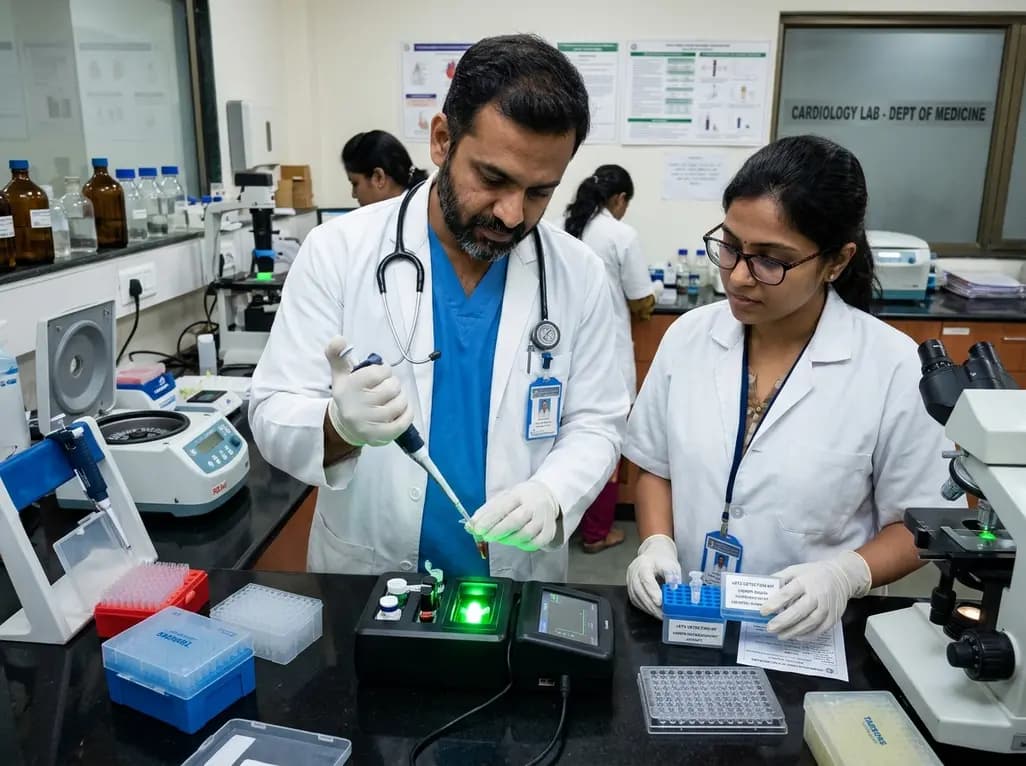
Researchers have engineered an innovative CRISPR-Cas12a fluorescent diagnostic kit for clinical sST2 detection. By combining nanotechnology with enzymatic trans-cleavage, this platform enables rapid, ultrasensitive heart failure diagnosis and risk stratification, outperforming conventional laboratory ELISA methods.
Today

Non-union fractures occur in 2-5% of cases, causing significant disability and cost. Conservative modalities such as LIPUS, PEMF, and focused ESWT offer non-surgical healing options for defects up to 5-10 mm when adequate mechanical stability exists without infection.
Today
A Brazilian birth cohort reveals significant sex-specific associations between preterm birth and adolescent adiposity, underscoring the urgent need for targeted long-term cardiometabolic surveillance and tailored clinical monitoring.
Today
