

Loading, please wait...
Loading, please wait...

Surgical departments face mounting pressure to optimize procedural budgets while delivering exceptional clinical outcomes. Consequently, healthcare administrators continuously scrutinize cervical spine interventions across regional care networks. Anterior cervical discectomy and fusion represents one of the most common elective neurosurgical procedures globally. However, healthcare systems frequently observe substantial financial variation across different practice environments. Many institutional leaders historically assumed that quaternary facilities incur higher procedural expenses due to complex academic infrastructure. In contrast, recent multi-center clinical data challenge this conventional belief. Researchers recently measured granular ACDF intraoperative costs across a comprehensive health network. Their investigation demonstrated that quaternary hospitals achieved significantly lower overall intraoperative expenses than affiliated satellite facilities. Specifically, procedures performed at regional satellite centers generated markedly higher expenses per surgical episode. Therefore, evaluating the underlying drivers of these procedural cost discrepancies is essential for modern surgical leadership. By examining true resource allocation, clinicians and hospital executives can implement actionable measures to curb unnecessary surgical expenditures. Furthermore, understanding these spending dynamics enables surgical leaders to allocate departmental resources with greater precision. Ultimately, eliminating cost inflation protects institutional balance sheets while preserving high standards of surgical care.
Traditional hospital accounting methods often fail to reflect the true financial resources consumed during surgery. Historically, hospital systems relied on charge-to-cost ratios or gross departmental billing metrics. However, these legacy metrics obscure individual resource consumption and mask inefficiencies in the operating theatre. To overcome these critical limitations, investigators adopted time-driven activity-based costing. This advanced micro-costing framework accurately captures true clinical expenditures by mapping every individual intraoperative step. Furthermore, the methodology pairs precise procedural duration with the per-minute wage rates of all involved healthcare personnel. These personnel include attending neurosurgeons, spine fellows, anesthesiologists, certified nurse anesthetists, circulating nurses, and surgical scrub technologists. Additionally, the framework captures every physical consumable, instrument tray, biologic product, and spinal implant utilized during the case. Researchers automated data extraction directly from electronic medical record databases across hundreds of surgical procedures. Consequently, this granular analysis established a highly accurate baseline of direct surgical expenses. Operating room directors can clearly distinguish personnel-driven expenditures from material supply costs. As a result, surgical departments gain actionable clarity into their operational performance. Moreover, this analytical precision empowers administrative leaders to target specific operational bottlenecks rather than relying on arbitrary spending cuts.
The multi-center study evaluated 958 anterior cervical discectomy and fusion procedures performed across two quaternary medical centers and six affiliated satellite hospitals. Notably, quaternary hospitals demonstrated significantly lower total intraoperative costs compared to satellite facilities. The mean intraoperative expenditure at quaternary centers was $6,773, whereas satellite hospitals averaged $8,862 per case. This represents a substantial gap of more than two thousand dollars per patient encounter. Moreover, multivariable logistic regression models demonstrated that satellite hospitals faced a 6.55-fold higher likelihood of performing high-cost surgeries. Confounding variables, including patient age, medical comorbidities, and surgical complexity, did not account for this disparity. Instead, the comparative data revealed that non-clinical institutional dynamics dictated procedural spending. Furthermore, statistical modeling confirmed that hospital setting remained an independent predictor of overall surgical expenditure. These robust observations overturn the common perception that academic health centers operate with excessive waste. Rather, centralized quaternary centers frequently display tighter procedural protocols and streamlined resource management. Consequently, network planners must examine why satellite facilities experience such profound operational divergence. Additionally, these striking data suggest that regional satellite centers require immediate managerial intervention to align their financial practices with the core academic hub.
A deeper examination of the cost components revealed that surgical supplies drove the vast majority of expenditure variation. Although personnel wages and operating room occupancy times contributed meaningfully, material consumables generated the primary financial divergence. Specifically, quaternary hospitals achieved substantially lower implant and disposable supply costs per case. Bulk purchasing agreements, standardized vendor contracts, and centralized formulary oversight at academic centers provided critical economic leverage. In contrast, satellite community hospitals often lacked standardized surgical preference cards. Consequently, surgeons at community locations frequently utilized fragmented implant vendors and expensive proprietary biologics. Moreover, quaternary centers maintained strict vendor consolidation committees that negotiated aggressive discounts on cervical plates, interbody cages, and fixation screws. In addition, academic operating rooms strictly monitored intraoperative biologic use, avoiding unnecessary premium hemostatic agents. Beyond material inventory, personnel allocation represents another major driver of procedural expenditure. Academic hospitals utilized standardized care teams with dedicated spine personnel, optimizing procedural turnover. Conversely, rotating staff at satellite facilities prolonged operative times, elevating staffing overhead. Therefore, variance in implant contracts and team consistency directly accounted for the dramatic financial gap between hospital tiers.
These findings offer timely, actionable lessons for hospital administrators, neurosurgeons, and orthopedic spine surgeons practicing in India. Healthcare delivery in India operates across a diverse spectrum, encompassing elite quaternary centers, corporate hospital networks, and tier-two satellite nursing homes. Many Indian healthcare conglomerates are actively expanding their geographic footprint through regional satellite clinics. However, decentralized satellite surgical theaters frequently struggle with fragmented inventory acquisition and uncontrolled supply procurement. Because Indian patients often bear significant out-of-pocket healthcare expenses, minimizing unnecessary procedural overhead is clinically and ethically paramount. Hospital administrators must implement network-wide centralized purchasing committees for spinal instrumentation, titanium cages, and cervical plates. Furthermore, department leaders should establish standardized surgical trays and restrict high-cost proprietary disposables across all branch facilities. Additionally, adopting micro-costing methodologies enables Indian hospital networks to identify precise operational bottlenecks and curb billing inflation. Standardizing perioperative protocols across urban quaternary hubs and regional satellites will expand access to affordable, high-quality spine surgery throughout the country. Moreover, adopting transparent cost accounting empowers Indian surgeons to deliver value-based care, thereby protecting vulnerable patients from unexpected financial toxicity.
Quaternary medical centers demonstrated significantly lower intraoperative expenses primarily due to superior supply chain management and standardized implant procurement. Academic hubs negotiated bulk discounts for spinal hardware and biologics, whereas regional satellite hospitals experienced fragmented purchasing, higher vendor variation, and less restrictive inventory controls.
Traditional accounting estimates surgical costs through gross departmental billing ratios or hospital charges, which frequently mask actual procedural consumption. In contrast, time-driven activity-based costing measures exact resource consumption by combining process-mapped procedural duration with per-minute personnel wages and the exact acquisition price of surgical materials.
Healthcare administrators can eliminate procedural cost disparities by standardizing surgical implant vendor contracts across all network sites. Furthermore, establishing uniform preference cards, consolidating instrumentation trays, restricting off-label biologic utilization, and deploying experienced, specialized operating room teams ensure consistent procedural efficiency and reduced intraoperative waste.
Disclaimer: This content is for informational and educational purposes only... Refer to the latest local and national guidelines for clinical practice.
References

Read summarized clinical updates, watch expert medical content, and earn CME certifications right from your smartphone.
Open your smartphone camera to scan and install.





A multi-center study using time-driven activity-based costing reveals that quaternary care hospitals have significantly lower ACDF intraoperative costs than satellite facilities, driven primarily by bulk implant pricing, vendor consolidation, and streamlined operating room staffing.
Today

Ambient digital scribes promise effortless medical documentation, but a critical sociotechnical commentary reveals that AI alters rather than eliminates charting work. Discover how shifting cognitive burdens, oversight risks, and workflow redesign impact clinical safety and healthcare practice.
Today

A new comparative study demonstrates that intraoperative imprint cytology achieves 96.6% diagnostic accuracy in ovarian tumours, outperforming frozen section in sensitivity for borderline lesions and offering an accessible, rapid alternative for resource-constrained surgical centres.
Today

Thoracic aortic aneurysm lacks etiologic medical therapy. A new study reveals that targeting specific αV integrins with Cilengitide attenuates TGF-β and mechanotransduction pathways, effectively limiting pro-fibrotic remodeling and aortic bulb dilation in both syndromic and sporadic disease models.
Today
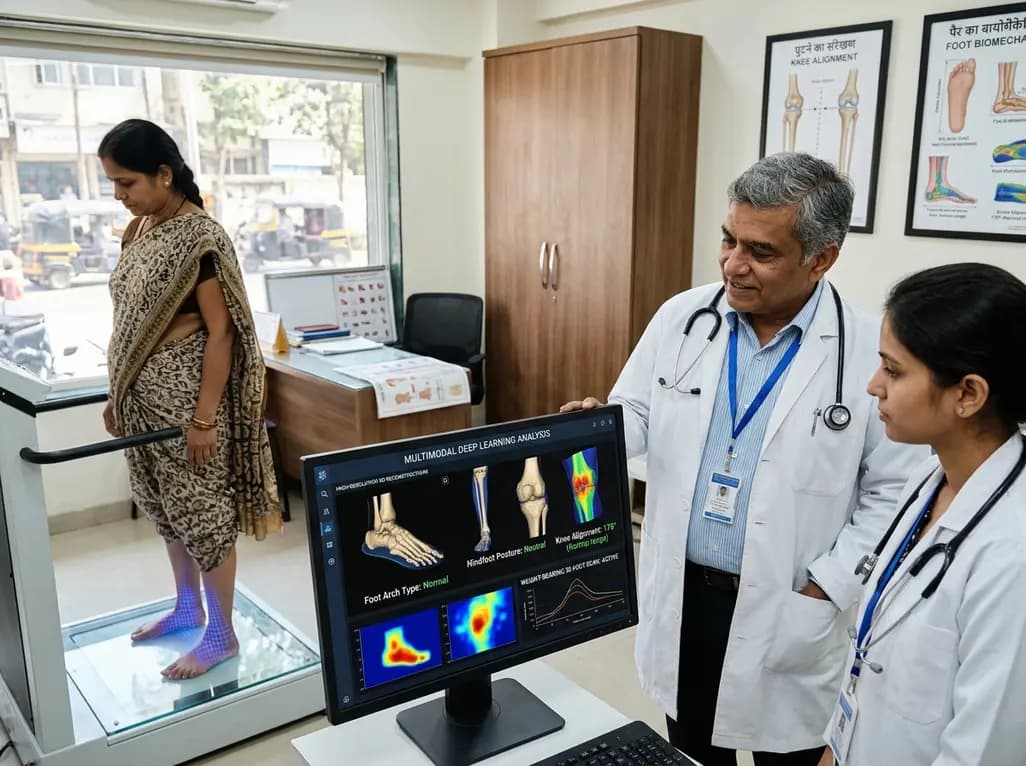
A multimodal deep learning framework utilizing weight-bearing 3D foot scans accurately screens lower-limb alignment, including arch type, hindfoot posture, and knee alignment, offering an accessible, radiation-free alternative to radiography for early biomechanical triage.
Today

A real-world retrospective study demonstrates that combining intravitreal ranibizumab with focal/grid macular laser significantly improves visual acuity and central macular thickness compared to laser monotherapy in patients with center-involved diabetic macular edema.
Today
