

Loading, please wait...
Loading, please wait...

Endoscopic sinus surgery remains a cornerstone intervention for medically refractory chronic rhinosinusitis with nasal polyps. However, evaluating surgical completeness objectively in daily practice has long challenged otolaryngologists. To address this clinical dilemma, researchers recently validated the ACCOMPLISH score as an objective, intraoperative endoscopic grading tool. This novel grading system systematically quantifies surgical extent by identifying verifiable anatomical landmarks at the conclusion of endoscopic sinus surgery. Consequently, this innovation helps bridge the gap between operative intention and reproducible surgical documentation.
Surgical management of chronic rhinosinusitis with nasal polyps demands meticulous precision and comprehensive anatomical clearance. While endoscopic sinus surgery aims to restore physiological sinus ventilation and facilitate topical drug delivery, operative extent varies widely among surgeons. Historically, clinicians relied on retrospective operative notes or postoperative clinic endoscopy to estimate surgical thoroughness. However, existing grading scores often prove cumbersome, subjective, or difficult for less experienced otorhinolaryngologists to apply consistently. Moreover, ambiguous operative documentation creates hurdles during longitudinal follow-up, multi-center surgical trials, and structured residency training.
Therefore, developing a streamlined, video-based scoring instrument represents a timely advancement in modern rhinology. The novel ACCOMPLISH score addresses these longstanding limitations by focusing on unequivocal, ordinally distributed anatomical criteria within the operative cavity. Instead of relying on qualitative impressions, the scoring framework requires examiners to confirm clear visualization of definitive boundaries. For instance, raters evaluate the presence of intact, fully exposed sinus landmarks like the skull base, lamina papyracea, and sinus roofs. Consequently, this standardized approach creates a transparent benchmark that can accurately document surgical completeness across different institutional settings and training tiers.
To evaluate this intraoperative endoscopic system, investigators conducted a prospective clinical study involving thirty patients undergoing endoscopic sinus surgery for chronic rhinosinusitis with nasal polyps. At the completion of each surgical procedure, teams systematically recorded standardized high-definition endoscopic video sweeps of the operative field. Subsequently, five independent raters possessing varying levels of surgical expertise reviewed the surgical videos to grade operative completeness.
The scoring architecture relies on objective, easily recognizable anatomical criteria established across each opened paranasal sinus. Specifically, raters confirm whether the surgeon safely and thoroughly skeletonized key boundaries, including the sphenoid posterior wall, the frontal sinus roof, the ethmoid skull base, and the lamina papyracea. Each confirmed landmark contributes to the cumulative assessment, where a greater number of identified landmarks reflects a more extensive surgical dissection. The final ACCOMPLISH score generates an ordinal numeric value ranging from 0 to 1, where 0 denotes a minimal surgical extent and 1 indicates complete, exhaustive anatomical dissection. Furthermore, because the scoring rubric utilizes clearly visible structural landmarks rather than complex area estimations, raters can score operative recordings rapidly without requiring specialized computerized software or post-hoc digital modeling.
A critical requirement for any surgical scoring system is robust reproducibility across varied observer experience levels. In this prospective investigation, the five raters ranged from senior rhinology consultants to junior surgical trainees. Interestingly, the median ACCOMPLISH score across the observers, ordered sequentially from greatest to least surgical experience, was 0.95, 0.97, 0.70, 0.82, and 0.88. These values confirm that senior surgeons frequently recognized higher degrees of anatomical exposure while junior observers applied slightly more conservative evaluations.
Nevertheless, statistical analyses demonstrated reliable inter-rater concordance across the cohort. When evaluating all five raters collectively, the intraclass correlation coefficient reached 0.69, indicating moderate overall agreement with high statistical significance. Furthermore, inter-rater reliability strengthened notably within subgroup stratifications. Between the three most experienced rhinology raters, the intraclass correlation coefficient rose to 0.74, reflecting substantial agreement. Similarly, the two less experienced surgical raters achieved substantial mutual concordance, with an intraclass correlation coefficient of 0.78. Remarkably, when investigators calculated the Gwet AC2 agreement coefficient to adjust for prevalence and marginal distributions, the overall score reached 0.91. Consequently, these findings establish that the system provides near-perfect consensus and minimizes inter-observer subjectivity, even when junior otorhinolaryngologists evaluate operative videos.
Standardizing surgical documentation holds tremendous practical value for contemporary otolaryngology practices and resident education. In many training hospitals, evaluating a surgical resident's operative progress remains largely subjective and dependent on senior attending perception. By adopting the ACCOMPLISH scoring framework, surgical educators can provide structured, milestone-based feedback rooted in objective anatomical exposure. Trainees can review their own post-dissection video sweeps to verify whether they systematically visualized the skull base, exposed the lamina papyracea, and opened sinus ostia completely.
In addition to enhancing surgical education, standardized intraoperative grading supports informed postoperative clinical decision-making. Patients with recalcitrant nasal polyps frequently experience disease recurrence, requiring revision interventions or targeted biologic therapies. When postoperative inflammation or polyps reappear, having an accurate ACCOMPLISH score allows clinicians to distinguish between inadequate primary surgery and severe, biologically refractory disease phenotypes. For example, if a patient with an ACCOMPLISH score approaching 1.0 experiences recurrent polyposis, physicians can confidently attribute recurrence to underlying type 2 inflammatory biology rather than incomplete anatomical clearance. Thus, clinicians can expedite transitions to advanced systemic monoclonal antibody therapies without questioning the technical adequacy of the initial surgical procedure.
As endoscopic sinus surgery moves toward precision rhinology and digital operating theatres, intraoperative video analytics will play an increasingly prominent role. The structured methodology of the ACCOMPLISH framework lends itself seamlessly to automated surgical recording workflows and prospective quality registries. In future iterations, investigators could potentially integrate computer vision and artificial intelligence algorithms trained to recognize these identical anatomical boundaries in real-time endoscopic feeds. Such technological synergy would offer immediate intraoperative guidance, alerting the operating surgeon to untouched sinus recesses before concluding the intervention.
Moreover, widespread adoption of the ACCOMPLISH framework will facilitate multi-center research comparisons. Historically, heterogeneous surgical extents have confounded trials comparing endoscopic sinus surgery directly against novel biologic agents. By implementing an intraoperative grading score across academic centers, researchers can ensure baseline surgical equivalence among study arms. Clinicians practicing in high-volume sinus centers can easily incorporate this scoring model into daily operative logs and multidisciplinary tumor or rhinology board discussions. Ultimately, this reproducible scoring paradigm enhances surgical transparency, fosters professional self-assessment, and promotes higher quality standards in patient-centered sinus care worldwide.
The ACCOMPLISH score evaluates the extent of surgery by identifying objective, ordinally distributed anatomical landmarks recorded at the end of the procedure. Raters assess high-definition endoscopic video footage to confirm the visualization of definitive structures, including the skull base, sinus roof, lamina papyracea, and posterior sphenoid wall. Identifying a higher number of cleared anatomical landmarks yields a score closer to 1, indicating extensive surgical dissection, whereas incomplete visualization results in lower scores.
Yes, less experienced otorhinolaryngologists can apply the ACCOMPLISH score with substantial reliability. The validation study demonstrated that raters with less surgical experience achieved an intraclass correlation coefficient of 0.78 between themselves, reflecting strong inter-rater concordance. Additionally, the overall Gwet AC2 agreement coefficient reached 0.91 across all observers. Because the scoring rubric relies on easily recognizable, concrete anatomical boundaries rather than subjective impressions, junior trainees and resident surgeons can implement it effectively during post-dissection evaluations.
Measuring surgical completeness is critical because thorough sinus clearance significantly reduces polyp recurrence and enhances local mucosal delivery of topical medications. Distinguishing between recurrent inflammation caused by biologically aggressive disease and recurrent symptoms due to residual anatomical obstruction directs appropriate management. An objective intraoperative score verifies whether the surgeon opened all affected sinus cavities completely. This clarity assists clinicians in deciding whether revision surgery or targeted biologic therapies represent the optimal next therapeutic step.
Disclaimer: This content is for informational and educational purposes only and should not be considered as medical advice. Healthcare professionals should make decisions based on each patient's individual clinical situation. Refer to the latest local and national guidelines for clinical practice.
References

Read summarized clinical updates, watch expert medical content, and earn CME certifications right from your smartphone.
Open your smartphone camera to scan and install.





The ACCOMPLISH score provides a standardized intraoperative endoscopic tool to grade surgical extent during endoscopic sinus surgery for chronic rhinosinusitis with nasal polyps.
Today

A nationwide UK Cystic Fibrosis Registry study demonstrates that higher updated mean HbA1c levels correlate with a graded, significant increase in all-cause mortality among individuals with cystic fibrosis-related diabetes, reinforcing the critical need for proactive glycemic monitoring and intervention.
Today

A KGMU study reveals over half of women with breast abnormalities fail to undergo diagnostic confirmation, leading to advanced-stage detection. Discover the socio-cultural barriers, clinical risks of incomplete resection, and community-level solutions needed to bridge the critical screening-to-diagnosis gap in India.
Today
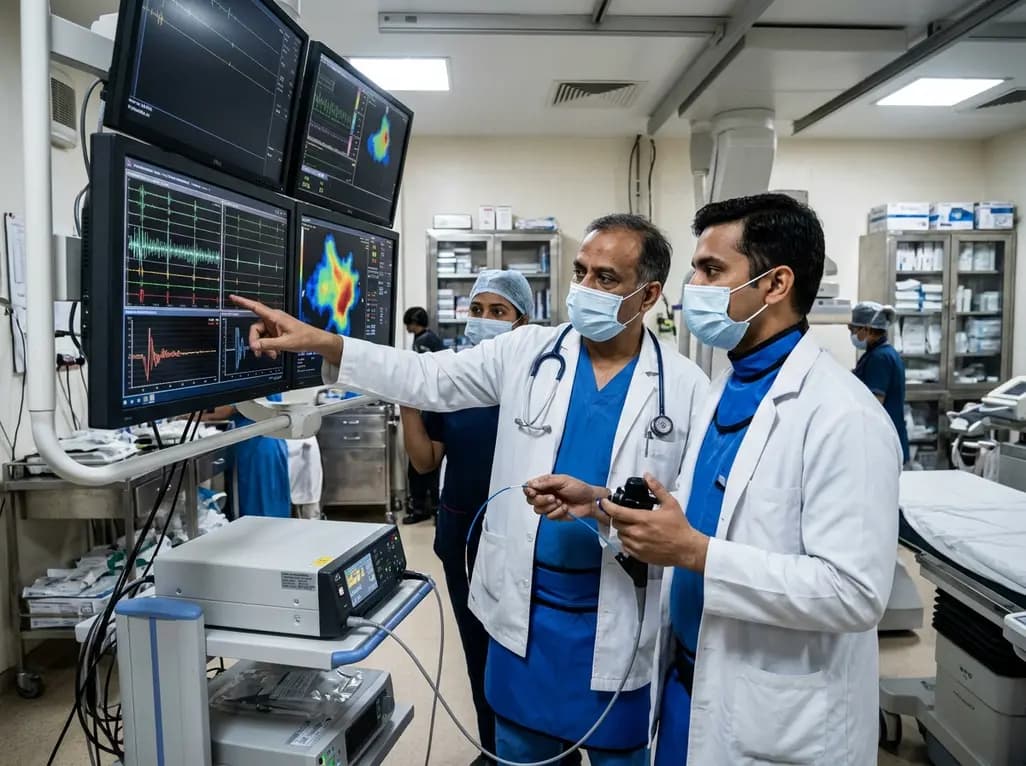
A comparative non-contact study reveals that high-power radiofrequency delivery with the QDOT MICRO catheter induces an artifactual contact force rise. Electrophysiologists must understand this power-dependent thermal and electrical phenomenon to avoid inadvertent catheter withdrawal and ineffective ablation.
Yesterday
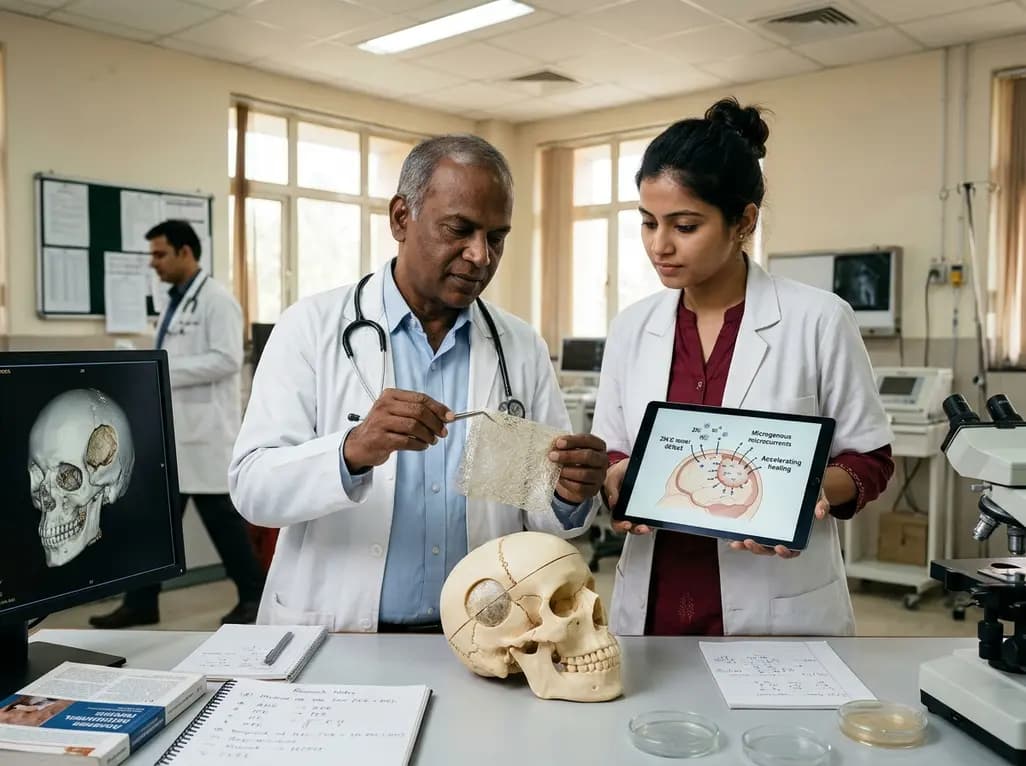
Researchers have engineered a self-powered Zn/C micro-galvanic electrospun membrane that couples sustained zinc release with endogenous microcurrents. This bioelectric scaffold stimulates M2 macrophage polarization and accelerates bone deposition to achieve robust cranial defect regeneration.
Today
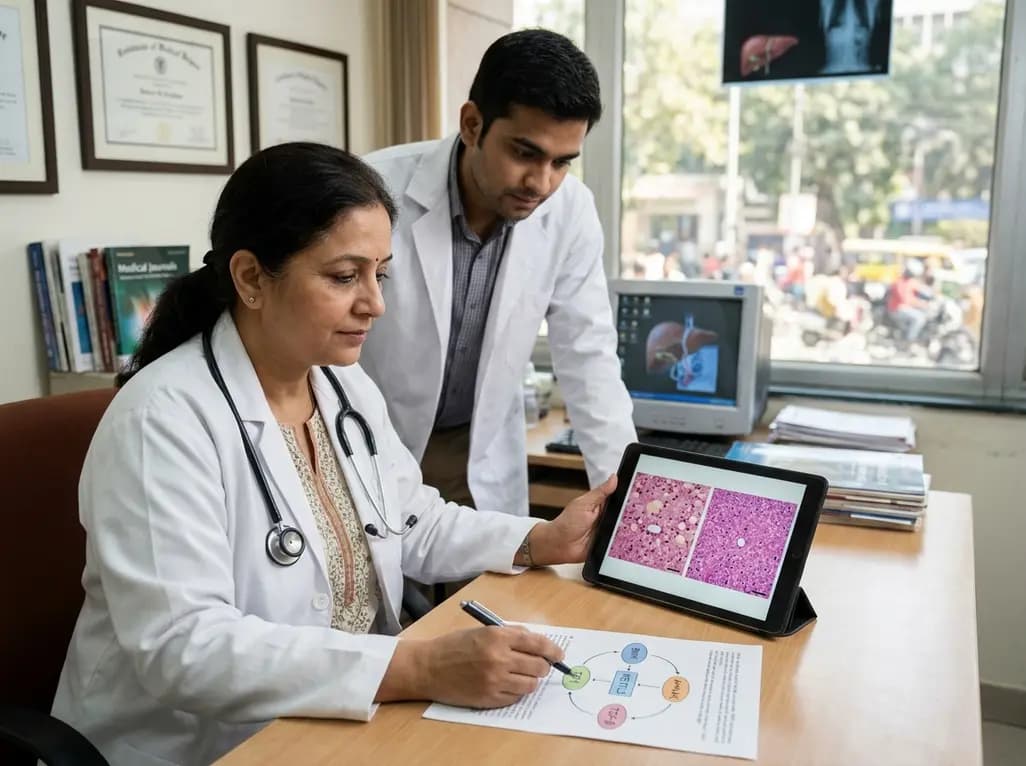
Preclinical research demonstrates that BMI1 overexpression alleviates metabolic syndrome-related liver injury. By triggering ubiquitin-mediated METTL3 degradation, BMI1 prevents AHNAK m6A methylation and suppresses fibrogenic TGF-β/SMAD signaling, significantly improving hepatic steatosis and insulin resistance.
Today
