.webp&w=384&q=75)

Loading, please wait...
Loading, please wait...

The latest Evidence-to-Recommendation (EtR) framework for the 2026 ACE Clinical Guidelines provides a transformative approach to the management of knee osteoarthritis. This joint effort between healthcare professionals and patients addresses current gaps in clinical care. Since knee osteoarthritis remains a prevalent and debilitating condition, these guidelines focus on enhancing conservative management. By prioritizing non-surgical interventions, the framework aims to optimize patient outcomes and reduce healthcare utilization costs effectively.
A comprehensive assessment serves as the cornerstone of effective orthopedic care. Clinicians should evaluate more than just joint pain and stiffness. Specifically, they must assess functional capacity and the patient's overall quality of life. Furthermore, evaluating psychosocial factors like depression, sleep quality, and kinesiophobia is essential. These elements significantly influence how patients perceive their symptoms and their willingness to adhere to mainstay strategies. Consequently, creating an individualized management plan requires a deep understanding of these diverse patient variables.
The framework outlines seven core evidence-based recommendations to guide clinical practice. Firstly, mainstay management must include patient education, structured exercise programs, and weight management. These strategies are vital for all patients, regardless of their disease severity. Secondly, the guidelines emphasize pharmacological relief using topical NSAIDs as a primary option. If topical treatments provide insufficient relief, clinicians may consider short courses of oral NSAIDs at the lowest effective dose. Additionally, the framework suggests that every 1 kg of weight loss can result in a four-fold reduction in knee joint load.
Effective management often requires a multidisciplinary approach. Healthcare providers should refer patients to allied health professionals for supervised exercise or the fitting of walking aids. Moreover, the framework considers complementary treatments, such as acupuncture, for patients who do not respond adequately to conventional therapies. Finally, specialist referrals for surgical intervention are reserved for those with persistent symptoms that severely impact daily function. This stepped approach ensures that patients receive the most appropriate care while delaying disease progression through non-invasive means.
The 2026 ACE guidelines recommend patient education, tailored exercise programs, and weight management for every patient diagnosed with knee osteoarthritis.
Topical NSAIDs are strongly recommended as a first-line pharmacological treatment due to their superior safety profile and comparable efficacy to oral alternatives for pain relief.
Disclaimer: This content is for informational and educational purposes only and does not constitute medical advice. It is not a substitute for professional clinical judgment. Refer to the latest local and national guidelines for clinical practice.
References
Chan JL et al. Evidence-to-Recommendation Framework for 2026 ACE Clinical Guidelines on the management of knee osteoarthritis - a joint effort with patients. Singapore Med J. 2026 Apr 29. doi: 10.4103/SINGAPOREMEDJ.SMJ-2026-139. PMID: 42054041.
Agency for Care Effectiveness (ACE). ACE Clinical Guideline: Management of knee osteoarthritis – a joint effort with patients. Published April 2026.
"
Read summarized clinical updates, watch expert medical content, and earn CME certifications right from your smartphone.
Open your smartphone camera to scan and install.





The 2026 ACE guidelines offer evidence-based recommendations for knee osteoarthritis, focusing on education, exercise, and holistic patient assessment....
4 months ago

A large NHANES cohort study reveals that higher Healthy Eating Index scores significantly reduce all-cause mortality risk in CKD patients by 45%. This analysis highlights the importance of comprehensive diet quality and medical nutrition therapy in renal care to optimize long-term clinical survival.
Today

Explore real-world data showing how private oncogenetics and molecular tumor boards achieve 3-week consult turnaround, high ctDNA actionability, and vital germline variant detection, enhancing individualized cancer care and familial risk assessment.
Today

A meta-analysis of 13 propensity score-matched studies shows ViV-TAVR delivers lower early mortality and reduced bleeding compared to redo-SAVR for degenerated bioprosthetic aortic valves, though long-term hemodynamics warrant careful anatomical and patient-centered evaluation.
Today
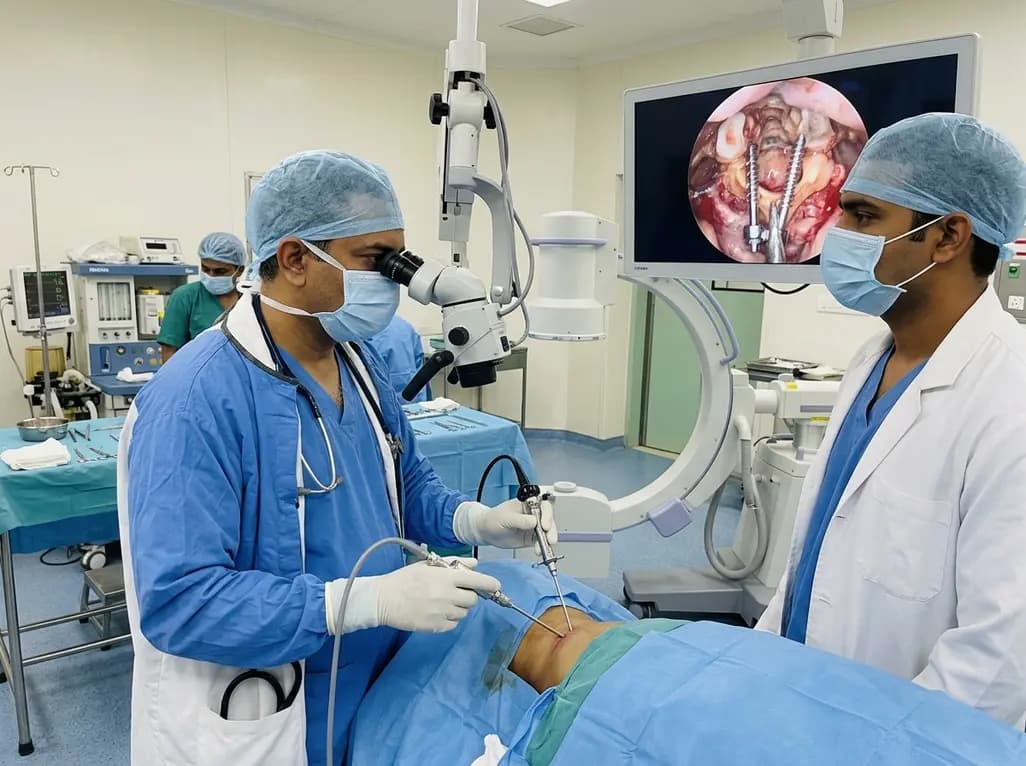
Endoscopic posterior cervical fusion combines minimally invasive decompression, joint preparation, and rigid screw-rod fixation for atlantoaxial pathologies. Early clinical findings demonstrate solid bony union, excellent symptom relief, and minimal soft-tissue morbidity without significant vascular compromise.
Today
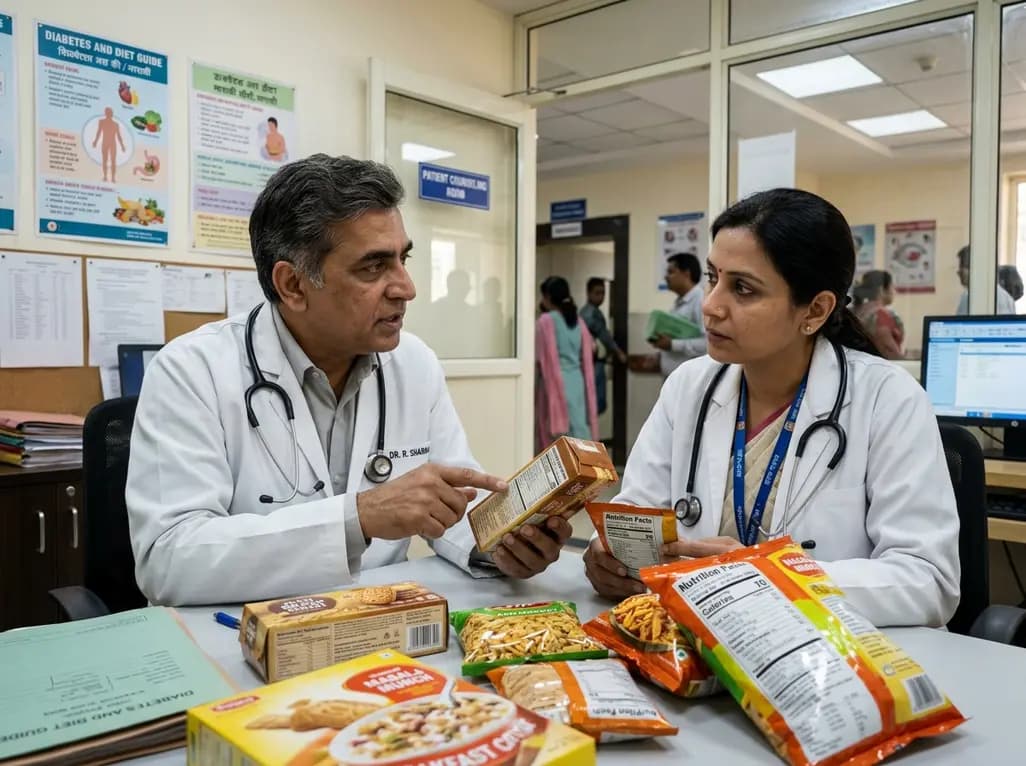
The All-India Food Processors' Association has approached the Supreme Court to oppose FSSAI's proposed per-100g benchmark for front-of-pack warning labels, advocating instead for a per-serving threshold. We explore the regulatory showdown, nutritional evidence, and implications for clinical lifestyle counseling.
Today
