.webp&w=384&q=75)

Loading, please wait...
Loading, please wait...

Recent clinical data highlight that COVID-19 vaccine effectiveness remains a critical factor in patient care. Consequently, a target trial emulation study recently evaluated the updated 2024-2025 mRNA vaccine. This research specifically focused on preventing emergency department visits and hospitalizations. Ultimately, the findings provide vital insights for healthcare providers managing the current respiratory season.
Researchers emulated a target trial using electronic health records from a large South Carolina health system. They compared adults who received the updated 2024-2025 vaccine with those who remained unvaccinated. To ensure accuracy, the team utilized propensity score matching based on demographic and clinical covariates. This approach allowed for a robust comparison of outcomes between the two groups over several months.
The study results revealed that the mRNA vaccine offered significant protection. Specifically, the vaccine was 41.3% effective against emergency department visits or more severe care. Moreover, it demonstrated 46.1% effectiveness against hospital admissions. Notably, these benefits persisted despite high levels of prior immunity from infections or earlier vaccinations. Therefore, the updated dose provides essential protection against severe disease.
These findings demonstrate that moderate protection remains achievable with current boosters. However, the study noted low vaccine uptake in the rural populations of South Carolina. This trend underscores a significant challenge for public health officials. Because emerging variants continue to circulate, clinicians must advocate for sustained vaccination efforts. This is particularly important for older adults and patients with multiple medical comorbidities.
Furthermore, the data suggest the vaccine offers significant incremental protection. Even in populations with significant prior exposure, the updated dose reduces the risk of severe disease. Consequently, healthcare providers should continue to recommend the updated mRNA vaccine to eligible patients. This strategy helps minimize the overall burden on hospital systems during peak periods.
The study indicates that the 2024-2025 mRNA vaccine is 46.1% effective against hospitalization. This level of protection is vital for preventing severe clinical outcomes during the respiratory virus season.
Yes, research shows that the vaccine provides additional protection even in populations with high levels of prior infection. It serves as an important booster against current circulating variants.
The updated vaccine demonstrated 41.3% effectiveness against emergency department visits or more severe care. This protection helps reduce the strain on emergency medical services and urgent care centers.
Disclaimer: This content is for informational and educational purposes only. It does not constitute professional medical advice, diagnosis, or treatment. Always seek the advice of your physician or other qualified healthcare provider with any questions you may have regarding a medical condition. Refer to the latest local and national guidelines for clinical practice.
References

Read summarized clinical updates, watch expert medical content, and earn CME certifications right from your smartphone.
Open your smartphone camera to scan and install.





A study confirms the 2024-2025 mRNA COVID-19 vaccine provides moderate protection against severe disease, including hospitalization and emergency care....
7 months ago

A systematic review of 41 preclinical studies reveals that baicalin dampens systemic inflammation, inhibits NF-κB and NLRP3 pathways, and improves organ preservation in sepsis models. However, substantial study heterogeneity and a complete lack of human clinical trials highlight the need for further translational research.
Today
Discover the crucial distinctions between mesonephric and mesonephric-like proliferations of the female genital tract. Learn the key histomorphologic, immunohistochemical, and molecular differences essential for accurate diagnosis and clinical management.
Today
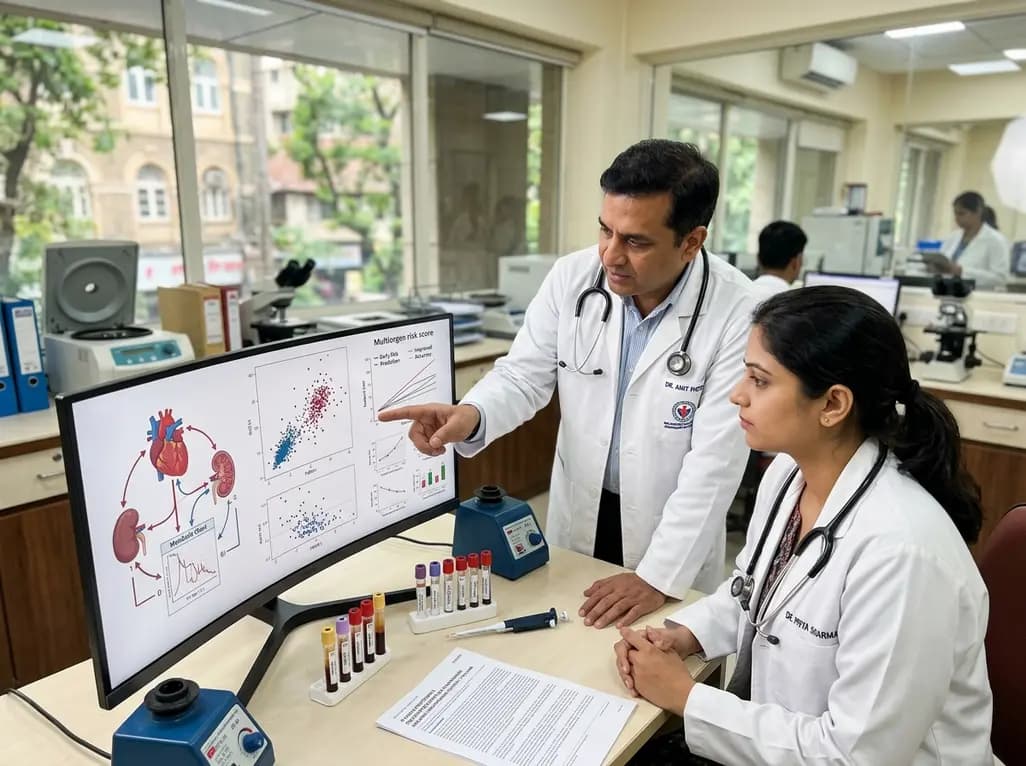
A large UK Biobank study reveals that plasma proteomic signatures capture preclinical organ damage and improve multiorgan risk prediction across early CKM syndrome stages 0 to 2 beyond traditional PREVENT clinical models.
Today
A narrative review investigates whether the articularis genus muscle functions as an independent anatomical entity or blends with the vastus intermedius. We evaluate its morphology, role in retracting the suprapatellar bursa, and direct clinical significance in anterior knee pain and arthroplasty.
Today

A Bayesian multilevel meta-analysis reveals that aerobic training combined with moderate carbohydrate restriction modestly lowers HbA1c in type 2 diabetes. However, sparse data and very low certainty leave incremental benefits over exercise or diet alone unproven, highlighting the need for individualized care.
Today
