.webp&w=384&q=75)

Loading, please wait...
Loading, please wait...

Modern cancer therapies have substantially improved survival rates across diverse malignancies, yet cardiovascular toxicities remain a leading cause of non-cancer morbidity and mortality. Consequently, predicting cardiovascular adverse events in oncological practice has emerged as a paramount priority for clinicians worldwide. Patients undergoing targeted therapies, anthracycline-based regimens, radiation, or immune checkpoint inhibitors frequently face heightened risks of heart failure, arrhythmias, and acute coronary syndromes. However, conventional risk stratification scores often fail to capture the complex, multi-system interactions present in cancer survivors. Traditional tools frequently underestimate risk because they rely primarily on static cardiovascular parameters without integrating dynamic oncological variables.
To bridge this critical prognostic gap, researchers increasingly utilize artificial intelligence and machine learning algorithms. These computational architectures can process multi-dimensional clinical data, patient demographics, laboratory biomarkers, and therapeutic histories. Furthermore, machine learning models uncover subtle non-linear associations that conventional regression analyses often overlook. As cardio-oncology expands into routine practice, developing dependable predictive frameworks becomes vital for timely cardioprotective interventions. Consequently, recent systematic syntheses have critically assessed whether machine learning algorithms genuinely deliver reliable, clinically actionable predictions across diverse cancer cohorts.
A comprehensive systematic review evaluated thirty-two distinct studies that examined artificial intelligence models built from patient-level clinical data. Among these publications, eighteen investigations conducted head-to-head comparisons across multiple computational algorithms, while fourteen focused on single analytical architectures. Notably, Random Forest and Extreme Gradient Boosting (XGBoost) emerged as the two most frequently implemented methodologies, appearing in seventeen studies each. When researchers compared multiple algorithms within identical datasets, XGBoost consistently demonstrated superior discriminative performance, frequently achieving higher areas under the receiver operating characteristic curve.
Nevertheless, clinicians must interpret these algorithmic rankings with appropriate caution. Substantial heterogeneity in study designs, cohort definitions, and clinical endpoints makes definitive claims of algorithmic superiority premature. For example, some models aimed to predict acute anthracycline-induced cardiotoxicity, whereas others evaluated long-term ischemic complications across mixed survivor populations. Additionally, basic algorithms like regularized logistic regression sometimes yielded discrimination metrics comparable to complex ensemble models. Therefore, algorithmic selection must align with data structure and interpretability needs rather than assuming advanced machine learning models always outperform simpler statistical methods.
Although machine learning algorithms exhibit impressive mathematical capabilities, their real-world utility depends entirely on rigorous data preprocessing. The systematic evaluation revealed notable methodological vulnerabilities across the analyzed literature. Specifically, seventeen out of thirty-two included studies failed to report how they handled missing clinical data. In routine practice, electronic health records regularly contain incomplete biomarker profiles, missing echocardiographic measurements, and inconsistent follow-up timelines. When researchers omit explicit data imputation protocols, models risk introducing significant selection bias and artificial performance inflation.
Furthermore, evaluating studies with the IJMEDI checklist indicated that twenty-eight of the thirty-two studies achieved only medium methodological quality. Poor transparency regarding feature selection techniques further complicates clinical appraisal. Many models selected predictors based on raw statistical correlation without accounting for clinical collinearity or biological plausibility. Consequently, algorithms may rely heavily on spurious features that lack pathophysiological relevance. To transition predictive tools from academic research into reliable clinical decision support, investigators must rigorously document imputation strategies, data preprocessing steps, and feature engineering workflows.
Discrimination metrics alone, such as the area under the curve, do not guarantee that a predictive algorithm will perform safely in real-world patients. Calibration, which measures the concordance between predicted risk probabilities and actual observed clinical outcomes, is essential for clinical decision-making. Alarmingly, only four of the thirty-two reviewed studies formally assessed model calibration. Without robust calibration, a model might correctly rank patient risk while drastically overestimating or underestimating absolute event probabilities, potentially causing inappropriate treatment alterations or unnecessary cardioprotective medication prescriptions.
Equally concerning is the persistent lack of external validation across diverse independent cohorts. Only eight included studies validated their machine learning architectures on external patient datasets. Models trained exclusively on single-institution datasets frequently suffer from overfitting, capturing local clinical idiosyncrasies rather than universal biological truths. Consequently, algorithms often experience substantial performance degradation when applied to different patient demographics, socioeconomic backgrounds, or alternative healthcare settings. Establishing multi-center validation protocols and publishing calibration curves are mandatory steps before these algorithms can reliably guide patient management.
For practicing oncologists and cardiologists, machine learning offers transformative potential to personalize surveillance and preventive interventions. Accurate risk stratification enables early cardioprotection, including the timely initiation of neurohormonal therapies like ACE inhibitors or beta-blockers before overt myocardial injury occurs. Additionally, high-risk patients can receive adjusted oncological regimens, intensified biomarker tracking, and proactive strain echocardiography surveillance. Conversely, accurately identifying low-risk individuals helps clinicians avoid excessive diagnostic testing, thereby reducing healthcare costs and treatment delays.
However, successful clinical translation demands standardized reporting standards, such as the TRIPOD-AI and PROBAST-AI guidelines. Future research must prioritize algorithmic explainability, ensuring that clinicians understand the biological rationale behind individualized risk scores. Integrating explainable artificial intelligence interfaces directly within electronic health records will foster physician trust and facilitate collaborative decision-making. Multidisciplinary cardio-oncology teams should actively participate in model design, ensuring that machine learning tools address pertinent clinical questions while preserving patient safety and equitable care delivery.
Cancer patients possess unique risk profiles driven by direct cardiotoxic antineoplastic therapies, shared cardiovascular risk factors, and systemic inflammation. Furthermore, oncological treatments interact dynamically with baseline patient comorbidities, creating complex pathophysiological trajectories. Traditional risk scores fail to account for multimodal cancer therapies and variable drug exposure schedules, making accurate baseline risk assessment particularly challenging without advanced analytical tools.
Ensemble tree-based algorithms, specifically Extreme Gradient Boosting (XGBoost) and Random Forest, currently demonstrate the strongest discriminative performance in published studies. These models excel at identifying non-linear interactions and handling complex tabular clinical data. However, their superior mathematical performance must be confirmed through external multi-center validation and proper calibration testing before routine clinical deployment.
Clinical translation is primarily hindered by insufficient reporting of missing data handling, rare assessment of calibration metrics, and a lack of external validation across diverse patient cohorts. Additionally, many algorithms function as opaque black-box models without explainable decision pathways, limiting clinician confidence and hindering seamless integration into routine electronic medical record workflows.
Disclaimer: This content is for informational and educational purposes only and does not constitute medical advice or establish a doctor-patient relationship. Healthcare professionals must exercise independent clinical judgment. Refer to the latest local and national guidelines for clinical practice.
References

Read summarized clinical updates, watch expert medical content, and earn CME certifications right from your smartphone.
Open your smartphone camera to scan and install.





A systematic review evaluates machine learning models predicting cardiovascular adverse events in cancer patients, highlighting XGBoost performance, calibration gaps, and validation needs.
last month
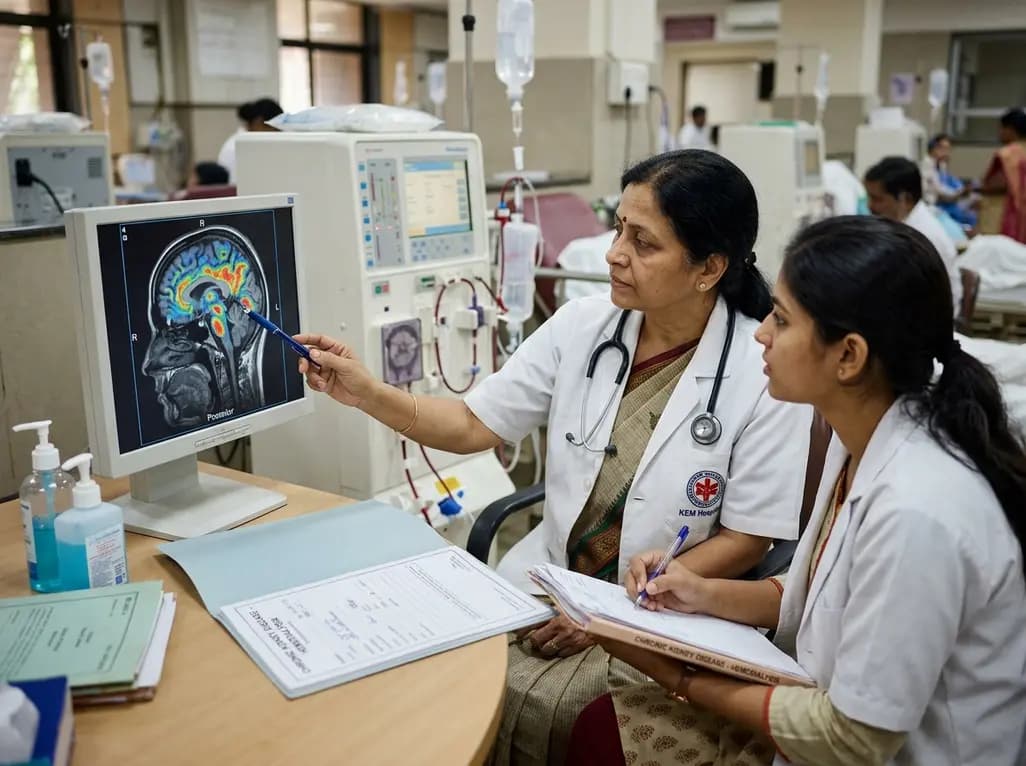
A retrospective clinical analysis reveals that hemodialysis-associated cognitive dysfunction arises from synergistic pathological mechanisms, including severe chronic anemia, worsening renal clearance, abnormal regional brain iron deposition, and an imbalance between neuroinflammatory and neurotrophic factors.
Today

A multiparametric MRI approach combining quantitative T2 shading, apparent diffusion coefficient (ADC) measurements, and morphological signs provides superior diagnostic accuracy over subjective evaluation to differentiate ovarian endometriomas from benign hemorrhagic cysts.
Today

Discover a novel laparoscopic approach for iatrogenic diaphragmatic hernia repair following pedicled omentoplasty. This modified Sugarbaker technique integrates dorsal pedicle lateralization and round ligament reinforcement to secure the diaphragmatic defect while preserving vital omental vascularity.
Today

Evaluating Hill-Sachs lesion size and the distance to dislocation is critical in recurrent shoulder instability. As bone loss concepts shift from binary on-track classifications to continuous risk assessment, clinicians must identify when isolated Bankart repair is insufficient and supplementary procedures are needed.
Today

New research reveals that M1 macrophage-derived exosomes aggravate diabetic nephropathy by transferring WTAP to stabilize S1PR2 mRNA. Silencing WTAP in these vesicles attenuates endothelial injury and renal fibrosis, pointing toward innovative nanomedicine therapies.
Today
