.webp&w=384&q=75)

Loading, please wait...
Loading, please wait...

Electrocardiography (ECG) remains a vital diagnostic tool in modern cardiology. However, the development of robust AI models for ECG interpretation often faces a major hurdle: the lack of large-scale, accurately annotated data. To bridge this gap, researchers have introduced GATE (Graph-And-Text Exchange). This framework facilitates zero-shot ECG classification by integrating graph-structured signal data with clinical reports. Furthermore, this approach addresses common issues like semantic distortion and insufficient spatial modeling found in traditional self-supervised learning methods.
GATE employs a specialized spatiotemporal graph encoder. This component captures intricate dependencies within and between various ECG leads. Additionally, the system introduces a lexical knowledge-embedded codebook. This feature enhances the semantic depth of clinical reports. Consequently, the model aligns graph data with text more effectively. During the inference phase, GATE leverages a large language model (LLM) combined with a domain-specific knowledge base. This combination generates rich disease descriptions, which ultimately empowers the system to perform zero-shot ECG classification with high precision.
In many clinical environments, especially in developing regions, obtaining labeled datasets is expensive and time-consuming. Notably, GATE demonstrates exceptional performance even when researchers use only 1% of available labeled data. This high level of generalization suggests that AI can assist doctors in diagnosing rare conditions without requiring thousands of previous examples. Moreover, the integration of LLMs allows for more interpretable results by linking signal patterns directly to medical terminology found in clinical literature.
It refers to the ability of an AI model to correctly identify a cardiac condition on an ECG without having seen any specific labeled examples of that condition during its initial training phase.
GATE uses LLMs to generate semantically enriched descriptions of diseases. These descriptions act as a bridge, allowing the model to match complex ECG signal patterns with clinical knowledge from text-based reports.
Graph data allows the AI to model the heart's electrical activity as a network. This approach better captures the spatial and temporal relationships between different leads compared to standard linear processing.
Disclaimer: This content is for informational and educational purposes only. It does not constitute professional medical advice, diagnosis, or treatment. Always seek the advice of your physician or other qualified health provider with any questions you may have regarding a medical condition. Refer to the latest local and national guidelines for clinical practice.
References
An Y et al. GATE: Graph and Text Exchange for Zero-Shot ECG Classification with LLM Prompts. IEEE J Biomed Health Inform. 2026 Apr 23. doi: 10.1109/JBHI.2026.3686890. PMID: 42024946.
Liu S et al. Self-Supervised Learning of ECG and PPG Signals for Multi-Modal Health Monitoring. PMLR. 2025 Apr; 278:350-358.
Fernandes JG et al. Transferring Clinical Knowledge into ECGs Representation: A Self-Supervised Approach for Interpretable, Unimodal-at-Inference Diagnosis. NeurIPS 2024 Workshop.
"
Read summarized clinical updates, watch expert medical content, and earn CME certifications right from your smartphone.
Open your smartphone camera to scan and install.





GATE is a new AI framework that enhances ECG classification using LLMs and graph data, enabling accurate diagnosis even with limited labeled medical data....
4 months ago

A retrospective cohort study evaluates the short- and long-term impacts of SARS-CoV-2 infection on patients with Graves' disease receiving antithyroid drug therapy, highlighting thyroid status destabilization, clinical symptom exacerbations, and post-viral sequelae.
Today

A comprehensive meta-analysis of over 278,000 women demonstrates that maternal atopic dermatitis significantly increases risks of premature rupture of membranes and low birth weight. Discover essential clinical insights on disease mechanisms, serial antenatal growth monitoring, and safe therapeutic interventions.
Yesterday
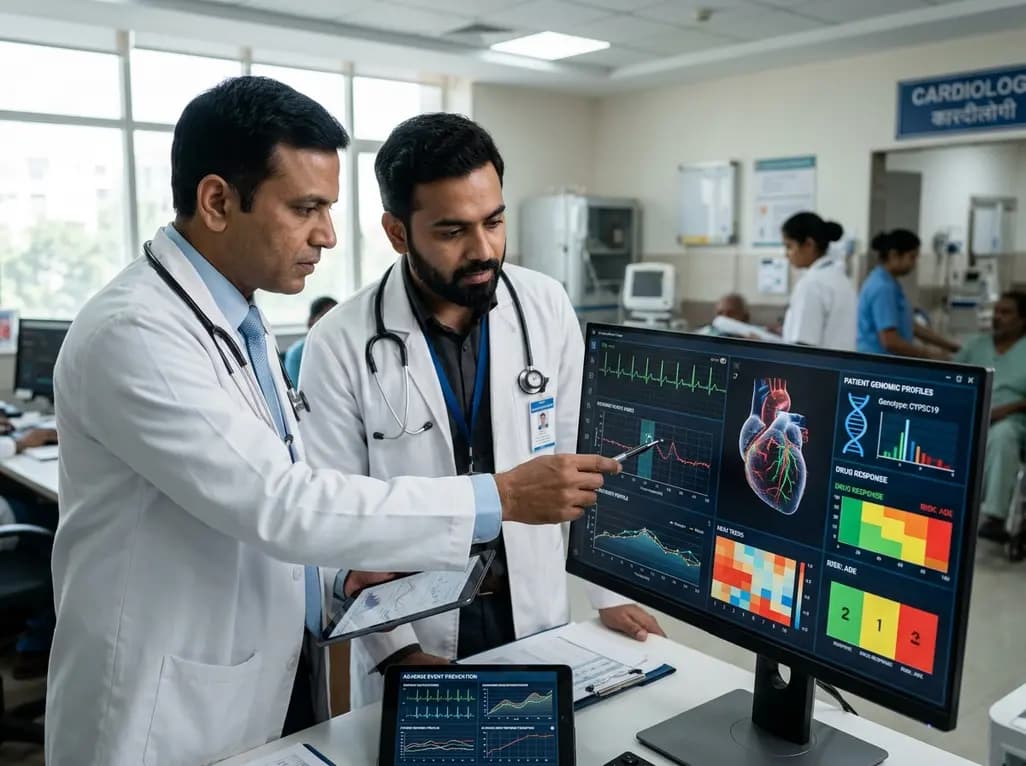
Pharmacogenomics and artificial intelligence are revolutionizing cardiology by tailoring therapies to individual genetic profiles and clinical data, reducing adverse drug events, and improving cardiovascular patient outcomes.
Today

India's premier scientific bodies have joined the Armed Forces Medical Services to solve unique physiological and operational challenges faced by soldiers. The national collaboration covers combat casualty care, artificial intelligence diagnostics, bionic prosthetics, and extreme-environment physiological resilience.
Today

Over 60 international public health researchers have advised FSSAI to mandate front-of-pack warning labels for any packaged product high in even one critical nutrient: sugar, saturated fat, or sodium. This reform counters phased rollouts to accelerate consumer protection and address India's chronic disease burden.
Today
